
“The life of a republic lies certainly in the energy, virtue, and intelligence of its citizens.” – Andrew Johnson, 1865
- Ad Trekker Water Station 1Gal Per MinuteCall us if you have Questions 800-627-3809
- Ad USA Berkey Water Filters - Start Drinking Purified Water Today!#1 Trusted Gravity Water Purification System! Start Drinking Purified Water now with a Berkey water filtration system. Find systems, replacement filters, parts and more here.
Preparedness Notes for Thursday — January 9, 2025
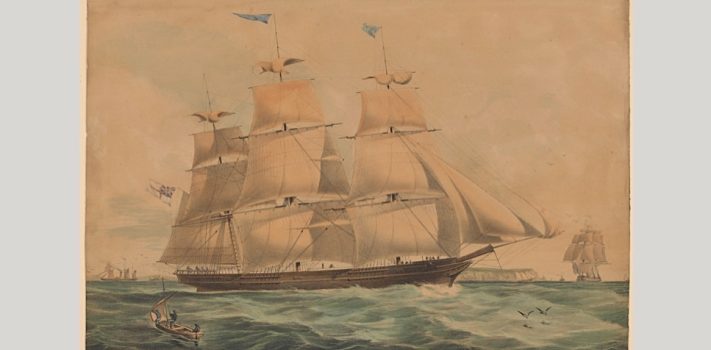
On January 9, 1855, the clipper ship “Guiding Star” disappeared in the Atlantic, with the loss of 480 lives.
—
January 6, 1880: It was reported that six feet of snow had fallen in Seattle, in five days.
—
And on January 6, 1936, the U.S. Army adopted the M1 semiauto rifle, designed by John Garand as its new standard-issue weapon.
—
Today’s feature article is a guest post by one of my consulting clients. It is not eligible for the writing contest judging. – JWR
We are seeking entries for Round 116 of the SurvivalBlog non-fiction writing contest. More than $935,000 worth of prizes have been awarded since we started running this contest. In 2023, we polled blog readers, asking for suggested article topics. Please refer to that poll if you haven’t yet chosen an article topic. Round 116 ends on January 31st, so get busy writing and e-mail us your entry. Remember that there is a 1,500-word minimum, and that articles on practical “how-to” skills for survival have an advantage in the judging.
- Ad Click Here --> Civil Defense ManualNOW BACK IN STOCK How to protect, you, your family, friends and neighborhood in coming times of civil unrest… and much more!
- Ad Don't wait - get the ultimate US-made ultra-high performance US-made SIEGE Stoves and stunning hand-crafted SIEGE belts for Christmas. For stocking-stuffers see our amazing fire-starters. Gifts that can save lives. Big Sale!Every bespoke SIEGE buckle goes through an hours-long artisanal process resulting in a belt unlike anything else, with blazing fast performance and looks and comfort to match.
Thoughts on Farming – Part 3, by Single Farmer
(Continued from Part 2.)
Wheat Farming in the Heartland: A year in the life of a wheat farm
We are a diversified family farm actually growing multiple crops to provide diversified income streams. We own all of our acres and have no debt. This will be covered extensively in the part which covers the “Economics of Farming.” Everything is grown that is sold is for profit. If a crop is no longer profitable or has a strong possibility of becoming unprofitable, it is not grown or sometimes grown in a limited amount. Just because we can grow something in quantity, does not mean that we should.
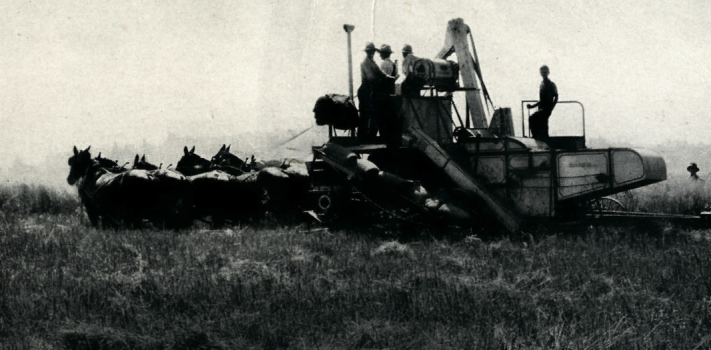
In pre-industrial America, a wheat farmer had to do these tasks by hand: cutting, bundling the sheaves, drying, threshing, winnowing, and storing. When wheat is at the stage which can be expressed as “amber waves of grain,” it describes the color transformation stage from green to amber in the ripening process on the road to harvest. This first stage of the harvest required great physical stamina in swinging a scythe where two acres a day would be a routine amount using a scythe with a cradle. This was an improvement over using a sickle where usually well under an acre could be cut, but this was a forward movement in efficiency.Continue reading“Thoughts on Farming – Part 3, by Single Farmer”
- Ad California Legal Rifles & Pistols!WBT makes all popular rifles compliant for your restrictive state. Choose from a wide range of top brands made compliant for your state.
- Ad LifeSaver 20K JerryCan Water PurifierThe best water jerrycan you can buy on the market! Mention Survivalblog for a Free Filter ($130 Value)

The Survivalist’s Odds ‘n Sods
SurvivalBlog presents another edition of The Survivalist’s Odds ‘n Sods. This column is a collection of news bits and pieces that are relevant to the modern survivalist and prepper from JWR. Our goal is to educate our readers, to help them to recognize emerging threats, and to be better prepared for both disasters and negative societal trends. You can’t mitigate a risk if you haven’t first identified a risk. In today’s column, we look at the risk of terrorist sleeper agents and cells in the United States.
More Than 1,000 Jihadi Sleepers In The US?
Countering Terrorist Sleeper Cells in the United States
FBI’s Frontline Defense: Countering Terrorist Sleeper Cells in the United States. JWR’s Comments: Based on its track record, the FBI seems to manufacture far more terrorists by grooming them and conspiring with them. If need be, undercover agents or their paid informants even gives terrorists driving lessons.
Abortion Was the Leading Cause of Death in 2024, Worldwide
Abortion was the Leading Cause of Death in 2024, With Over 45 Million Killed.
JWR’s Comment: That is a staggering figure. About the same as the entire population of Argentina, every year. Or think of it as nine Nazi Holocausts, per year. Please pray for the lives of the innocent unborn!
- Ad Survival RealtyFind your secure and sustainable home. The leading marketplace for rural, remote, and off-grid properties worldwide. Affordable ads. No commissions are charged!
- Ad STRATEGIC RELOCATION REALTYFOR SALE: Self-sustaining Rural Property situated meticulously in serene locales distant from densely populated sanctuary cities. Remember…HISTORY Favors the PREPARED!

The Editors’ Quote of the Day:
“Judges ought to remember that their office is jus dicere and not jus dare; to interpret law and not to make or give law.” – Francis Bacon
- Ad Ready Made Resources, Trijicon Hunter Mk2$2000 off MSRP, Brand New in the case
- Ad Civil Defense ManualClick Here --> The Civil Defense Manual... The A to Z of survival. Looks what's in it... https://civildefensemanual.com/whats-in-the-civil-defense-manual/

Preparedness Notes for Wednesday — January 8, 2025
On January 8, 1656, the longest-running commercial newspaper, “Weeckelycke Courante van Europa“, now known as “Haarlems Dagblad“, still in printed circulation first began publication in Haarlem, Netherlands.
—
January 8,1835: The US national debt was reduced to zero for the first and only time in history.
—
Today’s feature article is a guest post by one of my consulting clients. It is not eligible for the writing contest judging. – JWR
We are seeking entries for Round 116 of the SurvivalBlog non-fiction writing contest. More than $935,000 worth of prizes have been awarded since we started running this contest. In 2023, we polled blog readers, asking for suggested article topics. Please refer to that poll if you haven’t yet chosen an article topic. Round 116 ends on January 31st, so get busy writing and e-mail us your entry. Remember that there is a 1,500-word minimum, and that articles on practical “how-to” skills for survival have an advantage in the judging.
- Ad USA Berkey Water Filters - Start Drinking Purified Water Today!#1 Trusted Gravity Water Purification System! Start Drinking Purified Water now with a Berkey water filtration system. Find systems, replacement filters, parts and more here.
- Add Your Link Here
Thoughts on Farming – Part 2, by Single Farmer
(Continued from Part 1.)
Successful survivalists consider a variety of scenarios including looking at how previous generations survived to glean any wisdom that they can take as compensation for their time. All of us are only here because our ancestors somehow managed to carry themselves genetically forward. For most of human history, it was difficult to get enough calories to barely stay alive and this fact is lost upon most people as they have so many choices today often struggling on what cuisine to eat, and not how to find food.
A common cause of death throughout history has been starvation, due to crop failure. A lot of individuals reading this if asked to name a critical event of the 14th Century would say the “Black Death” — also known as the Bubonic Plague — reducing Europe’s overall population from 1346 to 1353 by about a third with mortality rates of often 80 percent or higher depending on the plague year. Few people know that just a little earlier in the 14th Century there was a large food crisis that is very important to our discussion on farming. Throughout history, people would often go from harvest to harvest and the slightest interruption often meant disaster as crop yields were not large multiples, but were often in low single-digit multipliers in productivity. Often it was two to one or even lower with even higher loss percentages.Continue reading“Thoughts on Farming – Part 2, by Single Farmer”
SurvivalBlog Readers’ & Editors’ Snippets
Our weekly Snippets column is a collection of short items: responses to posted articles, practical self-sufficiency items, how-tos, lessons learned, tips and tricks, and news items — both from readers and from SurvivalBlog’s editors. Note that we may select some long e-mails for posting as separate letters.
—
Mike in Alaska wrote:
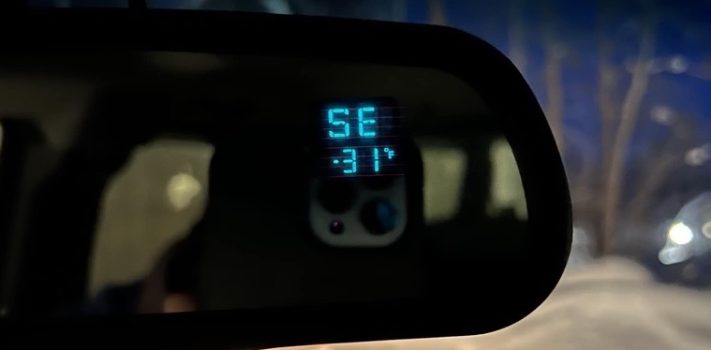
“The local climate here is our version of a freezer and refrigerator solution. I took the photo above on my way to work this morning … and it is now dropping even further. We are expecting -45 F this coming weekend. In the summer (June, July, and half of August) we have permafrost and can easily use underground bunkers for food. My basement under my house (really just a 5-1/2 foot deep crawl space, or what we called a “Michigan Basement” growing up, never gets much below or above 45 degrees, even when the temps outside are at -64 below zero. I hope you guys are all good, and I pray every day for you folks.”
o o o
Lily mentioned a useful video that she found for any folks looking for their ticket to living out in the hinterboonies: 10 Boring But Stable Remote Jobs That Pay $30+ Per Hour.
o o o
As a followup to the release of the Homestead feature film, Angel Studios has started early release of a Homestead streaming series. For now, the series episodes are only available to Angel Studios “Guild” members.
o o o
Reader L. wrote us the following on preparing to isolate rooms, in the event of power failures:
“Buying a couple of king-size flat sheets and some hooks or nails, and poking holes in the top hem on a sheet and hanging it on hooks or nails in the doorway(s) between rooms will do much to keep precious heat in one small room. Or you can hang the sheet on a spring-loaded tension type curtain rod and stick it up in a doorway, assuming you don’t live in an “open-plan” house. For those of you with houseplants or vegetable plant starts, you can keep them survivable in the smallest room in the house (usually the bathroom) with several lit candles, in the bathtub. This will keep them “baseline” warm until the polar vortex subsides.
I found a local business that puts its scrap lumber pieces in a bin out by the street and was able to obtain several totes full, I also found a local rock and gravel supply place that happened to carry $5 BIG bundles of firewood, much cheaper than the mini-mart bundles which are now priced at $9.00 for about 6 pieces of wood. Some of us [older people] have lost the ability to chop firewood anymore.
I remember seeing very old photos of my grandparent’s farm with dirt heaped up all around the foundation, for insulation, boy those single pane windows in wooden frames must have been fun, with ice melting on the inside and rotting the frame.”
o o o

The Editors’ Quote of the Day:
“Agriculture is our wisest pursuit, because it will in the end contribute most to real wealth, good morals, and happiness.” – Thomas Jefferson
Preparedness Notes for Tuesday — January 7, 2025
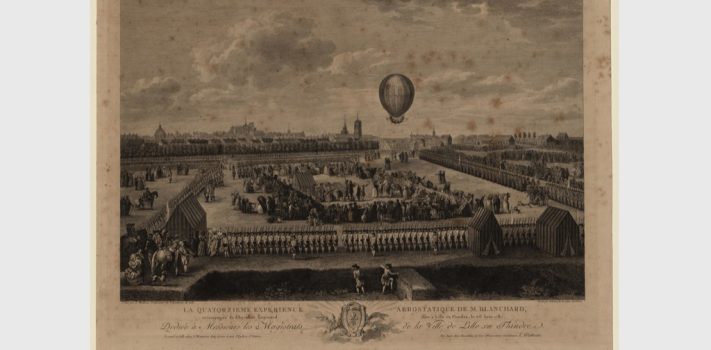
January 7, 1785: The first balloon flight across the English Channel, by Jean Pierre Blanchard and John Jeffries.
—
January 7,1927: Commercial transatlantic telephone service was inaugurated between New York and London.
—
Today is the birthday of Senator Rand Paul, born 1963.
—
This is also the birthday of Cresson Kearny (born 1914, died December 18, 2003.)
—
Today’s feature article is a guest post by one of my consulting clients. It is not eligible for the writing contest judging. – JWR
We are seeking entries for Round 116 of the SurvivalBlog non-fiction writing contest. More than $935,000 worth of prizes have been awarded since we started running this contest. In 2023, we polled blog readers, asking for suggested article topics. Please refer to that poll if you haven’t yet chosen an article topic. Round 116 ends on January 31st, so get busy writing and e-mail us your entry. Remember that there is a 1,500-word minimum, and that articles on practical “how-to” skills for survival have an advantage in the judging.
Thoughts on Farming – Part 1, by Single Farmer
I want to tell you about an amazing group of people. They make sure that you not only stay alive, are well-nourished, and that you have your choice of a delicious variety of food that Kings and Queens of yesteryear could not dream of, all at relatively low prices. Contrary to what you’ve been told, prices are still fairly low by historical standards and food quality is high. I know that you or someone you know has recently been to the grocery store and you think the prices are high, but wait until you hear about the state of the farm economy and I will give you some practical thoughts that may help your family in the future. In this article series, I am going to take you on a journey through history until the present where you probably interacted with the products from a family farm, probably three or more times per day.
The full depth of an article covering family farms could cover many volumes. So I will not be able to take you down every interesting road showing you every interesting detour, but I do hope to provide you a comprehensive overview of how a seed planted in the previous year harvested midway the following year could become a component in your breakfast, lunch, afternoon snack, or dinner — keeping you alive and healthy. I will introduce you to a farm family that survived the Great Depression including one of their stories of thrift, through using something most people today would discard. There are so many lessons to be learned in these struggles during previous tough times.
Continue reading“Thoughts on Farming – Part 1, by Single Farmer”
SurvivalBlog’s News From The American Redoubt
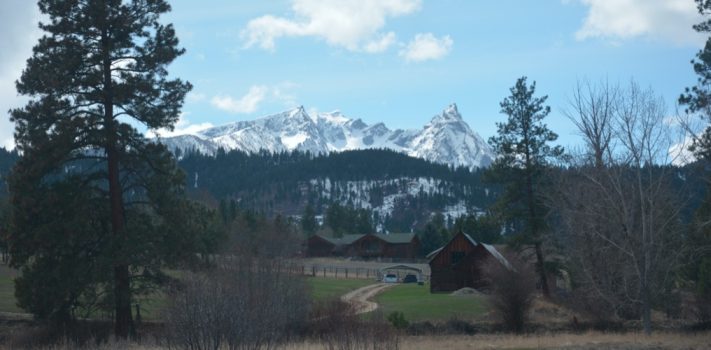
This weekly column features news stories and event announcements from around the American Redoubt region. (Idaho, Montana, eastern Oregon, eastern Washington, and Wyoming.) Much of the region is also more commonly known as The Inland Northwest. We also mention companies located in the American Redoubt region that are of interest to preppers and survivalists. Today, a retrospective on the recently-ended Yellowstone television series, and its fictionalized view of Montana. (See the Montana section.)
Idaho
Reuters: Biden officials issue permit for Perpetua’s Idaho antimony and gold mine.
o o o
Reader Michael D. sent us this: Coeur d’Alene to consider emergency plan. Michael’s Comments:
“This is a very scary article about arresting people who refuse to comply with the state Governor’s orders to evacuate for one of many reasons from wildfire to pandemic and whatever else they figure is an ’emergency’. It looks like Kootenai County has already added this to their plan and now the city is looking to do the same.”
o o o
ACLU files emergency motion against new public defense system.
Continue reading“SurvivalBlog’s News From The American Redoubt”
The Editors’ Quote of the Day:
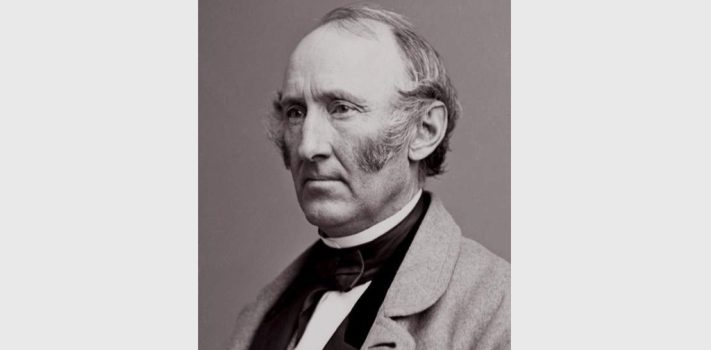
“The greatest praise government can win is, that its citizens know their rights and dare to maintain them.” – Wendell Phillips

Preparedness Notes for Monday — January 6, 2025
On January 6, 1893, the Great Northern Railway connected Seattle with the east coast for the first time. Passenger service began in June, 1893.
Four railroads were merged into the Burlington Northern Railroad Company in March, 1970:
- Great Northern Railway
- Northern Pacific Railway
- Chicago, Burlington & Quincy Railroad
- Spokane, Portland & Seattle Railway
—
In response to those who have written to ask: Yes, there will indeed be a new waterproof USB stick archive that includes all of the 2005 to 2024 of SurvivalBlog posts. There will be 11 more bonus books added to the already huge list. We’ll probably start taking pre-orders soon, and we should be able to mail out orders on or before February 5th. Thanks for your patience. – JWR
—
We are seeking entries for Round 116 of the SurvivalBlog non-fiction writing contest. More than $935,000 worth of prizes have been awarded since we started running this contest. In 2023, we polled blog readers, asking for suggested article topics. Please refer to that poll if you haven’t yet chosen an article topic. Round 116 ends on January 31st, so get busy writing and e-mail us your entry. Remember that there is a 1,500-word minimum, and that articles on practical “how-to” skills for survival have an advantage in the judging.
A Quest and a Gift, by Single Farmer
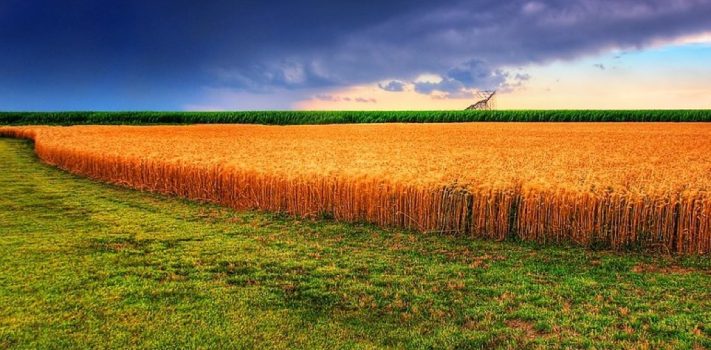
Editor’s Introductory Note: I’ve had a consulting client for more than two years, who I’ve learned to trust. He lives on a family farm. Please note that he is looking for a young woman who would like to be married and have children. She does not need any experience in agriculture. – JWR
—
I’ll begin this piece with a preview of something included in a six-part article that will be posted in SurvivalBlog, starting tomorrow:
Go back just a few generations, and there were no “food stamp” coupons or cards allowing you the benefit of the cornucopia of modern life potentially at your fingertips just by virtue of living in the post-industrial welfare United States of America. This is so historically abnormal, but tragic because it often can lead people down so many bad roads. Eating without working for able-bodied adults is contradiction of the Biblical wisdom in 2 Thessalonians 3:10 in which we are warned: “For even when we were with you, this we commanded you, that if any would not work, neither should he eat.”
The early colonists at Jamestown actually experimented with a form of “socialism” where everything was held in a common storehouse as that is how their company charter was originally organized. Because the colonists at Jamestown under this system could not individually benefit from their own labors, they often did very little and this contributed to the near collapse.
One of the leading colonists, Ralph Hamor, wrote in his 1615 book “A True Discourse of the Present State of Virginia” reflecting back on his time at Jamestown: “When our people were fed out of the common store and labored jointly in the manuring of the ground and planting corn, glad was that man that could slip from his labor, nay the most honest of them in a general business, would take so much faithful and true pains in a week as now he will do in a day.” Food shortages and leadership challenges led to disastrous results with an 80 percent death rate during the Winter of 1609-10. The colonists made it through the “Starving Time” although in diminished numbers. From that point forward, their numbers never dipped that low again and they became successful
The treasurer of the Virginia Company of London Sir Edwin Sandys highlighted an important fact in 1620: “The plantation can never flourish till families be planted and the respect of wives and children fix the people on the soil.” The first permanent English settlement in this country at Jamestown only flourished after it had discovered a few inescapable facts both through a lot of trial and error. People need to have a reasonable expectation that they will individually profit from their labor as Captain John Smith was instrumental in changing how the colonists worked and were compensated. Civilizations and their smaller outposts of colonies only succeed when they grow and flourish through feeding themselves and eventual population growth.
The best way to grow and multiply a population is through natural reproduction instead of importing people which generally does not lead to a cohesive social structure. (Jamestown was originally settled with all men and the population through the 1610s was always very imbalanced sometimes 7:1 men to women).
To change this, the Virginia Company started a program to import young ladies to Jamestown who would become some of the first mothers of America. For the price of 120 pounds of “good leaf tobacco” (back then tobacco was tradeable for gold as a commodity–since the colonists could not find gold they used their labor as suggested by colonist John Rolfe to grow tobacco which was an easily exportable cash crop commodity to England), a single Jamestown colonist man could pay the passage and dowry for a young woman to be his bride. The reason for this fee was because the men who were in charge of the colony only wanted these young women to marry industrious men who owned land for the colony to have its best opportunity. (in case you are wondering what this would be equivalent to today it would be about $5,000.)
Continue reading“A Quest and a Gift, by Single Farmer”