Notes for Thursday – December 29, 2016

One of the deadliest mass shootings in U.S. history was actually perpetuated by the Federal Government itself on December 29th, 1890, on the Lakota Pine Ridge Indian Reservation. While unconstitutionally disarming the people, the U.S. 7th Cavalry Regiment opened fire on men, women, and children, killing over 150 Indians, nearly half of which were women and children. Another 50 or so were wounded, some dying later from those wounds. The officers lost control of their men, and some were recorded as fanning out and finishing off the wounded. Wounded Knee stands as a prime example of why the Second Amendment exists.

o o o

Ready Made Resources is giving away a $500 Ham radio package and course with the purchase of a one year Mountain House Food package (in addition to the already discounted price.) It’s a good time to fill in this hole in your preps if you need it.


Strategic Opportunities and Challenges in a Trump-Putin World, by S.G. in Florida

Lost in the media coverage of the elections is that the Trump administration presents an opportunity for strategic cooperation between the U.S. and Russia that would not had been available if Hillary Clinton had been elected. Despite this opening, the challenges confronting such cooperation are many and formidable.

Trump fits the alpha male Russian stereotype: he is a strong leader, brash, displays some recklessness, has a beautiful trophy foreign wife, is a multi-billionaire with a gold-plated apartment, is a relentless self-promoter with a big ego, and is a BS artist but has been successful (so far). Those traits alone will make it much easier to broker deals. In contrast, President Obama was all the opposite. He displayed an innate weakness and was fearful of confrontations. Often unmentioned is the fact that there remains a bias against people of color in Russia and especially in the hierarchy. Thus, the personal attributes of the incoming American administration provide for an opportunity to recast U.S.-Russian relations.

One thing that confounds Americans is that NATO is portrayed by the Kremlin as an aggressor and a major threat to Russia. The Kremlin views America as the only world power that could possibly topple the Kremlin. Of course, Westerners know that the Kremlin is doing exactly what they are accusing the West of doing: using fear to control the population and to keep the Kremlin leadership in power. Everyday Russians are not concerned about NATO but at the same time are consumed by the 24/7 state controlled news from the Kremlin related to the threat from America. To understand this, it must be understood that the Kremlin regime views NATO as a political threat and not a military threat. The Kremlin would re-take ex-satellites if they could pull it off. The whole idea behind NATO is for Russia to be restrained from military expansion. There is simply too much opposition from Eastern Europe who are both EU and NATO members for any forced reincorporation to occur. Americans see the fears from Russians about NATO or America as some kind of military threat as disconnected from reality. Of course, if Russia were to attack the Baltic States, then military confrontation would be automatic, but absent such a Russia attack, the likelihood of NATO military attack on Russia is farcical. But it is the political side that explains why the Russians fear NATO expansion. Countries that “go NATO” are more than likely to also become democratic governments.

There are significant barriers to improved U.S.-Russian ties. Recent history has taught the Russians not to trust the American position, and the Russian leadership has a memory. For example, when Putin was first elected, NATO decided they could prove that NATO was not a threat to Russia by agreeing to allowing the Russians to have some standing at NATO meetings. When Putin attended a NATO conference shortly thereafter, a senior U.S. official publically and openly blasted him for all his sins and predecessors. That was followed closely thereafter by American intervention in Serbia, whom Russia supported against a Muslim population. This intervention was especially damaging for U.S.-Russian relations, not just because Russia has seen Serbia as a historic ally but also because it came after when President Clinton gave Russia assurances that such intervention would not be done. This was viewed in Russia as a reach out to the West with good faith, and the response was seen as minimization and humiliation. After that botched opening, Russia has withdrawn from the West and taken a hardline that continues to the present.

Another angle that is unknown in the U.S. is that the Hillary Clinton-led State Department invested time, resources, and money attempting to defeat Putin in 2011-2012. It remains unreported in the media, but in 2012 the U.S. Department of State held a large teleconference comprised of U.S. Department of State employees in Washington DC. The topic was how to support dissent in Russia. Also during this time, the Clinton Department of State sponsored personal, one-on-one visits with naive State department staffers who met with the most visible dissidents in several major Russian cities to encourage them and provide support. These State Department supported dissidents opposed Putin’s re-election and supported regime change. After this interference and post-election, Putin barred all NGOs receiving Western funds and even shut down apolitical humanitarian Western NGOs working in Russia that were helping a lot of people (such as the Red Cross). The scope of this Sec. Clinton blunder has been major but has remained largely unreported. The takeaway from all of this is that the American side has earned the distrust of Russia.

Despite this recent history, there are several world challenges where the U.S. and Russia agree. Both the U.S. and Russia are confronting the common enemy of Islamic expansion. Both Trump and Putin show outward signs that they understand this common interest and that both countries should be on the same page with them in that fight. Unfortunately, the Western elites are trapped in a cold war mentality and have trouble breaking out of that box. Trump’s “drain the swamp” mind set may result in a more realistic view of what is going on in Russia and the world. The so-called Arab Spring, which has turned into a bonanza for Islamic radicals, is viewed by the Kremlin as a direct political threat. The Kremlin is concerned that could create a “Red Square Spring”. NATO expansion also means EU expansion. With the suicidal immigration policies of the EU and especially their old enemy Germany, EU expansion brings Arab Spring movements closer to the Kremlin. This factor adds fuel to the continual anti-NATO propaganda campaign.

The economic factor is also important. During the last five years, Russian has dropped from the 4th largest economy to 14th. The economic situation in Russia is dire. They need the sanctions removed and realize oil is not going back to the halcyon days. This suggests that America needs to focus more on Russia’s domestic problems and work to strengthen U.S.-Russia relations, which means the potential of economic relief in Russia. Trump will have problems with the EU, if he tries to normalize relations with Russia by reducing or removing sanctions. Russian policy will be an early test of Trump’s international acumen. On the other side, Putin has a difficult position keeping competing oligarches pacified inside the Kremlin while holding together the huge Russian geographical area with hundreds of ethic groups.


Letter: Fat wood Firestarter

The fire starter recommendations are all good, and they do work. This article is not intended to take away from those talented writers, but I did want to write something that may provide an alternative that takes little prep time, zero storage considerations, is light weight, works in wet conditions, and can be started with one strike of a ferrocerium rod. If you are familiar with Fat wood and building a good pyre, skip down to the 4th paragraph.

I have started fires with a Bow and Spindle, Cotton Ball and Petroleum jelly, char cloth, 9-volt battery and steel wool, bic lighters, magnifying glass, matches, kerosene et cetera. Having knowledge of multiple ways of starting a file adheres to the redundancies theory. But even with GAS (strongly discouraged), you have to create the conditions that promote the transferring of the flame from the initial ignition to your high quantity of surface area. Creating the quantity of surface areas is simply gathering small sticks to be placed in close proximity of the source of the initial ignition regardless of which ignition method is used. Then using slightly larger sticks on top of the initial small sticks and gradually increase the size until you are at standard firewood size material.

The alternative I am referring to is from the core of pine trees. It has many names such as fat wood, fat lighter, lighter wood, Pine knot, heart pine, et cetera. Dead pine trees have a resin saturated heart at the center of the tree, the stump, the tap root, and even joints where limbs intersect. Most resinous pine trees produce fat wood to some level. In the southern states, it is more common with the long leaf pine and Virginia Pine. Sometimes, you may even find a deposit of pine pitch where a tree was injured and the resin builds in one area on the exterior of a living tree. This pitch is highly flammable and will produce a thick black smoke similar to burning rubber.

How to use Fat lighter in fire starting.

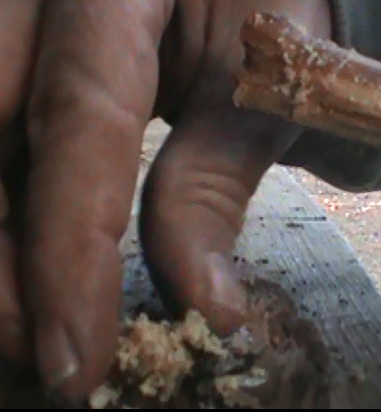
If you are using a ferro rod, you will want to create a quantity of surface area to receive the sparks and ignite the fat wood. Fat wood can be scraped by holding your knife at a 90 degree angle to the wood and repeatedly scraping the surface. This will produce a pile of shavings, which look more like tan snow than wood. You only need a very small amount to ignite, but the art is in being able to transfer the flame to other combustible material before the flame consumes the pine pitch material. You can slice off slivers of the fat lighter and position them to catch fire as well, so the life of the flame will be extended.

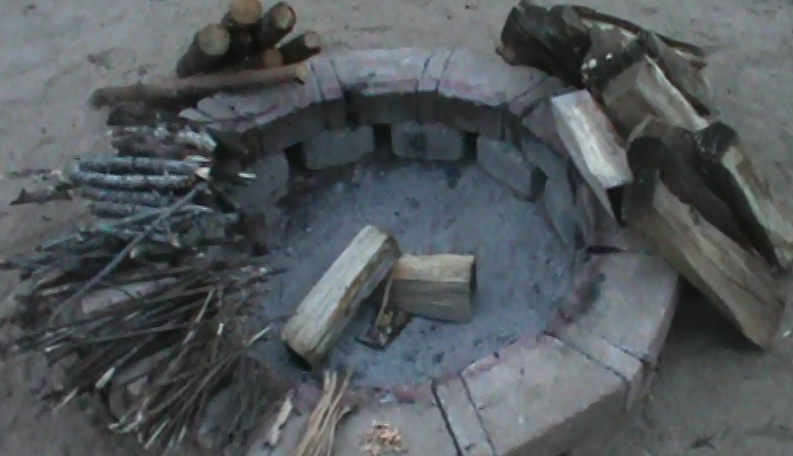
Now you are ready to strike this material to make a flame. The material in the image above will burn for about 45 seconds. At this point, use your preferred method of building a pyre. Some build the pyre and provide room for the flame source to be inserted. My preferred method is to have the material set next to the fire ring and place the kindling over the flame starting with the smallest, to the largest pieces. Definition: Tinder is what you use to receive the spark and create the flame; kindling is larger than tinder and is used to expand the fire. Feel free to comment on this, as I have heard folks state the opposite.

  1. Place the pine pitch Tinder in the fire ring on a piece of bark or some material that will aid in keeping it consolidated in one pile.
  2. Place a branch, piece of firewood, or something flammable next to it that you can lean-to your Tinder over the flame and leave a gap so as to not put out the fire.
  3. Strike the ferro rod and ignite the fat lighter. Add optional fat lighter slivers that will extend the life of the flame.
  4. Place a stack of the smallest tinder over the flame, and let it sit until you see that it has started to catch. (It should catch fast if material is dry. Don’t rush this process as you have time and you don’t want to collapse the pyre and put out the flame.)
  5. Gradually keep adding the larger tinder.
  6. Finish by putting the main firewood all around the pyre.
  7. Build the fire wood ring around the pyre so that you can put a “hat” (a flat piece of fire wood) on the fire. This hat keeps the heat from freely escaping and helps the fire build at the lower levels.
  8. Stand back and don’t mess with it. In about 20 minutes you can add more firewood, but this method is meant to build a coal bed quickly so that your physical fire maintenance is reduced.

Caveats:

  1. As you are lighting the fat wood, protect it from wind as you would most any other kindling. Wind will put it out, but by building a wind break it will stay lit. After the fat lighter is lit, immediately put the first layer of kindling over it to protect it from the wind.
  2. This will produce a lot of smoke, but it will only last a short amount of time. If you are in a situation where you are concerned about someone seeing your smoke or fire, wait until it is almost dark but not quite there yet. This will make the smoke not so obvious and as the initial fire is creating the coal bed, and the light from the fire will not be that noticeable. You can then use the coal bed to keep the fire going but reduce the amount of wood so the light is not that obvious. There is not much you can do about the smell of the fire.

The reasons why I like fat lighter:

  1. Where I am it is readily available in the woods. However it can be ordered on Amazon. Home Depot sometimes carries it as well as Plow & Earth, eBay, QVC, and other online retailers.
  2. It is light; one stick weighs a few ounces.
  3. You don’t need to put it in a container, wrap it, or protect it. The resin is embedded in the wood. Just choose a piece that doesn’t feel sticky, and you can drop it in your bug out bag. It won’t leak or stick to other materials.
  4. No preparation. Find a stick, and keep it for use.
  5. You can literally dunk this in water, even over night or for days, dry it with a towel, scrape and ignite it. Even wet, if you expose it to a flame, it will ignite.
  6. One stick will create many fires. The stick pictured above was used to start over 30 fires and can be used more conservatively to last a long time.


Economics and Investing:

India Fears Run on Banks: Capital Controls and Withdrawal Limits to Continue

o o o

How Interest Rates Affect Time Preference — and Vice Versa

o o o

Surging US Dollar In 2017 Could Be A Catalyst For Gold Bottom

o o o

Key Market In Major Trouble As Banks Now Have Near-All-Time Record Short Positions

o o o

SurvivalBlog and its editors are not paid investment counselors or advisers. Please see our Provisos page for details.


Odds ‘n Sods:

Tober’s Traditions (one of the new SurvivalBlog Writing Contest sponsors) asked us to post the answers to some repeated inquires they’ve had over their products from SurvivalBlog Readers:

o o o

Climate change expert sentenced to 32 months for fraud, says lying was a ‘rush’ – P.M.

o o o

The Lie-Detecting Security Kiosk of the Future – Aside from the obvious issues of AI determining truth, one has to wonder who comes up with these names: Automated Virtual Agent for Truth Assessments in Real Time (AVATAR) – DSV

o o o

More cases! Mumps spreads on college campuses – W.C.

o o o

Video: Hybrid Live/Work Van Conversion by Pro Woodworker


Notes for Wednesday – December 28, 2016

December 28, 1793 is the day that Thomas Paine was arrested in France for treason. The charges against him were never fully detailed, but he was tried in absentia on December 26 and convicted. Best known as the author of Common Sense, he moved to Paris to be part of the French revolution. Initially welcomed, the tide soon turned against him, because he was opposed to the death penalty, and the French revolutionaries were sending hundreds to the guillotine.

o o o

Today, we present another entry for Round 68 of the SurvivalBlog non-fiction writing contest. The nearly $15,000 worth of prizes for this round include:

First Prize:

  1. A $3000 gift certificate towards a Sol-Ark Solar Generator from Veteran owned Portable Solar LLC. The only EMP Hardened Solar Generator System available to the public.
  2. A Gunsite Academy Three Day Course Certificate that is good for any one, two, or three day course (a $1,195 value),
  3. A course certificate from onPoint Tactical for the prize winner’s choice of three-day civilian courses, excluding those restricted for military or government teams. Three day onPoint courses normally cost $795,
  4. DRD Tactical is providing a 5.56 NATO QD Billet upper with a hammer forged, chrome-lined barrel and a hard case to go with your own AR lower. It will allow any standard AR-type rifle to have a quick change barrel, which can be assembled in less than one minute without the use of any tools and a compact carry capability in a hard case or 3-day pack (an $1,100 value),
  5. Gun Mag Warehouse is providing 20 Magpul PMAG 30-rd Magazines (a value of $300) and a Gun Mag Warehouse T-Shirt; (an equivalent prize will be awarded for residents in states with magazine restrictions),
  6. Two cases of Mountain House freeze-dried assorted entrees in #10 cans, courtesy of Ready Made Resources (a $350 value),
  7. The Ark Institute is donating a non-GMO, non-hybrid vegetable seed package (enough for two families of four) plus seed storage materials, a CD-ROM of Geri Guidetti’s book “Build Your Ark! How to Prepare for Self Reliance in Uncertain Times”, and two bottles of Potassium Iodate (a $325 retail value),
  8. A $250 gift certificate good for any product from Sunflower Ammo,
  9. Two cases of Meals, Ready to Eat (MREs), courtesy of CampingSurvival.com (a $180 value).

Second Prize:

  1. A Tactical Self-Contained 2-Series Solar Power Generator system from Always Empowered. This compact starter power system is packaged in a wheeled O.D. green EMP-shielded Pelican hard case (a $2,400 value),
  2. A Glock form factor SIRT laser training pistol and a SIRT AR-15/M4 Laser Training Bolt, courtesy of Next Level Training, which have a combined retail value of $589,
  3. A gift certificate for any two or three-day class from Max Velocity Tactical (a $600 value),
  4. A transferable certificate for a two-day Ultimate Bug Out Course from Florida Firearms Training (a $400 value),
  5. A Trekker IV™ Four-Person Emergency Kit from Emergency Essentials (a $250 value),
  6. A $200 gift certificate good towards any books published by PrepperPress.com,
  7. A pre-selected assortment of military surplus gear from CJL Enterprize (a $300 value),
  8. An infrared sensor/imaging camouflage shelter from Snakebite Tactical in Eureka, Montana (A $350+ value),
  9. RepackBox is providing a $300 gift certificate to their site, and
  10. American Gunsmithing Institute (AGI) is providing a $300 certificate good towards any of their DVD training courses.

Third Prize:

  1. A Model 175 Series Solar Generator provided by Quantum Harvest LLC (a $439 value),
  2. A Royal Berkey water filter, courtesy of Directive 21 (a $275 value),
  3. A custom made Sage Grouse model utility/field knife from custom knife-maker Jon Kelly Designs, of Eureka, Montana,
  4. A large handmade clothes drying rack, a washboard, and a Homesteading for Beginners DVD, all courtesy of The Homestead Store, with a combined value of $206,
  5. Expanded sets of both washable feminine pads and liners, donated by Naturally Cozy (a $185 retail value),
  6. Two Super Survival Pack seed collections, a $150 value, courtesy of Seed for Security, LLC,
  7. Mayflower Trading is donating a $200 gift certificate for homesteading appliances,
  8. Montie Gear is donating a Y-Shot Slingshot and a $125 Montie gear Gift certificate.,
  9. Two 1,000-foot spools of full mil-spec U.S.-made 750 paracord (in-stock colors only) from www.TOUGHGRID.com (a $240 value), and
  10. Fifteen LifeStraws from SafeCastle (a $300 value).
  11. A $250 gift certificate to Tober’s Traditions, makers of all natural (organic if possible) personal care products, such as soap, tooth powder, deodorant, sunscreen, lotion, and more.

Round 68 ends on January 31st, so get busy writing and e-mail us your entry. Remember that there is a 1,500-word minimum, and that articles on practical “how to” skills for survival have an advantage in the judging.


Selecting Footwear and Foot Care Basics, by K.B.

Even the best of weapons, flashlights, knives, bugout bags, et cetera are practically useless if the user has become immobile due to an unnecessary foot injury or footwear related problem. It all starts with selecting the right boots for the job and having a good working knowledge of how to care for one’s feet and then doing it.

From the simple Roman (or Ho Chi Minh) sandals to the newest synthetic lined mountain boot, dependable footwear has been an essential for covering rugged terrain, or even not-so-rugged terrain, by foot. The comfortable, lightweight boots that are popular with the military and police these days are okay for around the house or work, and I have owned several pair, but for the most part they were never really intended for extended hard use.

Sizing

As is the norm with other important equipment items, various trade-offs are usually involved where overall performance issues are concerned, and one size doesn’t necessary fit all. This is also meant in the literal sense, as I have footwear ranging in size between 9 ½ regular to 13 wide, and they all fit about the same way. While the size of my feet is pretty consistent, there is a bit of inconsistency between various manufacturers as far as sizing goes. On occasion, I have even seen boots of the same make, model, and marked size that were not the same size. The only way to know for sure is to try them on. They should have a half-inch to an inch of space between the toes and the front of the boot and should be snug everywhere else but not tight.

The selection and breaking-in of appropriate footwear is something that should be done well in advance of any extended outdoor activity. One should pay particular attention to the climate where the activity is going to take place and plan accordingly. Wearing jungle boots to an Arctic environment is no wiser than wearing 1400 gram Thinsulate insulated boots in the tropics, no matter how cool they may look. Neither scenario ends well.

Breaking In Boots

Some boot manufacturers claim that there is no break-in time at all required for their boots. They are lying. They may have remarkably short and pain-free break-in periods, depending on the quality of construction and the materials the boots are constructed of, but the boot must be allowed the chance to mold itself to the wearer’s feet in order to avoid problems.

There are many ways to break in boots. There’s the old classic– the “soak them and walk them dry” approach– which has been employed for centuries and is one of the quickest methods, should one need a pair of boots to be broken-in in a hurry. While it takes longer, I prefer wearing them with thick socks for short periods until they mold themselves to my feet, and cleaning, moisturizing, or polishing them once in a while, depending on the material. Also keep in mind that the wearer’s feet will spread out a bit if carrying a heavy load.

Often the result of ill-fitting or poorly broken-in boots, blisters can be very painful and debilitating. They can also become infected or worse, if not dealt with promptly, and if ignored blisters can turn someone into a casualty in a relatively short amount of time. The old remedy of popping a blister when it first appears (at the base) with a flame-sterilized needle and then masking it with adhesive moleskin is still effective and relatively pain free.

On one occasion, an old friend of mine decided to save some time by breaking in a new pair of boots all at once during a long hike while carrying sixty pounds plus. He insisted on doing this, in spite of the collective advice of the rest of the squad that it was not a good idea. Naturally, his feet became covered with blisters, and being determined not to drop out of the hike he ignored the problem. At some point, the blisters popped and began to heal around his socks. After his wool socks were removed by the corpsman and he was evacuated, the resulting injuries kept him off his feet for days. The team was deprived of a valuable member, and it was all completely avoidable.

Dry Feet

Climate inappropriate footwear can also quickly turn the wearer into a casualty. Immersion foot (also known as Non-Freezing Cold Injury or Trench-Foot) develops if the feet stay wet for too long. Frostbite (a condition that develops in cold temperature when the blood is drawn back to the heart and the capillaries in the extremities begin to constrict) is capable of rendering someone immobile in a very short period of time. Not keeping one’s feet as dry as possible and the blood circulating is a sure recipe for disaster in colder climates.

While I have owned several pairs of modern synthetic-lined boots, I still prefer plain old leather uppers with RoSearch soles and wool socks for the colder climates or hard use in general. Wool still provides insulation when wet and leather will eventually dry, although usually slower than a synthetic. As the temperature changes, more socks (even different materials such as cotton) may be added or subtracted, but it is best not do this to the point where circulation is impeded. Since socks usually weigh less than boots, carrying a variety of socks would seem to be the practical way to go. Although I’ve never actually used them, there are waterproof socks.

Synethetic Boot Liner Problems

Modern, synthetic-lined boots can have their own unique problems. The Vibram outsole of an expensive pair that I particularly liked began to separate from the EVA midsole at about the halfway point of a long walk one day. A little later on the same walk, the midsole of the same boot warped, and the boot became useless. Fortunately, I wasn’t carrying very much at the time and the terrain was fairly hospitable, so I was able to make it home barefoot without much difficulty. Another problem that has plagued me with modern synthetic-lined boots is the Chinese Finger Puzzle Effect. This occurs when the heel, shank, or both areas of a boot lining decide to separate from the inside of the boot, thus causing the lining (still stitched to the collar and tongue of the boot, of course) to grasp the wearer’s foot in the manner of a Chinese Finger Puzzle. In most instances, the boot will neither come off nor go back on without a great struggle. It’s not something to look forward to at the end of a long hike.

I have since begun to experiment with a method by which to remedy this problem, as it has occurred in a couple of pair of my more expensive boots. With the ever handy Swiss Army Knife, I punched a small incision near the heel of the loose synthetic liner and inserted the precision tip of a tube of Krazy Glue into the opening. I then squeezed the glue and worked it around the edges of the hole (careful to avoid getting any too close to the hole where it could seep out) with a circular motion, I carefully patted the liner back into place, put a plastic bag full of sand in the liner to secure it, and waited a day or so until the glue had a chance to set. While this is probably not necessarily the best for waterproof membranes, it has done okay so far with a quick-drying one. It is still too early to tell whether or not this is a permanent fix.

Athlete’s Foot

Without prompt and proper attention, even athlete’s foot can get seriously out of hand in warmer climates, to the point where it can work its way down into muscle tissue, as happened to me once during an extended period in the field. It had been a long patrol, and I did not get the chance to change socks or dry my feet for five or six days. While I’m still not sure why this didn’t happen to anyone else who was on the patrol, I wound up getting evacuated and placed on oral anti-fungal for two weeks. (I was returned to the company a day or two later and relegated to answering the phone while wearing shower shoes.) After that, I made it a point to change into dry socks and to powder my feet as often as possible. I also began to carry shower shoes to allow my feet to dry in the sun when time and weather would allow.

More Boot Break-in Ideas

Let’s say you’ve found the perfect pair of expensive, high-quality boots, and you’ve meticulously broken them in, loved them, nurtured them, and put them away for a rainy day. Four or five months later, you retrieve the boots and attempt to put them on, only to discover that the boots have shrunk, you don’t have a boot stretcher, the nearest cobbler is a hundred miles away, and Western Civilization has slipped into total chaos for whatever reason.

If you’re willing to risk the blisters and can get the boots on at all, soak them thoroughly (while wearing them) and walk them until they are absolutely dry. Then they must be moisturized somehow. (Even petroleum jelly will work in a pinch.) If taken off before they dry, the problem can actually get worse. If it happens to be freezing outside (not the best time to walk boots dry) or you happen to have access to a working freezer that is big enough, plastic bags of water can be firmly tucked inside the boots, and they can be allowed to freeze. As the water in the bags freezes, it will expand and stretch the boots. There is, of course, an easier solution. Simply wear the boots around the house a few times a month.

Boot Material Terms

If for some reason I’m not wearing boots, I usually have a well broken-in/climate appropriate pair nearby. Here are some helpful boot terms, to aid you in purchasing yours:

Dry-Lex is a quick drying synthetic lining. However, all Dry-Lex linings are not created equal. I have one pair of boots that begins to dry as soon as they come out of the water to the point where one can actually see a waterline moving up the boot. I have another pair with the same kind of lining, and they don’t really seem to work at all.

EVA (or ethyl vinyl acetate) is a cushioning material that is usually found sandwiched between the outsole and the insole of the boot.

Gore-Tex is a waterproof, synthetic fabric developed in the late 1960s. It basically works as a result of micro pores that are large enough to allow perspiration or moisture to escape in its vaporous form, while the pores are still small enough to keep water droplets out. As a boot-lining material it works quite well in temperate climates. However, the performance is limited in areas with high humidity (such as the Tropics or the Subtropics). When water comes in over the top, they take forever to dry, compared to the simple and relatively inexpensive Vietnam pattern jungle boots.

RoSearch soles came about as the result of a direct molded vulcanization process, which actually molds hard rubberized soles to the welted leather of the boot’s upper. Some examples would be the old black G.I issue boots (chevron ripples or the later “jeep tread” speed-lace model), and the Panama soles of the classic Vietnam jungle boots or tan desert boots from the First Gulf War.

Thinsulate is a synthetic lining material often combined with Gore-Tex in boot liners to keep feet warm and dry in cold, damp climates. They generally come in various ratings ranging from 100 grams (for kinda cold) to 2000+ grams (for very, very cold). If using such a liner, it should be removable, as they can warm up very quickly as the temperature rises.

Vibram is the brand name of a popular vulcanized rubber outsole that is usually cemented onto a stitched-down EVA midsole. One of the great advantages of Vibram is that it can usually be repaired or resoled by a cobbler without great difficulty.


Letter: Inexpensive Perimeter Security for Your House in the Suburbs

Mr. Latimer,

I reside in southern California in a semi-rural area; however, I do live in a housing tract. When SHTF, my concern would be the security surrounding the perimeter of my property. I do live on a corner property, thus, two sides of my property are of concern. I have come up with a plan for security notification when anyone enters my property or even gets close.

I found an inexpensive item at Harbor Freight that will accomplish this notification. The item is an infrared triggered Wireless Security Alert System (Item Number: 93068). The battery operated unit has a range of 400’ from sensor to receiver. The retail price is $13.99; however, there is a savings coupon on Harbor Freight’s site good until 1-2-17 for a unit price of $9.99.

The units are customer rated at 3.8 out of 5.0 with a total of 773 reviews. As long as there are no bushes or tree limbs in the immediate area in front of the sensor, there should not be problem.

I have purchased three units to be installed once it is apparent that there be will a need to secure the perimeter of the property. Installation should be easy and fast, as everything is battery operated. I also have purchased extra batteries for each unit. Check the channels used by each unit that are stated on the box. It is important to purchase units with separate channels to avoid a conflict between multiple units.

I hope this suggestion can help others. – KL


Economics and Investing:

Monte dei Paschi Rescue Cost Jumps as Deposits Fall

o o o

Toshiba Says Nuclear Writedown May Reach Billions of Dollars

o o o

Bankruptcy Becomes an Option for Some Borrowers Burdened by Student Loans

o o o

Financial Times, Barron’s Tout Death of Gold. “When the pall bearers and grave diggers start dancing on gold’s grave, it’s usually a good time to buy.”

o o o

SurvivalBlog and its editors are not paid investment counselors or advisers. Please see our Provisos page for details.


JWR’s Recommendations of the Week:

Books:

Plunder and Deceit: Big Government’s Exploitation of Young People and the Future, by Mark Levin

The ARRL Ham Radio License Manual

Movies:

I Am David (“Chronicles the struggles of a 12-year-old boy who manages to flee a Communist concentration camp.”)

The Truman Show

Television:

How Should We Then Live? (This is Dr. Francis Schaeffer’s spectacular ten-part series on the rise and decline of Western culture from a Christian perspective.)

24: Redemption (Starring Kiefer Sutherland.)

Music:

Louis Armstrong: The Definitive Collection

Lynyrd Skynyrd – All Time Greatest Hits

Instructional Videos:

FLIR Factory Trip and Thermal Discussion

Franklin Armory BFSiii (Gen3 BFS) Trigger Install & Function Test

Podcasts:

Radio Free Redoubt

The Risky Biscuit Hayseed Hoot

Gear:

Seagate Backup Plus Slim 2 Terabyte Portable External Hard Drive – USB 3.0

Panasonic CF-30 Rugged Toughbook (Windows 7) Touchscreen With 4GB RAM and 1TB Hard Drive. (Refurbished Toughbooks are quite reasonably priced.)


Hugh’s Quote of the Day:

“The common denominator in all government activity is the use of force: Government either forces you to do things, forces you not to do things, or forces you to pay for things.” – Doug Newman


Notes for Tuesday – December 27, 2016

On this day in 1979, in an attempt to stabilize the turbulent political situation in Afghanistan, the Soviet Union sent 75,000 troops to enforce the installation of Babrak Karmal as the new leader of the nation. The new government and the imposing Soviet presence, however, had little success in putting down anti-government rebels. Thus began nearly 10 years of an agonizing, destructive, and ultimately fruitless Soviet military intervention in Afghanistan. Death by a thousand cuts.

o o o

Don’t forget, Ready Made Resources has a very limited supply of Knight Vision AN/PVS-30 Night Vision Weapon Site available. These have seen action in the Gulf but are “like new” or have been refurbished. Normally over $11,000, you can get them for under $5000. There are only a few left, so move fast. A moderately well-trained civilian shooter recently did some shooting with one of these with a .308 at just over 1,000 yards, and got consistent dings on a 10”x14” steel plate, in just dim moonlight! – JWR

o o o

Today, we present another entry for Round 68 of the SurvivalBlog non-fiction writing contest. The nearly $15,000 worth of prizes for this round include:

First Prize:

  1. A $3000 gift certificate towards a Sol-Ark Solar Generator from Veteran owned Portable Solar LLC. The only EMP Hardened Solar Generator System available to the public.
  2. A Gunsite Academy Three Day Course Certificate that is good for any one, two, or three day course (a $1,195 value),
  3. A course certificate from onPoint Tactical for the prize winner’s choice of three-day civilian courses, excluding those restricted for military or government teams. Three day onPoint courses normally cost $795,
  4. DRD Tactical is providing a 5.56 NATO QD Billet upper with a hammer forged, chrome-lined barrel and a hard case to go with your own AR lower. It will allow any standard AR-type rifle to have a quick change barrel, which can be assembled in less than one minute without the use of any tools and a compact carry capability in a hard case or 3-day pack (an $1,100 value),
  5. Gun Mag Warehouse is providing 20 Magpul PMAG 30-rd Magazines (a value of $300) and a Gun Mag Warehouse T-Shirt; (an equivalent prize will be awarded for residents in states with magazine restrictions),
  6. Two cases of Mountain House freeze-dried assorted entrees in #10 cans, courtesy of Ready Made Resources (a $350 value),
  7. The Ark Institute is donating a non-GMO, non-hybrid vegetable seed package (enough for two families of four) plus seed storage materials, a CD-ROM of Geri Guidetti’s book “Build Your Ark! How to Prepare for Self Reliance in Uncertain Times”, and two bottles of Potassium Iodate (a $325 retail value),
  8. A $250 gift certificate good for any product from Sunflower Ammo,
  9. Two cases of Meals, Ready to Eat (MREs), courtesy of CampingSurvival.com (a $180 value).

Second Prize:

  1. A Tactical Self-Contained 2-Series Solar Power Generator system from Always Empowered. This compact starter power system is packaged in a wheeled O.D. green EMP-shielded Pelican hard case (a $2,400 value),
  2. A Glock form factor SIRT laser training pistol and a SIRT AR-15/M4 Laser Training Bolt, courtesy of Next Level Training, which have a combined retail value of $589,
  3. A gift certificate for any two or three-day class from Max Velocity Tactical (a $600 value),
  4. A transferable certificate for a two-day Ultimate Bug Out Course from Florida Firearms Training (a $400 value),
  5. A Trekker IV™ Four-Person Emergency Kit from Emergency Essentials (a $250 value),
  6. A $200 gift certificate good towards any books published by PrepperPress.com,
  7. A pre-selected assortment of military surplus gear from CJL Enterprize (a $300 value),
  8. An infrared sensor/imaging camouflage shelter from Snakebite Tactical in Eureka, Montana (A $350+ value),
  9. RepackBox is providing a $300 gift certificate to their site, and
  10. American Gunsmithing Institute (AGI) is providing a $300 certificate good towards any of their DVD training courses.

Third Prize:

  1. A Model 175 Series Solar Generator provided by Quantum Harvest LLC (a $439 value),
  2. A Royal Berkey water filter, courtesy of Directive 21 (a $275 value),
  3. A custom made Sage Grouse model utility/field knife from custom knife-maker Jon Kelly Designs, of Eureka, Montana,
  4. A large handmade clothes drying rack, a washboard, and a Homesteading for Beginners DVD, all courtesy of The Homestead Store, with a combined value of $206,
  5. Expanded sets of both washable feminine pads and liners, donated by Naturally Cozy (a $185 retail value),
  6. Two Super Survival Pack seed collections, a $150 value, courtesy of Seed for Security, LLC,
  7. Mayflower Trading is donating a $200 gift certificate for homesteading appliances,
  8. Montie Gear is donating a Y-Shot Slingshot and a $125 Montie gear Gift certificate.,
  9. Two 1,000-foot spools of full mil-spec U.S.-made 750 paracord (in-stock colors only) from www.TOUGHGRID.com (a $240 value), and
  10. Fifteen LifeStraws from SafeCastle (a $300 value).
  11. A $250 gift certificate to Tober’s Traditions, makers of all natural (organic if possible) personal care products, such as soap, tooth powder, deodorant, sunscreen, lotion, and more.

Round 68 ends on January 31st, so get busy writing and e-mail us your entry. Remember that there is a 1,500-word minimum, and that articles on practical “how to” skills for survival have an advantage in the judging.


The Get-Home Cache, by The Feral Farmer

Bugout bags are a popular topic, and the content lists are long and varied, sometimes reading like a LRRP combat loadout. However, they have a couple of obvious problems, including that you have to carry it and keep it handy.

It takes a good degree of conditioning to carry a load any distance and a great degree of determination to do so while injured or frightened. Additionally, (unless your kit looks like a baby carrier and diaper bag), your chance of hitching a ride plummets the larger your bag appears to be. Any situation that requires a bugout bag automatically makes the holder a target to both criminals and authorities, and it would be a shame to surrender all those neat things at a check point, after carrying them so far.

Keeping a bugout bag within arms reach at all times is, for all intent and purposes, an impossibility. Employers seem to delight in decorating each employee with their own cattle tag and neck strap, but they frown on them wearing tactical bags on the job; yet, if it’s not on you you don’t control it. Having it in your trunk or locker is out of the question, if you just got a “Get Out Now” or “Shelter In Place” order, which is SOP these days.

Caches

This brings us to the use of caches. One can make best time over distance unencumbered, and running, crawling, or climbing is much easier. The simplest cache is buried. The largest, easily-buried cache is an igloo-type, plastic ice chest. I have found that buried with six inches of soil over the top, it can be driven over without damage. While PVC pipes with screw tops are popular, they can be difficult to re-locate, and they take a long time to place, comparatively speaking. A semi-buried cache might be an extra field tile drain next to a real one or two along side a field’s ditch. A tree stump placed among a few others is easily overlooked. One of the roots is used as leverage to raise and access the cache. Another would be the uphill side of a road culvert. They are sized twice the max storm flow, and a box epoxied or magnetized to the top of the inside is unlikely to be discovered, as road crews generally just look to see daylight out the other end, and humans rarely look up. Avoid the tubes that are silted; they are generally used as animal dens and critter crossings, which is why they are a favorite location to place animal traps.

Above ground caches are smaller, but you don’t have to disturb the ground to recover one. Let’s look at road signs. Nearly every sign in America is mounted on a U-shaped metal post, and there is a space between the sign and post. There’s enough room to hold a water filter and milk bottle bags to store water in, or food, a rain poncho, emergency bivy/space blanket, or what have you. Just avoid signs that are stolen, knocked down, or vandalized regularly, and there you go. Pull out the bottom bolt you loosened when you placed your cache, and no one is the wiser. Telephone pedestals are so common that no one notices them. Make a few replicas out of rain gutter or square PVC fence posts, paint them gray, add some stick-on numbers, and plant along a fence row next to a post. I’ve had three in the ground for over five years without discovery. Rural Water District vents and shutoff valves are usually found under a large white PVC tube with a flat black cap poking a foot or so out of the ground. One or two in line with but ½ mile or so from the actual water line won’t attract attention, when placed in a fence line where a mower won’t hit it. Closer to home, an extra PVC inspection tube for a septic tank infiltrator field won’t get any curious visitors, and it’s a better place to keep a spare key than that plastic rock or under the flower pot by your back door. Natural gas line markers are sealed, round topped, hollow fiberglass tubes that are buried only a foot in the ground, usually around five feet on both sides of the line in this part of the country, located on field boundaries and creek crossings. A friend came across a damaged buried electric service box in salvage. With a bit of repair and paint, this weather tight, cast aluminum box now sits along an alley in a housing development, and I noticed someone planted flowers around it. If you get one, change the lock; they all seem to be keyed alike. Have an easily climbed tree on your route? Cut a hatch in a basketball and make a fake squirrel’s nest or birdhouse with a painted on door. I’m co-owner of a little boat dock that now has a section of the dock that lifts up, revealing a plastic float, the top of which has been modified to open up like a chest. You can’t believe all the stuff that can be crammed in it. Railroad employees are notorious for tossing their trash and removed service equipment in the ditches along the track, rather than haul it back to the yard. Near me, a cement pedestal near a grain elevator that once held a signal control box, now has the cast iron box remounted (it was in the ditch), and the new key for the lock is hidden inside the weather cap.

Distance and Content

I hope I’ve given you a few possibilities and ideas that will safely see you home. Now, we shall cover distance and content and the reasoning behind my suggestions.

Each cache should be less than half a day’s walk apart, along the route to your home. Less is better. First, you have to determine if it’s safe to approach the cache. Second, if it is empty or circumstances make it too hazardous to open, you still have the time and the option to head for the next one safely.

Your first cache should be no more than one hour’s walk away. It should be long on water and nondescript warm clothing. An N95 mask would not be out of place if you are at risk to an NBC hazard, and they really mess with the facial recognition wonks. A vacuum sealer reduces clothing to a minimum package size and protects them from the elements. Plastic water bottles completely frozen will swell but rarely leak, and they’ll thaw out inside your clothing after a few hours of hiking, or you cut the plastic off the frozen ice chunk and melt it in a pan or chips in your mouth. Do include gloves and ear warmers. Frozen ears are no fun, and gloves, not only for protection and warmth, reduce physical identifiers, such as fingerprints and DNA.

Your next cache should contain spare communications, food, and cook kit as well as a tracfone purchased for cash in another zip code and a match box-sized backup charger for it, as they cost little. Charge the battery and remove it, and it will stay charged for almost a year. Don’t install the minutes card number or activate the phone until needed. A call to your home’s answering machine with a “Honey, I picked up a pizza and a movie and will be home by six”, or whatever your prearranged code for exfiltration by foot happens to be, isn’t going to alarm the local doorkickers monitoring their Stingray, and it informs anyone at your home of your status and location. A two meter Ham HT can be bought at throw-away prices, and if anything will be working in an emergency you can count on Ham radio. Carry it on a strap across your chest, along with a fluorescent vest, hard hat, and maybe a tool belt, and you disappear by standing out. Few would question the presence of a service worker on foot in a utility easement, and you are forgotten within minutes. Joe Surplus, who on the other hand is camo’ed, backpacked, and packing heat, is going to be reported every time he’s spotted or barked at. Don’t be that guy. Always assume you are being observed.

Your overnight cache contains your bedding, shelter, and toiletries. Handy wipes are a waste of space. Instead, fill a little spray bottle with water. A couple of ounces of water are enough for a pretty good bath, and three more will wash and rinse your hair. Funny thing about human nature is that no matter what harrowing experience they survived, the first thing a victim worries about after the danger is over is a self-conscious concern about their appearance. You are a fleeing refuge, but it is vital for your mental fortitude not to look like one. Like many hard core campers, I favor liquid dish washing soap for cleaning anything. A couple of drops is all it takes. Include a small nail brush. Nothing beats down for weight and warmth. Even in the dead of summer, a 20+ drop in nighttime temperature will make you miserable without shelter from cold, dew, or precipitation. I find a sleeping pad, down Stealth quilt from Jacks ‘r Better, and an inexpensive bivy or nylon tarp to be about the smallest, lightest, and best ultralight sleep system going. The quilt has the added benefit of having a velcro sealed head hole in the center, so that it can be worn as a down poncho. It all packs down to about a two-liter bottle in size. You can easily cook in just one pan, but a second, for beverages and washing, is quite a blessing. A hot drink in the morning predates recorded human history, and for that you need tea. Coffee is bulky, bitterly unpleasant if not carefully prepared, and nasty if instant. Stick to the drink of real outdoorsmen and the Tea Party, and leave the coffee addiction to the poofs in the city where it belongs. Crackers will keep fresh for decades, if vacuum packed in a glass jar.

I recommend caching twice the meals you need. First, food tastes better outdoors, and you are burning lots of calories. Second, you may have to skip a cache on your journey. Third, you may not be traveling alone. Last, you may need your cache to return, to recover tools, belongings, or supplies at a later date.

Finally, the old saying about keeping a secret remains true. Disclosing the location of your caches to anyone may mean you are the one that ends up dead. Someone that has a need to know, should never be told about half of them. You should never place one with your smart phone in your pocket, geocache mark it on a map or device, or place it while driving your on-star or GPS-enabled personal or company vehicle. Leave nothing that identifies you, including prints, hair, bodily fluids, or items you have worn or used. Everything to fill a cache is available for a few dollars at any big box store, and with the popularity of the Engel and Yeti coolers, an old igloo chest is a buck or two at flea markets and garage sales.

Now, get out there, and cache like your life depends on it. It just might.