(Continued from Part 1. This concludes the article.)
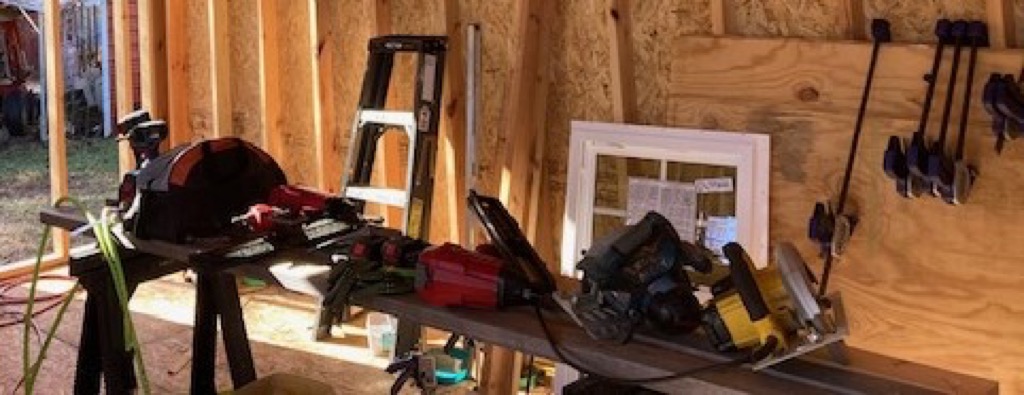 In the upper-right corner of the essential tools photo there is a stack of quick grip clamps. In particular, these are Irwin brand heavy-duty models in maximum working lengths between six and twenty-four inches. A couple of these models have head release slides that allow the user to quickly convert the tool from a clamp into a spreader. When it comes to pulling tightly cut framing into position, aligning materials until they can be fastened or holding the end of a long timber while working alone, these clamps can do it. I have jokingly told clients that these clamps in particular are more dependable than most employees. Once you have a set of these clamps, you will wonder how you accomplished anything without them. Of less use but still valuable are spring clamps. These look similar to a giant clothespin and have the same action. Although any quality F-style threaded clamp can achieve greater clamping pressure than the quick grip or spring-style clamps, only the latter styles can be routinely operated one-handed. Thus, when working alone this gives them the advantage in my carpentry tool kit.
Over the years, I have tried every common style of saw horse. Metal horses are strong but heavy, wooden horses are customizable but bulky and the quick-build “kit” saw horses that consist of wooden legs attached to one of several different metal connector pieces are in my experience the worst of both worlds. When hinged plastic horses first became available, I tried out a pair of them but found them to be shaky and weak.Continue reading“A Prepper’s Carpentry Toolkit – Part 2, by A.F.”