Notes for Tuesday – February 28, 2017

February 28th is the birthday of famed Swiss investor and economic pundit Marc Faber (born 1946).

o o o

Today, we present another entry for Round 69 of the SurvivalBlog non-fiction writing contest. The nearly $15,000 worth of prizes for this round include:

First Prize:

  1. A $3000 gift certificate towards a Sol-Ark Solar Generator from Veteran owned Portable Solar LLC. The only EMP Hardened Solar Generator System available to the public.
  2. A Gunsite Academy Three Day Course Certificate that is good for any one, two, or three day course (a $1,195 value),
  3. A course certificate from onPoint Tactical for the prize winner’s choice of three-day civilian courses, excluding those restricted for military or government teams. Three day onPoint courses normally cost $795,
  4. DRD Tactical is providing a 5.56 NATO QD Billet upper with a hammer forged, chrome-lined barrel and a hard case to go with your own AR lower. It will allow any standard AR-type rifle to have a quick change barrel, which can be assembled in less than one minute without the use of any tools and a compact carry capability in a hard case or 3-day pack (an $1,100 value),
  5. An infrared sensor/imaging camouflage shelter from Snakebite Tactical in Eureka, Montana (A $350+ value),
  6. Gun Mag Warehouse is providing 20 Magpul PMAG 30-rd Magazines (a value of $300) and a Gun Mag Warehouse T-Shirt; (an equivalent prize will be awarded for residents in states with magazine restrictions),
  7. Two cases of Mountain House freeze-dried assorted entrees in #10 cans, courtesy of Ready Made Resources (a $350 value),
  8. A $250 gift certificate good for any product from Sunflower Ammo,
  9. Two cases of Meals, Ready to Eat (MREs), courtesy of CampingSurvival.com (a $180 value).

Second Prize:

  1. A Tactical Self-Contained 2-Series Solar Power Generator system from Always Empowered. This compact starter power system is packaged in a wheeled O.D. green EMP-shielded Pelican hard case (a $2,400 value),
  2. A Glock form factor SIRT laser training pistol and a SIRT AR-15/M4 Laser Training Bolt, courtesy of Next Level Training, which have a combined retail value of $589,
  3. A gift certificate for any two or three-day class from Max Velocity Tactical (a $600 value),
  4. A transferable certificate for a two-day Ultimate Bug Out Course from Florida Firearms Training (a $400 value),
  5. A Trekker IV™ Four-Person Emergency Kit from Emergency Essentials (a $250 value),
  6. A $200 gift certificate good towards any books published by PrepperPress.com,
  7. A pre-selected assortment of military surplus gear from CJL Enterprize (a $300 value),
  8. A selection of canned meats containing a 10 pack of 28oz cans of Premium Beef and a 5 pack of 28oz cans of Premium Pork from Wertz’s Farm Market (a $300 value),
  9. RepackBox is providing a $300 gift certificate to their site, and
  10. American Gunsmithing Institute (AGI) is providing a $300 certificate good towards any of their DVD training courses.

Third Prize:

  1. A Model 175 Series Solar Generator provided by Quantum Harvest LLC (a $439 value),
  2. A Royal Berkey water filter, courtesy of Directive 21 (a $275 value),
  3. A custom made Sage Grouse model utility/field knife from custom knife-maker Jon Kelly Designs, of Eureka, Montana,
  4. A large handmade clothes drying rack, a washboard, and a Homesteading for Beginners DVD, all courtesy of The Homestead Store, with a combined value of $206,
  5. Expanded sets of both washable feminine pads and liners, donated by Naturally Cozy (a $185 retail value),
  6. Two Super Survival Pack seed collections, a $150 value, courtesy of Seed for Security, LLC,
  7. Mayflower Trading is donating a $200 gift certificate for homesteading appliances,
  8. Montie Gear is donating a Y-Shot Slingshot and a $125 Montie gear Gift certificate.,
  9. Two 1,000-foot spools of full mil-spec U.S.-made 750 paracord (in-stock colors only) from www.TOUGHGRID.com (a $240 value), and
  10. Fifteen LifeStraws from SafeCastle (a $300 value).
  11. A $250 gift certificate to Tober’s Traditions, makers of all natural (organic if possible) personal care products, such as soap, tooth powder, deodorant, sunscreen, lotion, and more.

Round 69 ends on March 31st, so get busy writing and e-mail us your entry. Remember that there is a 1,500-word minimum, and that articles on practical “how to” skills for survival have an advantage in the judging.


Preparing Out of Necessity, by B.H.

Many articles regarding prepping and “how-to” leave me to wonder how people survive in this world. I’m not judging, as only GOD can; rather, I am perplexed at how they can afford it. You see, many of the skills being taught are just what I had to figure out in order to get by. I learned how to fix machinery myself because if I did not these things would no longer be of use to me. I learned how to buy second hand because I simply cannot afford new. I learned to garden in order in eat; the why in this case is evident. Gardening know-how is best left to those more skilled in that area. Repairing/purchasing mechanical items is what I would like to discuss. There are many things that I have learned in my life that were taught to me. However, today I will explain what I had to learn on my own and I believe you can learn as well. I learned by trying, failing, and reading. If I can help you do some of the same, maybe you can save money. At some point you may not be able to pay or find someone to repair what needs repairing. Wouldn’t it be best to have a basic knowledge of mechanical repairs? Whether you find yourself without the means to pay, in the middle of a blizzard, or at the end of the world as we know it, maybe you could save your life.

I started learning about machines like any young boy may; the chain came off my bicycle. Being one child out of eight, you would think there would be someone to show me how to repair the chain. Yet, with sibling rivalry, if I couldn’t put it back on then I was simply out of the fun. The real entry into the world of mechanics came with my first vehicle. The quality of said vehicle, when I look back on it, is more than questionable. In other words, it was very humble. On my way to work one day, little to my knowledge at the time, the water pump started leaking followed by losing all coolant in the engine. At the time I either didn’t know enough to shut it off, or simply didn’t look at the gauges to know it was overheating. As luck would have it, I still managed to make it to work; however, the engine developed “rod knock”. This is where the bearings between the connecting rod to the crankshaft fail and make a distinctive knock. This is never a good thing. Depending on many factors, an engine may be salvageable. In my case it was not. Now up to this point, like I expressed, I had tinkered with mechanical stuff but no more than most young boys. This mechanical failure was something else. My means to freedom just died.

The vehicle got towed home; I called a junk yard and found another engine. My dad and I went and picked it up. When we got home I remember him simply telling me, “Let me know if you can’t get a bolt loose.” This began my mechanic career. I taped every connector I unplugged, and I bagged and labeled every bolt that came out. I made an oily mess, but I managed to pull the old engine out with boards screwed into two trees and a come-along. I got the new engine in and hooked everything back up the best I could. When the moment of truth came, it wouldn’t run. I checked everything and tried over and over. I finally figured it out. I had two spark plug wires crossed. After switching them, it was alive again and my freedom was back. As time went on, I ended up replacing many, many parts on that truck. I didn’t know it then, but it was quite an education.

I honestly believe most people can repair more mechanical things than they give themselves credit for. Be it time, money, or just being afraid to mess something up, they don’t even try. I’m not saying diagnosing a failed transmission in your woodshed is something you should head right out and try. However, many times many repairs can be done in the driveway. The money you can save is unbelievable. I know in my case I cannot afford to take my vehicles in. I’ve messed up, luckily not on anything huge, but there is not much in the way of services that I pay people to do for me, be it house, car, lawnmower, or clothes dryer. So, here are a few things I’ve learned along the way.

First and foremost, build a toolset. No, you don’t have to take out a mortgage and call up the Snap-On man. A mechanics set from Sears will get you started. Craftsman tools have a lifetime warranty on anything you don’t plug in or attach to a hose. They used to be made in USA, but now I believe they import a lot. Check garage sales, craigslist, resale stores. The warranty still applies with no receipt required. Get basic sockets, pliers, screwdrivers. If you have an import vehicle, you’ll need metric, and even most everything on domestic stuff is now metric, so I recommend building that set first. When you buy sets, there are always jumps in the set like say 7-15mm, 17mm, and 18mm. This is because those fasteners are uncommon. In my case I’ve needed those uncommon sockets many times, so I fill in the blanks. Sometimes the SAE socket fits the bill, as in the case of 18mm-3/4”socket, which is one in the same. Having a hammer pry bar and the like should go without saying, for anyone who frequents this sight, but try and get a dead blow hammer. Removing parts from equipment sometimes requires persuasion, and if you use your claw carpenters hammer you’re going to break something. You will undoubtedly need more tools. Having the right tool for the job is tough. In my case the savings usually more than justifies purchasing the correct tools, after which your tool set grows and you become better equipped to perform the next job. There is a fine line though. I recently spent $400 on VW specific tools to basically do one repair. I may use one tool when the timing belt needs replacing again, maybe. Doing this repair myself saved me $2000 up front, not to mention if the repair wasn’t made it could blow the $6,000-8,000 engine. I actually tried to get a shop that would already have the tools to do it; however, in my case they were busy, and the job had to be done within a window of opportunity.

Repairs and or maintenance items you can do at home are many. Simple things, such as oil changes, can be done at home and you can save a lot of money. But then you have to get rid of the oil, and pouring it out back behind the neighbor’s shed is not okay. You can take it back to the parts store, and in most cases they will take it. My oil changes cost $94 at the dealership, due to the oil type and only the dealer selling it. I do it at home for $42, ordering the oil online.

More money can be saved by doing your own brake jobs. Usually brake jobs can be done with basic toolsets. With shops charging $400 plus to do one end of your car is ridiculous. That’s not even using OE quality parts. You know you need brakes when you can’t stop, there’s grinding when you brake, and/or you hear squealing when you brake and it goes away after you let off the pedal, et cetera. I recommend looking online for a procedure on replacement for your specific vehicle. There are enthusiast sites for just about every type of vehicle. Somebody has instructions on exactly how to do it. The Internet can be great. You can also get repair manuals that explain it for your specific car/truck. Once you’ve replaced the brakes, you will be able to do it on any number of vehicles with minimal guidance.

Here’s a basic rundown. The round thing inside your tire is your wheel. Inside that round thing is another round thing; that’s the rotor or drum. The thing that’s on one side of the rotor is the brake caliper; it squeezes the rotor with the pads. If nothing failed, they’re just worn out and it’s the pads and rotors. I always replace both. Some people have their rotors machined back to shiny, smooth and flat; I don’t. Brakes convert mechanical energy to heat energy. They do this by the pads squeezing on the rotors, causing friction to make you stop. This friction creates heat. The rotors dissipate that heat. They warp and wear. I’m of the belief that more mass absorbs more heat and stays flatter longer. You take that mass away and you take life away from the brakes. Brakes make you stop, and sometimes you have to stop fast. Brakes aren’t something I like to skimp on. Break free the lug nuts on the wheel that needs working on. Don’t unscrew them all of the way; just break them free. Now safely jack up your vehicle; check your owner’s manual on where to place the jack. Make sure once the vehicle is jacked up that you put blocks of wood or a jack stand to support it in case the jack slips. Now, remove the wheel. There are two bolts that hold the caliper on. After that you can slip the caliper off the rotor; you may have to pry it off. Now that the caliper is off, the pads and caliper bracket are visible. Two bolts hold this bracket on. Once you remove these, the rotor can be removed. Sometimes there is a little screw in the rotor, and it may need a tap with that dead blow hammer you bought.

Installation goes backwards. Install the new rotor. Make sure you cleaned the rust protection oil off the rotor first. After cleaning the caliper bracket, it can be installed. The new pads will go on the way you took the old ones off. Sometimes the new pads come with a metal stamping; these give the pads a nice smooth surface in which to slide. To get the caliper back over the new pads/rotors assembly, you will have to compress the piston in it. Put the old pad in it, and use a c-clamp to squeeze the piston back into the cup, after which it should slip right over. Replace and tighten all bolts. Install wheel, lower car, and torque lug nuts. Always tighten all bolts to manufacturer specs!

This is a much generalized pad/rotor replacement scenario. I highly recommend finding, printing, and keeping a copy of the procedure on your specific vehicle, because there are many different steps on different vehicles.

Further maintenance that can be done at home includes:

  • air filter replacement,
  • belt replacement,
  • cabin air filter,
  • battery replacement.

Find all procedures or buy a manual to keep on hand. Diagnosing failures can be easier than you may think as well. Think critical. If your car does nothing when you turn the key, are the overhead lights still on? If not, head straight to the battery. If the lights are all normal and windows all work at full speed, we are now usually headed to the starter or ignition switch/relay. If your engine is making a squealing noise, it could be the belt; you can check the associated bearings by carefully placing an automotive stethoscope near every pulley the belt runs on. If your vehicle clunks over bumps, park it in the grass and get under it (with vehicle off). Push it up and down looking at all the steering and suspension points. Feel the associated steering parts with someone turning the wheel back and forth. Damaged shocks, sway bar end links, and tie rods can all make clunking noises. You will usually feel or see the clunk when you bounce the vehicle. If you do need any steering components replaced, you will need an alignment afterwards to ensure correct handling/steering.

I recommend buying/finding repair manuals for your vehicle now; even older automotive repair textbooks can give lots of insight. If you start slow, with an easy repair maybe on a long weekend or such you will become more comfortable, before you know it those high labor-cheap part repairs and maintenance items, like a timing belt job, will be under your belt. Not only will this save you loads of money, but, if the time comes where you can’t pay somebody to repair your vehicle, what will you do? Keeping up on maintenance is expensive, but your vehicle will last longer with proper care.

Another area we can, and I do, save money and prepare is buying quality older bargains, not only vehicles but home equipment. I’m talking about lawnmowers, chipper/shredders, chain saws, et cetera. I am a firm believer in older power equipment. I cannot tell you how many times I have bought a snow blower or chipper that doesn’t run, only to clean the carb and never have another problem. Most owners of these things use it and park it. The better ones change the oil every now and again and use it and park it. The gas then sits for a year and turns to varnish, plugging the carburetor. They take it back out, and then it doesn’t run. This is where you come in. I recently picked up a $700 chipper/shredder for $50 because it didn’t run. I cleaned the carb, put a new belt on it, and I’ve been running it since. You want to either put a fuel stabilizer into the fuel before you park it for the year or empty the fuel and run it out of gas. Also don’t just go buying up every not running small engine that’s out there, because I can assure you I am not the only one with this knowledge. Quality is what we are looking for. In my case, this unit was a couple of years old. It was a known good brand. The paint was in good shape, and it didn’t look abused. Someone with more money than time parked it in the garage and forgot about it until needed. They were not going to be bothered with maintenance or repairs. This is what I look for.

You can apply your new-found knowledge regarding repairs and maintenance to how you buy in the future. As I said at the beginning, I’ve lived like this out of necessity. As you prepare for the unknown, hopefully you do not burden yourself with loads of debt. This means not driving a brand new $50K truck with a $6K lift and tires, plus every off road feature you can buy. Instead, be practical with every purchase. Don’t be afraid to buy older. This gives me the opportunity to see how specific vehicles/equipment performs over time. Certain vehicles seem to just last because they’re tough. There are a lot of them, and once people start getting rid of them the abundance drives the cost down. Two examples are the Jeep Cherokee (or Grand Cherokee) as well as the GM sedan (Grand Prix, LeSabre, Impala). What do these vehicles have in common? They last. They are two very different platforms with very different intended uses. If you wanted some off-road ability with hauling a few people, the Jeep is there. Unlike the off-roading Jeep Wrangler, the Cherokee is everywhere and inexpensive. Look them up and you can find them for sale with 300k miles. That tells me if I find one with 100k that’s been taken care of, I may have a good vehicle for a while. I also know it runs the same engine, transmission, and axles as the “known for off road” Wrangler. The story is similar with the GM lineup I mentioned, only without off-roading. They get good gas mileage, and they last. It just depends on your needs/preferences. I’m not endorsing any brand. People already have numerous opinions about their vehicles. I’ve seen Ford Taurus’ with loads of miles, Subaru’s that look like they just did the Baja 1000, and even a BMW with 940k miles. I worked on it, and it had maintenance records back to 1984. Your results may vary, as they say.

The point is what do you need? What foots the bill? If you are not worried about keeping up with the Jones’, then buying older makes sense. Somebody else was the guinea pig. Bargain shop, do your own repairs, and when it all goes down and you are traveling and you blow a water pump, you can get one off the Cherokee that somebody who doesn’t know how to repair abandoned in the junk yard.


News From The American Redoubt:

GOP advancing bills to expand concealed-carry of handguns in Montana

o o o

I suppose it was inevitable: Now there is an American Redoubt song.

o o o

After taking a brief break, Enola Gay (one of our favorite bloggers) is back to regular posting at her Paratus Familia blog. This righteous family been living off grid and cooking on a wood stove for many years. There is a huge difference between studying self-sufficiency and actually living self-sufficiently. Learn from those who truly live the life.

o o o

Some interesting terrain analysis: Northern Islands of Refuge (in The American Redoubt)

o o o

Is the American Redoubt giving squirrels tactical training? Trusty pet squirrel foils burglary!


Economics and Investing:

A number of SurvivalBlog readers have written in about the March 17, 2017 date as a doomsday for the U.S dollar. However, we must realize that just like every other time the debt ceiling has been reached, there will be much gnashing of teeth, name calling, threats, and insults hurled across the aisle of congress, but in the end, the debt ceiling will be raised. One of the best instructional videos on the current economy that I have seen comes from Mike Maloney. In part 4 “The Debt Ceiling Delusion” Mike talks about why this is so. (The debt is explained starting at 12:27 and the debt ceiling at 14:40). I would encourage all of SurvivalBlog readers to at least watch this episode of the series. The system will eventually crash, but it will not be because of the debt ceiling. It will be an outside influence that causes the crash – International loss of confidence in the dollar, war, domestic civil war or similar occurrence. Left to themselves, the congress critters and the Fed will simply keep running up the debt because they have to. Trump cannot overtly stop the process without crashing the economies of the entire world.

o o o

How Russia Is Using Oil Deals To Secure Its Influence In The Middle East – Putin aims to secure its influence in the Middle East and North Africa with a string of deals between Russian oil companies and petrostates across the region.

o o o

Warren Buffett Pens a Dangerously Misleading Letter to Americans – P.K.

o o o

Is The Stocks’ Correction Coming What The Fear Index Is Telling Investors Moving Ahead In To 2017 – H.L.

o o o

SurvivalBlog and its editors are not paid investment counselors or advisers. Please see our Provisos page for details.


Odds ‘n Sods:

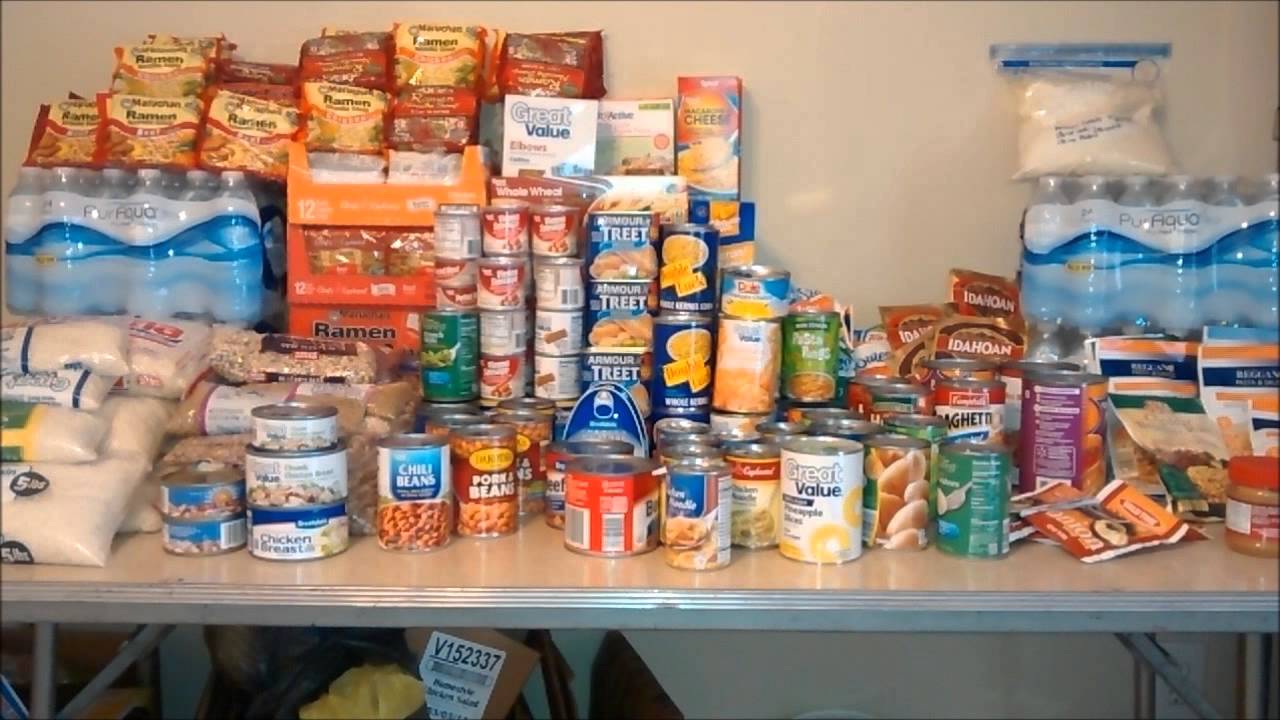
How To Buy and Store 260 Pounds of Food for just $83 – H.L.

o o o

What first amendment? Does this incredibly harsh punishment fit this “crime”? Judge sentences 2 people convicted in Confederate flag confrontation – T.P. (Editor’s note: SurvivalBlog does not condone the actions of the defendants, but this punishment borders on the level of political punishments seen 70 years ago in Europe.)

o o o

CDC: Bullets Can Cause Lead Poisoning – DSV

o o o

Welcome Aboard, But First US Marshals Will Scan Your Retina – D.W.

o o o

7 Vegetables You Should Be Starting Indoors Right NOW!


Notes for Monday – February 27, 2017

On February 27th, 1897, an agreement between Great Britain and the United States allowed the U.S. to arbitrate a border dispute between Venezuela and British Guiana, defusing a dangerous U.S.-British diplomatic crisis and formally recognizing the U.S. authority of the Western Hemisphere per President Grover Cleveland’s interpretation of the Monroe Doctrine. In the end, the border was decided in 1899, largely upholding Britain’s claims.


Blackhawk Legacy, by Pat Cascio

As many readers will know, my wife is always chiding me about flashlights. She is somehow under the impression that I might have too many, until the lights go out and she asks, “Where’s a flashlight?”. To be sure, I keep flashlights within my reach– in my living room, bedroom, kitchen, and office. Living in the boonies does have some disadvantages; the power goes out quite often in the winter months, due to trees falling onto the power lines.

We are used to the power going out and have prepared accordingly. We have LED lanterns, and we also have a 4,000-watt generator, which rarely gets used. Most of the time, when the power goes out, it is only for four to six hours, so I don’t want to crank up the generator for that, especially if the lights go out during daytime hours. If I need to find something, I’ll just grab a flashlight.

We’ve been down this road before in several other articles about flashlights, and I believe you should buy the absolute best flashlights you can afford. There is no sense going to the local dollar-type store and buying a cheap flashlight; they will fail you. The batteries die quickly, and quite honestly they don’t throw a lot of light, and the light is yellow in color, too. A quality flashlight will throw a very bright beam of white light a long, long distance.

I spent a majority of my adult life working in law enforcement, private security, K-9 patrols, private investigations, and other similar fields. Working at night or in low-light situations, you have to have a good flashlight. I still have my old Mag-Lite 3-cell (C batteries) flashlight that I used to keep in my patrol car. Back in the day, they were the flashlight to have. However, they didn’t throw a beam of light very far, and as mentioned it was a yellow light. I swapped out the factory light bulb for a Krypton light bulb, and it was much better in all respects. However, it was still lacking; it was big and bulky, and the batteries didn’t last all that long. On a positive note, it could be used as a striking weapon to bring a suspect into compliance when a fight broke out, so it had at least one advantage.

Blackhawk Products recently sent me their newest Legacy L-6V Night-Ops flashlight to test for our readers, and it has a lot of features in a small package. The length is only slightly over six inches, and it weighs a little more than half a pound, with the two CR123 batteries. The Legacy L-6V Night-Ops has a body made out of anodized black aluminum, which is tough stuff to be sure. The lens is tempered glass, so there are no worries about it breaking if you happen to drop it. The diameter of the body of the light is only one inch, and with the bezel– front and rear– it is 1.26 inches in diameter.

Some of the other features are the multiple position rotating switch that has a high, medium, low, strobe, and safety off positions. With many similar flashlights, you have to press through the on/off switch to get the setting you want, and quite honestly it is a little annoying with some of these flashlights to get the setting you want. The maximum lumens is 570 on high, 220 on medium, and 20 on low, with the strobe operating at the maximum lumens. Run time, and this is important to know, on high is 120 minutes. That’s two full hours.

The on/off recessed rubber button is in the butt of the flashlight and is easy to operate one-handed. A simple push on the button turns the light on to the setting you placed it in on the rear rotating bezel. The bezel is clearly marked, so you can select the setting you need. I also like that the front and rear bezel has flat sides, so when you set the flashlight down it won’t roll away on you. That’s nice, very nice! This light is also compatible with the Offset flashlight rail mount, which is sold separately from Blackhawk, so you can mount it on a rifle. The rubber on/off button also has a momentary setting; a light touch will turn the light on momentarily or press it harder and the light stays on. The on/off rubber switch is recessed, so there are no worries about the light turning on accidentally, and the entire unit is waterproof, too.

Blackhawk also sent a ballistic nylon holster for this light, and it will easily attach to your military/police tactical vest or you can carry it on your belt, if you prefer. While you can slide this flashlight in your pants pocket, it isn’t the way to carry it.

Living out in the country, way out in the country, we have no street lights; I like it this way. However, when we hear something that goes “bump” in the middle of the night, I reach for a flashlight before I open the front door. We also have several German Shepherds, and they are one of our early warning alarms. We have a huge front yard, and I need a flashlight that will penetrate the darkness and throw a bright light a long distance. The Legacy L-6V Night Ops gets the job done with the high setting of 570-lumens; it will light up my entire front yard all at once. Now, the only downside to this flashlight, as far as I’m concerned, is that the front bezel can’t be focused so I can concentrate the light into one smaller area. This is not a deal-breaker to me, but the more super-bright light I can shed on a particular area the better it is.

I haven’t actually measured the distance that the super-bright light is effective to reach, but it can easily shed light out to a couple hundred yards at night. Some similar flashlights will state that the light is effective out to 600 yards, but that’s hogwash, if you ask me. However, hype sells products.

I have several flashlights on the end table, on my end of the sofa. They all get used, all of the time. However, when I need to look outside my front door at night, I’ll reach for this Blackhawk flashlight. I like the strobe feature, too. It can momentarily disorient and blind an attacker, giving you time to react to the situation at hand.

Over the years, when working in public or private law enforcement, much of the time you are working at night. In my case, I worked alone most of the time. Without a doubt, you absolutely must have the best flashlight you can have. Many times, I had to clear a building, usually by myself, and I had to have a good flashlight. I made do with the Mag-Lite I had. It was better than most flashlights. However, today, there is no need to settle for lesser flashlights, especially when working in dangerous situations at night, when you want to identify a suspect. As to the CR123 batteries this flashlight uses, “Yes”, they are quite a bit more expensive than AA or AAA batteries that similar tactical flashlight take. However, the upside is that the CR123 batteries last longer, and I believe they give you a brighter light, too. Whenever I see CR123 batteries on sale, I’ll purchase half a dozen or even a dozen to have on hand. So, don’t let the price of the CR123 batteries scare you away. They do the job.

Quality never comes cheap, and when you buy quality it lasts and lasts. Buy cheap, and you will be buying cheap all of the time. The full retail on the Legacy flashlight is $122.95, and don’t forget to also purchase that ballistic Nylon holster for it, too. Blackhawk also has several other models of tactical flashlights. Be sure to check them out. I’m sure you’ll find one or two to fill your needs.

– Senior Product Review Editor, Pat Cascio


Recipe of the Week: Biga and Pugliese Bread, from Sarah Latimer

Biga For Bread

This is a bread starter that is used for artisan type breads, including Pugliese bread. This makes enough for two loaves. It must be made well in advance (at least 12 hours and preferably 24 hours) of making bread for best results, and it makes a big difference in the texture and the crust of bread, generating the nice soft and spongy inside with a crusty outside and excellent flavor. When using homemade yeast water instead of the combination of water and dry active yeast, it becomes a wonderful pre-ferment dough. Yeast water from raisins are most common, but yeast water from basil and other sources can add nice flavor notes to the bread through the biga pre-ferment. Pre-ferment dough requires time to rise and activate and then is used with flour and other ingredients to produce a variety of breads, as their source of yeast/leavening. Give this a try, and see how it affects the flavor of your favorite Italian breads.

Ingredients

  • 1 cup + 2 Tbsp lukewarm water (or yeast water)
  • 1/2 teaspoon dry active yeast (omit if using yeast water)
  • 9 oz (approximately 2 cups) whole wheat flour, finely ground, sifted

Procedure

  1. Mix water and yeast and let sit a few minutes to activate, unless using yeast water that is already active.
  2. Stir in flour until well incorporated.
  3. Cover with plastic wrap.
  4. Let sit overnight at room temperature.
  5. Use with bread recipe as instructed.

Pugliese Bread

Pugliese bread is a rustic bread from the south of Italy that uses biga pre-ferment bread starter, which should be made a day before the bread. This bread is most certainly a family favorite. It’s a crusty bread that is light and flavorful inside and wonderful by itself or served with cheese, meals, or even spreads and deli meat. Again, yeast water may be substituted for the water and yeast combination in this recipe, though the rise time may take longer. If you have a good mixer with a dough hook, give this a try. We think it’s well worth the time and effort of having to start on it two days ahead of time and knead a long time. Makes two, wonderful, large oval loaves.

Ingredients

  • Biga (see recipe above)
  • 5 Tablespoons warm water
  • 35 ounces fine, white whole wheat flour
  • 26 ounces water
  • 1 1/4 teaspoon yeast
  • 1 Tablespoon sea salt

Procedure

  1. After the biga has rested a day, put 5 Tablespoons of warm water and yeast in a large mixer bowl and add the biga; mix on low for 4-5 minutes with dough hook. (If using yeast water, just add the yeast water to the biga and mix thoroughly.)
  2. Add remaining 26 ounces of water and half of the flour; mix for 3-4 minutes on low, until smooth.
  3. Add the rest of the flour and mix for 2 minutes, until dough begins to come together, make sure to scrape down the sides and turn as needed.
  4. Cover the bowl and let sit for about 25 minutes.
  5. Add salt and knead with the dough hook on low for about 8 minutes, until completely mixed.
  6. Divide dough into two approximately equal portions, placing one portion in a container and leaving the other in mixing bowl. Cover both tightly with plastic wrap.
  7. Let both portions of dough ferment for 3 hours, folding them once after every hour.
  8. Put a generous amount of flour on a work surface and pour one portion of dough onto the work surface.
  9. Sprinkle the top of the dough with flour and pat the dough flat, to about 1/2 – 3/4″ thickness.
  10. Roll up dough, pat it flat, and roll it up again. Repeat an additional two times. The dough should de-gas and become springy.
  11. Draw sides of dough underneath itself and seal the edges very tightly.
  12. Dust the top of the dough with flour and set it on parchment paper on a baking sheet.
  13. Repeat with second dough portion.
  14. Cover both portions with plastic wrap and let rise for about 1 hour or so, until double.
  15. Twenty minutes before baking, preheat oven to 450F; 15 minutes before baking, dimple the tops of the dough with your fingers, lightly.
  16. Place dough into oven and bake at 450F for 25-28 minutes; turn loaves over and bake for an additional 25 minutes, until loves are medium-dark brown.
  17. Let cool before cutting or serving.

o o o

Do you have a favorite recipe that would be of interest to SurvivalBlog readers? Please send it via e-mail. Thanks!


Letter Re: Jøtul Woostove

Dear Hugh,

We have been using a name-brand (Firefox, a UK brand) woodstove at our home in the Greek Islands for about seven years.

We had the baffle at the top of the stove burn through within two years. The manufacturer would not send us a replacement, referring us to a retailer in the UK. They wanted the best part of $100 dollars for the part, plus postage of about the same amount.

Instead, I took the broken part to a local metal shop. They fabricated one out of much thicker steel for $20, and it’s still intact; in fact, it will probably last the stove out.

The firebricks were next. The agent wanted another $100 plus p&p. I got some firebricks locally and cut them to shape with a diamond blade angle grinder for the cost of $20.

We also had the glass break. Agent’s price was $50 plus p&p. A local glass shop cut some fireproof glass for $20.

Forget the dealers, assuming you are out of warranty of course. Go local. It’s faster and a lot less expensive. – Michael in the Greek Islands.


Economics and Investing:

N.Y. retirees struggle to survive after pension fund bottoms out – B.B.

o o o

Americans now Hold Over $4.1 Trillion in Consumer Debt: Last Debt Bubble Peak was at $2.5 Trillion – B.B.

o o o

Dutch Parliament to Debate Leaving the Eurozone: Nexit on the Way?

o o o

Economic Globalization Is Not Political Globalization

o o o

SurvivalBlog and its editors are not paid investment counselors or advisers. Please see our Provisos page for details.


Notes for Sunday – February 26, 2017

This day, February 26, is the birthday of Major-General Orde Charles Wingate (born, 1903, died 24 March 1944), an eccentric British Army officer who organized special military units in Palestine in the 1930s, and in Abyssinia, Sudan, and Burma during World War II. He is most famous for his creation of the Chindits, airborne deep-penetration troops trained to work behind enemy lines in the Far East campaigns against the Japanese during World War II.

o o o

We’ve made mention of Emergency Life Saving Armor (ELSA) before in the blog and now Ready Made Resources is carrying it. It looks like a computer bag, but unzips and deploys in seconds to give a level 3+ body armor capable of stopping 5.56 and 7.62 rounds.


Household Basics in TEOTWAWKI- Part 4, by Sarah Latimer

The Physical Properties and Application

I’m concerned about having yeast readily available in TEOTWAWKI. I like having dry yeast readily available by the measurable spoonful, and so I buy it in one pound bricks and then store it in a sealed quart Mason jars – one in my refrigerator door and one in my freezer– so that the yeast keeps for well over a year (if I haven’t used it up in that amount of time). It is no problem to use cold yeast directly in your recipes. It wakes up in the warm water just as if it had been stored at room temperature. However, this dry, dormant yeast won’t last forever, even in my freezer, and I wonder if I will continue to be able to buy it. I’ve used other forms of yeast also. Let’s talk about yeast and look at our options for a long-term TEOTWAWKI situation where we can’t buy our dry, packaged yeast.

The Simple Science of Common Baking Yeast

Yeasts are single-celled organisms that generally reproduce asexually through mitosis, which can be simplistically described as cellular self-replication and splitting. The yeast reproduction process is commonly referred to as budding. Yeasts differ from mold in that molds are multi-celled organisms. Saccharomyces cerevisiae is the species of yeast commonly used in bread baking and in alcohol production. (There are more than 1,500 species of yeast.) According to Wikipedia, Saccharomyces is a Latin word that literally means “sugar fungus”. Yes, it is a fungus, and it is a tasty and nutritious one. It is also a yeast derived generally from sweet fruits. (We’ll look into that more later in this article.)

Biologists consider yeast to be a plant capable of reproducing itself. You can feed it sugar or carbohydrates to make it grow or kill it through starvation or heat. In the fermentation process, our baking yeast (Saccharomyces) converts carbohydrates into carbon dioxide and alcohol, giving our breads wonderful lift and flavor and, I suppose, doing something of the same for beverages (or those who consume alcoholic beverages and become “light” in the head).

For thousands of years, it is well documented that yeast has been used in bread baking and in brewing alcoholic beverages around the world. It seems that this yeast began being accumulated from the surface skins of grapes; however, back in the days when everyone made their own bread, there is much documentation (and even art) of people going to their local brewer to purchase a jug of liquid, yellow brewer’s yeast for their week’s bread baking needs.

Today’s Manufacture of Baking Yeast

According to King Arthur Flour:

In order to have a reliable supply of yeast on hand for all of our baking needs, it’s necessary for manufacturers to “domesticate” wild yeast—stabilizing it, and in the process making it 200 times stronger than its wild counterpart.

Plant scientists working with a yeast manufacturer identify certain characteristics of wild yeast that they decide are desirable; isolate them, and then replicate them. The resulting yeast is given a “training” diet to make it reproduce. Formerly based on molasses, most manufacturers now feed their growing yeast with corn syrup. Once the cells have replicated to a critical mass—a process that generally takes about a week—they’re filtered, dried, packaged, and sent off to the market.

Application of Yeast in Whole Grain Breads

Homemade bread from freshly ground whole grains is routinely a part of our family’s daily diet, and at least half of these breads are yeast breads. Sure, we enjoy whole grain biscuits, pancakes, cornbread, cookies, pastries, cakes, muffins, scones, and more, each made with baking soda or baking powder, plus I occasionally make crackers or unleavened breads too; however, a significant portion of our breads depend upon yeast. When we travel or eat out, we definitely miss the benefit of the fiber and wholesome goodness of our own freshly ground whole grain breads (and lightly cooked vegetables)! Without them, things in our well-adjusted bodies just don’t function as well. It is for this same reason that I encourage those who want to survive TEOTWAWKI in good shape begin adjusting their diets now to include fresh whole grain flours and not just the products at the store that say “whole grain”. The difference between the grain you grind yourself and what you buy in the store is significant, because so many of these store items just have a small portion of their content that includes whole grain, plus as soon as the grain is cracked the germ and nutrients begin to deteriorate and some are lost within a few days. Using truly fresh flour captures the greatest amount of nutrient and fiber and prepares us for what we will deal with in TEOTWAWKI. Since our whole, uncracked grains store indefinitely, we wait to grind grain until we have need of flour and then just grind what we are going to need for the day (or possibly two days).

Fiber– real, heavy fiber– affects your body. If you wait to begin grinding your grain and using it for flour and homemade breads and cereals for the first time after TEOTWAWKI, you are not only in for some frustration in learning how to go about doing all of this successfully, but your body may have a significant digestive fitness adjustment. Your body’s plumbing may initially be sluggish from its habit of eating highly processed foods and become constipated and then possibly shift to the opposite. If this is the case, you may not have a pleasant go of it. Imagine this physical discomfort occurring simultaneously to the stress of adjusting to life in a chaotic situation without electricity or running water and you are in short supply of toilet paper (or at least worried about your supply), and I haven’t even mentioned the social unrest or relocation circumstances that you may be enduring, too. Again, I cannot encourage you strongly enough to begin living the wholesome, healthy dietary lifestyle now that you plan on living in a TEOTWAWKI situation, including eating whole grains, increased quantities of greens including wild/weedy ones, fresh fruits and vegetables, eggs, and reduced quantities of processed meats and foods.

In addition to using yeasts in breads, it is used in fermenting sauces and alcohol. I have no expertise there, at least not at this time, but it is something that I may look at in the future, as I definitely can see great life-sustaining value in being able to make our own wine and distilled alcohols for medicinal purposes that go beyond pleasure.

Sources of Yeast

Commercial

Right now, we have a variety of commercial yeasts available to us. We have several kinds of instant/rapid rise yeasts as well as active yeasts and also fresh yeast. Do you know the difference and which might be better for storage? Well, the instant/rapid rise yeasts are smaller celled organisms that provide more surface space when placed into warm liquid to active and thus enable it to activate more quickly. Instant/rapid rise doesn’t produce a bigger rise in bread, but it is quick and convenient. Active yeasts are larger celled organisms that take a little longer to activate in liquid but produce the same rise in bread as its smaller version. Fresh yeast comes in cubes that crumble when touched; it has a very, very short shelf life and is not available everywhere. Yeast is a living orgasm, and it needs energy to survive, though it retains some within its cellular structure. By keeping yeast in the freezer or refrigerator, we are able to slow its activity. It seems to me that the larger celled orgasm– active yeast– would be better able to retain more resources for a longer shelf life than the instant yeasts, and in my research that is in fact what I discovered. So, for storage purposes, active yeast has the longest shelf life and is what I choose to use and keep in the freezer and refrigerator. I store at least a two-year supply in the freezer, even though it may not be “as” active in year two as it was in its first year, but it may still have some life to it to boost my starters.

Introduction to Wild Yeasts

There are very practical and relatively easy ways of dealing with having no dry yeast, if it becomes unavailable commercially. Certainly, the dry active yeast most of us use in our recipes and activate with warm water is the simplest and very easiest form, but there are other ways to use yeast for bread leavening, and there are some benefits and flavor enhancing qualities that can be added in these methods, also.

Yeasts grow on organic matter, especially sweet organic matter. It is on the surface of fruits, vegetables, and grains and can be lying around your home dormant just about everywhere, especially if you are a bread maker, like me. While I usually use dry yeast, I will definitely need to capture some of the available wild yeasts in my possession to make our family’s beloved breads in a TEOTWAWKI situation. Even now, there are times when I grow yeast and modify bread flavors using it, keeping some continuously alive in my refrigerator for weeks or months at a time. (We’ll talk about sour dough a little later.)

Anyway, whoever wants yeast bread or to make beer or wine will need to produce yeast once their commercial yeast supply is depleted. I am delighted to share with you that it is possible to produce your own yeast and also to produce pre-fermented dough that stores and can be used as bread “starter”.

I recall my mother making a jar of mixed fruit yeast water. I thought it looked and smelled horrible, but I was just a youngster. What did I know!?! Back then, I didn’t like vinegar or wine. I did like the bread that was her final result though. Yum!

Yeast Water

The basic and very old way to capture yeast is to make yeast water. This is done simply by growing natural yeast, found on the surface of dried fruits, in room temperature water, and to speed the growth you can feed the yeast a little sugar or honey. Yeast naturally accumulates on dried raisins, apricots, apples, and cranberries, so these are good to use or you can use a combination of fruits. Just be sure that you are using pesticide-free/organic dried fruits. Here are the simple steps:

  1. Clean and sterilize a glass jar, making sure to rinse it very well. (I use a quart Mason jar, as I keep these in abundance for many purposes.)
  2. Filter some water (to remove chlorine and lower the pH if it is alkaline, as a pH level should be between 4.5 and 6.0), and let it sit to adjust to room temperature (75-85 degrees Fahrenheit).
  3. Put 3-4 Tbsp of dried raisins (or other fruit) in your clean, glass jar.
  4. Pour 3 cups of the filtered, room temperature water over the raisins in the jar.
  5. Add 1 Tbsp organic sugar or honey to your water and stir.
  6. Put the lid on loosely to allow a bit of airflow for gasses to escape but not allow bugs or dust to enter.
  7. Let it sit on the counter at room temperature for about three days (and up to a week in winter).
  8. When raisins float to the surface and small bubbles form on the surface, smell it. You should be able to smell the fruity yeast smell, similar to wine at this point. If not, add a bit more fruit.
  9. Once it has reached the right bubble and smell activity level, store it in the refrigerator to use in making pre-fermented dough.

Pre-Fermented Starter and Pâte Fermentée Dough

While the Italians call it “biga” and the French call it “poolish”, this pre-fermented dough starter is simply a wet mixture of flour and water with a small amount of yeast that is allowed to rest at room temperature for a long period (usually 12-24 hours and sometimes longer) to allow the yeast (and some probiotic-type bacteria) to multiply and improve the dough’s texture and taste. Then this biga or poolish is added into new dough to complete the bread dough recipe. Most Italian breads, including Ciabatta and Pugliese, are made using bigas. These are some of our family’s favorite table breads, and they require that I begin the process days in advance of serving them on the table; however, we find the taste, texture, and crust to be worth the advance planning. I usually allow my whole wheat bread doughs to sit for at least several hours to pre-ferment and also for the grains to soften before completing the recipe. Pâte Fermentée, which means “old dough” in French, differs from biga and poolish in that this dough is merely a portion of regular dough that is set aside to be added to the next batch of bread dough to continue the yeast and bacterial strains in order to preserve a consistent bread flavor between batches. In using these methods, we are able to reduce the amount of yeast required and can use our yeast water instead of active dry yeast in bread recipes.

While these pre-fermented doughs have hours and even days to sit at room temperature, they are not sour. Even the Pâte Fermentée is used for many doughs that are not sour, though this process is also used for sour dough, too. A lot has to do with how long the dough is allowed to sit and its ratios of yeast, sugar, water, and temperature, et cetera.

Sour Dough

The sour dough process is believed to be the oldest form of bread leavening. InfoGalactic references the very expensive Encyclopedia of Food Microbiology report of sour dough being excavated in Switzerland that was dated from 3700 BCE. (That was some pretty stale bread, I’d imagine.) Good sour dough is wonderful, as it is recognized and applauded around the world but especially in San Francisco. It captures yeast from the grain itself and uses the sugars from the grain to grow and reproduce.

To make a superb wheat flour sour dough “mother” or starter can be a tricky process. The production of a good sourdough, in modern manufacturing kitchen, employs exact control of the acidity developed during the process as well as highly controlled temperature, time, dough yield (dough firmness), and type and species of microflora. Additionally, there are multiple processes for producing sour dough as well. The final results of all of this effort to produce good sour dough bread is not known until the final product is produced, baked, and tasted. We do not have all of these controls and simply must do our best and then taste the yield. Here’s the simplest process that I use:

  1. In a large glass bowl, mix one cup of whole wheat (or quality all-purpose) flour into one cup of filtered warm water; blend it well, and loosely cover the bowl; let it sit to ferment at a temperature between 70 and 80 degrees Fahrenheit for one day. (If your home is cooler than this, place it on top of your refrigerator or on another steadily “warm” appliance.)
  2. The next day, add 3/4 cup of flour and 1/2 cup of warm, filtered water to the mixture; cover loosely and again place in a warm place for another day.
  3. On each of the third and fourth days, add another 3/4 cup of flour and 1/2 cup of warm, filtered water, returning the bowl to the warm place to continue fermenting.
  4. On the fifth day, smell it to see if it has the sweet-sour smell you desire for your dough. If it has any funny colors, discard it; however, I’ve not had any problems. If it needs longer, repeat step three and check again the next day. My sour dough starter has been ready for my favorite sour dough bread recipes on the fifth or sixth day (though it may take you a few days longer, depending upon your climate and/or flour choice as well as the availability of wild yeasts in your home). If you have a sterile home and rarely bake breads, then this is a factor that may also cause your starter to take longer also.

After completing this four-step process and obtaining your good-smelling sour dough starter, store it covered in the refrigerator. Each day begin removing the amount of starter you need for making bread or throw out the excess, but be sure to feed your living sour dough starter every day. It is alive and will die if not fed! I add about 3/4 cup of flour plus 1/3 cup of warm water solution each day. I sometimes use even more flour to thicken my final sour dough starter before putting it in the refrigerator to help it maintain the yeast in the refrigerator. If it gets too thick, just add water. Also, if you get tired of maintaining your sour dough starter, I’ve read that it can be air dried by smearing it on a silpat non-stick sheet and storing it then in an airtight container for months until you want to use it and activate it in warm water. (I haven’t done this before. If you have, you might write to SurvivalBlog about your experience. Having a dry sour dough starter to carry in our BOB is a great idea, if it really works!)

So, in my final conclusion about yeast, I know that it is everywhere and can be multiplied in the proper conditions and used to leaven all kinds of breads. We can store the commercial yeast in the freezer or refrigerator. We can capture yeast from fruit in yeast water and use yeast water to make wonderful pre-ferment dough and artisan breads, and we can simply use wholesome grains and filtered water to make sour dough starters that will leaven our sour dough breads. The non-commercial options take some time, but their tastes and results are superior and worth the effort, especially if our commercial yeasts are unavailable.

If you haven’t tried to capture wild yeasts and make pre-ferments or sour dough starter, I suggest you give it a try. You’ll be satisfied in knowing that you can. It becomes fairly easy and routine after you get the hang of it. It’s one more step in self sufficiency, plus you just might get a taste for your own homemade whole grain breads and make a lifestyle change that saves your colon or your life.

I wish you well, until we meet again on SurvivalBlog!