The Landscape
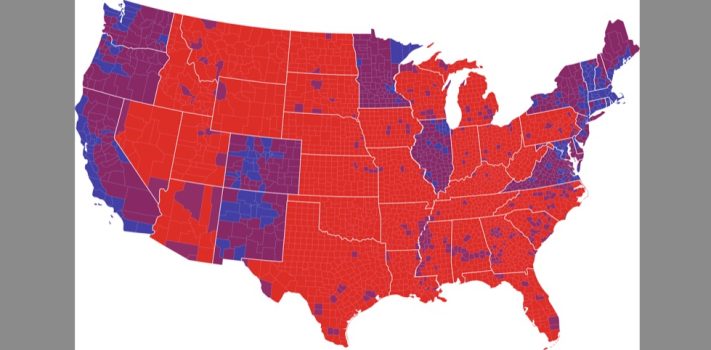
In 2025, the divide between red states and blue states has not gone away, but only become more distinct. The decisive results of the 2024 election saw all the swing states shift significantly toward the Republican candidate, and even typically “purple” metros like Dallas-Fort Worth (DFW) and Houston voted for Trump. This victory has further cemented the idea of Red America as a distinct entity, directly opposed to what is happening in Blue America. It’s a clear cultural and political divide cutting across the country.
The electoral map makes this abundantly clear: The core of America is firmly conservative, while the Pacific and north and central Atlantic coasts (along with Colorado, New Mexico, Minnesota, and Illinois) are still dominated by the progressive agenda.
Over the past decades, this divide has become more and more pronounced. Numerous commentators and analysts have pointed out the growing divide. Bill Bishop first brought it to national attention with his 2008 book *The Big Sort*, and it’s been an ongoing topic of discussion with every election since.
However, the overwhelming support for Trump’s second term slightly muted the divide in this election. In 2024, every single state and 90% of all counties had a more Republican vote, and Democratic margins were narrower in every state. While this did not erase or reverse the divide overall, it does paint a hopeful picture of future gains for conservatives.Continue reading“A Red State Manifesto: Two Americas in 2025 – Part 1, by Jonathan Rawles”