Economics and Investing:

Time To Give The Metals A Break

o o o

Colt Lays Off Custom Shop Director, Other Employees, Company Rumored Gutted – DSV

o o o

Gold Investing 101 – Beware eBay, Collectibles and “Pure” Gold Coins that are Gold Plated – S.C.

o o o

Cost of Illegal Immigration Higher than Cost of Securing Borders – G.L.

o o o

SurvivalBlog and its editors are not paid investment counselors or advisers. Please see our Provisos page for details.


JWR’s Recommendations of the Week:

Books:

The Defined King James Version Bible, Large Print

The Art of Invisibility: The World’s Most Famous Hacker Teaches You How to Be Safe in the Age of Big Brother and Big Data

Movies:

Gone with the Wind

USS Indianapolis: Men Of Courage

Television:

Lonesome Dove

Band of Brothers

Music:

Wanted! The Outlaws (1976-1996 20th Anniversary)

O Brother, Where Art Thou? (Movie Soundtrack)

Instructional Videos:

Bushcraft Fun in the Bush, Camp Projects

The Backyard Machine Shop – Machine Rescue Series

Online Sermon Videos:

Grace Baptist Church, Fremont, California (Pastor Michael Phillips)

Sovereign Grace Baptist Church of Silicon Valley (Dr. Paul Nelson, et al.)

Podcasts:

The Bump That Bumps the Bump in the Night (Podcast – Season 4, Ballistic Radio Episode 197)

The Self Sufficient Gardener (No longer being produced, but the archived shows are worth a listen!)

Blogs:

The Freeholder

Barnhardt

Salvation And Survival: A Woman’s Perspective On The Times We Live In

Gear:

Pelican 1740 Travel Vault Watertight Hard Case with Foam – Olive Drab

Lorex HD 16 Channel Security DVR System with Eight 1080p HD Cameras – 2TB HDD

Nikon PROSTAFF 5 BDC Riflescope, Black, 3.5-14×40

Chapman (Made in USA) Master Tool Kit with Screwdriver Kit Allen Hex, Metric Allen Hex, Star/Torx, Phillips, Reed & Prince, Robertson, Socket Adapter, Midget Ratchet Hand Tools Set.


Notes for Tuesday – March 07, 2017

Panic in Year Zero: It is important that SurvivalBlog readers take the time to read at least the summary of the Wikileaks “Year Zero” March 7th announcement. (Also known as Vault 7.) The ramifications of this release of state-sanctioned and state-sponsored cyberweapons are huge. The sheer volume of weaponized code that has been unleashed is amazing. The mis-use of these cyberweapons could very rapidly devastate e-commerce, banking, satellite navigation systems, and public utilities, including national power grids. Do not dismiss this as mere speculation. The risk is real, and the risk is huge. This announcement is just one more reason for SurvivalBlog readers to redouble their preparedness efforts. Make your preparations now, before the lights go out! – JWR

o o o

March 7, 1707 was the birthday of Stephen Hopkins, (Governor of Rhode Island) one of the signers of the Declaration of Independence.

March 7, 1925 was the birthday of Rene Gagnon, a U.S. Marine, who was seen in the famous photographs of the Raising the Flag on Iwo Jima. (He died in 1979.)

And March 7, 1944 was the birthday of Townes Van Zandt, a gifted Texan singer/songwriter. (He died in 1997.)

o o o

Today, we present another entry for Round 69 of the SurvivalBlog non-fiction writing contest. The nearly $15,000 worth of prizes for this round include:

First Prize:

  1. A $3000 gift certificate towards a Sol-Ark Solar Generator from Veteran owned Portable Solar LLC. The only EMP Hardened Solar Generator System available to the public.
  2. A Gunsite Academy Three Day Course Certificate that is good for any one, two, or three day course (a $1,195 value),
  3. A course certificate from onPoint Tactical for the prize winner’s choice of three-day civilian courses, excluding those restricted for military or government teams. Three day onPoint courses normally cost $795,
  4. DRD Tactical is providing a 5.56 NATO QD Billet upper with a hammer forged, chrome-lined barrel and a hard case to go with your own AR lower. It will allow any standard AR-type rifle to have a quick change barrel, which can be assembled in less than one minute without the use of any tools and a compact carry capability in a hard case or 3-day pack (an $1,100 value),
  5. An infrared sensor/imaging camouflage shelter from Snakebite Tactical in Eureka, Montana (A $350+ value),
  6. Gun Mag Warehouse is providing 20 Magpul PMAG 30-rd Magazines (a value of $300) and a Gun Mag Warehouse T-Shirt; (an equivalent prize will be awarded for residents in states with magazine restrictions),
  7. Two cases of Mountain House freeze-dried assorted entrees in #10 cans, courtesy of Ready Made Resources (a $350 value),
  8. A $250 gift certificate good for any product from Sunflower Ammo,
  9. Two cases of Meals, Ready to Eat (MREs), courtesy of CampingSurvival.com (a $180 value).

Second Prize:

  1. A Tactical Self-Contained 2-Series Solar Power Generator system from Always Empowered. This compact starter power system is packaged in a wheeled O.D. green EMP-shielded Pelican hard case (a $2,400 value),
  2. A Glock form factor SIRT laser training pistol and a SIRT AR-15/M4 Laser Training Bolt, courtesy of Next Level Training, which have a combined retail value of $589,
  3. A gift certificate for any two or three-day class from Max Velocity Tactical (a $600 value),
  4. A transferable certificate for a two-day Ultimate Bug Out Course from Florida Firearms Training (a $400 value),
  5. A Trekker IV™ Four-Person Emergency Kit from Emergency Essentials (a $250 value),
  6. A $200 gift certificate good towards any books published by PrepperPress.com,
  7. A pre-selected assortment of military surplus gear from CJL Enterprize (a $300 value),
  8. A selection of canned meats containing a 10 pack of 28oz cans of Premium Beef and a 5 pack of 28oz cans of Premium Pork from Wertz’s Farm Market (a $300 value),
  9. RepackBox is providing a $300 gift certificate to their site, and
  10. American Gunsmithing Institute (AGI) is providing a $300 certificate good towards any of their DVD training courses.

Third Prize:

  1. A Model 175 Series Solar Generator provided by Quantum Harvest LLC (a $439 value),
  2. A Royal Berkey water filter, courtesy of Directive 21 (a $275 value),
  3. A custom made Sage Grouse model utility/field knife from custom knife-maker Jon Kelly Designs, of Eureka, Montana,
  4. A large handmade clothes drying rack, a washboard, and a Homesteading for Beginners DVD, all courtesy of The Homestead Store, with a combined value of $206,
  5. Expanded sets of both washable feminine pads and liners, donated by Naturally Cozy (a $185 retail value),
  6. Two Super Survival Pack seed collections, a $150 value, courtesy of Seed for Security, LLC,
  7. Mayflower Trading is donating a $200 gift certificate for homesteading appliances,
  8. Montie Gear is donating a Y-Shot Slingshot and a $125 Montie gear Gift certificate.,
  9. Two 1,000-foot spools of full mil-spec U.S.-made 750 paracord (in-stock colors only) from www.TOUGHGRID.com (a $240 value), and
  10. Fifteen LifeStraws from SafeCastle (a $300 value).
  11. A $250 gift certificate to Tober’s Traditions, makers of all natural (organic if possible) personal care products, such as soap, tooth powder, deodorant, sunscreen, lotion, and more.

Round 69 ends on March 31st, so get busy writing and e-mail us your entry. Remember that there is a 1,500-word minimum, and that articles on practical “how to” skills for survival have an advantage in the judging.


Building An 80% Firearm- Part 1, by Tupreco

Learn the Why and How

The election of Donald Trump is beginning to show concrete steps toward dialing back the Obama administration’s numerous efforts to undermine our Second Amendment rights. How that will continue to play out remains to be seen. Surprisingly though, even on Obama’s watch there were several pro-2nd Amendment (2A) court and legislative victories, including expansion of concealed carry in many states.

Another thing that occurred while Obama was in office was an unexpected but welcome surprise from the ATF. Several years ago, a well-known AR-15 parts manufacturer requested and received the ATF’s formal approval to manufacture and sell, without restriction, a partially-finished AR-15 lower receiver. This receiver would only be legal for unrestricted sale if the ATF approved the exact design where several very specific features remained un-machined or marked in a way that would aid in its completion. This partially-complete receiver (now commonly called an “80% receiver”) required that the through holes for the trigger and hammer pins be omitted and that solid material must remain where the cavity for all of the trigger components would normally be milled out. This new approach was clearly designed to attract buyers who would then complete the steps left unfinished. When finished, it would be a fully functional AR-15 lower receiver.

Many people don’t realize that it has been legal for years to build your own personal unregistered firearm. Up to this point, the practice of making a homemade firearm has not generated much activity or interest for two reasons. First, a home built firearm cannot be legally sold or transferred to another person. Second, building a firearm safely was typically well beyond the skills of most people. However, the approval for sale of a partly finished receiver ushered in a significant change. Now all that would be required to build a quality firearm at home would be a minimal level of machining skills and equipment. Suddenly, making your own unregistered firearm for only personal use just got a lot easier. Virtually overnight, the 80% firearms industry was born and has continued to flourish. It will surely continue to grow, provided it is not eliminated through a contrary stroke of the ATF’s regulatory pen.

This may be the time to take advantage of the opportunity to build your own “ghost gun”, as this type of firearm is often called. For now you can build your own commercial-quality firearm with virtually no paper trail tracking it (presuming you don’t use your credit card or ship to your home address). Michael Bloomberg, George Soros, and the other anti-2A gun control crowd have already begun putting resources together to convince the public and sympathetic lawmakers to restrict or eliminate the availability of the 80% lower receiver. Even with the Trump administration taking the pressure off the Second Amendment, other governmental bodies still have power to act independently. The worst example of this in years just happened in February 2017, when the Fourth Circuit Federal Appeals Court in Virginia overruled its own previous ruling regarding Maryland’s state law banning the AR-15 and other similar scary rifles. The court finding was that firearms of this type had no legitimate purpose other than to kill in large numbers and that these “weapons of war” (their words) did not qualify for protection under the Second Amendment. It was not an actual ban per se, but if left standing it would clear the way for an unfriendly federal government issue, an executive order, or a liberal state to pass a law to ban them. Further, in 2016, four states voted on gun control initiatives, and all passed except for Maine’s universal background check measure. Other laws recently passed in California now affect a firearm built there using an 80% receiver through new restrictions going into effect regarding fees, registration, and serialization requirements. Given these pressures, it seems like now is a prudent time to do your research and get to work before it’s too late.

So what are the things that need to be considered before building your own firearm using a legal 80% receiver? You can legally purchase one at this time and perform the final machining operations to make it 100% functional. If done according to ATF guidelines, the 80% receiver is not considered a firearm by any federal or state agency. Since the ATF approved this approach several years ago, manufacturers and sellers have been popping up rapidly. The AR-15 variants have catapulted to capture the lion’s share of the market. Also available are versions for the AK-47, the 1911 pistol, and most recently, an 80% pistol frame designed to be completed using standard Glock pistol components.

In this four-part article series, we will look at the issues surrounding the purchase, completion, and assembly of three very popular 80% platforms:

  • AR-15 rifle,
  • 1911 Browning-designed pistol, and the
  • Glock–style pistol, in both full-size and compact versions

There is also a smaller but active AK-47 builder community as well plus a growing AR-10 presence. However, we will focus here on the versions listed above, since they are more widely supported and popular. Other than the specific technical issues, the things that affect the three 80% platforms in this series also generally apply to the other platforms as well.

SERIOUS DISCLAIMER:

Understand this up front, I am not a lawyer, so nothing listed here may be considered legal advice of any kind. Your decisions should be made after thoroughly researching the law and published ATF guidelines. At the end of the day, it is your responsibility to confirm which aspects of this apply to you and how they apply. There are some very important distinctions about what the ATF does and does not consider a firearm, including at what moment your 80% hunk-o-plastic or aluminum magically and legally transforms into a firearm. At that moment, it comes under the jurisdiction of multiple government agencies that range from your local LEO to the ATF (depends on your locale). For advice, start with the person or company where you might purchase your 80% components. Realize that they are hoping you buy as much as you can from them, so verify what they tell you. Read the links that are provided here and on their websites. Read the actual laws themselves. I can’t stress enough how important this is. You will learn a great deal here, but at the end of the day it’s completely on you.

What is an 80% firearm?

This is the first and most important issue because an 80% firearm as discussed here is not an actual firearm as purchased. It does not become a firearm until an individual completes the steps needed to transform it into a form that does meet the legal definition of a firearm. To be on the safe side, I consider an 80% component a firearm from the moment the first feature is drilled or milled. The reason I approach it that way is that there is very minimal case law at this time. The only configuration that has been specifically designated by the ATF as “not-a-firearm” is the part you took out of the box that is described in the seller’s Determination Letter (more on that later). In other words, once the 80% component is modified in any way from its “as-received” condition, the government may try at some point to declare that it has become a firearm. This can happen any time it suits their purposes to do so. It would then be up to you to spend the time and money proving that it is not a firearm. Who wants to sign up for that? Just don’t plan to sell your partially finished receiver once you start to machine it. The good news is that at this time, a reasonably competent individual can safely fabricate his or her own 80%-er into a functional lower receiver fairly quickly. Once you’ve gathered the correct additional components, it can also be assembled into a usable firearm without restriction and used as you would any firearm.

What is considered a firearm?

We have to start with a working definition. This is where the ATF website is actually a treasure trove of information. Find out yourself at www.atf.gov. You can find listings of most current federal laws there as well as the ATF regulations that serve to interpret (or some would say, re-write) those laws. Be sure your state laws also allow this kind of build to take place. California is already trying to restrict their large in-state 80% community.

Two of the most important federal statutes that apply are the National Firearms Act (NFA) of 1934 and the Gun Control Act (GCA) of 1968. These two are the source of most of the definitions and restrictions you will have to comply with. That said, here is what the GCA and the NFA calls a firearm:

(A) any weapon (including a starter gun) which will or is designed to or may readily be converted to expel a projectile by the action of an explosive; (B) the frame or receiver of any such weapon; (C) any firearm muffler or firearm silencer; or (D) any destructive device. Such term does not include an antique firearm.

The terms “firearm silencer” and “firearm muffler” mean any device for silencing, muffling, or diminishing the report of a portable firearm, including any combination of parts, designed or redesigned, and intended for use in assembling or fabricating a firearm silencer or firearm muffler, and any part intended only for use in such assembly or fabrication.

The term “make” is defined in the NFA to include manufacturing, putting together, altering, any combination of these, or otherwise producing a firearm.

Once something is legally considered a firearm, it becomes subject to a myriad of restrictions and regulations (yes, infringements) that control its sale, transport, purchase, and use.


Letter Re: Dental Emergencies Questions

Dear Editor,

After combing through the dental information on your blog, I’m hoping you might report a new and comprehensive article on dental care and how to be prepared. I think it important to address this issue because dental woes can render a person unable to function. As one of your blog entries noted, broken bones and other injuries of the body will eventually knit up, but a tooth abscess will only get worse and can actually become fatal. I’m looking to know what equipment is needed to address tooth extractions whether I have to do it myself, or, in a changed world, will need those instruments to bring to any available dentist still practicing. I don’t see that any of your advertisers carry extraction instruments. There are many tools on the market, but what tools are reliable and of good quality? And how about info on surgical tool sterilization in a grid down situation? What about lidocaine for addressing pain in dental surgery? Can it be obtained through a veterinary site? Can the syringe and needles at least be obtained? Thanks for your informative blog. – KB

HJL’s Comment: SurvivalBlog implemented a new search engine this week, and you may want to try your search again. Every word in the 27,000+ articles on SurvivalBlog is now indexed (minus the ridiculously common words like “the” end “therefore”, which would just clutter a search). You might also look at our advertisers as several carry emergency dental kits. I consulted with Sarah Latimer on this and determined that we would like to hear from dentists on recommendations for extraction instruments. It is our understanding that injection lidocaine requires a prescription for humans and animals and is not included in emergency kits and that topical lidocaine has its limits and should not be ingested. The book Where There Is No Dentist makes some recommendations on supplies but also makes some assumptions that people have access to medications, such as lidocaine, that are typically provided by doctors and nurse practitioners because they require prescriptions. In its absence, we may have to suffer, using whatever form of pain relief is available to us, and treat infections with antibiotics or remove the tooth with whatever tools we have available. Dentists, we would like to hear from you on best available resources, in the absence of available prescription medication for TEOTWAWKI.


News From The American Redoubt:

Anyone who wants to convert a cargo van for camping or Get Out Of Dodge purposes should check out End of the Earth Vans, in Missoula, Montana. The proprietor is pro-gun and has amazing skills.

o o o

SurvivalBlog reader E.W. highly recommended Sourdo.com as a source of sourdough cultures and highly recommends the Russian culture as a fast riser and heavy lifter that works well with whole fours. Activating the starter mid-evening makes fresh, whole spelt bread by the next afternoon possible. The South African culture is also advertised as working well with whole grain flours.

o o o

Looking for a quick, easy solution to an outhouse? Reader C.N. found an ad for Privy Ranch: Custom Made Outhouses in a local paper that sounds kind of nice.

o o o

Idaho politics from Redoubt News: Swamp Master Bedke Meets the Gator – T.K.

o o o

More Idaho politics from Redoubt News: The Truth About Our Morally Bankrupt Legislative Leadership – T.K.


Economics and Investing:

Here’s an example of a bank you want to avoid

o o o

Why It Isn’t Game Over For Canada’s Oil Sands. Many declared the oil sands dead after some oil majors withdrew and debooked reserves, but while they may be down, they are definitely not out.

o o o

Half US can’t write check for 500

HJL’s Comment: Perhaps one of the reasons that they can’t write a check for $500 is precisely because they are constantly buying the newest phone, or 100” flat screen TV, or eating out too much…and so on. It seems that we have forgotten how to teach basic financial management these days.

o o o

LIQUIDATING FEDERAL ASSETS: A Promising Tool for Ending the U.S. Debt Crisis

o o o

SurvivalBlog and its editors are not paid investment counselors or advisers. Please see our Provisos page for details.


Odds ‘n Sods:

To keep Tor hack source code secret, DOJ dismisses child porn case – T.P.

o o o

A useful skill to have: Just a detail – Guy Higgins on the Importance of Plans and Checklists – Condo Prepper

o o o

Get home bike? This Folding Fat-tire Ebike Does 85 Miles On A Single Charge, And Also Fits In Your Trunk – G.P.

o o o

Over at CommanderZero: CostCo ammo cans

o o o

Coming to a town near you: All-knowing surveillance system detects gunfire all across America – C.J.


Notes for Monday – March 06, 2017

March 6th was the birthday of Leroy Gordon “Gordo” Cooper Jr., (1927) in Shawnee Oklahoma. This U.S. Air Force pilot and astronaut, who was aboard Mercury 9 and Gemini 5, had his exploits well documented in Tom Wolfe’s book The Right Stuff, and in the well-done film of the same name. Cooper died at age 77 from heart failure at his home in Ventura, California, on October 4, 2004.

Coincidentally, this is also the birthday of Valentina Tereshkova (born 1937), a Soviet cosmonaut and the first woman in space (aboard Vostok 6). She was born in Maslennikovo, USSR.


Kel-Tec SU-16B, by Pat Cascio

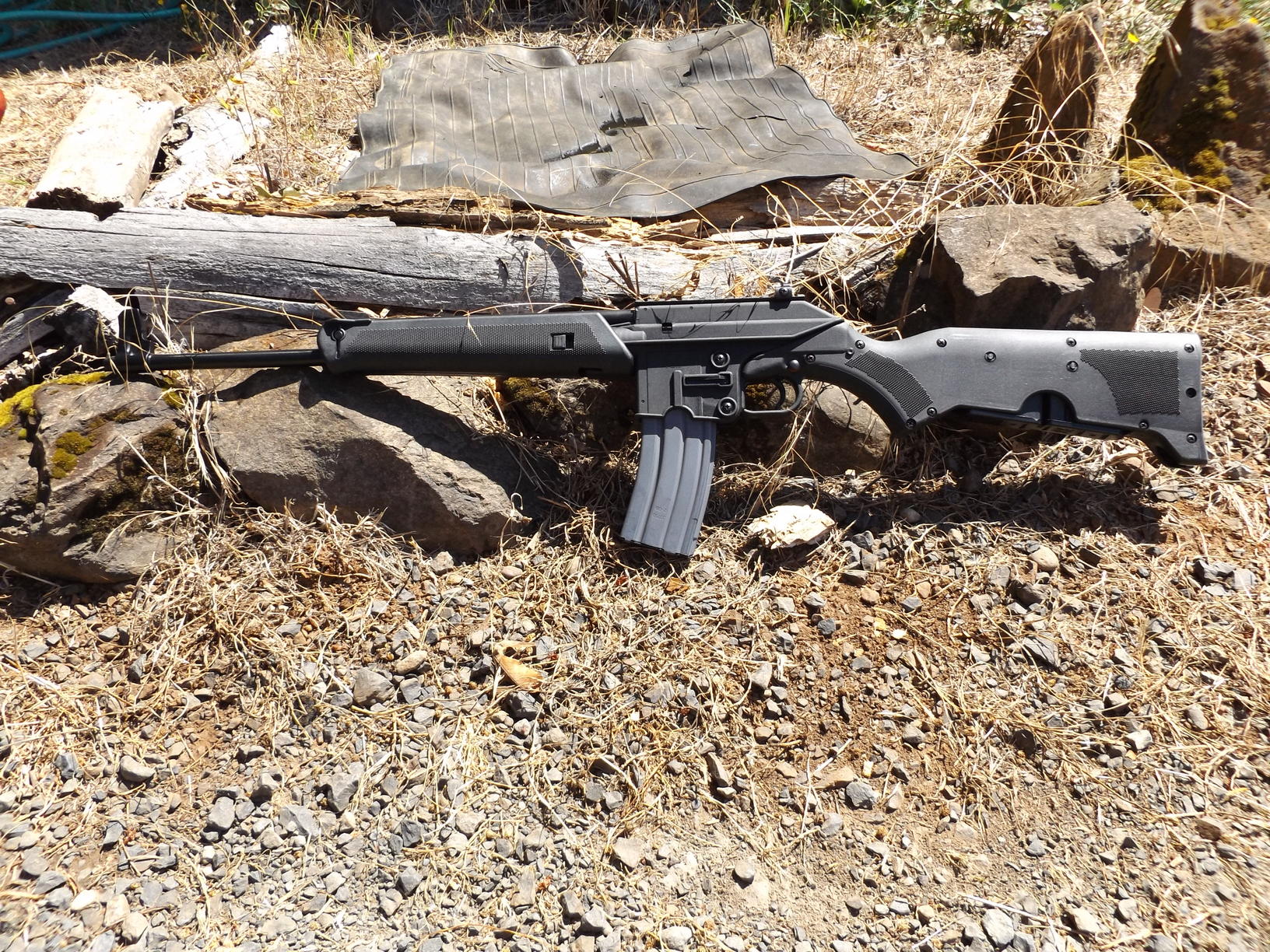
This isn’t my first Kel-Tec SU-16B rifle; I bought one around 2003 or 2004, if memory serves me correctly. What caught my attention back then was that it didn’t look like other so-called “assault rifles”. It was compact, lightweight, and shot the .223/5.56 caliber round. However, I had nothing but problems with that particular sample. The empty brass would stick in the chamber after firing, and quite often loaded rounds wouldn’t fit the chamber either. The gun was sent back to Kel-Tec, and several weeks later I got the gun back. I was told that the chamber reamer was worn out and the chamber wasn’t cut deep enough. Whatever! However, the gun still wouldn’t function 100%, so I got rid of it.
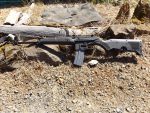
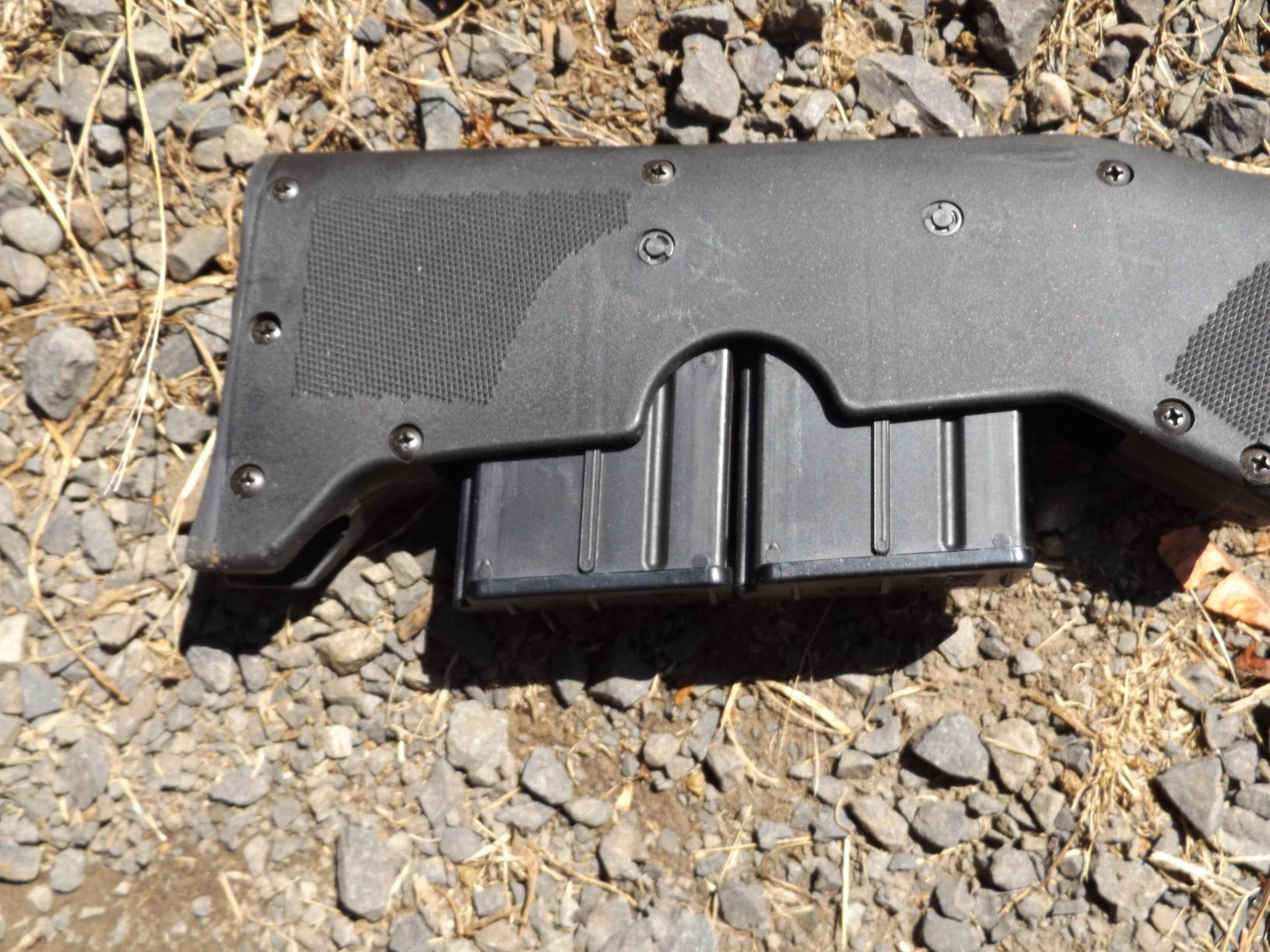
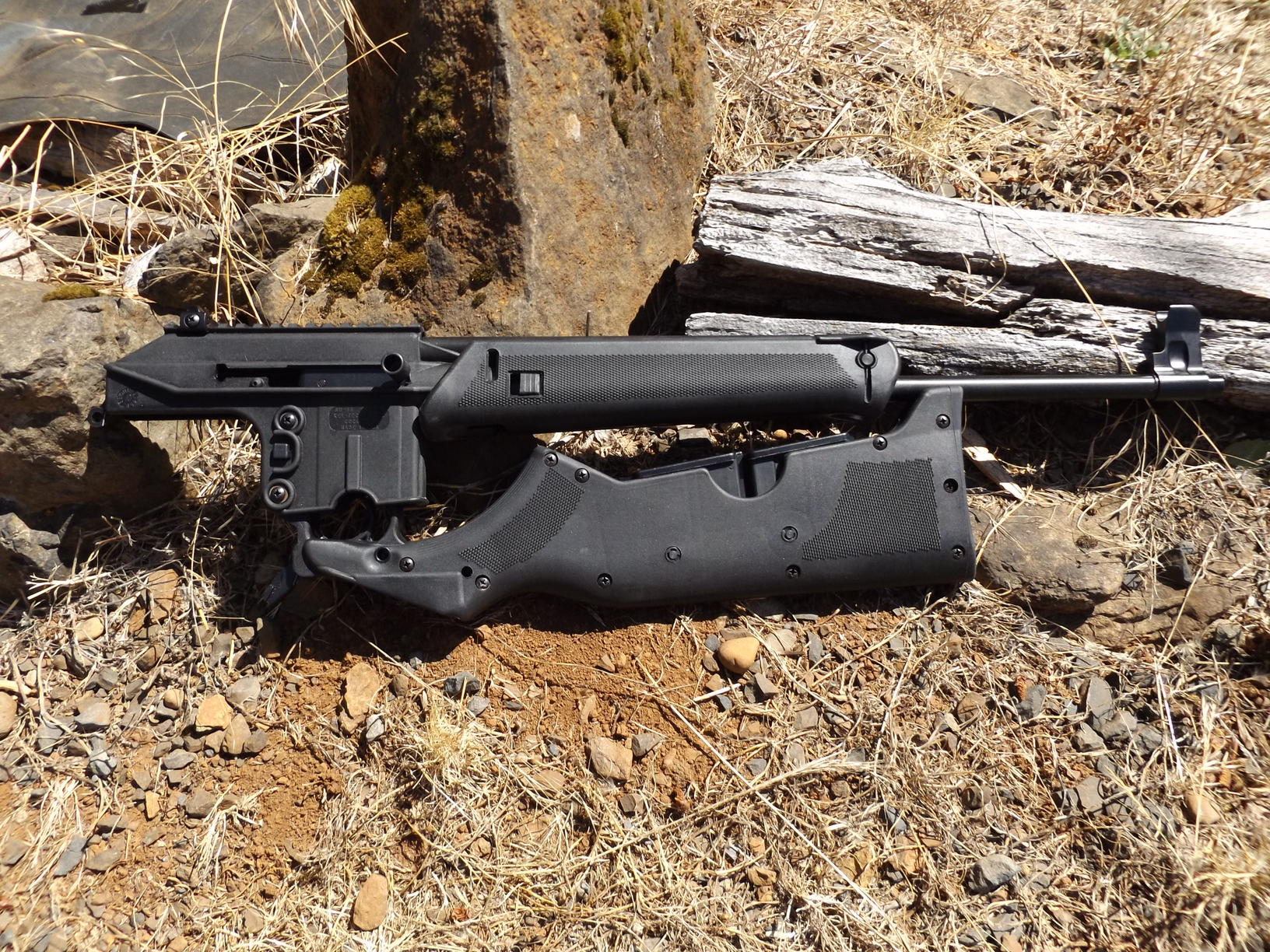
Some time ago, I spied a used but like-new Kel-Tec SU-16B at my local gun shop. The price was way more than “right”, and I got it and took it home for a good cleaning and lubrication and, of course, a very close inspection. The SU-16B weighs a mere five pounds empty, which is nice. It has a 16-inch medium/heavy barrel profile, with an overall length of a bit more than 37 inches, but that isn’t the whole story. The stock actually folds under the receiver, making it one very compact package at 26.4 inches when folded. The receiver and stock are made out of polymer, but it’s pretty tough stuff. The gun came with two 10-rd mags that fit nicely into the bottom of the stock, and of course the gun takes regular AR-16/M-16 magazines, too. You can also put one 30-rd AR mag in the stock, if you prefer it over the two 10-rd mags. On my first sample years ago, when I fired the gun the mags would fall out. This didn’t happen on this particular gun!

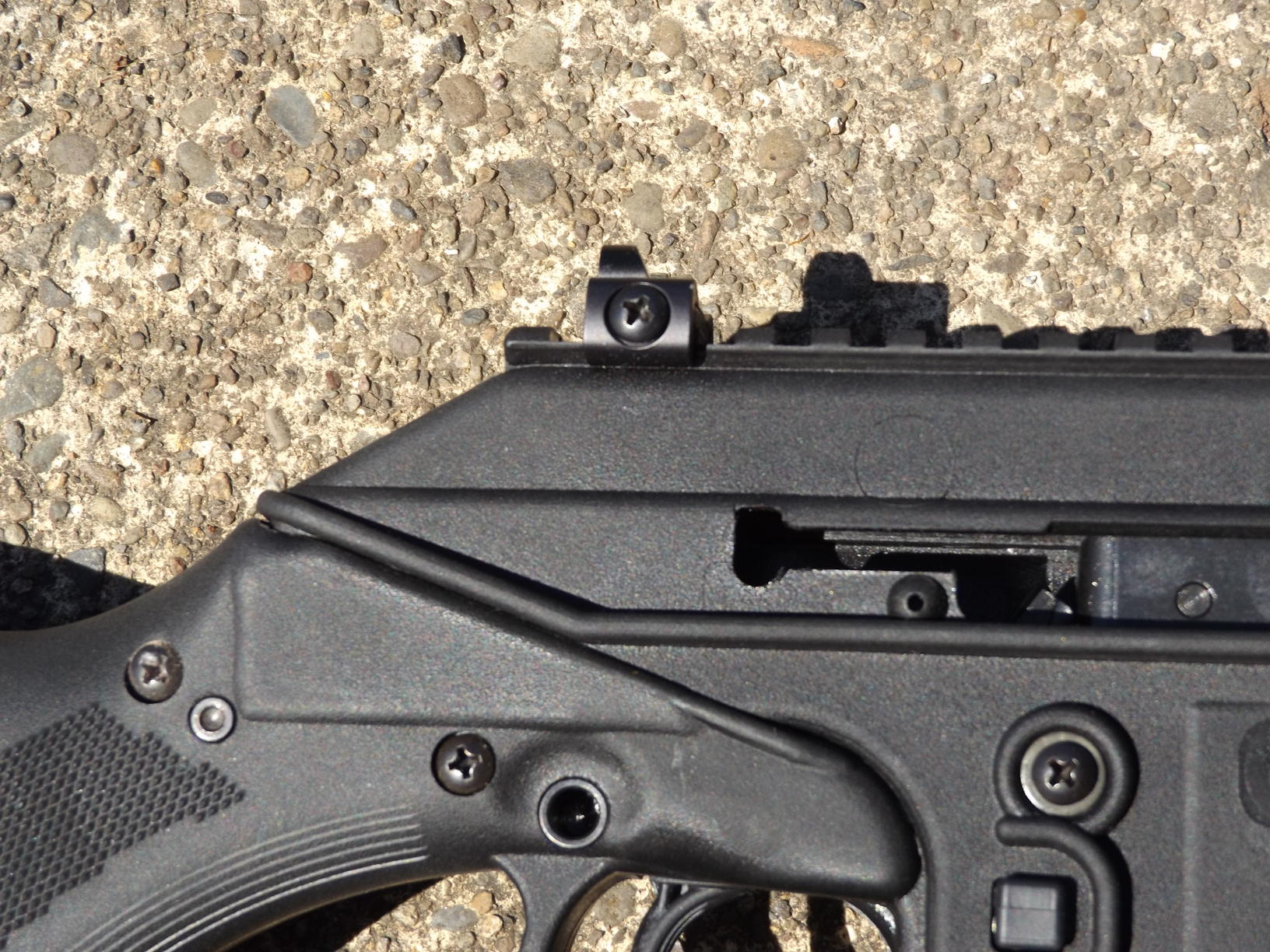
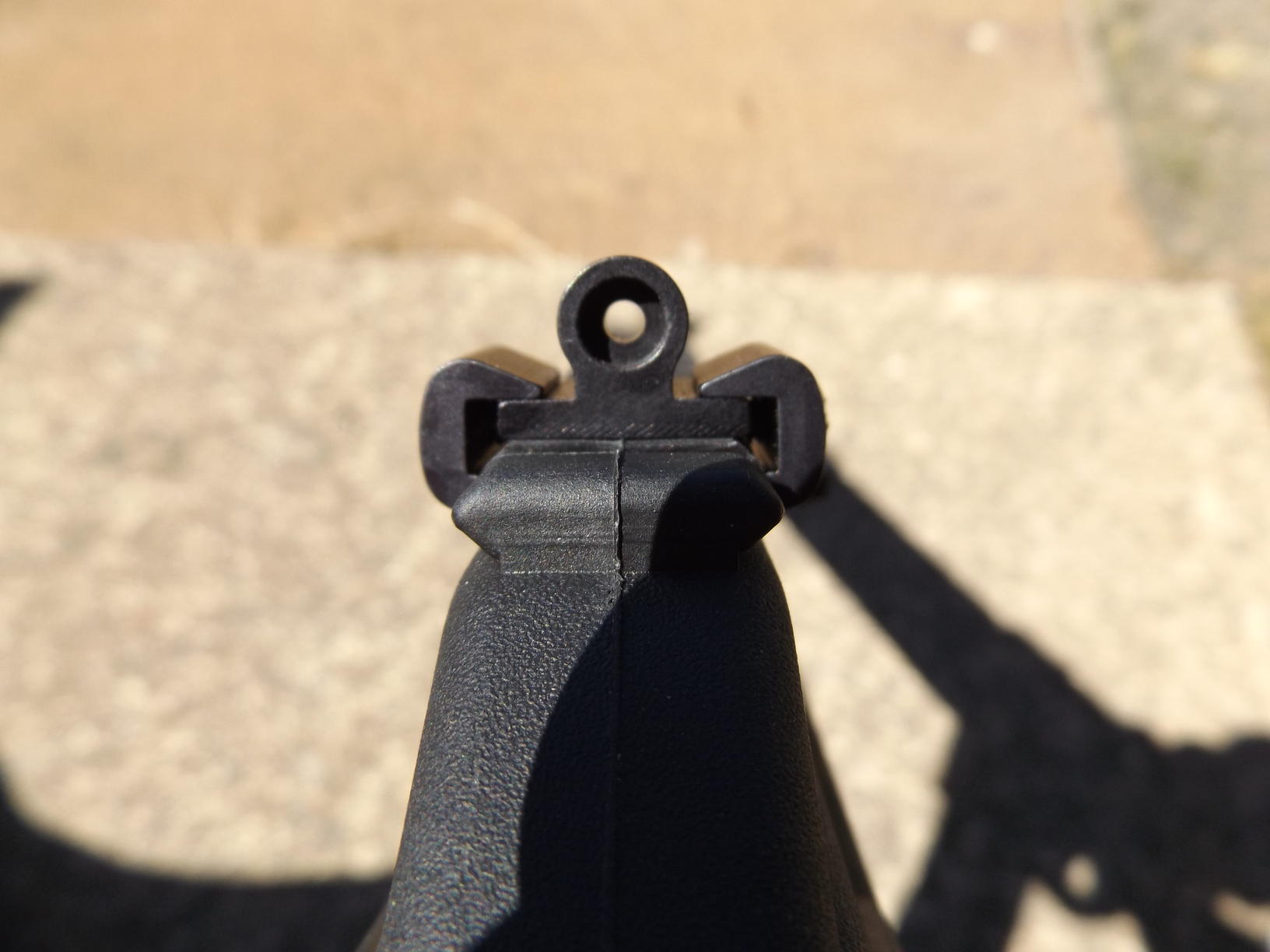
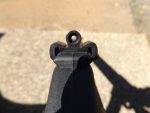
The trigger pull was at 6 lbs and very spongy, but you get used to it, if you’ve owned a Glock. The rear sight is a peep style and not easily adjusted. The front sight is a protected type that is adjustable for elevation. Again, it’s not an easy or very precise affair; however, once you get it adjusted, there isn’t any need to mess with it again.
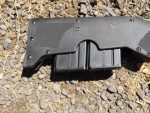
The gas operating system is based on the AK-47, so it’s not direct gas impingement; it keeps the inside of the receiver pretty clean between cleanings. It is a little bit tricky taking the gun apart when field stripping for a complete cleaning. There is also a Picatinny type rail on the top of the receiver, if you wish to mount a scope or red dot sight. As if the folding stock isn’t cool enough, the hand guard opens into two sections, and it can be used as a bi-pod. It’s not a super-sturdy bi-pod, but it’s a bi-pod just the same.

One problem I had on my first SU-16 was that the hand guard got very hot very fast. If I was able to empty a full 30-rd mag without any malfunctions, the hand guard was too hot to touch. I lined it with some aluminum foil, which really helped. On the new SU-16B, the polymer material that the hand guard is made out of is much thicker, and it never got too hot to touch, even under very rapid fire.
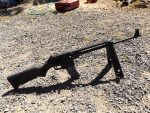
The Kel-Tec SU-16B isn’t my first rodeo with this company’s firearms. I’ve owned some others, and I have friends who owned guns by this company. It seems like it is a hit or miss proposition, when it comes to getting a gun that works 100% of the time. It shouldn’t be that way. However, the good news is that Kel-Tec will make it right if you have a problem gun. Still, they should do some better quality control before guns are shipped.

I’m happy to report that my SU-16B had zero malfunctions, and I even fed it some steel-cased .223 ammo, which is not the best ammo, to be sure. I just wanted to get that little tidbit out of the way. One place where the SU-16 shines is in that it doesn’t scream “assault rifle” to most folks, especially if you insert one of the 10-rd magazines that came with the gun. Additionally, it is legal to own in many locales where an AR-15 might be illegal to own. Plus, when folded, the gun takes up very little room in an emergency box under the seat of your vehicle.
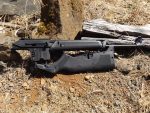
I’m not sure how durable this gun will be in the long-term. However, I didn’t buy it for a one and only gun to do a lot of shooting. It was bought to toss into my e-box in my pickup truck as a “just in case” rifle thing, ya know. I don’t see myself firing tens of thousands of rounds through it, but it’s just a nice gun to have with me, if I want to do some plinking when I’m out in the mountains, or as a weapon for self defense. It would make a dandy rifle to have in your bug out bag (BOB) if you ask me, when it is folded, assuming your BOB is big enough to conceal it. If I plan on a lot of shooting, I’ll grab an AR. It’s as simple as that. I don’t think I’d feel comfortable taking the Kel-Tec to war per se, but it would hold its own. I just don’t think it will over the long-term, but that’s just my two-cents worth. It would serve to get you home, if you are caught in a SHTF scenario.

The barrel twist on the SU-16B is 1:7, so it can handle a large variety of bullet weights. I didn’t have the usual wide assortment of .223 Rem ammo on hand for testing. Still, I think the gun will handle just about any .223/5.56 ammo. From Black Hills Ammunition, I had their 55-gr FMJ, 55-gr Soft Point, 60-gr Soft Point, and their 68-gr Heavy Mach Hollow Point ammo, which is a fair selection to run through the Kel-Tec. In all, I fired more than 300 rounds in my testing, all done in one shooting session. I zeroed the sights for 100 yards, though I normally zero my AR-15 sights for 300 yards. For whatever reason, I decided on a 100-yard zero, and it was quite the chore getting that front sight adjusted to just where I wanted the bullets to hit. However, once there I snugged it down, and it was good to go.

The front sight on the SU-16B is a bit large, and perhaps that’s why I only zeroed the gun for 100 yards. It isn’t the best sight for extreme precision shooting, but it will easily take deer-sized game or, in a self-defense situation, it will make fast work of a man-sized target. The good news is that there are now a lot of after-market and even some factory accessories for these rifles, so check around and you might find a better front sight. Better yet, mount a scope on the gun for more accuracy work.

As I mentioned early on, I fired some steel-cased ammo through the gun, and there were zero problems. That did my heart good. So, you can punch some paper with this ammo and save some money on your ammo purchases.

The SU-16B is only one model in the SU-16 line-up. Be sure to check out the Kel-Tec website for other models, if this one doesn’t fit your needs. I can see this as a dandy rifle for the kids to shoot or maybe for the wife, if she doesn’t like an AR or an AK. It will surely get the job done in many respects. Street pricing is tough. Brand new these guns are going between $600 – $700, when you can find one, and they are a bit difficult to find in stock in many gun shops, because they are in demand! Yes, I know you can find an entry-level AR-15 style gun for $600 – $700, but they don’t have the same features as this folding Kel-Tec SU-16B. It’s something to think about.
If the Kel-Tec SU-16B sounds like something you’d like, find one and make sure you fire enough rounds through it to make sure you are satisfied that it will go “bang” every time you pull the trigger. If it doesn’t, contact Kel-Tec, and they’ll make it right, in short order. I can only “endorse” the sample I bought, used, for this article. I’m satisfied with it in all respects. It’s just a lot of fun gun!

– Senior Product Review Editor, Pat Cascio



Recipe of the Week: Is There Any More of That Chicken? by J.M.

This simple, inexpensive meal will leave your guests asking, “Is there any more of that chicken?”. The result is a moist, fall-off-the bone chicken thigh wrapped in a crisp sweet and tangy skin. Note that hormones and antibiotics spoil this recipe, so shop for quality chicken.

Ingredients:

  • 6-8 plump chicken thighs
  • 1-2 large cloves of garlic, minced
  • Fresh ground mild chili or black pepper
  • ½ cup olive oil
  • ¼ cup Balsamic or apple cider vinegar
  • ½ cup honey
  • 1-2 tsp Balsamic or apple cider vinegar
  • ½ cup molasses

Directions:

  1. Preheat oven or covered grill to 350 degrees Fahrenheit.
  2. Place cooling rack on baking sheet. Place thighs skin side up on rack. This allows the grease to drip and accumulate.
  3. For the first baste, combine in a small bowl the minced garlic, pepper, olive oil and 1/4 cup of vinegar; this makes enough to baste the chicken two times.
  4. Brush on chicken and place sheet in oven.
  5. Bake for 45 minutes, basting another time or two to keep the skin moist.
  6. For the second baste, combine the honey and a splash (about 1-2 tsp) of additional vinegar to thin in a bowl and brush on.
  7. Bake for another 45 minutes, basting another time or two.
  8. For third baste, brush on the molasses and bake for another 20-30 minutes until skin is crisp.
  9. Remove from oven and rest for a few minutes. Goes well with baked beans or potato salad.

o o o

Useful Recipe and Cooking Links:

Do you have a favorite recipe that would be of interest to SurvivalBlog readers? Please send it via e-mail. Thanks!


Letter Re: Solid Fuel Stoves

Hugh,

Our home is located in NW Wyoming, at an elevation of just under 6,000 feet. We have operated both a coal stove (Hitzer Model 30-95 EZ-Flo Hopper Stove) and a wood burner (Blaze King Princess Catalytic Model) for a number of years. The wood stove is on the lowest level of our three-story log home, while the coal stove provides emergency heat for our storage/pantry building.

Over the years, we have learned a great many tips and techniques for using solid fuel heaters. The most important step in installing and using one of these stoves is to get the advice and help of a qualified chimney and stove installer. After hiring a couple of “experts” who had no idea what they were doing, we were fortunate to contact one of the best outfits in NW Wyoming. He corrected the glaring and dangerous mistakes of the bumblers and installed both of our stoves. He used Selkirk “Ultra-Temp” stainless steel insulated pipe with a rating of 2,100 degrees on the exterior sections and double wall chimney pipe for the interior location. To deal with draft issues, he installed “Vacu-Stack” chimney caps. And, since there are very few “chimney sweeps” in our area, we purchased a chimney-cleaning kit made by Wohler and imported from Germany. (It’s expensive but built like a Tiger Tank.)

The installer gave us some expert advice in how to burn solid fuel safely and efficiently. For the wood stove, he installed a thermometer through the double-wall pipe, rather than use a magnetic mount. He advised us that at least monthly to crank the heat up to bring the stack temperature to 1,200 degrees. This, he said would greatly minimize the formation of creosote. He further advised us to “burn hot”… keeping the stack temp at a minimum of 600 degrees. On windy days, he said to crack open a window on the windward side (the side facing the direction the wind is coming from). This helps to overpressure the house and help drive gases up the stack. Keep other doors and windows closed. We have followed his advice and found no fault with his suggestions.

The Hitzer coal stove can burn either Anthracite or Bituminous coal, but it does so in a different fashion. For Anthracite, it utilizes a 30-pound hopper designed for nut-sized coal. If burning Bituminous, the hopper is removed and large pieces of lump coal can be utilized. We make a trip back East every of couple years and bring back a few tons of “Blaschak” Anthracite coal from Pennsylvania. There is a mom and pop coal mine a few miles from us that sells chunk Bituminous. Using the Anthracite is much easier, cleaner, and efficient, with the coal burning almost completely free of smoke and smell. The hopper allows 12 to 18 hours of unattended heat. Keeping a coal stove going isn’t difficult, and I learned all the tricks by watching a few of the YouTube videos on the subject. The biggest caution is to keep the ashbin emptied, as you will burn out the grates if the ash bin fills up and restricts the flow of cooling air through the grates.

We are fortunate in being connected to natural gas, but during power failures or extreme weather, we are very glad to have the backup heat provided by wood and coal. – W.D.