A Homemade Thermos Cooker, by M.P.

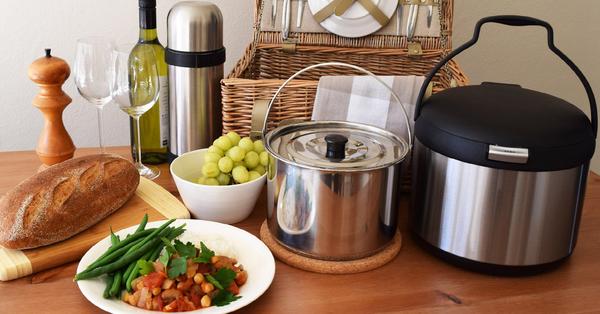
A thermos cooker is an energy saving cooking device. Earlier versions were a vacuum thermos that you placed uncooked food and boiling water into and then sealed it up, and in a few hours you had cooked food. Later versions have a pot that you put your ingredients into and place on your stove; you then bring the contents to a boil and place the pot into an insulated outer pot to hold the heat in and cook the food. Thermos cookers do not speed up cooking times; they only save energy, and in fact cooking times can be significantly longer than other methods. To cook food in the shortest amount of time, use a pressure cooker. Any serious prepper should already have and use a pressure cooker. The theory behind the thermos cooker is to limit the amount of heat that escapes from the cooker and hold that heat inside for a long period of time, therefore cooking the food inside with very little energy expended. Depending on the amount of food and liquid that is inside, a thermos cooker can also keep food warm for a very long time. Thermos cookers can be purchased at many online stores, such as Amazon. I liked the concept of the original thermos cookers but was disappointed with the size limitation, since it could only cook small to medium quantities. Current versions of the thermos cookers are available in sizes up to eight quarts or so, but they are quite expensive. I did some thinking and came up with an alternative that suits my needs very well and cost considerably less. I created my own thermos cooker using an 8-quart pressure cooker, three cardboard boxes that nest together, some foil-lined bubble wrap, and some contact cement. Two cardboard boxes would probably be sufficient, but according to my IR thermometer, with three boxes, the outside temperature is only a few degrees above room temperature. The pressure cooker that I have is an 8-quart Presto model 01370, which has small handles on opposite sides at the top. This style works much better than smaller pressure cookers that have one long handle coming off the side of the pot due to the large amount of space below the handle that has to be heated, thus wasting heat. Pressure cookers can be purchased at most stores that carry cookware and many online stores, such as Amazon. The pressure cooker that I use measures 10 inches in diameter not counting the handles, 15 inches in diameter with the handles, and is 9 inches tall with the lid locked.

Making Your Thermos Cooker

The inner box measures 12 inches wide, 15 inches long, 10 inches tall, and 20 inches diagonally. The pressure cooker fits in diagonally with a little room to spare. The middle box measures 12.75 inches wide, 18 inches long, and 11.75 inches tall. The outer box measures 17 inches wide, 20.5 inches long and 15 inches tall.

Boxes can be scrounged from stores or bought at one-stop stores, such as Wal-Mart, big box hardware stores, as well as moving and storage facilities. Foil lined bubble wrap can be found at any big box hardware store in the insulation isle. Spray contact cement can be found at any big box hardware store in the adhesive isle.

Inner Box

First, I cut the top flaps off of the inner box. I then cut one piece of bubble wrap to fit in the bottom of the inner box and I glued it in with contact cement. Next, I cut one piece of bubble wrap for each of the inside walls of the inner box and glued them in. Next, I cut bubble wrap for each of the outside walls and the bottom of the inner box and glued them on. The inner box now fit loosely inside the middle box. I centered the inner box inside the middle box and filled the gaps with bubble wrap; these don’t need to be glued. Finally, I cut a piece of scrap cardboard to the size of the opening of the inner box and cut and glued one piece of bubble wrap to it. This is used as a lid to seal up the inner box, once the cooker is inside.

Middle Box

First, I cut the top flaps off of the middle box. I then cut and glued bubble wrap on the outside sides and bottom of the middle box, just like the outside of the inner box. The middle box now fit inside the outer box with some room to spare. I centered the middle box inside the outer box and filled the gaps with bubble wrap. (These don’t need to be glued.) Next, I cut a piece of scrap cardboard to the size of the opening of the middle box and cut and glued two pieces of bubble wrap to it. This is used as a lid to seal up the middle box once the cooker is inside.

Outer Box

First, I cut the top flaps off of the outer box. Next I cut a piece of scrap cardboard to the size of the opening of the outer box and cut and glued two pieces of bubble wrap to it. This is used as a lid to seal up the outer box once the cooker is inside.

Thermos Cooker Operation

You will find some sample recipes at the end of this article. Place the food to be cooked along with any spices and cooking liquid into the pressure cooker and lock the lid in place. Bring the pressure cooker up to high pressure under medium-high heat. As soon and the cooker is up to high pressure, cover the steam vent with a hot pad or small kitchen towel to prevent steam burns. Place the pressure cooker into the inner box, carefully remove the hot pad from the vent, and put all of the lids in place. Start the cook timer.

There are two notes to pay attention to:

  1. Depending on the amount of ingredients and the cooking time, the pressure cooker may be very hot even after setting for many hours. Once the time has elapsed, open the boxes and using hot pads remove the cooker. If the pressure cooker still has pressure, release the pressure using the method called for in the recipe.
  2. If the volume of food and liquid is increased, the additional thermal mass will require that the cooking time be shortened or the food will be overcooked. If the volume of food and liquid is decreased, the reduced thermal mass will require the cooking time be lengthened or the food will be undercooked. Reducing the thermal mass significantly will at some point, cause there to not be enough heat stored to cook the food.

The thermos cooker works best using either electric or gas stoves because of the constant heat provided. Wood stoves can be used, but cooking times will vary due to temperature variations, which will lengthen the time to get to high pressure, which in turn will probably shorten the cooking time.

Recipes

These recipes are based on an elevation of 4,000 feet. The cooking times of the recipes may need to be adjusted slightly based on your elevation and the desired doneness of the food. Higher elevations require longer cooking times because the boiling point of water decreases 1.8 degrees F for every 1000 feet increase in elevation above sea level.

White Rice

Total time about 45 minutes – Makes about 6 cups

Note: white rice cooks so fast that a thermos cooker is not required.

Ingredients:

  • 3 cups long grain white rice
  • 3 1/2 cups cold water
  • 2 1/4 tsp salt or other seasonings

Instructions:

  1. Place rice, water, and seasonings into the pressure cooker; bring up to pressure under medium-high heat.
  2. Remove from heat and place on a trivet or hot pad.
  3. Cook 30 minutes. When the time is up, if there is any pressure left, drop the pressure using the quick release method. Crack the lid and let stand for a few minutes.

Brown Rice

Total time: 1:30 – Makes about 6 cups

Ingredients:

  • 3 cups long grain brown rice or rice blend
  • 5 1/2 cups cold water
  • 2 1/4 tsp salt or other seasonings

Instructions:

  1. Place rice, water, and seasonings into the pressure cooker.
  2. Bring up to pressure under medium-high heat; place a cloth over the relief valve and immediately place into the insulated box.
  3. Close up the box; cook 1:15.
  4. Remove from the insulated box; if there is any pressure left, drop the pressure using the quick release method.
  5. Immediately remove the pressure cooker lid. Leave the lid cracked if not serving immediately.

Beans

Total time: 1 hour – Makes about 10 cups

Ingredients:

  • 4 cups dry beans, soaked 8-24 hours
  • Water

Instructions:

  1. Place beans into the pressure cooker; add enough water to cover the top of the beans by 1”.
  2. Bring up to pressure under medium high heat; place a cloth over the relief valve and immediately place into the insulated box.
  3. Close up the box; cook 18 minutes.
  4. Remove from the insulated box. Let the pressure drop naturally. Drain any excess liquid if desired.

Chicken Stock

Total time: about 2 hours – Makes 3-4 quarts

This recipe can be used without the vegetables and seasonings to cook a chicken for shredding.

Ingredients:

  • 1 whole chicken rinsed, giblets discarded, excess fat removed
  • 2 carrots, cut in large chunks
  • 3 celery stalks, cut in large chunks
  • 1 large onion, quartered
  • 1 head of garlic, halved horizontally
  • 1 turnip, quartered
  • 1/4 bunch fresh thyme or 1 tsp dried thyme
  • 2 bay leaves
  • 1 teaspoon whole black peppercorns
  • Water

Instructions:

  1. Place all ingredients in the pressure cooker; Add enough cold water to just come to the top of the chicken and vegetables. (Too much will make the broth taste weak.)
  2. Bring up to pressure under high heat; Place a cloth over the relief valve and immediately place into the insulated box.
  3. Close up the box; cook for 1:30.
  4. Remove from the insulated box; let the pressure drop naturally.
  5. Carefully remove the chicken to a cutting board.
  6. When it’s cool enough to handle, discard the skin and bones and shred the meat.
  7. Carefully strain the stock through a fine sieve into another pot to remove the vegetables.

Pork Roast For Shredding

Total time: about 2:25.

Ingredients:

  • 3 pounds of pork loin, pork roast, or pork sirloin, cut into 2 to 3-inch chunks
  • 2 cups cold water
  • salt, pepper or any other desired spices

Instructions:

  1. Put the trivet or basket in the bottom of the pressure cooker.
  2. Add the pork, water, and spices; put the lid on the pressure cooker and bring up to pressure under medium-high heat.
  3. Reduce heat and cook for 20 minutes, maintaining high pressure. Place a cloth over the relief valve and immediately place into the insulated box. Close up the box; cook for 2 hours.
  4. Remove from the insulated box, letting the pressure drop naturally.
  5. Remove pork to a cutting board and allow it to cool until it is cool enough to handle. Shred the pork while warm.


Letter Re: 80% Lower Router Problems

Hugh,

I wanted to add something here. You should not have to keep retightening a router bit after each cut.

Having been a woodworker for 25+ years and having used routers to mill aluminum, here are a few safety tips:

  1. When inserting bit in collet make sure bit is not bottomed out all the way. Insert bit until it bottoms out and then slightly raise it up about 1/32 or 1/16″.

    The easy way to do this is to snug collet enough so you can insert bit into collet, and that bit will stay put when you take your hand off, then bottom bit out. Then while pulling outward, slightly twist bit about 1/8 of a turn to relieve bit from touching bottom, then tighten collet.

  2. I have noticed that if a bit is bottomed out, it can work loose even when routing wood. By relieving slightly so bit is not touching, I have never had one come loose.

Hope this helps readers stay safe. – William in NC


Economics and Investing:

In recognition of the Government’s debasement of the U.S. doller, some states are begining to realize that precious metals are not investments, but act as real money: IT BEGINS…. Idaho & Arizona Pass Bills To Remove “Capital Gains Taxes” On Gold & Silver (SRSrocco Report)

o o o

Reader H.L. sent in the link to this map that renames American States with the name of the country most closely matching their GDPs. It’s interesting to realize that the U.S. economy is so large that individual states have GDPs larger than many countries.

o o o

Collapsing pensions will fuel America’s next financial crisis

Private pension plans, state and teacher pension plans, union pension plans, and of course, Social Security are all in jeopardy due to unrealistic earnings expectation, poor management of some, too many people retiring and living much longer, and other various factors. The 3 legged retirement stool of a generation or two past (Soc. Sec., Company pension plan and personal retirement savings), is gone! It is up to the individual to save and invest and hope that their investments hold up, plus, get out of all debt well before retirement. No Student Loans, No Credit Card Debt and definitely a paid up home.

The Government Pension Guarantee Fund is almost broke! For most Americans, it means living below your means, like our Grand Parents lived during the Great Depression! This does not mean not enjoying life, but does mean smarter spending, fewer “wants”, and concentrating on needs. Also, as more people are thrown into poverty and various welfare programs are stretched beyond their limits, some desperate people will turn to crime to survive. Protecting the home and self will become even more critical! The old Boy Scout motto “be prepared”, should be our mantra! – H.L.

o o o

Mizuho on subprime auto lending conditions. Many have stopped paying on their car loans as they struggle to make ends meet. – G.P.

o o o

SurvivalBlog and its editors are not paid investment counselors or advisers. Please see our Provisos page for details.


Odds ‘n Sods:

I recently bought some “Morale” patches from a small company in Tennessee called MoraleTags.com, and I was quite pleased with the quality of their products and their great service. It is a veteran-owned company. They have a wide assortment of patches, and also sell clever metal hat clips that are laser engraved with logos. (Warning: A few of them are rather crude.) Take a look at their web site. – JWR

o o o

Showing their support of collectivism and the establishment, a group of retired military leaders are fighting to stop the Veterans 2nd Amendment Protection Act. Apparently, those who have put their lives on the line for their country are not responsible enough to own a weapon. – Link sent in by DSV

o o o

An incredible way to control the direction of a felled tree: Tounge and groove – W.A.

o o o

Emerging Cyberthreat: Suspected Hack Attack Snagging Cell Phone Data Across D.C. – A mass hack and tracking of cell phones. – G.P.

o o o

As families alter their food habits to fit their shrinking budgets, echos of WWI are starting to emerge: How WWI food propaganda forever changed the way Americans eat – T.B.


Notes for Thursday – March 16, 2017

Today is the anniversary of the Battle at Pound Gap Kentucky (1862).

o o o

Today, we present another entry for Round 69 of the SurvivalBlog non-fiction writing contest. The nearly $15,000 worth of prizes for this round include:

First Prize:

  1. A $3000 gift certificate towards a Sol-Ark Solar Generator from Veteran owned Portable Solar LLC. The only EMP Hardened Solar Generator System available to the public.
  2. A Gunsite Academy Three Day Course Certificate that is good for any one, two, or three day course (a $1,195 value),
  3. A course certificate from onPoint Tactical for the prize winner’s choice of three-day civilian courses, excluding those restricted for military or government teams. Three day onPoint courses normally cost $795,
  4. DRD Tactical is providing a 5.56 NATO QD Billet upper with a hammer forged, chrome-lined barrel and a hard case to go with your own AR lower. It will allow any standard AR-type rifle to have a quick change barrel, which can be assembled in less than one minute without the use of any tools and a compact carry capability in a hard case or 3-day pack (an $1,100 value),
  5. An infrared sensor/imaging camouflage shelter from Snakebite Tactical in Eureka, Montana (A $350+ value),
  6. Gun Mag Warehouse is providing 20 Magpul PMAG 30-rd Magazines (a value of $300) and a Gun Mag Warehouse T-Shirt; (an equivalent prize will be awarded for residents in states with magazine restrictions),
  7. Two cases of Mountain House freeze-dried assorted entrees in #10 cans, courtesy of Ready Made Resources (a $350 value),
  8. A $250 gift certificate good for any product from Sunflower Ammo,
  9. Two cases of Meals, Ready to Eat (MREs), courtesy of CampingSurvival.com (a $180 value).

Second Prize:

  1. A Tactical Self-Contained 2-Series Solar Power Generator system from Always Empowered. This compact starter power system is packaged in a wheeled O.D. green EMP-shielded Pelican hard case (a $2,400 value),
  2. A Glock form factor SIRT laser training pistol and a SIRT AR-15/M4 Laser Training Bolt, courtesy of Next Level Training, which have a combined retail value of $589,
  3. A gift certificate for any two or three-day class from Max Velocity Tactical (a $600 value),
  4. A transferable certificate for a two-day Ultimate Bug Out Course from Florida Firearms Training (a $400 value),
  5. A Trekker IV™ Four-Person Emergency Kit from Emergency Essentials (a $250 value),
  6. A $200 gift certificate good towards any books published by PrepperPress.com,
  7. A pre-selected assortment of military surplus gear from CJL Enterprize (a $300 value),
  8. A selection of canned meats containing a 10 pack of 28oz cans of Premium Beef and a 5 pack of 28oz cans of Premium Pork from Wertz’s Farm Market (a $300 value),
  9. RepackBox is providing a $300 gift certificate to their site, and
  10. American Gunsmithing Institute (AGI) is providing a $300 certificate good towards any of their DVD training courses.

Third Prize:

  1. A Model 175 Series Solar Generator provided by Quantum Harvest LLC (a $439 value),
  2. A Royal Berkey water filter, courtesy of Directive 21 (a $275 value),
  3. A custom made Sage Grouse model utility/field knife from custom knife-maker Jon Kelly Designs, of Eureka, Montana,
  4. A large handmade clothes drying rack, a washboard, and a Homesteading for Beginners DVD, all courtesy of The Homestead Store, with a combined value of $206,
  5. Expanded sets of both washable feminine pads and liners, donated by Naturally Cozy (a $185 retail value),
  6. Two Super Survival Pack seed collections, a $150 value, courtesy of Seed for Security, LLC,
  7. Mayflower Trading is donating a $200 gift certificate for homesteading appliances,
  8. Montie Gear is donating a Y-Shot Slingshot and a $125 Montie gear Gift certificate.,
  9. Two 1,000-foot spools of full mil-spec U.S.-made 750 paracord (in-stock colors only) from www.TOUGHGRID.com (a $240 value), and
  10. Fifteen LifeStraws from SafeCastle (a $300 value).
  11. A $250 gift certificate to Tober’s Traditions, makers of all natural (organic if possible) personal care products, such as soap, tooth powder, deodorant, sunscreen, lotion, and more.

Round 69 ends on March 31st, so get busy writing and e-mail us your entry. Remember that there is a 1,500-word minimum, and that articles on practical “how to” skills for survival have an advantage in the judging.


Selecting An Escape Route, by KyoSa D

Everyone has a plan to “Get Out of Dodge” in an emergency. As I teach my self defense and firearms classes, I ask people and they all say, “I’d head up to my cabin” or “I’ll head out west”. The problem is, have you actually considered how you will leave the immediate area of your home or work? Most of the people I hear begin their plan ambiguously. They say, just simply, “I’d leave town”, but they have never done any reconnaissance or real-life consideration of their route.

As humans, we are creatures of habit. If I want to leave my house in Metro Detroit and head to my cabin, I just jump on the freeway two blocks from home and take it most of the way, right? Well, on a normal weekend, without any unrest or an emergency, that’s very simple.

These basic plans fall apart once we consider the effects of a large civil disturbance, a disaster, or simply a large-scale long-term blackout. With the increasing trend of protesters blocking the freeways and major streets, these issues must be taken into consideration.

As the crisis unfolds, people will take to the streets in many ways. Protesters who may be out, people seeking to re-unite with family members, looters, people seeking supplies, and people trying to leave the area will all clog the roads. Authorities will attempt to retain control by establishing traffic control points and roadblocks. Roads and highways may also have been damaged.

When planning routes, a simple and thorough process needs to be used. The process begins with locating four different routes to use in the event one is blocked. A map study is a method to predict where issues may arise. You must drive these routes (conduct reconnaissance) to determine where the problems areas are and how to avoid them. Safe havens and supply stops (or absence thereof) must be planned. Final coordination with others at your destination is also needed. We will address these areas in this article.

Planning needs to begin with a map study. While GPS technology is convenient and should certainly be planned for, the failure of batteries or other components can happen, so beginning with an old-fashioned map and compass is an important fail-safe. Analyze the map and select routes out of the area that are non-traditional. Sure, the highway is the fastest way out of the area, but the other 400,000 people fleeing the area also know that. I recommend the acronym PACE to remind you to have four routes or plans for everything. Primary, Alternate, Contingent, and Emergency.

As you are studying the map, think from the perspective of the local law enforcement agency trying to maintain order. Decide where Traffic Control Points (TCP) would be placed to best control traffic. Decide what government buildings will either be heavily protected or draw protesters/refugees. Make your routes to avoid these areas. Mark grocery stores and gas stations on the map, and avoid these areas. They will be magnets for looters or just desperate people. Mark and avoid all hospitals, again, during a crisis; these will be busy areas and present a risk.

I have designed my routes to use only secondary roads. While larger traffic arteries move faster under ideal circumstances, they will be at a standstill and will attract the most law enforcement, protest, and refugee attention as well. Ensure that the secondary roads you use don’t traverse high-crime areas.

After selecting at least three routes using only secondary roads, select as your Emergency route something completely out of the box. As an example, I live two blocks from the start of a walking trail that leads all the way through the south side of my city and avoids all major intersections. The trail is wide enough for a vehicle and the reconnaissance showed it’s usable with special equipment (bolt cutters). It also connects with a private dirt road along the power lines that are used to check the transmission lines. This gives me yet another route option in a different direction that also avoids major intersections.

Once you have selected the routes, drive them to validate the selections. Watch for bridges that can easily be blocked, high-crime neighborhoods, grocery stores and gas stations to be avoided, as well as police and fire stations to be avoided. Ensure that the route doesn’t have special hazards that aren’t visible on the map, like narrow streets easily blocked with on-street parking and one-way areas. Avoid routes that lead through subdivisions with a lot of cul-de-sacs. Make sure there is always a way out of any congested area along these routes. Drive them both in daylight and darkness. My personal plan involves leaving between 3 and 4 AM (slowest human reaction times), and so I have done recon on my routes during that time frame. The reason is that if you drive through a neighborhood during daytime, you won’t have a feel for how many cars are parked on the street at night. A lot of on-street parking at night creates a zone where attackers can ambush you (using the vehicles for cover) and can make it very easy to box you in by having a vehicle come at you while a second ones pulls up behind you. With cars on both sides, this is a no-win scenario. Continue to drive the routes on a regular basis to ensure that you are aware of any new issues, like construction, changes in traffic flow, and any new businesses that need to be avoided.

After selecting the routes from your home out of the immediate area, next select routes from workplace. However, your work is now double because you will need to select routes from work to home, as well as routes from work directly out of the immediate area. Yes, it’s a lot of work, but prior planning makes emergency response that much easier. Use the same process of map study and recon to select the routes. It will make you more secure as well, because taking multiple routes to and from work keeps you safe anyway. The reason for having both destinations is that the level of emergency may dictate an immediate departure from the area without a stop at home. Also, the location of the situation may be between your workplace and home.

Once we have our routes out of the immediate area planned and vetted, it’s time to analyze routes from the area to your “Get Out Of Dodge” location. Again, start with the map and select four routes. When picking out a map, purchase a state Atlas/Gazetteer type, rather than a DOT fold-out map. The reason is that the average citizen is going to use routes on a fold-out map, and the Atlas type shows many good roads that aren’t listed on the state highway map. I chose routes that avoid any city and looked for farmland or very small villages. These small towns will likely have a locally-owned and operated gas station or store that may remain open for emergency supplies, but I wouldn’t count on it. If you must cross interstates, look for crossings under them away from interchanges. Traffic control points are likely to be up at on and off ramps and traffic may be forced off right into your path.

It’s very tempting, once you are away from an urban area, to try and transition to an interstate or other freeway. Don’t fall into this trap. These highways are designated as “limited-access” and their actual purpose is to facilitate the movement of government vehicles in an emergency. They have on and off ramps not for travel convenience but for the ability to “seal off” all non-essential traffic. As they are fenced on both sides usually with a ditch on both sides before the fences, there are very easy to block, trapping you.

Once the routes from your original location to your hide-away have been selected and recon done, it’s time to turn your attention to final coordination with others at your hide-away or “Get Out Of Dodge” location. Even if it’s only you there, there are some steps that will need to be taken for safety. Once you get close to the location, don’t plan to drive straight in, even if it’s just you and your family. Plan and select a hidden location near your final destination where you can stop your vehicle and conceal it briefly and walk in on foot. It would do you no good to have made a great escape plan, executed it flawlessly, then blunder into your hide-away to find it already seized by others who may be unfriendly.

If it’s a single-family property, set up tell-tales to determine if anyone has been on the access road or driveway. These can be as simple as a string or branch left across the road. Walk in, using a covered and concealed route and observe to ensure that no one has taken over your hide-away. Once you have determined that it’s secure, bring in your vehicle and execute your security plans.

If it’s a multi-family situation (like mine), have a plan agreed upon by all and allow no deviation. Our plan consists of stopping the vehicle short of the location and making radio (don’t rely on cell phones). Once radio contact is established, an all-clear pass phrase is given. Even though the pass phrase is given, a radio stays with the vehicle and another radio-equipped person walks in on foot to visually verify the situation. Only after all steps are verified is the vehicle then called in.

Once all the routes have been planned and verified, continue to review and update your plan regularly. Once a month is a good idea, but once a quarter is a minimum. I live in an area with serious seasonal changes, so updates will be needed in the event of winter snow, spring floods, et cetera.

The final step is the development of a “travel security SOP”. By this I mean a set of procedures to ensure your safety and security while on the move. First, as harsh as it sounds, consider that you will not stop to render aid to others. This is a personal choice, but many ambush scenarios begin with staging someone needing assistance or the person who truly needs help may have just been ambushed by others. Try to send help using a radio or other communications, but stopping should not be part of the plan. Understand that whatever disputes or conflicts you encounter, they are not your fight and you will either continue straight through or avoid them. Another consideration is security at relief breaks. A trip that may have taken three hours on a normal weekend may take 10-12 hours or even longer. One person should always be posted as security with the vehicle, and no one should go out of the other’s sight. If you are traveling alone, decide upon safe locations and procedure ahead of time (like driving off the main route and out of sight first).

Keep the vehicle fueled and have snacks stocked in it at all times, along with plenty of water to eliminate the need for stops.

Also, ensure that you bring along maps and a compass, just in case you need to change the plan on the fly, based upon the conditions you encounter. If a road is blocked or impassable, having a paper map to quickly make changes is vital. The navigator (person designated ahead of time) should follow your progress on the map diligently, so that if an emergency change must be made, valuable minutes won’t be wasted trying to figure out where you are on the map.

Most plans involve leaving the immediate area, but don’t consider planning how that will be done. Following the steps in this article will help you establish a secure plan that has options in the event of an emergency. The more plans you have ahead of time, the less stress you will encounter when it’s time to get out of dodge. In an emergency, it’s time to move, not time to plan. Movement is life.


Letter Re: 80% Firearms

Hugh,

I recently completed a Complete AR-15 Rifle Kit with PTAC Upper from 80% Arms with their Easy Jig system, and I would like to share a few things from my experience.

80% Arms shipped the kit within just a few days. There were no missing parts or tools. That was my only experience with their customer service, but based on the rapid shipment I would rate them “excellent”.

The instructions were quite complete and understandable, but you do need to read them carefully (preferably twice or more) before cutting and then follow them exactly step by step while cutting.

Two points I want to emphasize from the instructions:

The Easy Jig system uses a router with a mill bit for much of the cutting. The instructions clearly state to ensure the bit is very tight in the router. They do mean very tight, as mine began to drift at one point in the cut causing a problem I will discuss shortly. Even though I had tightened the bit tight enough that I was worried about breaking my router, I found that I needed to tighten the bit after every cut, until it eventually “seated” in a sense and the problem went away. But I would tighten after every cut period as the vibration from making those cuts does seem to loosen it.

The second related topic was that the instructions state very clearly to shut off the router and let it coast to a stop before removing it from the cut and resetting depth for the next cut. When the bit began to drift out, I tried to pull the router out before the bit cut too deep. That was a bad idea. The gyroscopic effect of the spinning router makes it very difficult to pull out without contacting the inside of lower and the jig. When you make one contact, you then bounce and make several. The result was marking up the inside of the lower and the jig pretty badly and breaking one of three points off the bit and damaging the second, leaving only one good point on the bit.

I stared at this mess and was about ready to go order another lower, a replacement bit, and a replacement for the portion of the jig I messed up. However, I did not want to spend the money and wait for delivery, and figuring at that point I had nothing to lose I continued on with the damaged goods. The bit made it through to the end. The marks in the jig did cause the inside of the lower to have some imperfections as I continued, but none of them made any functional difference. I ended up with a completed lower with some pretty ugly tool marks inside, but it was completely functional and none of my mistakes were visible from the outside.

I had never shot an AR let alone torn one down or assembled one. I have, however, shot and torn down a lot of other guns and I am reasonably mechanically inclined, so I simply looked for assembly instructions online, found a good set, and had the whole assembly together in short order. I came to understand why ARs have so many fans, as they are very simple. I did run into one slight problem when I lost one of the tiny teardown springs, but I was extremely lucky and found it.

I did not time the entire process, but I would guess I had four to six hours in the whole process from unpacking to final assembly.

The kit I bought had a Palmetto State Armory upper with a 16″ chrome-lined barrel. It comes with front sight but no rear sight or magazines. I put an inexpensive carry handle sight on mine, replaced the standard front sight with a tritium sight, and purchased two Magpul magazines. At 100 yards, the rifle shoots as well as I can see at 55 years of age with inexpensive commercial reloads. I think if I put a scope on it, it might be a 1 MOA gun or close with that same ammo. At some point I will probably work or replace the trigger as well and get it down to the 3.25lbs that I like. It is not bad. I would put it at maybe five or six pounds, if I were to guess. It is just a normal factory trigger IMO, and I don’t particularly like normal factory triggers.

The only other thing I would add is to put up a good barrier around where you are cutting, as the router throws a lot of aluminum shavings all over. I did not bother to and consequently spent a bit of time cleaning up afterward.

I recommend this build to anyone. I enjoyed the process, and I love the rifle despite my mistakes.

In closing, tighten your router bit after every cut, turn off the router before trying to pull it out, buy an extra bit to have on hand in case you mess up, and unless you like having a meaningful relationship with a broom and shop vac put up some kind of containment while you are cutting. Go slow and have fun! – JBH


Economics and Investing:

Another casualty of online shopping: Gander Mountain Files Chapter 11 Bankruptcy & Will CLOSE 32 Stores (The Firearm Blog) – T.P.

o o o

What do these CEOs know that we don’t? (Sovereignman) Excerpt: “My friend’s grandfather once told him that, just prior to the Nazi invasion, the schools in Poland announced they were suspending classes… but only for two weeks, because that’s how long they expected the war to last.”

HJL’s Comment: Or in the words of Admiral David Glasgow Farragut (1801-1870) “Damn the torpedoes, full speed ahead!”

o o o

Gold’s Next Leg Down Targets $1156 (Gold Eagle)

o o o

How the Fed Convinced Markets It’ll Raise Rates This Week (Bloomberg) While Janet Yellen, Lael Brainard, and crew are talking markets into believing a March hike, SurvivalBlog can’t help but wonder if this is just a continuation of the establishment’s battle against Government reform.

o o o

G-20 Checks In for Detox as Germany Seeks Backing for Free Trade (Bloomberg) Excerpt: “Currency complaints and the threat of trade wars are making global economic affairs the most toxic they’ve been in years. So the world’s top policy makers are heading for a spa treatment. This weekend in the German resort of Baden-Baden, finance ministers and central bank governors of the world’s 20 key economies are going to be asked to reaffirm the principles of free trade.”

o o o

SurvivalBlog and its editors are not paid investment counselors or advisers. Please see our Provisos page for details.


Odds ‘n Sods:

Mike Williamson, SurvivalBlog’s Editor at Large, sent in this link to the video “Surviving in the Siberian Wilderness for 70 Years”. We’ve linked to the story of this family before, but it is a good reminder for all those who think that they will survival “alone” when TEOTWAWKI hits. Unless you want to spend every moment of your life scratching for the next breath you take, relationships are incredibly important.

o o o

Goldman Sachs: Almost One Million H-1B Foreign Workers Hold University-Level Jobs Here – H-1B: Bullying American workers. – D.S.

o o o

From reader M.P.: I just ran across this tool, which claims to block the Microsoft telemetry that sends a steady stream of data back to MS from Windows 10. Some of us have to use Windows, some of us just prefer it, and for those folks this might be a good safety step to take. Works with Windows 7 and 8/8.1 as well. I have always found SpyBot to be a pretty good group.

o o o

Increasing America’s official combat footprint worldwide: Pentagon Wants To Declare More Parts Of World As Temporary Battlefields – H.L.

o o o

Sounds like a natural consequence of claiming the “Conservative Christian” title, yet living life with a double standard: Many Young Adults Are Turning To Witchcraft As A Way To Rebel Against Their Conservative Christian Upbringings

o o o

Wondering what it’s like to work from your own home? This short video nails it! Professor Robert Kelly Skype TV Interview Interrupted by Toddlers – but I wouldn’t trade it for anything. SurvivalBlog will be introducing a series of articles next month about breaking free from the rat race and working from your own home as your own boss. Link sent in by D.C.


Notes for Wednesday – March 15, 2017

This is the birthday of General and President Andrew Jackson, in 1767. He was the 7th President of the United States (1829-1837).

o o o

Today, we present part two of an entry for Round 69 of the SurvivalBlog non-fiction writing contest. The nearly $15,000 worth of prizes for this round include:

First Prize:

  1. A $3000 gift certificate towards a Sol-Ark Solar Generator from Veteran owned Portable Solar LLC. The only EMP Hardened Solar Generator System available to the public.
  2. A Gunsite Academy Three Day Course Certificate that is good for any one, two, or three day course (a $1,195 value),
  3. A course certificate from onPoint Tactical for the prize winner’s choice of three-day civilian courses, excluding those restricted for military or government teams. Three day onPoint courses normally cost $795,
  4. DRD Tactical is providing a 5.56 NATO QD Billet upper with a hammer forged, chrome-lined barrel and a hard case to go with your own AR lower. It will allow any standard AR-type rifle to have a quick change barrel, which can be assembled in less than one minute without the use of any tools and a compact carry capability in a hard case or 3-day pack (an $1,100 value),
  5. An infrared sensor/imaging camouflage shelter from Snakebite Tactical in Eureka, Montana (A $350+ value),
  6. Gun Mag Warehouse is providing 20 Magpul PMAG 30-rd Magazines (a value of $300) and a Gun Mag Warehouse T-Shirt; (an equivalent prize will be awarded for residents in states with magazine restrictions),
  7. Two cases of Mountain House freeze-dried assorted entrees in #10 cans, courtesy of Ready Made Resources (a $350 value),
  8. A $250 gift certificate good for any product from Sunflower Ammo,
  9. Two cases of Meals, Ready to Eat (MREs), courtesy of CampingSurvival.com (a $180 value).

Second Prize:

  1. A Tactical Self-Contained 2-Series Solar Power Generator system from Always Empowered. This compact starter power system is packaged in a wheeled O.D. green EMP-shielded Pelican hard case (a $2,400 value),
  2. A Glock form factor SIRT laser training pistol and a SIRT AR-15/M4 Laser Training Bolt, courtesy of Next Level Training, which have a combined retail value of $589,
  3. A gift certificate for any two or three-day class from Max Velocity Tactical (a $600 value),
  4. A transferable certificate for a two-day Ultimate Bug Out Course from Florida Firearms Training (a $400 value),
  5. A Trekker IV™ Four-Person Emergency Kit from Emergency Essentials (a $250 value),
  6. A $200 gift certificate good towards any books published by PrepperPress.com,
  7. A pre-selected assortment of military surplus gear from CJL Enterprize (a $300 value),
  8. A selection of canned meats containing a 10 pack of 28oz cans of Premium Beef and a 5 pack of 28oz cans of Premium Pork from Wertz’s Farm Market (a $300 value),
  9. RepackBox is providing a $300 gift certificate to their site, and
  10. American Gunsmithing Institute (AGI) is providing a $300 certificate good towards any of their DVD training courses.

Third Prize:

  1. A Model 175 Series Solar Generator provided by Quantum Harvest LLC (a $439 value),
  2. A Royal Berkey water filter, courtesy of Directive 21 (a $275 value),
  3. A custom made Sage Grouse model utility/field knife from custom knife-maker Jon Kelly Designs, of Eureka, Montana,
  4. A large handmade clothes drying rack, a washboard, and a Homesteading for Beginners DVD, all courtesy of The Homestead Store, with a combined value of $206,
  5. Expanded sets of both washable feminine pads and liners, donated by Naturally Cozy (a $185 retail value),
  6. Two Super Survival Pack seed collections, a $150 value, courtesy of Seed for Security, LLC,
  7. Mayflower Trading is donating a $200 gift certificate for homesteading appliances,
  8. Montie Gear is donating a Y-Shot Slingshot and a $125 Montie gear Gift certificate.,
  9. Two 1,000-foot spools of full mil-spec U.S.-made 750 paracord (in-stock colors only) from www.TOUGHGRID.com (a $240 value), and
  10. Fifteen LifeStraws from SafeCastle (a $300 value).
  11. A $250 gift certificate to Tober’s Traditions, makers of all natural (organic if possible) personal care products, such as soap, tooth powder, deodorant, sunscreen, lotion, and more.

Round 69 ends on March 31st, so get busy writing and e-mail us your entry. Remember that there is a 1,500-word minimum, and that articles on practical “how to” skills for survival have an advantage in the judging.


Vinegar As An Essential Multi-Purpose Tool for TEOTWAWKI- Part 2, by J.R.

Equipment and Supplies

Making your own vinegar at home is a simple, useful, practical skill that is applicable to TEOTWAWKI.  If you can crush apples and save the apple juice, you can make apple cider vinegar (ACV).  In addition to apple, there are many different types of vinegars you can make depending upon your needs and desires.  I have been making ACV for many years. I have gallons put away in my basement, and I always have a bottle in the fridge that I use on a continual basis.  Stocking up on some basic supplies ahead of time will ensure you have the potential of making your own supply of vinegar for years.  One of the most important items you would want is an apple or fruit cider press. Farms with apple orchards have used these elementary presses for decades to make apple cider.  Growing up in rural New England, I first saw one in use when I was a child when my mother took me to the local town apple orchard where they made apple cider.  These types of presses can be purchased online for between $100-$500, depending on the quality and brand of the press, and may even be found at estate sales for much less.  Just like when you shopped for your grain mill and purchased a Country Living hand grain mill with a lifetime warranty, it would be wise to purchase a juice press of the same caliber.  I have a Macintosh apple cider press with the stainless steel basket.  I purchased mine online from PleasantHillGrain.com, but there are several companies that offer cider presses at a fair price.  My local apple orchard, in addition to a large industrial press, has a few of these Macintosh presses on hand that were many years old and still in proper working order. This was one of the reasons I bought one, as well as the machine’s design being very basic and tough to break because there is only one moving part. An electric juicer is also a great tool for juicing your apples, but of course using it will depend on having access to electricity, so having a electricity-free manual fruit press for long-term vinegar making is a must.

Regrettably, like many grain mills, this juice press is also powered by human muscle.  So just like when you have to grind your corn down for corn meal, your arms will also be getting a workout when you have to use your juice press.  Hopefully, you have your own little fruit orchard on your property. If not, locating the fruit orchards that are in relatively close proximity to your property ahead of time is a wise idea.  Often during the fall season, there is an ample amount of fruit that ends up on the ground that farmers will not use and may be collected with permission from the landowners.  This fallen fruit is still perfect for making vinegar.  Frequently farmers will not even charge a penny for the fallen fruit so you will be able to get the principle ingredient of your vinegar for free!  Of course, this is also another splendid reason to plant some fruit trees of your own on your property so that no travel is required when it’s harvest season.  

Having all these essential supplies to make ACV would not only enable you to make vinegar for you and your loved ones but would also position you to have a seasonal job where you could provide both vinegar and apple juice to the local community when the grid is down, provided you have easy access to an plentiful supply of apples.  You will also need containers in which to ferment your vinegar.  Ideally, these containers should be glass, ceramic, stainless steel, or sanitary wood barrels.  I have found the best containers to use if you’re making a larger batch of vinegar to be glass carboys commonly used in beer and wine making.  These come in 5- and 6-gallon sizes and will usually last a lifetime.  For making smaller batches, you can use 1-gallon glass wine fermenter bottles.  You will also need cheesecloth or even some old clean cotton t-shirts that you longer wear can also be used to cover the fruit juice after you put it in the containers.  Lastly, you will want to have some plastic food grade tubing that you will use to siphon the vinegar into smaller containers for convenient storage and use.  As you can see the amount of equipment needed is minimal and the press is the most expensive item.  

Procedure For Making Vinegar

To make ACV, rinse your apples in water to rid them of debris, then commence juicing/pressing.  There is no need to cut them up when using a press, as presses are designed to work with whole fruit.  Just fill the press with your fruit and began working the wheel until the apples begin to crush.  Make sure you have set up a sanitized bucket below the press to catch all your apple juice. The excess mushed fruit scraps can be used to feed your chickens, if you’re lucky enough to have some.  You can then begin to fill the containers using your food grade tubing as a siphon or by pouring the juice into the containers with the help of a funnel.  When filling your containers with juice, make sure to leave space for adequate surface area for proper gas exchange.  If you use a large glass carboy, leave some space at the top of the container as opposed to adding juice all the way to the narrowing neck of the bottle; this will maximize surface area in the container.  Make sure to cover containers with either cheesecloth or a cotton shirt so no insects or dust gets in, while the juice is still allowed to “breathe” for proper gas exchange.  

The juice will now go through two stages of fermentation.  The time it takes for both stages will vary depending on the room temperature of the juice; the warmer the room, the faster the process.  The first stage will take about a week; all the sugars in the juice will start to covert to alcohol.  This is when the fun comes, not because you can then get tipsy by drinking some of your newly produced alcoholic libation but because you get to watch the fermentation process take place.  Using glass containers adds the benefit of being able to watch the fermentation process happen. This ends up becoming a type of science experiment, which is great if you have kids in the house and get them involved in vinegar making.  Your container of juice temporarily takes on the appearance of a lava lamp. For those of you old enough to remember lava lamps, which had wax in a container of liquid that melted from the heat of a light bulb causing balls of liquid wax to float up and down in the lamp, the yeast cake that forms on the bottom of the container acts in a similar fashion as it rises from the bottom to purge its excess CO2. 

During the fermentation process, bubbles of CO2 gas will rise up from the bottom and slowly accumulate at the top of the container underneath a floating mat of beneficial bacteria, known as the “mother”.  This mother bacteria will continue to grow and slowly convert the alcohol into acetic acid, which is the second stage of the fermentation process and gives vinegar its distinctive bite when it hits your taste buds.  Strands of the mother will eventually fall back to the bottom of the container, while some may reach throughout the cylinder causing all the liquid to take on a cloudy appearance, which is exactly what you want.  It may take a month to several months for all the alcohol to be converted over to acetic acid.  When the process is finished, you will know by taste testing the flavor, or you could also get that acid titration test kit to see if your vinegar has reached the preferred level of acid between 3-5% acetic acid. 

After the second stage of fermentation is finished, you can bottle your vinegar into smaller containers for long-term storage or even give some away to family and friends after you educate them about the many benefits of vinegar.  Just like saving yeast when baking bread or brewing beer, saving some mother bacteria from one batch of vinegar can be used to jump start the fermentation process of your next batch of vinegar. The mother bacteria that concentrates as a thin floating mat on the surface of the vinegar will stay living for an extended period of time in a sealed bottle with just a little vinegar. Whenever you happen to make another batch of ACV, even if it’s a year or two later, just add in some of your saved vinegar that contains the mother immediately after you juice your apples. This will dramatically speed up the fermentation process and will also give the vinegar a similar flavor to your previous batch of vinegar because you are using the same bacteria culture to initiate the fermentation process.

With such a wide variety of uses, coupled with its affordability and simple method of production, we owe it to ourselves to store an ample supply of vinegar to enjoy now and during uncertain times. Hopefully you and your family will enjoy the process and uses of vinegar as my family and I have. Happy fermenting!


Letter Re: 80% Article

Hugh,

Concerning the article titled “Building an 80% Firearm,” I just wanted you (and the readers, should you decide to post this) to know that the 80% handgun market is continuing to expand. In addition to the Not-A-Glock and 1911s, there is a website (matrixprecisionparts.com) that offers 80% Sigs for construction. On the website, they also sell refinished German Sig Sauer P228 9mm parts kits for the 80% receiver. This is easily one of the most satisfying builds I have done. Now if only someone would offer an 80% M1A or mini 14 receiver and tooling. – F.M.


Economics and Investing:

Gold Holds Small Gain After U.S. PPI Up 0.3% During February

o o o

How Will Gold React To The Next Rate Hike?

o o o

Fed minutes set stage for rising interest rates in 2017

o o o

What’s next with America’s enormous $20T debt?

o o o

Waning Sales Force Layoffs By Gun Maker in New York – DSV

o o o

How The Federal Reserve Is Setting Up Trump For A Recession, A Housing Crisis And A Stock Market Crash – B.B.

o o o

SurvivalBlog and its editors are not paid investment counselors or advisers. Please see our Provisos page for details.