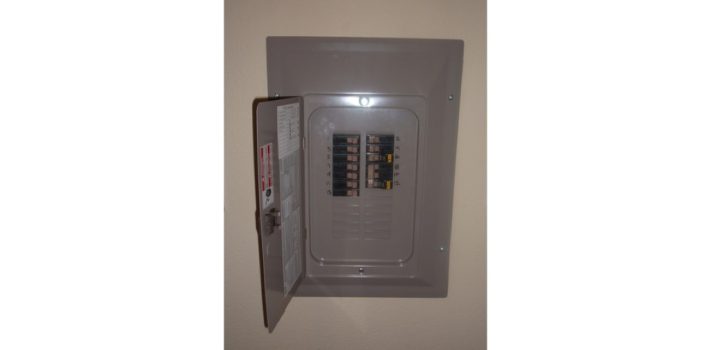
Most people’s circuit breaker panels that I’ve seen (including my own) are poorly labeled regarding where each circuit breaker’s current actually goes. Many panel descriptions are either very vague about what circuits are on each breaker or they aren’t labeled at all. Usually, this happens because the person who installed the panel was in a hurry to finish the wiring and never returned to label them properly. When they did label them, it was often with something vague like “east half house” or “basement.” These descriptions aren’t very helpful when you’re trying to locate the specific breaker for a particular outlet or light fixture.
My first realization that my breaker panel needed better labeling came on a calm, sunny June day. It had been raining hard for the previous two days, with about seven inches of rainfall in total. As I sat in my living room enjoying the sun-filled room, I was startled when the usual background hums of the house fell silent. We had lost grid power.
Since the weather was nice, we figured the power company would fix the issue soon, so we decided to hold off on using our generator. I smiled, glad it hadn’t happened at night or during winter, and went back to reading my book. About 15 minutes later, a faint beeping sound interrupted the calm. We couldn’t figure out where it was coming from since the lights were out, and it wasn’t the smoke alarms.
We searched the house room by room until my daughter called from the basement, saying she found the source: a small battery-operated water leak detector in the basement bathroom. The basement floor was starting to get wet. I quickly realized the sump pump wasn’t running due to the power outage. With the ground saturated from the recent rain, I knew I had to act fast to get the pump working or risk the ruination of my food preps and other emergency items stored on the basement floor. Continue reading“Circuit Breaker Panel Labeling, by Free Loader”