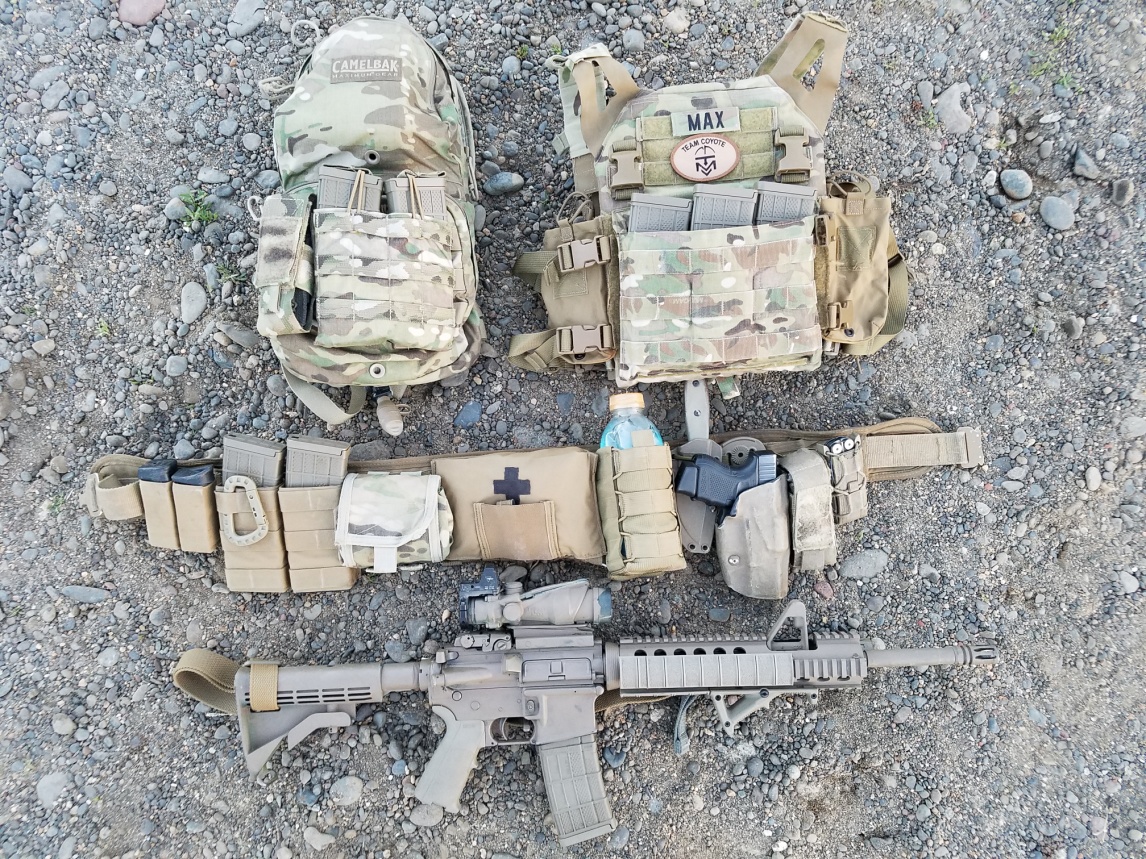
The intent of this continued post is to tie in the related, practical application concepts of tactical gear, fitness, teamwork, logistics, and tactical loading, in order to present a realistic and logical way to approach the subject. There are a number of related factors at play here. Part 1 covered the mission, logistics, tactical load, physical conditioning, transport, and ballistic plates along with a note urging people to avoid heavy steel plates.
Team
In order to be able to conduct any sort of patrolling/security operation, you are going to need a team. This means numbers of trained personnel. You cannot have that QRF if you do not have the trained bodies to man the operations center and the QRF team, while also running a security rotation on your home base. Thus, it goes without saying that you need trained people, in sufficient numbers, to provide an effective tactical team.
Combat Load
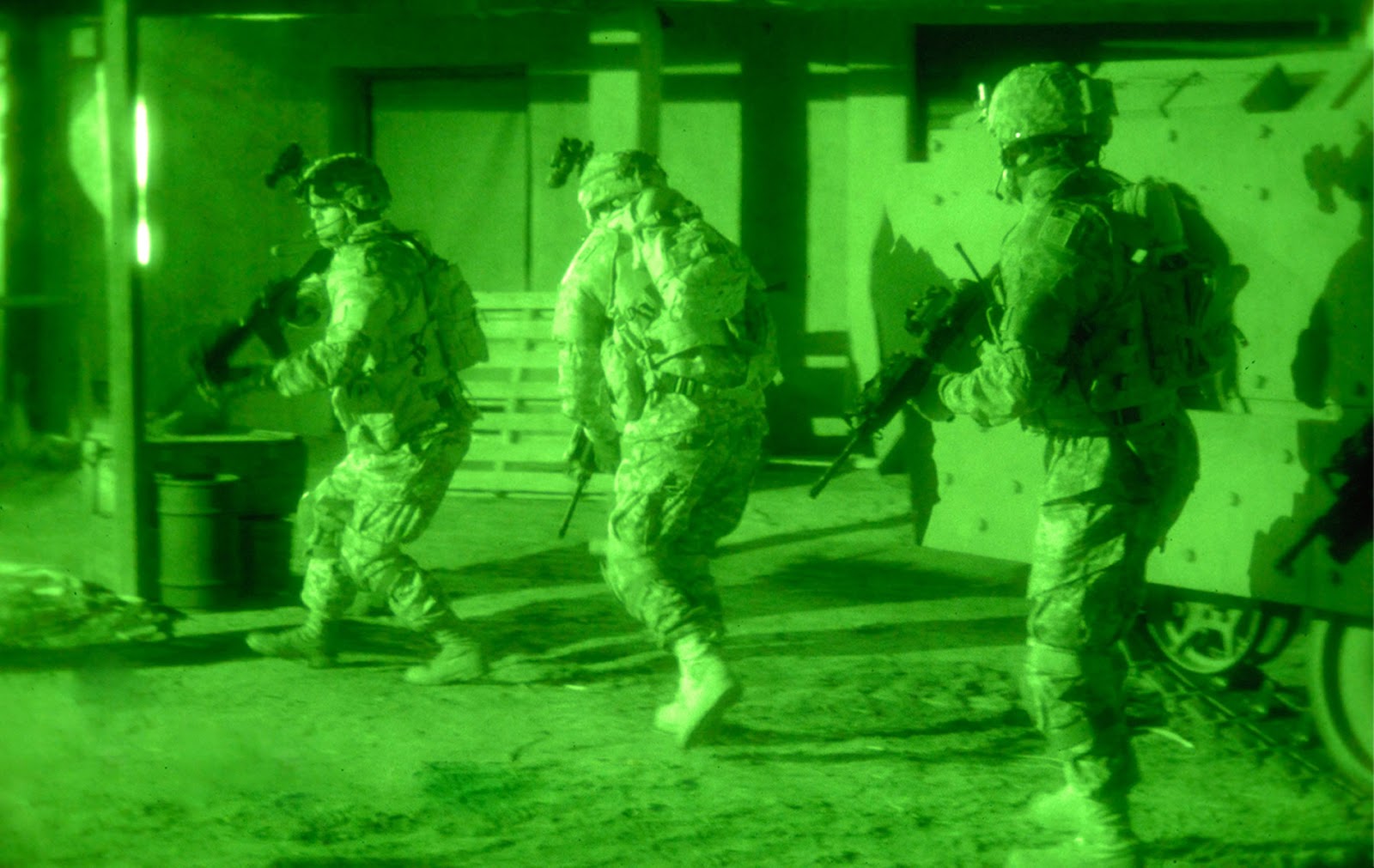
So what do you carry? The point is that you have to balance the logistics of what you carry on your body with what you can effectively maneuver around in. Thus, physical condition and strength must increase, while the load must come down to something that you can tactically maneuver in. You have to be able to be comfortable wearing this gear. Particularly if a collapse goes on for a time and complacency starts to rear its head, you have to have a practical plan that allows you to wear some gear. You also must have it ready and comfortable for long periods of time.