Yesterday, we began looking at how to see and move at night with low tech- or no tech equipment. I shared about the importance of developing and protecting natural night vision and ways to more safely patrol at night. You cannot assume that darkness masks your movement, but you can adjust. Let’s continue with this in mind.
Adjusting To Challenges of Moving At Night
So there are challenges of moving at night when working low-tech. But it’s actually something that you can get used to after a little bit of practice. You can get very comfortable at it. You need to just take account of the difficulties the darkness presents, with the lower visibility. Compensate your patrol conduct as required. Your pace will be slower, in order to avoid excessive noise by blundering around in the trees. You will need to close up a little to take account of the reduced visibility. You’ll need to make extra efforts to ensure the patrol does not become split or separated. You will need to close up at halts in order to pass any hand signals, whispered messages, and to ensure accountability.
What Happens When It Gets Hot and Lights Flash
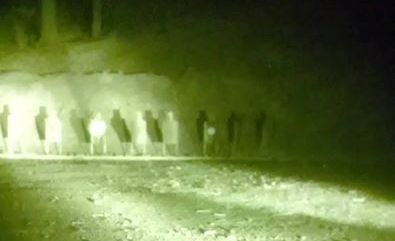
What happens if you get into contact and it goes hot? If it’s dark and you walk into a contact, then perform your contact drill as rehearsed. Fire at the enemy’s muzzle flashes. Remember that if tracer is involved, either by the enemy or by yourself, then it lights up at 100 meters from the muzzle (if the NATO standard type). So it does not truly point both ways. If the contact is taking place at ranges greater than 100 meters, then you can also use tracer as a means of target indication. Tracer looks like blobs of light flying through the green night sky when viewed through night vision.
Continue reading“Guest Article: Considerations for Night Operations- Part 2, by Max Alexander”