Economics & Investing For Preppers

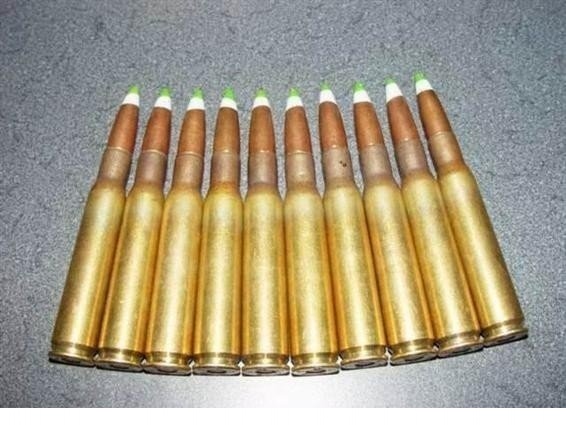
Here are the latest items and commentary on current economics news, market trends, stocks, investing opportunities, and the precious metals markets. We also cover hedges, derivatives, and obscura. And it bears mention that most of these items are from the “tangibles heavy” contrarian perspective of JWR. (SurvivalBlog’s Founder and Senior Editor.) Today’s focus is on .50 BMG Raufoss explosive ammunition.

Precious Metals:

Gold Price Slips As Dollar Holds Steady

o  o  o

Jim Wyckoff asks: Where are the Stops?


Forex:

EUR/USD Price Forecast March 12, 2018, Technical Analysis


Commodities:

Oil prices settle lower as EIA data point to further gains in U.S. shale output

Continue reading“Economics & Investing For Preppers”


JWR’s Recommendations of the Week

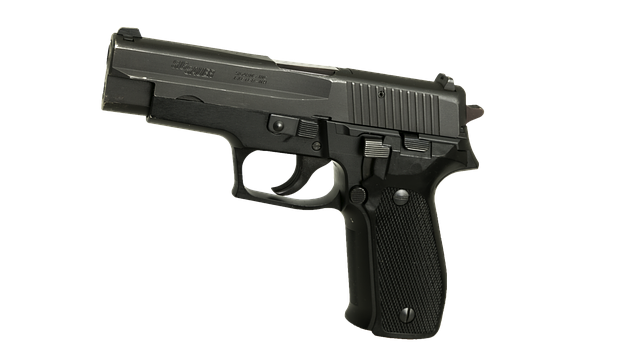
Here are JWR’s Recommendations of the Week for various media and tools of interest to SurvivalBlog readers. This week the focus is on SIG pistols.

Books:

Gun Digest Book of SIG-Sauer, Edited by Massad Ayoob

o  o  o

SIG P226 Combat Pistol Armorer’s Manual (Loose Leaf Edition.)


Movies:

SIG Auto Pistols Armorer’s Course (from AGI, on DVD)

o o o

The Rise and Rise of Bitcoin. I highly recommend this documentary that was made back in 2014–still the early days of Bitcoin. In some ways it is a bit dated. (It is humorous seeing people getting so excited about Bitcoin prices zooming up to $180 USD per BTC,) But in other ways, this film was incredibly prescient. Available on DVD, or for free download for Amazon Prime members.

o o o

I noticed that a now classic Steve McQueen war film is now available for free download for Amazon Prime members: Hell is for Heroes. (Also available on DVD.)


Continue reading“JWR’s Recommendations of the Week”


Preparedness Notes for Tuesday – March 13, 2018

Today is the birthday of the astronomer Percival Lowell, in 1855. His flawed “Canals of Mars” theories persisted from 1895 to 1909.

o o o

There are only a little more than two weeks left in this round of the SurvivalBlog Writing contest. For a chance at these great prizes, get your article finished up and sent in to us.

o o o

SurvivalBlog Writing Contest

Today features another entry for Round 75 of the SurvivalBlog non-fiction writing contest. The nearly $11,000 worth of prizes for this round include:

First Prize:

  1. A $3000 gift certificate towards a Sol-Ark Solar Generator from Veteran owned Portable Solar LLC. The only EMP Hardened Solar Generator System available to the public.
  2. A Gunsite Academy Three Day Course Certificate. This can be used for any one, two, or three day course (a $1,095 value),
  3. A course certificate from onPoint Tactical for the prize winner’s choice of three-day civilian courses, excluding those restricted for military or government teams. Three day onPoint courses normally cost $795,
  4. DRD Tactical is providing a 5.56 NATO QD Billet upper. These have hammer forged, chrome-lined barrels and a hard case, to go with your own AR lower. It will allow any standard AR-type rifle to have a quick change barrel. This can be assembled in less than one minute without the use of any tools. It also provides a compact carry capability in a hard case or in 3-day pack (an $1,100 value),
  5. Two cases of Mountain House freeze-dried assorted entrees in #10 cans, courtesy of Ready Made Resources (a $350 value),
  6. A $250 gift certificate good for any product from Sunflower Ammo,
  7. Two cases of Meals, Ready to Eat (MREs), courtesy of CampingSurvival.com (a $180 value), and
  8. American Gunsmithing Institute (AGI) is providing a $300 certificate good towards any of their DVD training courses.

Second Prize:

  1. A Model 175 Series Solar Generator provided by Quantum Harvest LLC (a $439 value),
  2. A Glock form factor SIRT laser training pistol and a SIRT AR-15/M4 Laser Training Bolt, courtesy of Next Level Training, which have a combined retail value of $589,
  3. A gift certificate for any two or three-day class from Max Velocity Tactical (a $600 value),
  4. A transferable certificate for a two-day Ultimate Bug Out Course from Florida Firearms Training (a $400 value),
  5. A Trekker IV™ Four-Person Emergency Kit from Emergency Essentials (a $250 value),
  6. A $200 gift certificate good towards any books published by PrepperPress.com,
  7. RepackBox is providing a $300 gift certificate to their site.

Third Prize:

  1. A Royal Berkey water filter, courtesy of Directive 21 (a $275 value),
  2. A large handmade clothes drying rack, a washboard, and a Homesteading for Beginners DVD, all courtesy of The Homestead Store, with a combined value of $206,
  3. Expanded sets of both washable feminine pads and liners, donated by Naturally Cozy (a $185 retail value),
  4. Two Super Survival Pack seed collections, a $150 value, courtesy of Seed for Security, LLC,
  5. Mayflower Trading is donating a $200 gift certificate for homesteading appliances, and
  6. Two 1,000-foot spools of full mil-spec U.S.-made 750 paracord (in-stock colors only) from www.TOUGHGRID.com (a $240 value).

Round 75 ends on March 31st, so get busy writing and e-mail us your entry. Remember that there is a 1,500-word minimum, and that articles on practical “how to” skills for survival have an advantage in the judging.

Perspectives on Patrolling- Part 1, by J.M.

Patrolling is something you may need to know how to do. In today’s world, if we want to find out what’s going on around us, we typically turn to the Internet, look at TV or newspapers, or call up a friend. In a post-SHTF world, we probably won’t have those options, but we’ll have an even greater need to locate resources and stay up-to-date on what’s happening around us that might have an impact on our health, safety, or well-being. One way to accomplish would be patrolling.

Patrolling Defined

For the purpose of this discussion, I define patrolling as “a planned and organized movement through a demarcated area of operations with defined goals and objectives”. Note that patrolling differs from other activities, such as a hunting trip or running down to the stream to catch some fish, in that it tends to be longer in duration, have a broader set of goals, and involves more structured planning and preparation.

Objectives

There are a number of reasons you may want or need to run a patrol. The most common ones are reconnaissance and gathering intelligence. There will most likely be a lot of things happening out beyond your immediate area that could have a major impact on you and your group’s survival. Knowing about them before they hit you over the head will allow you to plan and respond much more effectively. Some examples of the types of information you may want to collect by patrolling include human threats, environmental threats, and resources.

Human Threats

In evaluating human threats, you may want to ask some questions. Is there a gang of marauders moving in? How many are there and how are they armed? Which direction are they coming from? How soon will they arrive? Is there a new warlord in the next town that intends to expand her territory? Has someone set up an observation post on that hill a mile away to observe your home base?

Environmental Threats

There could be a variety of environmental threats. For example, is that dam upriver from your house starting to come apart? Is there a pack of wild dogs in the area that have been attacking animals and people? Has one of the tanks in that chemical plant 10 miles upwind from you sprung a leak?

Resources

In a post-SHTF scenario, you need to know what resources are available to you. Where are the deer running? Has someone opened up a trading post? Where are some maple trees you can tap? Is there a trail you can use for a cart to help carry what you harvest?

Much Patrolling Material Written By Military

A lot of the material you can find on patrolling was written by the military and focuses on locating, observing, harassing, and engaging the enemy, and it tends to assume you can call in an artillery or air strike or have a larger force available that you can summon when you find the enemy. For the purposes of this discussion, I’m going to assume those are not options for you and focus mostly on collecting information.

Adjunct to Other Information Collection Techniques and With Secondary Goals

Patrolling should be considered an adjunct to other information collection techniques. Some of these include radio scanning/Ham communications, observation posts, et cetera.

Patrolling can also have some secondary goals, such as communications, training, deterrence, distribution, and assistance.

Communications

There may be other people, towns, or neighborhoods that you want to establish and maintain communications with. If you both have radios with the necessary range, you can provide them with frequencies and call signs they can use to contact your group, or your patrols can act as a postal service.

Training

You may have some people in your group that have never been on a patrol and aren’t trained on your techniques and procedures. Taking them on a couple of low-risk patrols is a good way to provide some OJT.

Deterrence

People that would seek to do harm to you and yours may be less likely to enter your area of operations if they know it’s patrolled by people willing and able to defend it.

Distribution

You may be in radio contact with another group that’s running low on some seeds of which you have a surplus available for distribution to them. A patrol can deliver them as part of its route.

Assistance

Your patrol can provide assistance to people it encounters. It can help others out by doing things like providing basic medical care for injuries or teaching them how to forage for edible plants.

Planning

There are two types of planning you need to do prior to patrolling – general operational planning and mission planning. General operational planning refers to defining higher-level policies and procedures regarding how and when patrols will be carried out. This should include frequency, staffing, communications protocols, and qualifications.

Frequency

You must plan your patrol frequency. How often will you run patrols? This can change over time and will most likely involve more frequent shorter patrols for a period right after the event and longer, less frequent ones as the situation stabilizes. You may choose to only run patrols when certain “trigger” events occur, such as a notification over Ham radio that a motorcycle gang is heading towards you. However, this approach will result in a less up-to-date picture of what’s happening in your area.

Staffing

When staffing your patrol group, consider who is qualified to go on patrol. Personnel can be added and removed from the roster for different reasons, such as injuries or gaining qualifications. In general, patrols should never consist of fewer than three people, as that allows one person to assist one that is injured while the third person provides security. It also allows for two people to carry a makeshift stretcher in the event of a severe injury. In general, 4-6 people is probably the ideal size for most patrols. Keep in mind that smaller patrols may need to avoid more contacts, as they may be outnumbered by a larger group if the contact turns hostile.

Communications Protocols

There must be some communications protocols in place. How will members of a patrol communicate with each other and with the home base? This needs to be documented and everyone needs to be trained on it prior to planning any patrols. Trying to learn a communications protocol the night before leaving on a patrol is a recipe for disaster. There are a number of articles on this subject that can provide a lot more detail. “Comprehensive Crisis Communications Planning for the Prepper” and “Preventing Failure to Communicate” are a couple. (For full disclosure, I’m the author of the second one.) One item you may want to include for any patrol is a portable antenna, which will significantly increase the range of their radios.

Qualifications

What types of skills and attributes are required of a person in order for them to qualify for participation in a patrol? At a minimum, they should possess levelheadedness, physical fitness, training in combat, bushcraft, situational awareness, communications, communications protocols, tactics, first aid, and navigation. Let’s take a look at each of these.

Levelheadedness

The members of a patrol will be on their own for a long period of time, and they will frequently need to be able to make fast and appropriate decisions while under pressure that may impact the whole group.

Physical Fitness

Patrolling will usually involve a lot of walking and physical exertion while carrying a heavy load, so the members need to be in good shape. They should also have good observational skills and senses (eyesight, hearing, and smell).

Combat

The patrol may be forced to engage hostiles (human or otherwise), so they should be able to effectively defend themselves as well as the rest of the team using both weapons and unarmed techniques.

Bushcraft

The patrol may need to move through or bivouac in wilderness areas while avoiding detection, or track people or animals moving through the area.

Situational Awareness

Patrol members will need to constantly have their head on a swivel in order to avoid dangerous situations and to detect potential threats before they’re detected themselves.

Communications

Patrol member should be fully trained on all standard communications protocols. There should also be someone on every patrol that’s the designated contact specialist, who is the type of person that can approach and talk to other people you encounter and has the skills and personality that can put other people at ease while extracting useful intelligence from them.

Tactics

There should be a series of standard movement, combat, and reaction tactics defined for the situations the patrol will most likely encounter.

First Aid

Every member of the patrol should be trained on basic first aid, and at least one member should have advanced skills.

Navigation

Every patrol member should be able to navigate using a map and a compass.

General Operating Planning and Patrol Guide, Started Now

General operational planning is something that should be started now and updated as circumstances change. I recommend creating a “Patrol Guide” using a 3-ring binder that gets reviewed and updated every so often.

We have concluded the section on general operational planning. Tomorrow, we will take a look at mission planning as well as dress and kit and navigation.

See Also:

SurvivalBlog Writing Contest

This has been part one of a five part entry for Round 75 of the SurvivalBlog non-fiction writing contest. The nearly $11,000 worth of prizes for this round include:

First Prize:

  1. A $3000 gift certificate towards a Sol-Ark Solar Generator from Veteran owned Portable Solar LLC. The only EMP Hardened Solar Generator System available to the public.
  2. A Gunsite Academy Three Day Course Certificate. This can be used for any one, two, or three day course (a $1,095 value),
  3. A course certificate from onPoint Tactical for the prize winner’s choice of three-day civilian courses, excluding those restricted for military or government teams. Three day onPoint courses normally cost $795,
  4. DRD Tactical is providing a 5.56 NATO QD Billet upper. These have hammer forged, chrome-lined barrels and a hard case, to go with your own AR lower. It will allow any standard AR-type rifle to have a quick change barrel. This can be assembled in less than one minute without the use of any tools. It also provides a compact carry capability in a hard case or in 3-day pack (an $1,100 value),
  5. Two cases of Mountain House freeze-dried assorted entrees in #10 cans, courtesy of Ready Made Resources (a $350 value),
  6. A $250 gift certificate good for any product from Sunflower Ammo,
  7. Two cases of Meals, Ready to Eat (MREs), courtesy of CampingSurvival.com (a $180 value), and
  8. American Gunsmithing Institute (AGI) is providing a $300 certificate good towards any of their DVD training courses.

Second Prize:

  1. A Model 175 Series Solar Generator provided by Quantum Harvest LLC (a $439 value),
  2. A Glock form factor SIRT laser training pistol and a SIRT AR-15/M4 Laser Training Bolt, courtesy of Next Level Training, which have a combined retail value of $589,
  3. A gift certificate for any two or three-day class from Max Velocity Tactical (a $600 value),
  4. A transferable certificate for a two-day Ultimate Bug Out Course from Florida Firearms Training (a $400 value),
  5. A Trekker IV™ Four-Person Emergency Kit from Emergency Essentials (a $250 value),
  6. A $200 gift certificate good towards any books published by PrepperPress.com,
  7. RepackBox is providing a $300 gift certificate to their site.

Third Prize:

  1. A Royal Berkey water filter, courtesy of Directive 21 (a $275 value),
  2. A large handmade clothes drying rack, a washboard, and a Homesteading for Beginners DVD, all courtesy of The Homestead Store, with a combined value of $206,
  3. Expanded sets of both washable feminine pads and liners, donated by Naturally Cozy (a $185 retail value),
  4. Two Super Survival Pack seed collections, a $150 value, courtesy of Seed for Security, LLC,
  5. Mayflower Trading is donating a $200 gift certificate for homesteading appliances, and
  6. Two 1,000-foot spools of full mil-spec U.S.-made 750 paracord (in-stock colors only) from www.TOUGHGRID.com (a $240 value).

Round 75 ends on March 31st, so get busy writing and e-mail us your entry. Remember that there is a 1,500-word minimum, and that articles on practical “how to” skills for survival have an advantage in the judging.


SurvivalBlog’s News From The American Redoubt

Here is SurvivalBlog’s News From The American Redoubt. This weekly column features news stories and event announcements from around the American Redoubt region. We also mention companies of interest to preppers that are located in the region. The emphasis this week is on CeraTac LLC in Cheyenne, Wyoming. (See the Wyoming  section.)

Region-Wide:

Perhaps I’m just behind the power curve, but I finally noticed that Redoubt News now has a YouTube channel.

o o o

Radio Free Redoubt: Episode 18-08 Trained Strong Men and The Emerging Insurgent Political Arm

I should mention that in this episode, host J.J. Schmidt announced that anyone who has a limited bandwidth Internet connection but that has an unlimited long distance phone call plan, they can now phone in to listen, but only during live broadcasts to: (857) 757-1085.
Continue reading“SurvivalBlog’s News From The American Redoubt”


The Survivalist’s Odds ‘n Sods:

SurvivalBlog presents another edition of The Survivalist’s Odds ‘n Sods— a collection of news bits and pieces that are relevant to the modern survivalist and prepper from “HJL”. Today focuses mainly on medical drug issues.

Why Democrats Would Lose a Civil War

Another U.S. civil war is unlikely in the near future, but if it were to come to that, this article explains why a red vs. blue war would result in the blue losing. While the blue holds the ports, the red holds the heartland with the vast majority of resources. Even if the military were to fall on the blue side, it would be incapable of imposing it’s will. Sure, it could probably hold any ground it stood on and a short distance around, but in 4th gen warfare, there are no pitched battles.

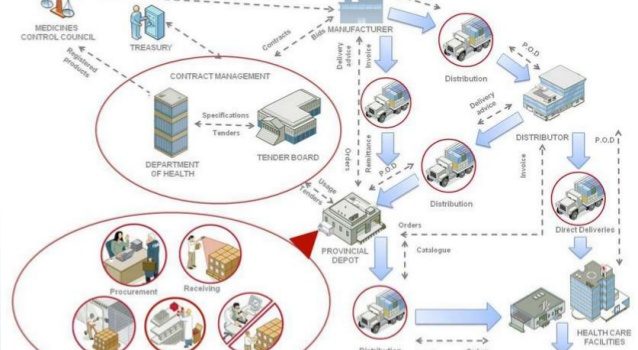
Long Thin Logistics Chain of Medicine

Did you know that a significant portion (if not the majority) of medicinal drugs in the U.S. are manufactured off-shore? On the Food and Drug Administration’s web site, there is a page that lists drugs that are in short supply. Last week, there were 90 entries on the list covering drugs such as antibiotics, anesthesia, imaging aids, immunosuppressives, tube feeding solutions, and sedatives. Remember this last season when a string of hurricanes cause a severe saline shortage because a major manufacturer had to shut down operations in Puerto Rico? There is a national security issue when this many medical drugs are manufactured and supplied on a very vulnerable supply line. Hopefully, next time your doctor puts you on a drug (especially a long-term drug), this will help you ask questions you didn’t think of before. Thanks to reader V.V. for the link.

Continue reading“The Survivalist’s Odds ‘n Sods:”


The Editors’ Quote of the Day:

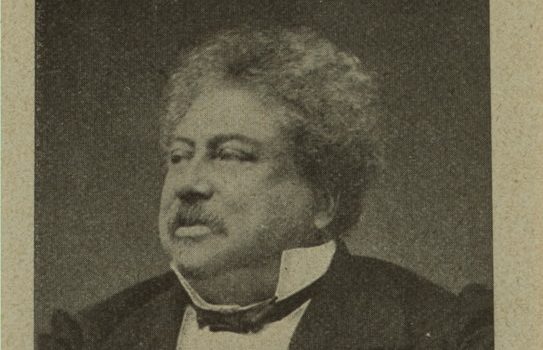
“There is … a clever maxim which bears upon what I was saying to you some little while ago, and that is, that unless wicked ideas take root in a naturally depraved mind, human nature in a [[right] and wholesome state, revolts at crime. Still, from an artificial civilization have originated wants, vices, and false tastes which occasionally become so powerful as to stifle within us all good feelings, and ultimately to lead us into guilt and wickedness…” – Alexandre Duma, in The Count of Monte Cristo


Preparedness Notes for Monday – March 12, 2018

Today is the birthday of science fiction author Harry Harrison, who is best known for his Deathworld trilogy. (He was born in 1920 and died in 2012.)

On March 12, 1850, the first U.S. $20 gold piece was issued. The current bullion (melt) value of a $20 gold piece (not even considering any numismatic value) is about $1,185. Lesson learned: Trust gold, not paper.


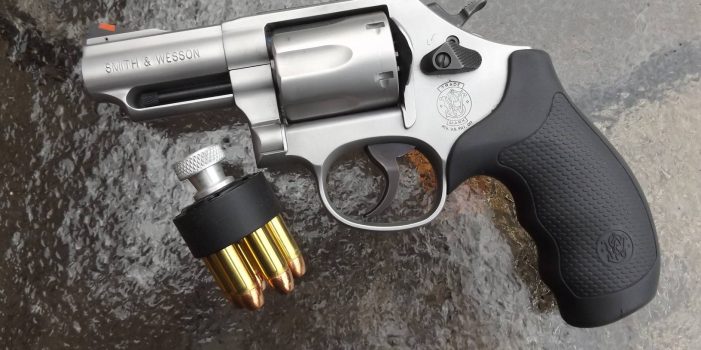
Smith & Wesson Model 66, by Pat Cascio

Today, we are looking at the S&W Model 66 stainless steel 2.75-inch barrel handgun on the popular K Frame. With so many requests from SurvivalBlog readers, we are covering this, another good ol’ fashioned revolver.

Early Years Carrying a Revolver

Truth be told, in my early years as a police officer, private security contractor, and private investigator, I carried a revolver for the simple fact that in Illinois, at least at that time, you were required to only carry a 4-inch barrel revolver when doing private security. As a police officer in various areas of the country, I was pretty much allowed to carry just about any type of handgun I wanted. Still, more often than not, I’d reach for a Smith & Wesson revolver in .38 Spl or .357 Magnum.

Back in the day, the two most popular revolvers were the S&W K Frame with a 4-inch barrel for a full-sized duty handgun or a Colt revolver, once again with a 4-inch barrel. It’s hard to go wrong with either one of those choices. The S&W K frame revolver design is well over a hundred years old and has a proven track record. And, I always found it was easier to get a better double-action trigger pull on the K frame as opposed to a Colt.

Continue reading“Smith & Wesson Model 66, by Pat Cascio”


Economics & Investing For Preppers

Here are the latest items and commentary on current economics news, market trends, stocks, investing opportunities, and the precious metals markets. We also cover hedges, derivatives, and obscura. And it bears mention that most of these items are from the “tangibles heavy” contrarian perspective of JWR. (SurvivalBlog’s Founder and Senior Editor.) Today’s focus is on greenback cash.

Precious Metals:

Spot silver took a 0.65% bounce on Friday, up to $16.608. But it is still grossly under-valued vis-a-vis gold.  For the time being, I recommend that you make any new precious metals acquisitions in the form of either silver or platinum, not gold!


Stocks:

Over at MarketWatch: The stock market will remain glued to the inflation story


Commodities:

Next, at FarmFutures.com: Grain market week in review – March 9, 2018

o  o  o

India may see record sugar production of 29.5 MT in 2017-18: ISMA


Economy & Finance (Greenback Cash):

With all of the recent talk about digital currencies, I want to spill a little e-ink and extol the virtues of greenback cash. By that I mean printed Federal Reserve Notes (FRNs.)  While still subject to the invisible taxation of general price inflation, paper Dollars still have a few advantages over competing currencies–including electronic currency. The first of these is the most important:

  • Privacy.  (Cash transactions in and of themselves do not create a paper trail or electronic trail.)
  • Readily recognizable.
  • Good design features that have kept a low rate of counterfeiting
  • A fairly low inflation rate.
  • Acceptance beyond our shores. (Dollars are de facto currency in several other countries. They can also be traded for local currency in nearly every country.)
  • Compactness (versus barter goods, which tend to be bulky.)
  • Light weight (versus barter goods, which tend to be heavy.)
  • Legality for settling “all debts, public and private”. (Although this is now slipping away.)
  • Utility in the midst of a power failure.
  • Utility when away from cellular phone coverage.
  • Utility for conversion into precious metals.

Of course there are just as many drawbacks. For example, the inclusion of a metallic thread in FRNs now makes them capable of being detected if sewn into clothing. But I am thankful that I’m not now carrying a pocketful of Bolivars!

Continue reading“Economics & Investing For Preppers”


Preparedness Notes for Sunday – March 11, 2018

Today is the birthday of author Douglas Adams (born 1952). He is the author of Hitchhiker’s Guide to the Galaxy.

Also on this day, the Great Blizzard of ’88 struck the northeastern United States (1888).

March 11th is the birthday of the late actor Anton Yelchin (born 1989, died June 19, 2016). He is remembered for his portrayal of Kyle Reese in Terminator: Salvation, and as Ensign Pavel Checkov, in the most recent Star Trek movie series. He died in a freak accident wherein his parked Jeep Grand Cherokee unexpectedly rolled forward on an incline, pinning him to a security fence. He is greatly missed.

o o o

SurvivalBlog Writing Contest

Today features another entry for Round 75 of the SurvivalBlog non-fiction writing contest. The nearly $11,000 worth of prizes for this round include:

First Prize:

  1. A $3000 gift certificate towards a Sol-Ark Solar Generator from Veteran owned Portable Solar LLC. The only EMP Hardened Solar Generator System available to the public.
  2. A Gunsite Academy Three Day Course Certificate. This can be used for any one, two, or three day course (a $1,095 value),
  3. A course certificate from onPoint Tactical for the prize winner’s choice of three-day civilian courses, excluding those restricted for military or government teams. Three day onPoint courses normally cost $795,
  4. DRD Tactical is providing a 5.56 NATO QD Billet upper. These have hammer forged, chrome-lined barrels and a hard case, to go with your own AR lower. It will allow any standard AR-type rifle to have a quick change barrel. This can be assembled in less than one minute without the use of any tools. It also provides a compact carry capability in a hard case or in 3-day pack (an $1,100 value),
  5. Two cases of Mountain House freeze-dried assorted entrees in #10 cans, courtesy of Ready Made Resources (a $350 value),
  6. A $250 gift certificate good for any product from Sunflower Ammo,
  7. Two cases of Meals, Ready to Eat (MREs), courtesy of CampingSurvival.com (a $180 value), and
  8. American Gunsmithing Institute (AGI) is providing a $300 certificate good towards any of their DVD training courses.

Second Prize:

  1. A Model 175 Series Solar Generator provided by Quantum Harvest LLC (a $439 value),
  2. A Glock form factor SIRT laser training pistol and a SIRT AR-15/M4 Laser Training Bolt, courtesy of Next Level Training, which have a combined retail value of $589,
  3. A gift certificate for any two or three-day class from Max Velocity Tactical (a $600 value),
  4. A transferable certificate for a two-day Ultimate Bug Out Course from Florida Firearms Training (a $400 value),
  5. A Trekker IV™ Four-Person Emergency Kit from Emergency Essentials (a $250 value),
  6. A $200 gift certificate good towards any books published by PrepperPress.com,
  7. RepackBox is providing a $300 gift certificate to their site.

Third Prize:

  1. A Royal Berkey water filter, courtesy of Directive 21 (a $275 value),
  2. A large handmade clothes drying rack, a washboard, and a Homesteading for Beginners DVD, all courtesy of The Homestead Store, with a combined value of $206,
  3. Expanded sets of both washable feminine pads and liners, donated by Naturally Cozy (a $185 retail value),
  4. Two Super Survival Pack seed collections, a $150 value, courtesy of Seed for Security, LLC,
  5. Mayflower Trading is donating a $200 gift certificate for homesteading appliances, and
  6. Two 1,000-foot spools of full mil-spec U.S.-made 750 paracord (in-stock colors only) from www.TOUGHGRID.com (a $240 value).

Round 75 ends on March 31st, so get busy writing and e-mail us your entry. Remember that there is a 1,500-word minimum, and that articles on practical “how to” skills for survival have an advantage in the judging.


No Man Is An Island, by J.S.

“No man is an island, entire of itself; every man is a piece of the continent.” – John Donne

Compared to the seasoned veterans of the preparedness camp, I am a rookie. I have no specific training in any field or category that would make me specifically qualified to write an article on preparedness, but that is why this is so important.

Majority of Preparedness Individuals Are Not Specialists

Odds are the vast majority of TEOTWAWKI preparedness-aware individuals are not specialists in any specific category of emergency or end of societal type skills. Yes, they have a few specific things that they can lean on, as do I. But, in general, they are just the “average Joe” that realizes being prepared is a smart thing to do, and it is fun to learn new things. The reality is that they had to learn from someone else, just like I have had to do.

But nothing I have learned, read, or found discusses the difficulties of dealing with family dynamics. Yes, there are small discussions of how there needs to be plans and everyone needs to be on board and “trained”. What happens if your wife is not part of the plan and your kids are too little to be help, or too old to listen anymore?

Continue reading“No Man Is An Island, by J.S.”