
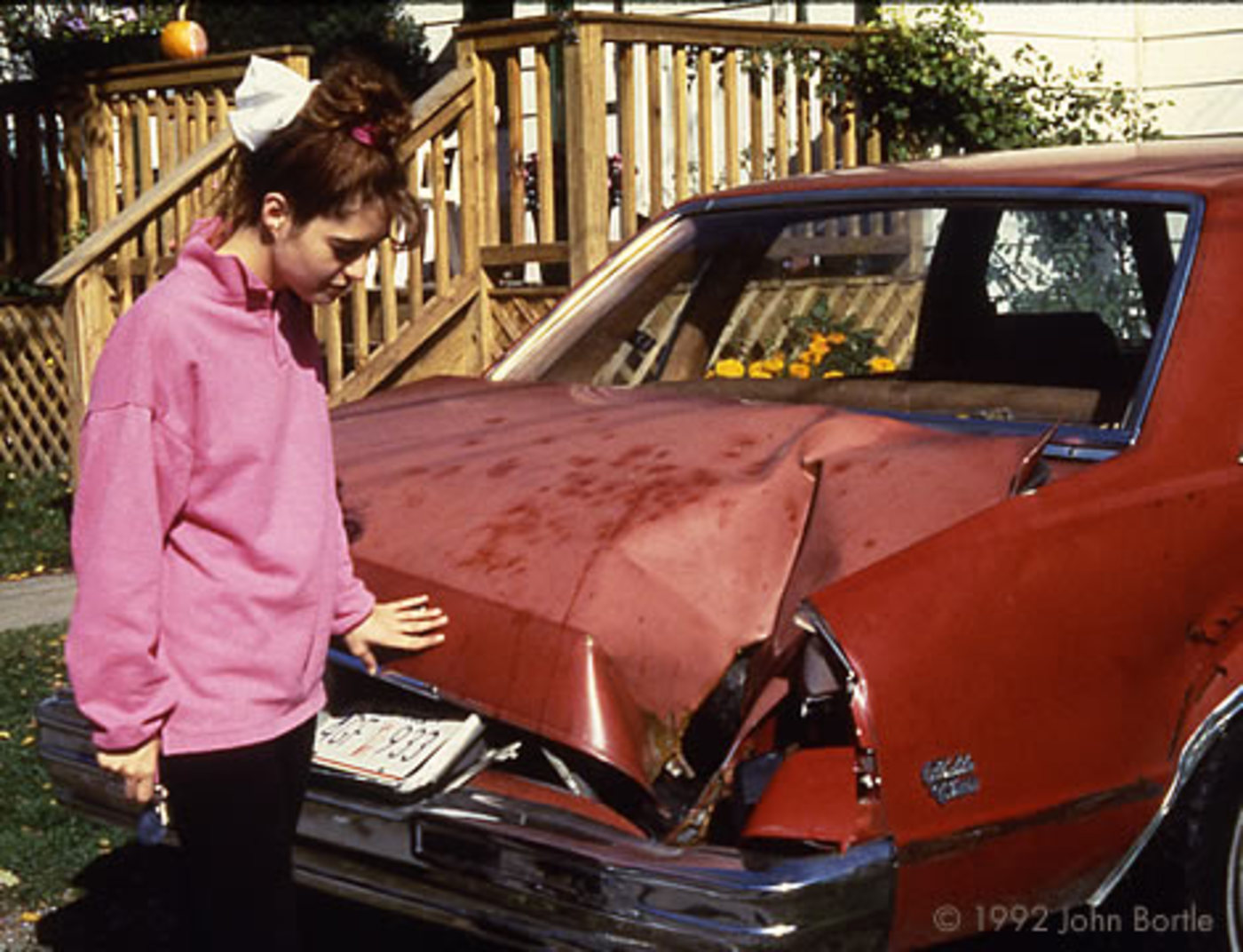
On this day in 1992, 18-year-old Michelle Knapp was watching television in her parents’ living room in Peekskill, New York when she heard a crash in the driveway. Alarmed, Knapp ran outside to investigate. A sizable hole in the rear end of her car and a matching hole in the gravel driveway underneath the car. In the hole was what looked like an ordinary, bowling-ball–sized rock. It was extremely heavy for its size (it weighed about 28 pounds), shaped like a football and warm to the touch; also, it smelled vaguely of rotten eggs. The next day, a curator from the American Museum of Natural History in New York City confirmed that the object was a genuine meteorite.
- Ad Even in permissive states guns are often locked up - a glaring security gap which must be filled with a dependable tool. Pepper sprays & stun guns fail often. Stunning travel-anywhere SIEGE Belts have been a proven life-saver over decades. Made in USASIEGE STOVES: Get ready for summer in the great outdoors with the ultimate portable stove. In a fuel crisis twigs are FREE. Use code "SBLOG" at checkout for $20 off BELTS!
- Ad SurvivalRealty.com: Sell Your Remote LandAdvertise your hard-to-sell remote land to eager buters. We specialize in rural, remote, and off-grid properties worldwide. Affordable ads. No commissions are charged!
An Open Letter To President Trump: Knock a Zero Off The Dollar!
Dear Mr. President:
I am writing to propose that congress make a formal currency revaluation of the U.S. Dollar at the end of this year that will have several positive effects:
- It will create an unprecedented economic boom.
- It will reduce the economic clout of foreign drug lords.
- It will wrest considerable power from the Federal Reserve banking cartel, and return it to the U.S. Treasury.
- It will correct the effects of seven decades of gradual inflation.
- It will mean that our currently laughable Penny and Nickel will again have value and meaning.
- The U.S. Treasury will again make a profit through seignorage. (Presently it costs more than two cents to mint each Penny. But with a revalued Dollar, the cost will drop to less than 1/10th of cent. Likewise, it costs more than 8 cents to mint each Nickel. The difference (seignorage) would again become a profit to the government, as it should be.
- The U.S. Treasury will have the opportunity to issue U.S. Treasury Notes that will circulate side-by-side with Federal Reserve Notes. Issuing new currency that is not debt-based will both reduce the National Debt and foster economic prosperity.
Continue reading“An Open Letter To President Trump: Knock a Zero Off The Dollar!”
- Ad STRATEGIC RELOCATION REALTYFOR SALE: Self-sustaining Rural Property situated meticulously in serene locales distant from densely populated sanctuary cities. Remember…HISTORY Favors the PREPARED!
- Ad Click Here --> Civil Defense ManualNOW BACK IN STOCK How to protect, you, your family, friends and neighborhood in coming times of civil unrest… and much more!
SurvivalBlog’s News From The American Redoubt
Here is SurvivalBlog’s News From The American Redoubt. This weekly column features news stories and event announcements from around the American Redoubt region. We also mention companies of interest to preppers that are located in the region. The emphasis this week is on 2A Arms, in Boise, Idaho. (See the Idaho section.)
Region-Wide
Radio Free Redoubt: Episode 18-34A INW Prep Expo 2018 JJS – Intro To Prepper Comms
o o o
American Redoubt Radio: David A. Vine “All Hazards Communications Preparedness”
Idaho
History at Meridian Speedway: Hailie Deegan, 17, becomes 1st female winner in NASCAR K&N
o o o
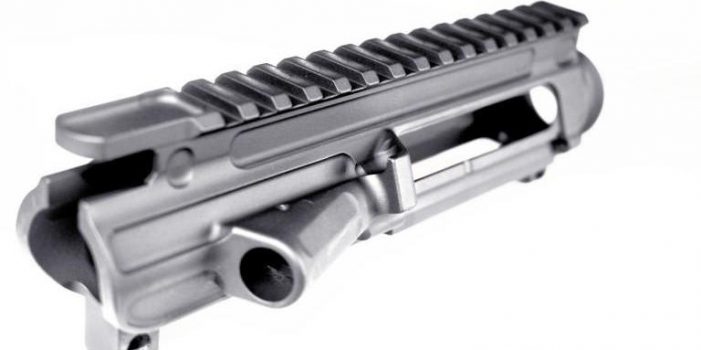
I noticed that 2A Arms (in Boise, Idaho) has both expanded their AR product line and reduced some prices.
o o o
Opponents See Horse-Racing Measure as “Bait and Switch”
Continue reading“SurvivalBlog’s News From The American Redoubt”
- Ad Most “Healthy” Food Isn’t What It ClaimsMost stored food isn’t meant for daily use. If you’ve ever questioned what you’re eating, this shows a clean option you can rely on every day, and even store for years.
- Ad Survival RealtyFind your secure and sustainable home. The leading marketplace for rural, remote, and off-grid properties worldwide. Affordable ads. No commissions are charged!

The Survivalist’s Odds ‘n Sods:
SurvivalBlog presents another edition of The Survivalist’s Odds ‘n Sods— a collection of news bits and pieces that are relevant to the modern survivalist and prepper from “HJL”. You might want to look at sorghum as a sweetener on your homestead.
Freeze Drying
Valley Food Storage, a SurvivalBlog advertiser, has posted an article on freeze drying food without the aid of a large expensive machine, using equipment that you probably already have. I will note that this is entirely possible and I have actually performed such an operation myself, though not intentionally. I will attest to the fact that it does work. However, be aware that since it is a long term process and not in a hermetically sealed and controlled container, there is a far greater chance that something will affect the food. I have never had food that came out of this process with an acceptable taste. Still, if you are looking for something that works without spending thousands of dollars and you don’t need a high volume, this can work.
- Ad USA Berkey Water Filters - Start Drinking Purified Water Today!#1 Trusted Gravity Water Purification System! Start Drinking Purified Water now with a Berkey water filtration system. Find systems, replacement filters, parts and more here.
- Ad Elk Creek Company - Federally-Exempt No-Paperwork GunsPre-1899 Antique Cartridge Guns -- No FFL Required. Can be mailed to your doorstep with no Federal paperwork!

The Editors’ Quote of the Day:
“Ironically, by transferring the risk of a widespread mortgage default, the government increases the likelihood of a painful crash in the housing market. This is because the special privileges granted to Fannie and Freddie have distorted the housing market by allowing them to attract capital they could not attract under pure market conditions. As a result, capital is diverted from its most productive use into housing. This reduces the efficacy of the entire market and thus reduces the standard of living of all Americans. Despite the long-term damage to the economy inflicted by the government’s interference in the housing market, the government’s policy of diverting capital to other uses creates a short-term boom in housing. Like all artificially-created bubbles, the boom in housing prices cannot last forever. When housing prices fall, homeowners will experience difficulty as their equity is wiped out. Furthermore, the holders of the mortgage debt will also have a loss. These losses will be greater than they would have otherwise been had government policy not actively encouraged over-investment in housing.” – Congressman Ron Paul, in Fannie Mae and Freddie Mac Subsidies Distort the Housing Market, September 10, 2003
- Ad California Legal Rifles & Pistols!WBT makes all popular rifles compliant for your restrictive state. Choose from a wide range of top brands made compliant for your state.
- Ad Elk Creek Company - Percussion Blackpowder Guns - No FFL Required.Elk Creek Company - Percussion Blackpowder Guns - Pre-1899 Guns - Knives - Bayonets - Magazines - The last bastion of privacy!
Preparedness Notes for Monday – October 08, 2018
October 8th is the birthday of economist and libertarian commentator J. Orlin Grabbe. (Born, 1947, died March 15, 2008.)
- Ad Survival RealtyFind your secure and sustainable home. The leading marketplace for rural, remote, and off-grid properties worldwide. Affordable ads. No commissions are charged!
- Ad USA Berkey Water Filters - Start Drinking Purified Water Today!#1 Trusted Gravity Water Purification System! Start Drinking Purified Water now with a Berkey water filtration system. Find systems, replacement filters, parts and more here.

Round 78 Non-Fiction Writing Contest Winners Announced!
Round 78 of the Non-Fiction Writing Contest has ended and the editors have picked the winners. If you are one of these winners, please make sure that you send us your USPS and your UPS/FedEx mailing addresses. Any article submitted, but not published in the August and September 2018 time frame have been automatically rolled over to Round 79 of the Contest.
First Prize:
First Prize goes to JBH for “Survival Fitness and Health-Part 1”, “Part 2”, “Part 3”, and “Part 4”, published on September 5th, 6th, 7th, and 8th. He will receive the following prizes:
- A $3000 gift certificate towards a Sol-Ark Solar Generator from Veteran owned Portable Solar LLC. The only EMP Hardened Solar Generator System available to the public.
- A Gunsite Academy Three Day Course Certificate. This can be used for any one, two, or three day course (a $1,095 value),
- A course certificate from onPoint Tactical for the prize winner’s choice of three-day civilian courses, excluding those restricted for military or government teams. Three day onPoint courses normally cost $795,
- DRD Tactical is providing a 5.56 NATO QD Billet upper. These have hammer forged, chrome-lined barrels and a hard case, to go with your own AR lower. It will allow any standard AR-type rifle to have a quick change barrel. This can be assembled in less than one minute without the use of any tools. It also provides a compact carry capability in a hard case or in 3-day pack (an $1,100 value),
- Two cases of Mountain House freeze-dried assorted entrees in #10 cans, courtesy of Ready Made Resources (a $350 value),
- A $250 gift certificate good for any product from Sunflower Ammo,
- American Gunsmithing Institute (AGI) is providing a $300 certificate good towards any of their DVD training courses.
Second Prize:
Second Prize goes to BIF for “Making a Living as a Reseller- Part 1”, “Part 2”, “Part 3”, and “Part 4”, published on September 18th, 19th, 20th, and 21st. He will receive the following prizes:
- A Model 175 Series Solar Generator provided by Quantum Harvest LLC (a $439 value),
- A Glock form factor SIRT laser training pistol and a SIRT AR-15/M4 Laser Training Bolt, courtesy of Next Level Training, which have a combined retail value of $589,
- A gift certificate for any two or three-day class from Max Velocity Tactical (a $600 value),
- A transferable certificate for a two-day Ultimate Bug Out Course from Florida Firearms Training (a $400 value),
- A Three-Day Deluxe Emergency Kit from Emergency Essentials (a $190 value),
- A $200 gift certificate good towards any books published by PrepperPress.com,
- RepackBox is providing a $300 gift certificate to their site.
Third Prize:
Third Prize goes to The Grumpy Gunfighter for “Thirsty Are Those Who Do Not Prep- Part 1”, “Part 2”, “Part 3”, “Part 4”, and “Part 5”, published on August 28th, 29th, 30th, 31st, and September 1st. He will receive the following prizes:
- A Royal Berkey water filter, courtesy of Directive 21 (a $275 value),
- A large handmade clothes drying rack, a washboard, and a Homesteading for Beginners DVD, all courtesy of The Homestead Store, with a combined value of $206,
- Expanded sets of both washable feminine pads and liners, donated by Naturally Cozy (a $185 retail value),
- Two Super Survival Pack seed collections, a $150 value, courtesy of Seed for Security, LLC,
- Mayflower Trading is donating a $200 gift certificate for homesteading appliances, and
- Two 1,000-foot spools of full mil-spec U.S.-made 750 paracord (in-stock colors only) from www.TOUGHGRID.com (a $240 value).
Honorable Mention:
Honorable Mention Prizes ($30 Amazon.com gift certificates via e-mail and an autographed hardback copy of JWR’s novel Survivors) have been awarded to the writers of these fine articles:
- “How To Be A Financial Prepper- Part 1”, “Part 2”, and “Part 3” by Brandon
- “Adaptation is Key to Survival”, by B. L.
- “Common Sense Preparation”, by D.A.

Sig Sauer P229 “Legion”, by Pat Cascio
It’s almost like belonging to an exclusive club, with the Sig Sauer “Legion” line of handguns. They are custom in many ways, and we’re checking out the P229 Legion model today.
Sig Sauer
Anyone who knows even a little bit about firearms, knows that the Sig Sauer line of firearms are some of the best-made guns, period! The workmanship is second to none, and they are all super-accurate, too. I’ve never had any Sig that passed through my hands, used or new, that had a problem of any kind. The Sig Sauer Legion line of handguns are as close as can be to being custom-made. Additionally, they have some features that can only be found on the Legion lineup.
The Legion P229
The Legion P229 has a proprietary Legion gray PVD coating on the frame and slide, and it’s some tough stuff. It also comes with custom G-10 grips, and there is a Legion medallion in the middle of the grips that’s nice looking. In addition, the Legion comes with something Sig calls Electro-Optics X-RAY high visibility night sights. They are different from the SigLite night sights and are hard to explain, but they are better than the SigLite night sights. Each Legion also ships with three 15-rd mags, and it comes in a standard polymer Sig carrying case. However, once you register your Legion, Sig will send you a challenge coin, and another custom molded carrying case for your Legion and the three mags.
Recipe of the Week: Swiss Steak by B.D.
Ingredients:
- 1 1/2 to 2 lbs of round steak
- 2 tbs flour
- 1 tsp salt
- 1/8 tsp pepper
- 2 tbs salad oil
- 1 (16oz) can of tomatoes, cut up
- 1 large onion, sliced
- 1 stalk of celery, thinly sliced
- 1 tbs of thick bottled steak sauce

Economics & Investing For Preppers
Here are the latest items and commentary on current economics news, market trends, stocks, investing opportunities, and the precious metals markets. We also cover hedges, derivatives, and obscura. And it bears mention that most of these items are from the “tangibles heavy” contrarian perspective of JWR. (SurvivalBlog’s Founder and Senior Editor.) Today’s focus is on the Fed’s Great Unwinding. (See the Economy & Finance section.)
Economy & Finance:
At Wolf Street: The Fed’s QE Unwind Reaches $285 Billion. JWR’s Comment: That $285 Billion represents a reduction of only about 17% of the QE bubble. Remember: Debt money creation has a multiplying effect. The destruction of debt money has a reverse multiplying effect! (Credit implosion.) Unless the Fed Board of Governors unwind their balance sheet very slowly, they are likely to burst the credit bubble and crash the global financial system. Politically, this may be just they want: Turning President Trump into another President Herbert Hoover.
o o o
A primer from Wells Capital Management: The Fed’s balance sheet normalization plan
o o o
Back in October, 2017, we read: Unwinding QE could trigger financial crisis, warns JP Morgan

The Editors’ Quote of the Day:
“I began teaching my son how to shoot when he was two, starting with the basics of a BB rifle. My theory is that kids get into trouble because of curiosity—if you don’t satisfy it, you’re asking for big problems. If you inform them and carefully instruct them on safety when they’re young, you avoid a lot of the trouble. My son has learned to respect weapons. I’ve always told him, if you want to use a gun, come get me. There’s nothing I like better than shooting.” – Chris Kyle, American Sniper
Preparedness Notes for Sunday – October 07, 2018
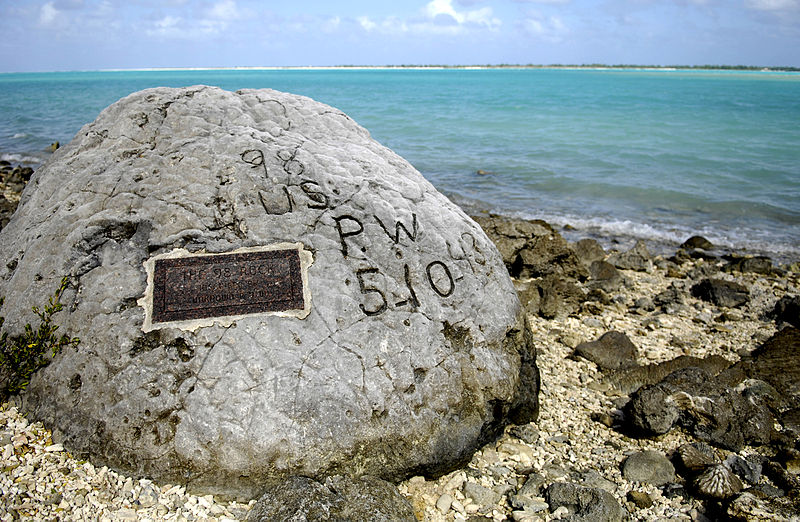
October 7th is the day that we remember the 96 American POWs from Wake Island that were executed on the orders of the commander of the Japanese garrison on the island, Rear Admiral Shigematsu Sakaibara. The execution of those American POWs who were blindfolded and shot in cold blood, remains one of the more brutal episodes of the war in the Pacific.
Survival Notes from Canada for October 7th, 2018, by Clint Ekert
First off Ol’ Clint would like to thank the readers and the editors for reading this and giving me a voice.
A Foundation of Christianity
This country, your country, and my country was built on the Christian faith. Is this to your liking?
Your best, number one prep number above all is to “get right with God”, a Christian God. Why? It’s about a connection to the Creator beyond the material.
“I have never heard of a man who would staunchly face a firing squad for the sake of defending the truth of the Law of Gravity or 2×2=4. But FAITH in the seemingly irrelevant (at the time) and immaterial teachings of Jesus Christ generated such tremendous MORAL FORCE in MILLIONS of human beings for the past TWO THOUSAND YEARS, that people willingly and happily accept violent death and tortures rather than deny their belief in Christ!” – Thomas Schuman/AKA Yuri Bremenov
I helped build houses before. I do know at the very least one thing about building a house, and that is that once the foundation is set, if you break that foundation in any way, or try to replace it with another material, the house will fall. It’s plain and simple.
Continue reading“Survival Notes from Canada for October 7th, 2018, by Clint Ekert”
The Survivalist’s Odds ‘n Sods:
SurvivalBlog presents another edition of The Survivalist’s Odds ‘n Sods— a collection of news bits and pieces that are relevant to the modern survivalist and prepper from “HJL” — this week with JWR filling in.
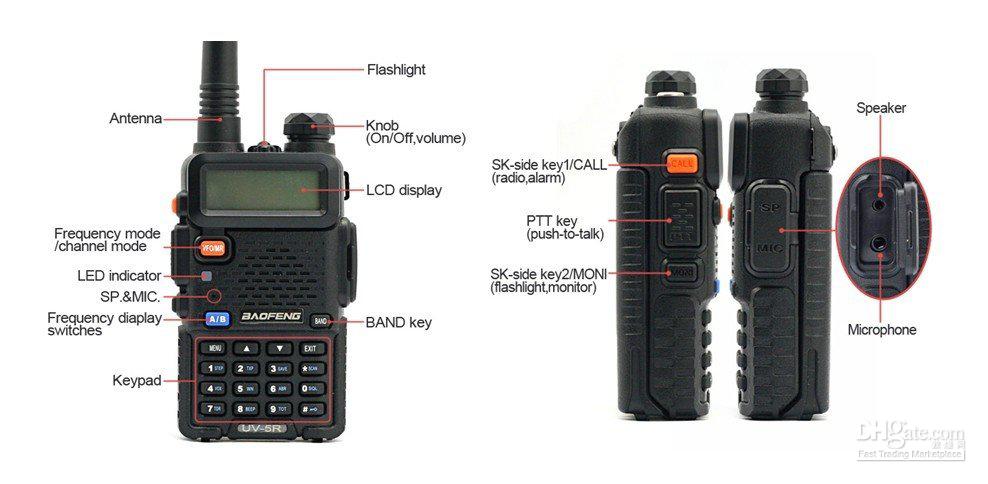
More About the Baofeng Dual Ban Transceiver Import Ban
To follow up on a couple of previous posts, here is some recent video commentary from a ham operator: FCC DA 18-980 Chinese BaoFeng Radio Ban Will Regulate Amateur Operators. JWR’s Comment: This is a serious ban, folks! Buy your five-pack box of UV5R handie-talkies now, while they are still both available and affordable!
More Levi Strauss Anti-Gun Politicking
Reader DSV sent us this: A Month Ago, Levi’s Wanted Your Guns. Now They Want You To Elect People To Take Them.

The Editors’ Quote of the Day:
“And the Spirit and the bride say, Come. And let him that heareth say, Come. And let him that is athirst come. And whosoever will, let him take the water of life freely.” – Revelation 22:17 (KJV)