

“Foolish liberals who are trying to read the Second Amendment out of the Constitution by claiming it’s not an individual right or that it’s too much of a public safety hazard, don’t see the danger in the big picture. They’re courting disaster by encouraging others to use the same means to eliminate portions of the Constitution they don’t like.” –
- Ad USA Berkey Water Filters - Start Drinking Purified Water Today!#1 Trusted Gravity Water Purification System! Start Drinking Purified Water now with a Berkey water filtration system. Find systems, replacement filters, parts and more here.
- Ad Elk Creek Company - Federally-Exempt No-Paperwork GunsPre-1899 Antique Cartridge Guns -- No FFL Required. Can be mailed to your doorstep with no Federal paperwork!

Preparedness Notes for Tuesday — December 31, 2019
December 31st is the birthday of both Alexander Solzhenitsyn (pictured).
—
And December 31st, 1851 was the birthday of Frederick Selous. (He died on January 4th, 1917.)
–
This is also the birthday of Dr. Cynthia Koelker, SurvivalBlog’s Medical Editor.
- Ad Survival RealtyFind your secure and sustainable home. The leading marketplace for rural, remote, and off-grid properties worldwide. Affordable ads. No commissions are charged!
- Ad Click Here --> Civil Defense ManualNOW BACK IN STOCK How to protect, you, your family, friends and neighborhood in coming times of civil unrest… and much more!

Why Trade Deficits Matter, by Lyn Alden
Editor’s Introductory Note: This article is a guest post that I selected from a contrarian economist and investment advisor. It first appeared at the Lyn Alden Investment Strategy web site.
—
Due to the ongoing trade dispute between the United States and China, as well as between certain other nations, the concept of a trade deficit is now front and center in financial media.
This article takes a look at why trade deficits (eventually) matter, and how they can factor into an investment strategy.
- Key Terms Defined
- Trade Deficit Simple Example
- Modern Trade Deficit Explanation
- Why I’m Cautious About the Dollar
- Cut to the Chase: Portfolio Applications
The short version is that trade deficits, along with a few other factors, tell us whether a country’s
currency is more likely to strengthen or weaken going forward.
However, it often takes several years for trade deficits to matter for a currency, which means that for the vast majority of investors and traders, trade deficits aren’t really factored into their analysis. Trade balances are not usually a short-term piece of trade-able data, in other words.
Instead, understanding trade deficits is more actionable in regards to long-term portfolio positioning.
Terms Defined
Trade Balance- A country’s trade balance measures the value of goods and services it exports compared to the value of goods and services that it imports. A country that exports more than it imports (i.e. produces more than it consumes) has a trade surplus. A country that imports more than it exports (i.e. consumes more than it produces) has a trade deficit.
For example, if the United States buys $500 billion worth of goods and services from China each year, and China buys $200 billion worth of goods and services from the United States each year, then the United States has a $300 billion trade deficit and China has a $300 billion trade surplus. A country’s overall trade balance is measured by adding up all the various trade surplus and trade deficits it has with all of its trading partners.
Current Account Balance- A more “complete” picture of a country’s inflows and outflows. The current account balance includes the trade balance, plus investment income between nations, plus cash transfers. A country with a current account surplus has more value flowing into it. A country with a current account deficit has more value flowing out of it.
For example, if the United States has a $300 billion trade deficit with China, but owns enough companies in China that they receive $100 billion worth of dividends each year, then the United States only has a $200 billion current account deficit with China, and China has a $200 billion current account surplus with the United States.
Net International Investment Position (NIIP)- Private citizens and government organizations of a country may own assets of other countries, like real estate, shares of corporations, bonds, and so forth. A country’s net international investment position is determined from the total amount of foreign assets its citizens and government own minus the total amount of domestic assets that foreign citizens and governments own.
For example, suppose United States citizens own $1 trillion worth of Japanese real estate, Japanese citizens own $2 trillion of U.S. real estate, and Swiss citizens own $1 trillion worth of U.S. real estate and $1 trillion of Japanese real estate. In this example, the United States has a -$1 trillion negative international investment position, Japan has a $0 net international investment position, and Switzerland has a +$2 trillion positive net international investment position.Continue reading“Why Trade Deficits Matter, by Lyn Alden”
- Ad California Legal Rifles & Pistols!WBT makes all popular rifles compliant for your restrictive state. Choose from a wide range of top brands made compliant for your state.
- Ad Elk Creek Company - Percussion Blackpowder Guns - No FFL Required.Elk Creek Company - Percussion Blackpowder Guns - Pre-1899 Guns - Knives - Bayonets - Magazines - The last bastion of privacy!
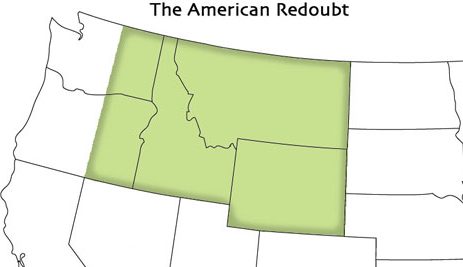
SurvivalBlog’s News From The American Redoubt: A Special Message
This is the final News From The American Redoubt column for calendar year 2019. I’m taking this opportunity to briefly express my thanks and give recognition to some of the key leaders and promoters of the American Redoubt movement. They include:
- Pastor Chuck Baldwin of Liberty Fellowship, Kalispell, Montana
- Alex Barron of the North Idaho Republican Party central committee. He is the founder of the Charles Carroll Society, and now a candidate for the Idaho State Senate. His campaign deserves your support.
- Don Bradway.
- Shari Dovale and the Editors of Redoubt News
- The Editors of The Inland Northwest Report
- John Loeffler of Steel on Steel News.
- Todd Savage of Black Rifle Real Estate
- Jonathan Rawles (my #1 Son) of SurvivalRealty.com
- John Jacob Schmidt (a pseudonym), the host of Radio Free Redoubt and founder of the American Redoubt Radio Operators Network (AmRRON)
- Representative Heather Scott
- Representative Matt Shea. I must mention that Shea is currently being mercilessly hounded by the Democrat leadership of the Washington State Legislature. Their recent report laughably said that Shea had “participated in an act of domestic terrorism.” Shea immediately issued a rebuttal, noting that he had been denied due process. He has also issued a more detailed rebuttal.
- Chris Walsh of Revolutionary Realty
My sincere thanks to all of you! It is gratifying to see that our internal migration movement has been so successful. The in-migration of conservative Christians and Jews to the Redoubt states is growing larger every year. In sheer numbers, our growing movement has absolutely dwarfed the concurrent in-migration of liberals from various coastal states. Conservative newcomers out-number liberals by at least a four-to-one ratio. And to further bolster our numbers, Redoubters demonstrably have larger families. So we are definitely winning, demographically!
I’d also like to recognize the efforts of René Holaday and the other organizers of the Liberty State partition movement. Although it is a completely separate movement, the goals of the Liberty State movement dovetail nicely with those of the American Redoubt movement. By the way, I recommend that you take a listen to the new Liberty State Radio podcast. There are now 15 archived episodes.
Likewise, I want to recognize the pioneering efforts of Boston T. Party and the Free State Wyoming project. It too has a lot of common goals with the American Redoubt movement. Free State Wyoming pre-dated the Redoubt movement by many years.
This may sound odd, but I’d also like to give a hat tip to the leftist journalists of The Inlander and The Spokesman-Review. Without realizing it, even with their biased reporting they have given the American Redoubt movement some valuable publicity. Their many failed attempts to smear us are evidence that the Law of Unintended Consequences has not been repealed.
Lastly, I want to express my sincere gratitude to the native born land-owners of the Redoubt states. Thank you for making your many new conservative and libertarian neighbors feel welcome.
For those of you who live outside of the Redoubt: If you feel convicted to do so, then make the move, soon.
And to all of my readers: Please pray for the Redoubt, daily! – JWR
- Ad Survival RealtyFind your secure and sustainable home. The leading marketplace for rural, remote, and off-grid properties worldwide. Affordable ads. No commissions are charged!
- Ad Prepare for chaos with the essential SIEGE belt. Perfected for CCW with flexible, no-stretch, high-grip custom HD ballistic nylon and capabilities unmatched in any other belt. Go anywhere. Solid 5.5-7 oz of persuasion has saved many. Save $20!SIEGE STOVES: in a fuel crisis twigs are free and abundant. Ultra-compact high-performance portable survival stoves. Enter "SBLOG" at checkout for $20 off any belt. USA-made.

The Editors’ Quote of the Day:
“America is a country founded on guns. It’s in our DNA. It’s very strange but I feel better having a gun. I really do. I don’t feel safe, I don’t feel the house is completely safe, if I don’t have one hidden somewhere. That’s my thinking, right or wrong.” – Brad Pitt (2012)
- Ad SurvivalRealty.com: Sell Your Remote LandAdvertise your hard-to-sell remote land to eager buters. We specialize in rural, remote, and off-grid properties worldwide. Affordable ads. No commissions are charged!
- Ad STRATEGIC RELOCATION REALTYFOR SALE: Self-sustaining Rural Property situated meticulously in serene locales distant from densely populated sanctuary cities. Remember…HISTORY Favors the PREPARED!
Preparedness Notes for Monday — December 30, 2019
December 30, 1865 was the birthday of Rudyard Kipling. His writings are now favorites among British, Australian, and American officers and NCOs deployed to Afghanistan.
—
Today we present another review by our Field Gear Editor, Pat Cascio. But first, some breaking news (with commentary):
Armed church members shoot active shooter inside packed Texas church during a livestreamed communion.
JWR’s Comment: Chalk up one for the Good Guys. Without their prompt response, this probably would have been another bloodbath.
- Ad USA Berkey Water Filters - Start Drinking Purified Water Today!#1 Trusted Gravity Water Purification System! Start Drinking Purified Water now with a Berkey water filtration system. Find systems, replacement filters, parts and more here.
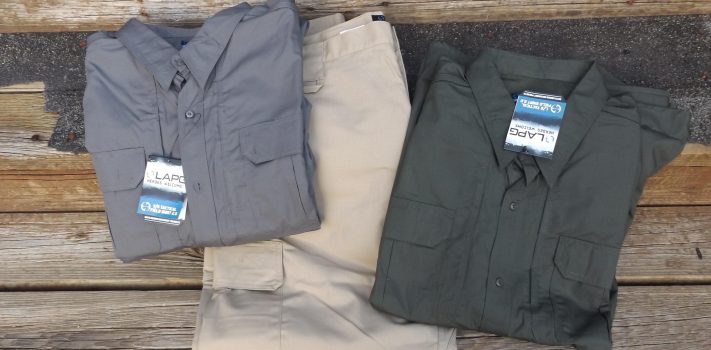
LA Police Gear: Clothing, by Pat Cascio
“Clothes make the man (or woman)” and I couldn’t tell you how many times I’ve heard someone say that, or where it came from. However, I believe, they are talking about dressing-up, as in a suit coat and trousers, for a man; or in the case of a woman, perhaps a really nice-looking dress. The last time I had my suit on was when my oldest daughter graduated from college – about 18 years go – I doubt it still fits me, and I know that I don’t own a pair of dress shoes to go with it.
I’ve held two jobs in my life where I had to wear either a suit or sport jacket. One was when I worked in the advertising department of a large downtown department store – Marshall Field & Company. (Now part of Macy’s) And, in the other, I was the investigations manager of a detective agency, with offices all over the country. II was in-charge of all major investigations we had, as well as investigating charges brought against our uniformed guard division for using excessive force. If I never wore a suit, ever again it would be too soon. For me, the “uniform” of the day, is cargo pants, hiking shoes or boots, and a T-shirt, with a button down shirt over it in the summer months, to conceal my handgun. So, I’m not quite sure if “Clothes make the man…” applies to my usual clothing.
For many years, I wore a photographers vest to conceal my handgun on my hip, and then everyone started wearing these vests, to conceal their handguns on their hip – it was sort of a “badge” and whenever you saw someone wearing that vest, you could be sure they were carrying a concealed handgun on their hip, and then if you looked closely you could usually spot the gun or the outline of the gun. So I stopped wearing a vest. I went to wearing a sporty-type button down short sleeve shirt in the summer months. But it is never buttoned, so I can have fast access to my handgun on my right hip.
I wear cargo pants because they are comfortable, and give me more freedom in the overall fit of the pants, and it helps conceal a back-up handgun, on my ankle, too. These pants are some what baggy, and that helps conceal a gun in an ankle holster.
This brings us to some clothing, cargo/tactical pants and shirts, from LA Police Gear that I’ve been testing. For years, especially when I was a police officer, or doing private security, I purchased products from LA Police gear, because they have always had a huge assortment of just about everything and anything you could use in this line of work. Secondly, their prices are more than fair. I don’t know how they can sell so many products at the prices they sell them for. Some of their clothing is made in China, but there’s no way around this on a lot of things – most folks don’t realize that, about 95% of our footwear comes from China. Heaven help us, if we go to war with China. If we don’t win right away, we’ll be barefoot in short order. Products from LA Police gear are not made in a lao gai slave labor prison. No, they are made in reputable factories. If you buy clothing at Walmart, odds are that much of it is made in China. [JWR Adds: And Walmart sources from hundreds of Mainland China factories, so we have no certain guarantee that none of theirs is made with slave labor.]Continue reading“LA Police Gear: Clothing, by Pat Cascio”

Recipe of the Week: Vincent’s Italian Beef Roast
Reader “Sis” kindly sent us this Italian Beef Roast recipe.
Vincent’s Crock Pot Italian Beef Roast
Ingredients
- 2-to-4 lb beef roast, whole.
- 10 pepperchinis diced, with seeds
- 1 jalapeno pepper, diced
- 1/3-to -1/2 tsp. Oregano
- 1 Tablespoon Cooking Oil
- 1/2 tsp. Salt
- 1/2 tsp. Fresh Ground Black Pepper
- 2 Cups of Water
Directions
- Put roast in an electric crock pot or a covered broiler pan.
- Baste the roast in oil.
- Sprinkle the seasonings on the roast.
- Gently pour in two cups of water.
- Cook in a covered crock pot on a low setting for 4-5 hours or until tender.
SERVING
Serve hot, sliced, with usual roast side dishes.
Variations
This can also be cooked in a covered broiler pan, at 275 degrees F. But begin checking it after 2-1/2 hours. Do not over-cook!
Peeled and halved or quartered potatoes may be added, for just the last two hours of cooking.
This recipes also works well with venison or elk. Use a large cross cut, from a hind quarter.
STORAGE
Stores well for up to four days, refrigerated. The leftovers are great for sandwiches
—
Do you have a favorite recipe that would be of interest to SurvivalBlog readers? In this weekly recipe column we place emphasis on recipes that use long term storage foods, recipes for wild game, dutch oven and slow cooker recipes, and any that use home garden produce. If you have any favorite recipes, then please send them via e-mail. Thanks!
Economics & Investing For Preppers
This is my last Economics & Investing column post for calendar year 2019, so today I’m posting my 2020 recommendations:
Stocks:
Minimize. The unprecedented 11+ year U.S. economic expansion cannot continue indefinitely. So far, the banksters have kept “the everything bubble” expanding by means of artificially low interest rates. At some point in the near future, the bubble will deflate, and possibly pop spectacularly. Keep in mind that 2020 is a presidential election year. If The Powers That Be (TPTB) want to see President DJT ousted, then they can do so with an orchestrated crash. If they merely allow interest rates to revert to more normal levels, then that would probably be enough to accomplish that. All in all, 2020 is a good year to get out of all but a few very safe “Widows and Orphans” stocks. And even with those, you should set Stop Loss orders. Precious metals mining stocks look like they will continue to be poor performers in 2020. Presently, buying a mining stock in not a good way to invest in precious metals.
Precious Metals:
Hold. This may be a good opportunity to re-balance your personally-held portfolio, but it is certainly not a time to reduce it! Your mileage may vary, but here is how I’ve allocated my personal metals portfolio for 2020:
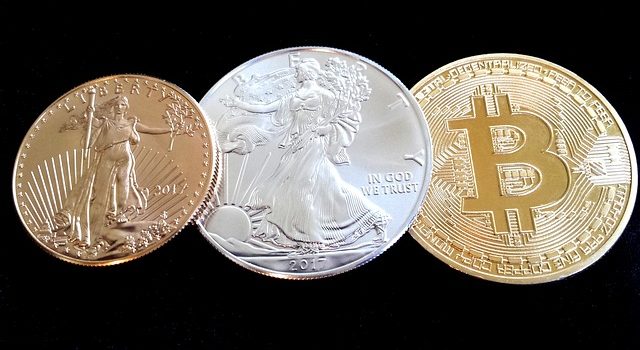
- Silver: 80% (Mostly a mix of pre-1965 dimes and quarters, as well as some 1 ounce U.S. Mint Silver Eagles, and just a few serialized Engelhard 10 ounce bars.)
- Gold: 10% (I now have far more 1-ounce U.S. Mint Gold Eagles than I do numismatics.)
- Platinum: 10% (U.S. Mint Platinum Liberty 1/4-ounce and 1/2-ounce bullion coins)
Base Metals
Hold. I trust that you have all long since bought some boxes of nickels, at face value. Hang on to them. I also suggest closely watching the world supplies of cobalt, copper, lithium, and nickel. These are all key components of large batteries used for electric vehicles. If shortages of any of these loom up, then it would be a good time to invest in a few very carefully selected mining stocks. And, of these, nickel is compact enough to invest in, tangibly.Continue reading“Economics & Investing For Preppers”
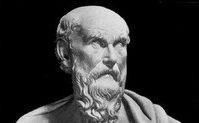
The Editors’ Quote of the Day:
“It will not always be summer, [so] build barns.” – Hesiod, Ancient Greek poet of the 7th Century B.C. He was the author of Theogony and Works and Days
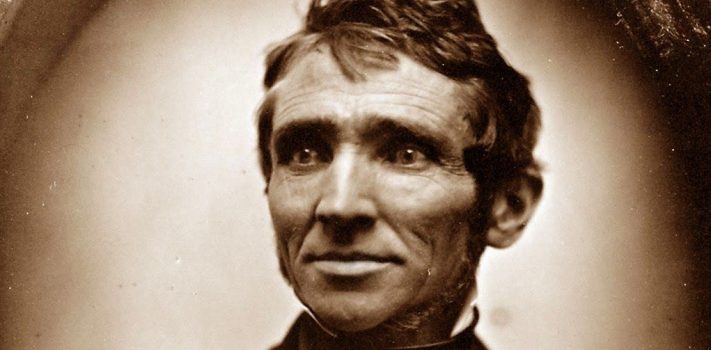
Preparedness Notes for Sunday — December 29, 2019
Today is the birthday of inventor Charles Goodyear (1800–1860.)
This is also the birthday of actor Jude Law (born 1972.) You will remember him from Enemy at The Gates and Sky Captain.
—
SurvivalBlog Writing Contest
Today we present another entry for Round 85 of the SurvivalBlog non-fiction writing contest. The more than $12,000 worth of prizes for this round include:
First Prize:
- A $3,000 gift certificate towards a Sol-Ark Solar Generator from Veteran owned Portable Solar LLC. The only EMP Hardened Solar Generator System available to the public.
- A Gunsite Academy Three Day Course Certificate. This can be used for any one, two, or three day course (a $1,095 value),
- A course certificate from onPoint Tactical for the prize winner’s choice of three-day civilian courses, excluding those restricted for military or government teams. Three day onPoint courses normally cost $795,
- DRD Tactical is providing a 5.56 NATO QD Billet upper. These have hammer forged, chrome-lined barrels and a hard case, to go with your own AR lower. It will allow any standard AR-type rifle to have a quick change barrel. This can be assembled in less than one minute without the use of any tools. It also provides a compact carry capability in a hard case or in 3-day pack (an $1,100 value),
- Two cases of Mountain House freeze-dried assorted entrees in #10 cans, courtesy of Ready Made Resources (a $350 value),
- A $250 gift certificate good for any product from Sunflower Ammo,
- American Gunsmithing Institute (AGI) is providing a $300 certificate good towards any of their DVD training courses.
Second Prize:
- A gift certificate from Quantum Harvest LLC (up to a $2,200 value) good for 12% off the purchase of any of their sun-tracking models, and 10% off the purchase price of any of their other models.
- A Front Sight Lifetime Diamond Membership, providing lifetime free training at any Front Sight Nevada course, with no limit on repeating classes. This prize is courtesy of a SurvivalBlog reader who prefers to be anonymous.
- A Glock form factor SIRT laser training pistol and a SIRT AR-15/M4 Laser Training Bolt, courtesy of Next Level Training, which have a combined retail value of $589,
- A $300 purchase credit for any of the products from EMPShield.com
- A Three-Day Deluxe Emergency Kit from Emergency Essentials (a $190 value),
- Two 1,000-foot spools of full mil-spec U.S.-made 750 paracord (in-stock colors only) from www.TOUGHGRID.com (a $240 value).
- An assortment of products along with a one hour consultation on health and wellness from Pruitt’s Tree Resin (a $265 value).
Third Prize:
- Good2GoCo.com is providing a $400 purchase credit at regular prices for the prize winner’s choice of either Wise Foods or Augason long term storage foods, in stackable buckets.
- Three sets each of made-in-USA regular and wide-mouth reusable canning lids. (This is a total of 300 lids and 600 gaskets.) This prize is courtesy of Harvest Guard (a $270 value)
- A Royal Berkey water filter, courtesy of Directive 21 (a $275 value),
- Expanded sets of both washable feminine pads and liners, donated by Naturally Cozy (a $185 retail value),
- Two Super Survival Pack seed collections, a $150 value, courtesy of Seed for Security, LLC,
- Mayflower Trading is donating a $200 gift certificate for homesteading appliances.
Round 85 ends on November 30th, so get busy writing and e-mail us your entry. Remember that there is a 1,500-word minimum, and that articles on practical “how to” skills for survival have an advantage in the judging.

Potential Food Shortages, by 3AD Scout
I’d like to address the potential for food shortages. The producers of the YouTube channel “Six Acres” filmed some shelves at a Williston, North Dakota Walmart. The Six Acres footage was posted on December 12, 2019. The Six Acres YouTube video was on my suggested list so I took a look at it.
There has been much discussion about food shortages on various prepper blogs and other forums. I have watched and listened to some but obviously not all. But when watching the Six Acres video and comparing and contrasting with my trips to my own local Walmart here in Pennsylvania I have a theory.
Having worked in retail in my younger days, we were directed twice each shift to “front and face” which was a term to go into our area of responsibility and move product from the back of the shelf to the front of the shelf where product had been removed as customers picked it up. We also turned around product that had gotten moved so that the front of the product label was able to be seen by shoppers. What I saw in the video was the lack of this normal retail practice in several pictures. There was product but it was towards the back of the shelf. Many of the products were turned on their side or otherwise not placed orderly on the shelf. Has Walmart cut back on employees and/or have not made fronting and facing a priority? With North Dakota having an unemployment rate of 2.5%, Walmart may not be able to compete for workers against others who are paying higher wages.Continue reading“Potential Food Shortages, by 3AD Scout”
The Survivalist’s Odds ‘n Sods
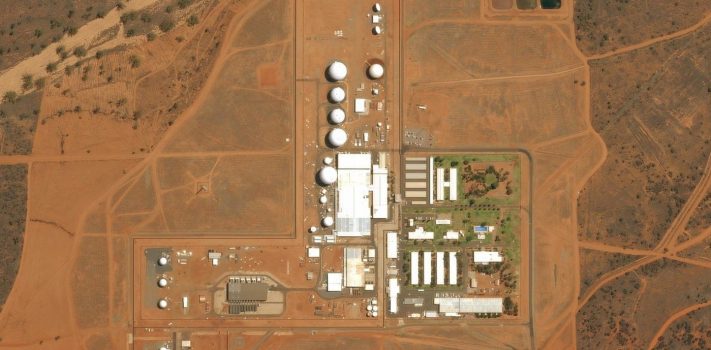
SurvivalBlog presents another edition of The Survivalist’s Odds ‘n Sods— a collection of news bits and pieces that are relevant to the modern survivalist and prepper from “JWR”. Our goal is to educate our readers, to help them to recognize emerging threats and to be better prepared for both disasters and negative societal trends. You can’t mitigate a risk if you haven’t first identified a risk. Today, we feature an article that describes some secret military bases, such as Pine Gap, Australia. (Pictured.)
Mike Williamson: The Virginia Debacle, Summarized
Over at our own Michael Z. Williamson’s personal blog (The Sacred Cow Slaughterhouse), there is this:
The Virginia Debacle, Summarized (And Why You Should Buy More Guns). Here is a quote from Mike’s essay:
“I spent 19 of my 25 service years in the Guard. I don’t want to see either side of this.
This is why more and more counties are deciding to be “sanctuary” and totally sit this one out. Good for them.
If you’re willing to use military force and murder people over ownership of anything, we’re back to tar, feather, and lampposts.”
Secret Military Bases
Linked over at the great Whatfinger.com news aggregation site: Exploring the Most Secretive Military Bases in the World: Area 51, Kasputin Yar, Porton Down, Floating China Bases, Pine Gap. Here is the article’s teaser opening paragraph:
“In a time when we are overloaded with information, it’s important to distinguish fact from fiction. We are here to verify some real-life military bases around the world. These bases have been shrouded in mystery and protected from the public eye for decades. At the same time, their locations and existence have been covered by the media for years or decades, so no top-secret military secrets are shared here, sorry! We’re simply here to separate the fact from the fiction for you, and perhaps stoke your imagination just a little bit.”Continue reading“The Survivalist’s Odds ‘n Sods”

The Editors’ Quote of the Day:
“But speak thou the things which become sound doctrine:
That the aged men be sober, grave, temperate, sound in faith, in charity, in patience.
The aged women likewise, that they be in behaviour as becometh holiness, not false accusers, not given to much wine, teachers of good things;
That they may teach the young women to be sober, to love their husbands, to love their children,
To be discreet, chaste, keepers at home, good, obedient to their own husbands, that the word of God be not blasphemed.
Young men likewise exhort to be sober minded.
In all things shewing thyself a pattern of good works: in doctrine shewing uncorruptness, gravity, sincerity,
Sound speech, that cannot be condemned; that he that is of the contrary part may be ashamed, having no evil thing to say of you.
Exhort servants to be obedient unto their own masters, and to please them well in all things; not answering again;
Not purloining, but shewing all good fidelity; that they may adorn the doctrine of God our Saviour in all things.
For the grace of God that bringeth salvation hath appeared to all men,
Teaching us that, denying ungodliness and worldly lusts, we should live soberly, righteously, and godly, in this present world;
Looking for that blessed hope, and the glorious appearing of the great God and our Saviour Jesus Christ;
Who gave himself for us, that he might redeem us from all iniquity, and purify unto himself a peculiar people, zealous of good works.
These things speak, and exhort, and rebuke with all authority. Let no man despise thee.” – Titus 2 (KJV)

Preparedness Notes for Saturday — December 28, 2019
December 28, 1793 is the day that Thomas Paine was arrested in France for treason. The charges against him were never fully detailed, but he was tried in absentia on December 26 and convicted. Best known as the author of Common Sense, he moved to Paris to be part of the French revolution. Initially welcomed, the tide soon turned against him, because he was opposed to the death penalty and the French revolutionaries were sending hundreds to the guillotine.
—
Today, instead of another regular entry for Round 85 of the SurvivalBlog non-fiction writing contest, we are presenting two short articles that are too brief to qualify to be part of the judging. Our thanks to the authors!