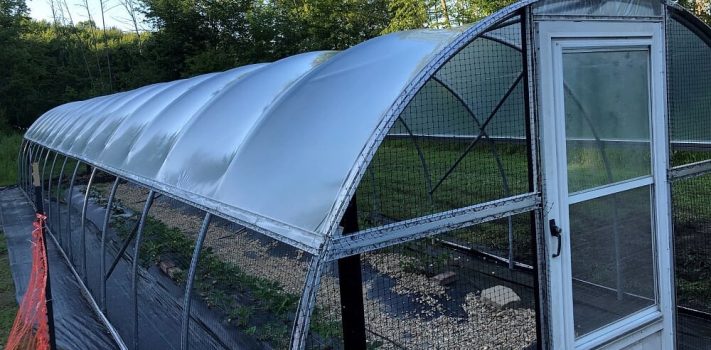
A Disclaimer: I have zero commercial interest or connection to the plastic industry or any link contained herein. All links and references below are provided for informational and educational purposes only. I strongly encourage readers to use locally owned suppliers and make your purchases face to face for all of the products I recommend. Or better yet- source them via second hand, scrap, or salvage. All photos are originals and taken at my property.
—
Plastic has been getting a lot of bad press lately. Plastic pollution in our waterways is certainly a problem that deserves our attention. Leaching of toxic compounds from plastic containers into the food supply should concern us all. However, what if plastic could save farming by reducing the need for toxic pesticides and herbicides? What if plastic could increase yields and help feed you and your family? Plastic as a material, is widely available, lightweight, relatively shelf stable, and easy to work with. Plasticulture is an agricultural practice that deserves consideration.
What is plasticulture? Wikipedia defines it as:
The term plasticulture refers to the practice of using plastic materials in agricultural applications.
The plastic materials themselves are often and broadly referred to as “ag plastics.” Plasticulture ag plastics include soil fumigation film, irrigation drip tape/tubing, nursery pots and silage bags, but the term is most often used to describe all kinds of plastic plant/soil coverings. Such coverings range from plastic mulch film, row coverings, high and low tunnels (polytunnels), to plastic greenhouses.
In his book Plasticulture | Farming for Everybody, Otis Lester Bray presents plasticulture as an opportunity to transcend the problems associated with modern agriculture.
What is plasticulture to me? Plasticulture is abundance in my pursuit of maximizing food production for my family. Embracing plasticulture has been the single biggest difference maker for the development of our homestead (buying a tractor being a close second). Being the co-owner of a commercial building firm and father of two, my spare time is quite limited so I need every edge I can get as we develop our homestead.
First, some background
Shortly after moving to our rural homestead 7+ years ago, my wife and I hastily began building our garden on the site of what was once a pole barn. Completely overgrown and waterlogged, the site was the sunniest area of the yard. Once the remnants of the barn and surrounding rubbish was (mostly) cleared, we set out to see what would grow. Without any plan whatsoever and using basic hand tools, I built rows and beds and Mrs. P planted them. Many long sweaty evenings later, things started to grow! It was fun and exciting to experience the fruits (pun intended) of our labor, albeit with modest results.Continue reading“How Plastic Saved Our Homestead – Part 1, by H.P.”