(Continued from Part 1. This concludes the article.)
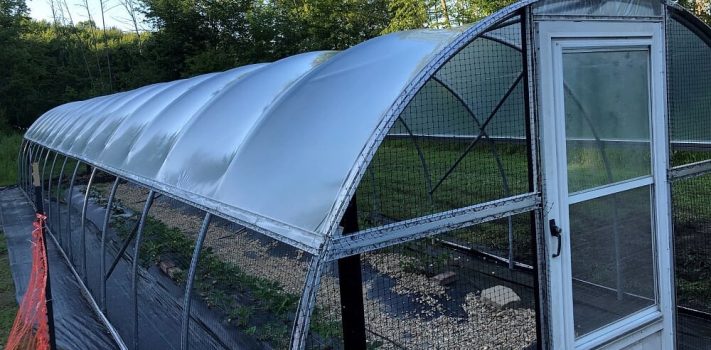
For covering all of the crop rows, we use a black on white 1 mil UV stabilized poly film. This versatile material must be replaced every year after the grow season ends. Depending on which crop is being planted, we roll it out either white up or black up. The white, best for greens and brassicas, has a cooling effect on the soil by reflecting sunlight. The black warms the soil by absorbing sunlight and is used for the majority of crops. When used in the hoop house, drip tape would be installed first on the row before the film. Using this film has several benefits besides weed control including moisture retention, erosion control, and temperature regulation.
Another unexpected benefit is that using the film prevents the plant leaves from touching the soil. Plants stay much cleaner and less at risk for soil borne disease because of that barrier. Anyone who’s cleaned garden lettuce will appreciate that. The film is easily cut with a small putty knife when it’s time to plant the soil blocks or direct seed. There are implements used to apply this film in commercial applications, but we do it easily by hand. Once the film is down, we border it with the mulch cloth to complete the install. This method serves to channel rainwater to the base of the raised rows which wicks up into the roots.
Using these weed control methods will eliminate all weeding chores for your row crops and trees. The big exception is mound grown crops like raspberries, asparagus, and potatoes. Our asparagus is finally doing great, but it requires frequent weeding due to the exposed soil requirement. A ground covering tip we’ve learned is that having loose bricks (like those left over from a chimney repair) laying around is very helpful when installing the cover material.Continue reading“How Plastic Saved Our Homestead – Part 2, by H.P.”