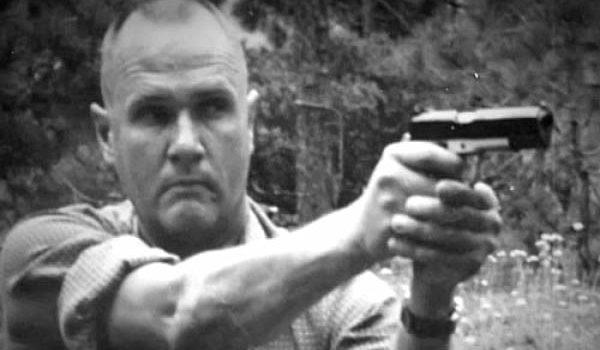
Most people know the four rules of firearm safety popularized by Colonel Jeff Cooper:
1.) All guns are always loaded.
This one has a double meaning – (1) always check an “unloaded” firearm yourself and (2) once you’ve checked, still follow all the other rules as though it was loaded.
2.) Never let the muzzle cover anything you are not willing to destroy.
This doesn’t mean you’re willing to destroy the wall of your home – just that it’s not catastrophic like pointing at a family member.
3.) Keep your finger off the trigger until your sights are on target.
This is a critical partner for the ‘muzzle’ rule above. It means that you have to violate 2 rules in order to hurt someone – both sweeping a person with the muzzle and having your finger on the trigger.
4.) Be sure of your target.
This is often expanded to “be sure of what is between you and the target along with what is behind your target”. You must know where the bullet will stop.
Let’s expand on these rules and consider some issues faced by almost everyone who owns a firearm:
In the home
- Even with guns that you know are unloaded – check every time. This is very important when kids are around to demonstrate good habits. It’s also essential when handling firearms around people less familiar than you – putting them at ease and ensuring no problems when they invariably violate the muzzle and/or finger rules.
- When unloading, first remove the magazine from semi-autos. Then lock the slide back to inspect the chamber. This ensures that racking the slide does not inadvertently chamber a round.
- Have a safe direction for the muzzle when loading and unloading. Some people keep a 5-gallon bucket of sand in the workshop for this purpose. At least have a safe direction where you won’t penetrate a floor, wall or ceiling into an occupied room or adjacent building.
- The above muzzle advice is also important when moving firearms in the home. Muzzle “up” may be the best option on your upper floor but muzzle “down” may be the best option downstairs.
- Dry fire practice is an excellent way to develop good sight, trigger and follow-through skills. The best technique is to aim at a blank wall about a foot away. First unload the firearm and separate the ammo or loaded magazine to a different room. Then double check the chamber and use a wall where nothing important will be damaged if an accident occurs.
- If you store loaded guns for self-defense, consider having a small safe or lockbox. There are many options that allow fast access via a key code, fingerprint or RFID bracelet. I personally avoid anything with batteries since they can and do fail at inopportune times. I prefer key codes using a Simplex lock – one that is purely mechanical. If you hide firearms in the home, then you may want to keep the chamber empty in case they are found by an unauthorized person. If there is any chance of a child or unstable person finding them, stick with a lockbox or safe.