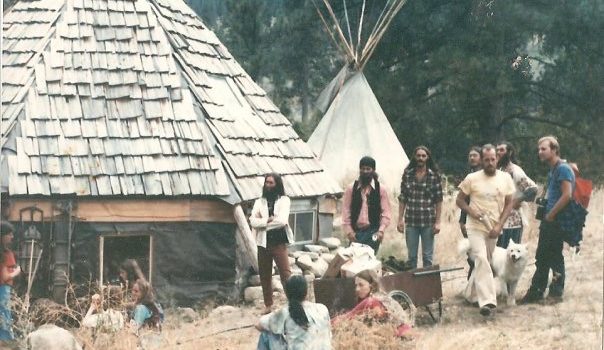
Now I might be just a mild mannered, right-leaning, Christian grandma, but in my former life I was a hardcore, back-to-the-land, Rainbow Family hippie. There’s a bunch of us (once young people) who learned survival and community building skills in the late 1970s and early 1980s, and we suspected that someday we might need to be teaching these skills.
The Rainbow Family name came from different native American visions of white people who would adopt Native American styles of life. (This was decades before the LBGTQ+++ crowd appropriated the “rainbow” and half of the English Alphabet.) For example the Hopi Eight Sign says: You will see many youth, who wear their hair long like my people, come and join the tribal nations, to learn their ways and wisdom….”[1]
We Learned From Native Americans
We were Indian wannabees in a white hippie sort of way. We would go to annual gatherings in remote parts of national forests, put up tepees and tents, have huge drum circles, smoke dope, dance, and commune with nature. When we weren’t “gathering” some lived on communes or bought homesteads to build on – many in the Northwest.
One of the first shelters alternative folks tried was tipis. Tipis are a magical place to live in for half of the year. Their diffused light and the ability to move the flaps according to which way the wind was blowing is unique and grounding to nature. Tipis are livable in the cold half of the year. I spend a winter at 9,500 feet in the Sangre De Cristo mountains (of Colorado) in a tipi and was comfortable. However it is hardly energy efficient. We used a very large wood stove, a lot of wood, and hay bales around the perimeter to keep warm. Many of us at that time lived a semi-nomadic life. Some had converted school buses, some tipis, and some yurts. But for people in the mountain West who were looking for a place to live for a few years and perhaps did not have the money or time to build a cabin or house the best option was to build earth lodges.Continue reading“Building Hippie Earth Lodges, by Valerie”