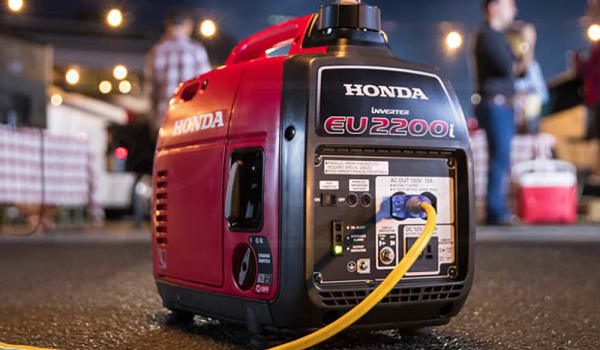
Many of us own a generator. But how much research did you do before purchasing yours? Generator system integration into you home power design is frequently a series of tradeoffs. I’m going to cover how generators work, potential design features, trade-offs, and strategic considerations. I actually own four generators of various capacities, fuel types, and features, each for slightly different purposes. I also work doing generator fleet maintenance.
Key Components
I like to break generators down into an alternator, and engine, a DC control system, an AC control system, a fuel system and a cooling system. Generator sets are typically powered with gasoline, diesel, natural gas or propane engines. The engines typically run at 1,800 RPM, 3,600 RPM, or are variable speed. The engines will be air cooled or liquid cooled. Alternators can be permanent magnet, brushless or they cnd bedesigns that use traditional brushes. The AC waveform can be made by the alternator or byan inverter/converter. The AC frequency can be created by the engine/alternator or by the inverter converter. The AC voltage can be controlled by a voltage regulator, the inverter/converter or by a circuit in the alternator. They can be pull-start or electric start. The generator manufacturing industry combines all these to create generator sets with different performance characteristics at different price points.
All the alternators rotate a magnetic field inside a set of wires (windings) to convert the rotating energy of the engine into electricity. The rotor is spun by the motor, and the stator is the stationary copper windings that produce the electricity. The best alternators are brushless with four sets of windings, the exciter stator, exciter rotor, and the rotor and stator windings. The voltage regulator (VR) sends a DC voltage to exciter stator which passes the energy electromagnetically to the rotor to create the rotating magnetic field. These alternators can produce high quality power, they can handle the stress of motor starting surges, and can last for tens of thousands of hours with simple bearing and diode replacement. They tend to be found in commercial generators.
A brush alternator still uses a voltage regulator, but passes the VR DC energy to the rotor via brushes. Brushes wear out, but power quality is still fairly good and brushes can be replaced. Inverter generators typically use an alternator that spins a permanent magnet as the rotor to create the voltage for the inverter. No brushes to wear. PMAs are typically smaller than other alternators, but require the inverter. Power quality is as good as the inverter. Consumer household generators may also contain a simple brushless alternator that uses an extra winding and capacitor in the rotor to somehow energize the rotor. They are reliable, inexpensive, but don’t regulate the voltage very well. My brushless consumer generator produces 129 VAC at zero load and steadily drops down to below 120 VAC by teh time it reaches 2/3 load.
I also have a generator with brushes and a voltage regulator. It produces 128-129 VAC all the time from zero to as much load as I could pull from it. The manufacturer told me they set the voltage high to allow for extension cord voltage line loss. The voltage regulator can be adjusted to a lower voltage, if that is what is wanted. I plan to order a spare pair of brushes. Voltage variability on the inverter will depend on the design of the inverters. I checked the two I own and one dropped about 4 Volts in the transition from zero load to ¾ load and the other dropped less than 2 Volts in the transition from zero load to ½ load.Continue reading“Generators for Family Readiness – Part 1, by Greg X.”