(Continued, from Part 2. This concludes the series.)
We also raised rabbits, in a row of three backyard hutches, that my father built. These were wire mesh hutches on wooden frames that were elevated and protected by a roof. We raised white rabbits with black ears, noses, and paws, as well as some gray rabbits. I was in charge of gathering the rabbit feed. Since Dinuba was a farm town, all of the vacant lots had weeds that were mostly hay grass, or alfalfa. Once every two or three days, I would ride my bicycle around town and use hand shears to cut the grass and alfalfa. We preferred alfalfa. The lot owners never objected because I was cutting their weeds, for free. I would stuff as much as I could into the big basket on my bike. We never paid for any rabbit feed–only salt. Since we knew they’d be butchered, we never named our rabbits.
War Bonds and Scrap Drives
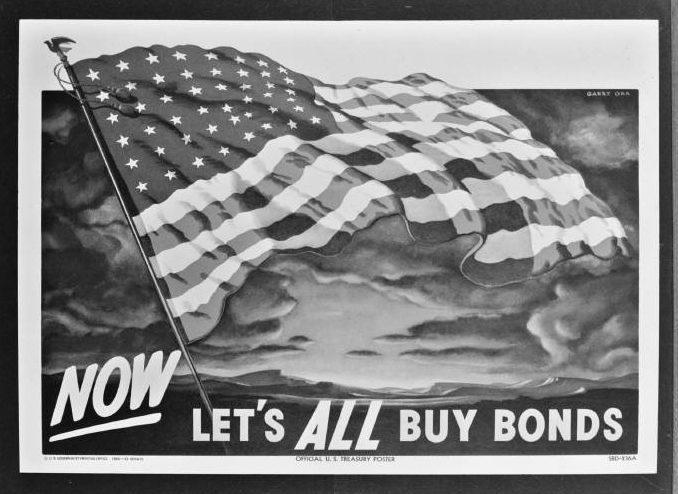 In 1940, with the war in Europe already in progress and American involvement looking likely, a series of Defense Bonds were issued, to help cover the enormous expenditures, as the military ramped up. After Pearl Harbor, these were re-named War Bonds. There were plenty of patriotic exhortations in newspaper and magazine ads, radio commercials, parade floats, and special events like concerts. Movie stars got involved, in the Bond Drive campaigns to sell these war bonds. There was tons of publicity, and they even pushed them on us school kids. Basically, this is how they worked: You would pay $18.50, and then at maturity the bond could be redeemed for $25.00. To make the bonds affordable to working-class people and to children, 10 cent savings stamps could be purchased and pasted in special stamp albums. Once you had saved $18.50 worth of stamps, then you’d have a full bond. Each week, a man from the local bank would come to our grammar school, to sell the War Bond stamps. I can still picture his kindly face.
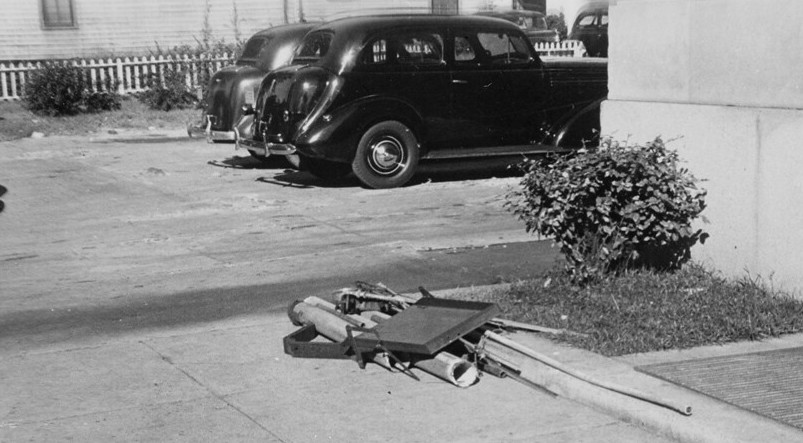 One of the other ways that the citizenry got involved in the war effort was in scrap metal drives and other civic drives to collect all sorts of things: rubber bands, string, aluminum foil, paper, and even left-over cooking fat. The kids in Dinuba all got involved, pestering adults for donations, but the kids did most of the work. Everyone thought it was part of “Doing Our Bit” for the war effort.
Over X-Rayed
One of my father’s many weekend and summer jobs was as a salesman at the shoe store down the street– Don’s Shoes. Surprisingly, it is still in operation in 2020, at the same location! Anita and I, and sometimes accompanied by our neighbor Ruthie Gapen would walk and visit the shoe store. We got a big kick out of being there with Daddy. As little girls, we felt like we were part-owners of the store. While Daddy was waiting on customers, we were standing on the scale, or standing on the X-Ray fluoroscope machine that was used for fitting shoes. We could look at the bones in our feet, and even see our toe bones wiggle, when the machine was turned on. We thought that was fascinating, so we’d take turns doing that, over and over. Daddy would say: “Hey girls, why don’t you let someone else use that.” This was not because it was considered hazardous, but rather because he didn’t want us distracting the genuine customers, or keeping them away from the machine.Continue reading“Oral History: A Child of the Great Depression – Part 3”