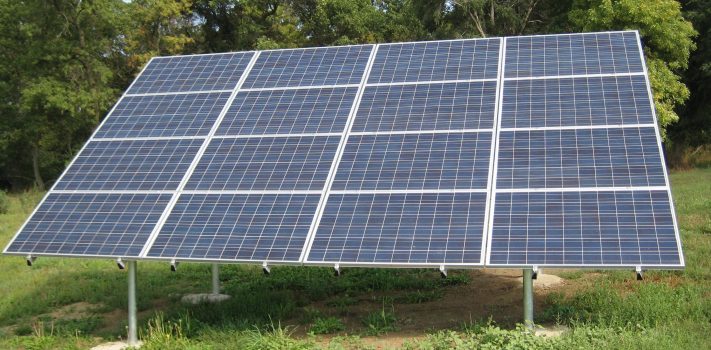
Solar power from photovoltaic (PV) cells is an inexpensive, plentiful source of versatile energy for off-grid locations. This piece is not intended to be a comprehensive treatise on solar power design – there are many excellent books on the subject. Rather, this is a discussion specializing on considerations for solar power in a bug out location (BOL) or homestead, especially with some thoughts toward going forward after a grid-down event. It also describes some tips on what I have found works the best at my BOL.
System Voltage – 12, 24, 36, or 48V?
The higher voltage used, the more potential power you have for a given battery capacity and wire size. However, in a BOL, an important consideration is how versatile the system is when you consider what you are going to run. While 12 Volt DC requires the biggest gauge wiring and has the potential for the most energy loss in the wiring, I feel that it is more than made up for by the variety of things you can run on it. Nearly every cordless tool you get now can be had with a vehicular charger, and so can also be charged off a 12V solar system. 12V LED bulbs are ubiquitous, both in automotive applications and in standard Edison screw base bulbs for house lighting – 12V Edison base LED bulbs are even stocked at many home improvement stores now, albeit at a much higher price than you can get them for on-line.
DC well pumps, on the other hand, require higher voltages due to the amount of power required, and the length of wire necessary to go down the well to the pump. If you are considering a DC well pump, you will probably have to go with a system voltage higher than 12V. I have a gravity-fed rainwater system that I described in an earlier article for my water needs, so my well pump is strictly for backup.
And while we’re on the system voltage discussion, the next thing to consider is controller type and panel voltage.Continue reading“Versatile Photovoltaic Power – Part 1, by Tractorguy”