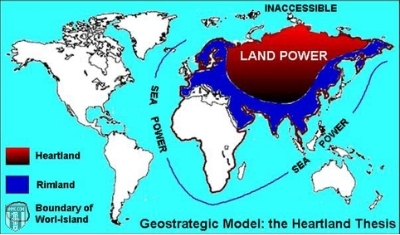
Editor’s Introductory Note: The following guest article was first posted by Ammo.com. It is re-posted with permission. It appealed to me because–like the author–I adhere to the Geographic Detriminist school of history. – JWR
—
“It is not often that nations learn from the past, even rarer that they draw the correct conclusions from it.” – Henry Kissinger
American students are notoriously bad at geography, and have been for some time. In 2002, for instance – the year after the 9/11 attacks – only 17% of American students could find Afghanistan on a map. In 2016, less than one third were able to score a minimal pass of 66% on the National Geographic Global Literacy Survey. In 2015, the United States Government Accountability Office reported that 75% of eighth grade students don’t even know what geography is.
Picture your old-school geography class. More likely than not, it was a boring subject requiring rote memorization of global factoids, U.S. state names, and their capitals. This does American students a disservice, because an appreciation for the hidden power of geography helps one make sense of seemingly random historical tidbits, more accurately predict the future, and see beyond political rhetoric to what actually matters among nation-states.
When contemplating geography’s usefulness in better understanding our world, consider the following:
- Why is it important to the state to get a handle on its subjects and their environments, i.e., through long-established practices like land registries and the creation of permanent last names? Or more recent examples such as the census bureau, the passport system, the DMV, birth and death certificates, or just registering to vote?
- Why is the state seemingly always the enemy of “people who move around,” i.e., nomads and pastoralists, hunter-gatherers, Gypsies, vagrants, homeless people, iterants, runaway slaves, and serfs? All have always been a thorn in the side of the state, and efforts to permanently settle these mobile peoples seem to rarely succeed.
The answers to these questions are straightforward when the classic imperatives of the state are known – and these are taxation, conscription, and the prevention of rebellion.Continue reading“Geopolitics: How Maps Help Us Understand History, Predict the Future – Pt. 1, by Brian Miller”