Preparation for Roasting
Besides gathering all your equipment together, two skills need to be developed:
1.) Maintaining just the right amount of fire and
2.) “Nurturing” the beans with masterful strokes of the paddles.
First, the fire. If you are blessed to be a master of the wood fire then this part will come easy. Most effective wood cooking fires are long on a good bed of coals and short on actual flame. Flame delivers short-lived heat and then it dies. You don’t want to be rebuilding your fire in the middle of a roast.
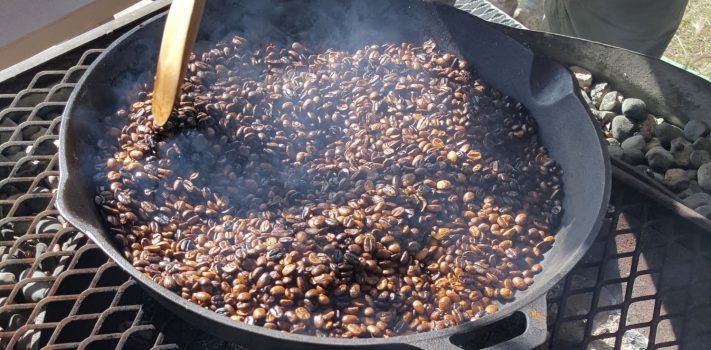
Now let’s talk about what I refer to as “nurturing” the beans – stirring. I’m convinced proper stirring is the secret to a magnificent wood-fired coffee roast.
Remember, we’re not looking for speed. If your fire is right then slow and steady is very productive. Too much speed and you will be pushing and flipping the beans out of the pan. If a smoking hot pan is tempting you to stir faster what you really need to do is reduce the heat under the pan.
I’ve found two paddle strokes that work well. One, the “sweep stroke” which is used to move beans away from the edge of the pan. And, the second stroke, which I call the “over and under,” is a double paddle stroke that starts with the paddles on opposite sides of the pan, draw the paddles toward each other while pushing beans toward the center, and before the paddles collide one stays on the pan and the other rises, pushing beans up and over the top of the other paddle.
You’re off and running, and you’ll soon develop your own personal style. Simply keep in mind that your goal is to keep the beans moving, never leaving a bean on the hot, cast-iron surface, more than 10-15 seconds so the roast is slow and even. Now you’re beginning to understand “nurturing” beans!”
Time to Roast
What I intend to do is share our first roasting experience, followed by some improvements in subsequent roasts.
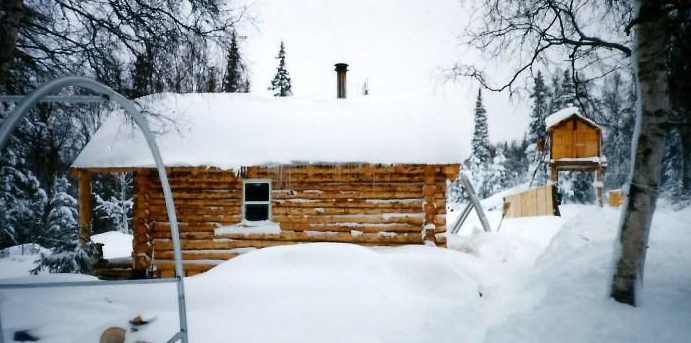
After breakfast on roasting day, I grabbed one of the sets of roasting instructions I’d pulled off the Internet, quickly reread them, and hoped I’d be able to maneuver the beans through the ten stages of roasting and somehow bring them right up to the fine line of a dark roast, black but not burned. I got the beans, picked out a cast iron frying pan, pulled a few spatulas and a large serving spoon from the kitchen and headed for the backyard of our cabin.
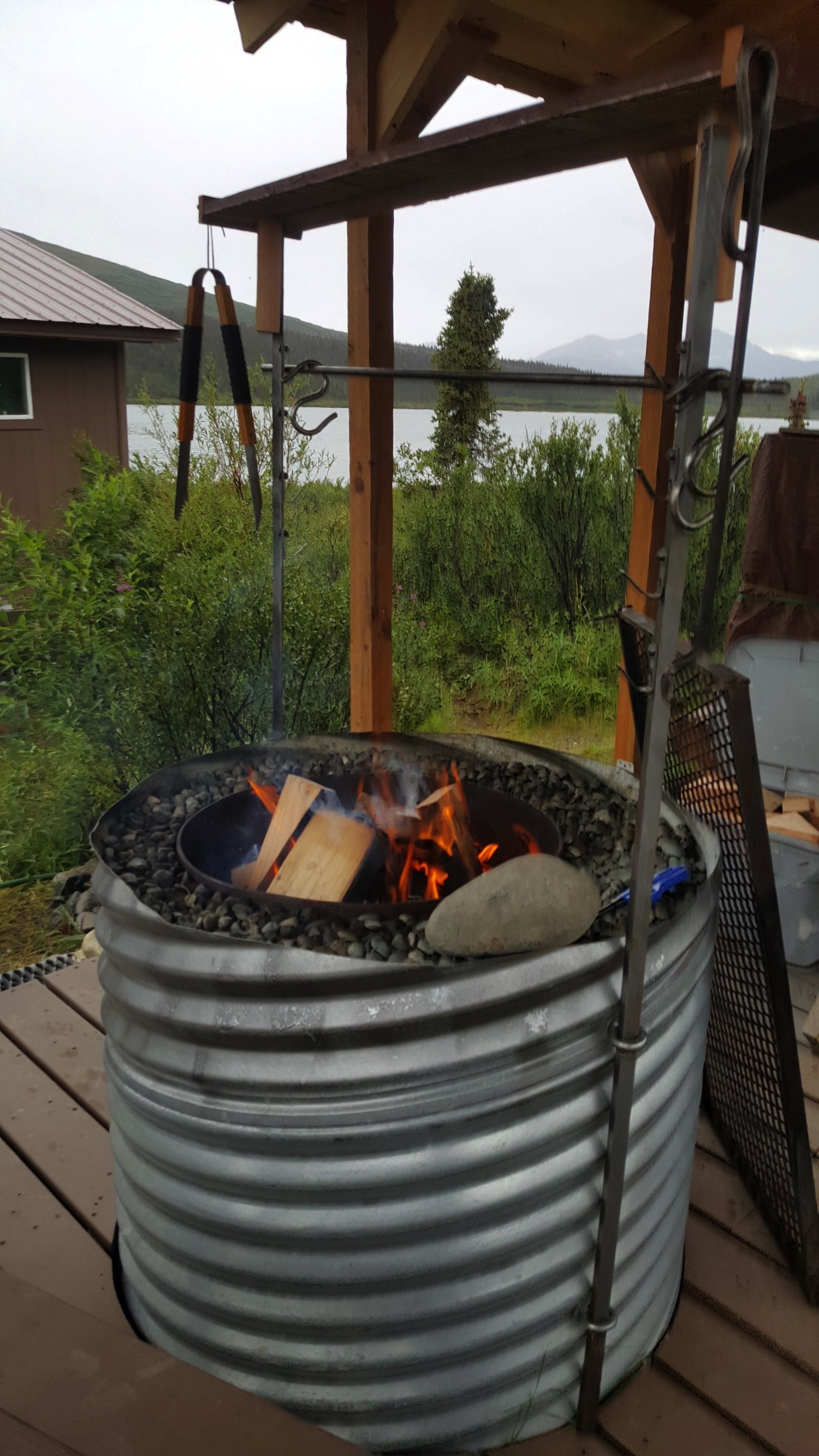 Several years ago I’d built what we call our culvert cooker. It is a 3’ long heavy corrugated piece of culvert, 3’ in diameter, and stood it on end. Filled nearly to the top with gravel, it has served as our go-to outdoor cooking facility. On it we regularly grill meat and fish, do open fire roasting, and prepare slow-cooked dutch oven meals. Today we intend to roast coffee beans for the first time. I’ve got a good pile of short split chunks of birch ready to go and in a half hour the fire is mostly a bed of hot coals with a reasonable amount of low flame. Additional wood is ready if I need it. It’s obvious I’m going to need a cooking glove and a squirt bottle of water so I put the fry pan on the grill and make a quick trip into the cabin, grab the glove and water, and ask my wife if she’d bring out the colander we brought for cooling the roasted coffee beans.Continue reading“Wood-Fired Coffee Roasting – Part 2, by J.P.”