(Continued from Part 1. This concludes the article.)
In Part 1, I presented an overview of the Super Safety and why it was chosen. Now, I will move on to describing some details on installation and function checking. This will cover the modifications to install a Super Safety on only a standard 5.56mm AR-15. The MP5 and AR9 models of the Super Safety are very popular but do require extra parts as well as some other considerations. A successful 5.56 install will help you get used to what you’re dealing with, since it is by far the most straightforward.
Parts List
You will need:
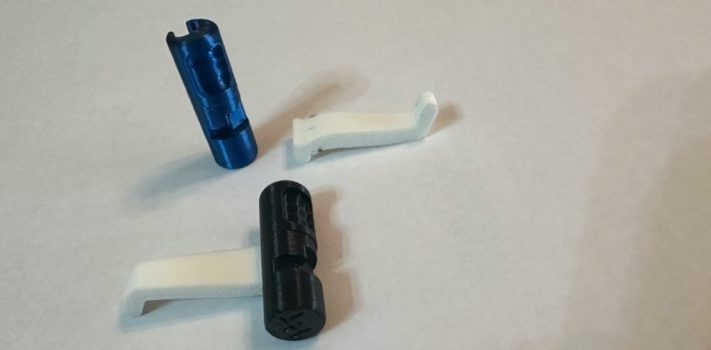
1. A Super Safety, (cam and lever)
2. A mil-spec low-shelf or M16-pocket AR15 with a full-auto BCG and mil-spec fire control group. Be advised that the Super Safety is compatible with low-shelf or no-shelf AR lower receivers ONLY. A high shelf lower cannot accommodate them. If the shelf in your lower behind the safety sits right up next to your takedown pin hole you have a high shelf lower and are out of luck unless you are comfortable with removing some material.
The trsnsition to a “high shelf” was done on some older-fashioned ARs to deter would-be rapid-fire enthusiasts from drilling the third hole or installing a drop-in autosear (DIAS). I believe that older Bushmasters and some Colts are like this. PSA, BCM, all 80% lowers, and Aero precision lowers are low-shelf or M16 cut, but double-check yours to make sure as manufacturing specifications can change, over time.
3. A modified AR-15 trigger and a modified AR-15 safety detent (we will get to the modifications shortly).
4. A Dremel miniature grinding/sanding tool with some basic grinding wheels and sanding drums as well as a polishing end. Hoffman’s own guide suggests 320, 600, and 1500 grit sandpaper as well as polishing compound.
5. Basic punches, wrenches et cetera for working on an AR-15.Continue reading“The AR Super Safety – Part 2, by St. Leibowitz”