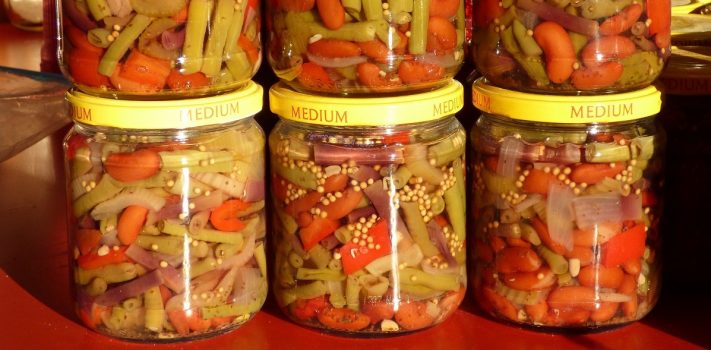
I’ve been on an incredible journey since submitting my last article Reusing Canning Jar Lids to SurvivalBlog.
That article was based on my personal experience reusing 1,000+ canning jar lids. Many other home canners bear similar testimony about successfully reusing lids. My article specifically mentioned ignoring all the blogs, the USDA Complete Guide to Home Canning, and even my own experience mentioned in the article. Since the best teacher is personal experience, I then challenged the reader to do a simple test themselves by canning some water with used canning jar lids.
In this follow-up article, I have researched and contacted many of the professionals involved in recommending home-canning procedures including the USDA and Newell Brands, the company which makes Ball, Kerr, Golden Harvest, and Bernardin Jars. I’ve also gone straight to the horse’s mouth and contacted many glass-jar manufacturers and suppliers, engineers, makers of the plastisol sealant used on virtually all of today’s food jar lids, and the FDA’s regulation book for commercial canners, among others.
I believe this is possibly the most comprehensive article on the subject of reusing canning lids and commercial jars which pickles, salsa, pasta sauce, etc. come in. This is a science-based, informative treatise concerning all aspects of reusing canning lids and commercial jars. I hope this article, for some at least, will be the one to finally end all the “controversy” about reusing these items.
TYPES OF INFORMATION AVAILABLE ON REUSING CANNING LIDS
There are two main sources of canning information available: advice from professionals like the USDA and Ball (and the many bloggers and county-extension offices quoting them), and personal testimonies. Personal testimonies were discussed in the previous article. This article first discusses recommendations by the USDA and their close associate in home canning, the National Center for Home Food Preservation (NCHFP), then takes a look at the science behind jars and lids.
Since nearly every article mentioning not reusing canning lids refers back to one of the above two organizations, let’s examine their advice.
IMPORTANT CLARIFICATIONS
First, a few clarifications:
“Commercial jars” refers to jars and their lids from store-bought pickles, salsa, pasta sauce, etc. Please note my references in this article for reusing commercial jars are for water-bath canning only, not pressure canning which I have not tried. The reasons will be explained in more detail in the section on canning lid shelf life.
Incorrect terminology – The words “botulism” and “unsafe” have no place in discussions of reusing canning lids and commercial jars. These terms are used by people who don’t understand the science and principles behind canning. Botulism in home canning results from two things: pressure canner temperatures not reaching 240-250°F for the specified time period, and water-bath canning foods which are not acidic enough. Therefore, whether lids are new or used has nothing to do with botulism. The concept of “unsafe” is also irrelevant to the discussion. New and used lids can fail to seal when canning principles are not strictly adhered to but that does not make the contents unsafe. Home-canned food is only unsafe when unsealed jars are not either put into the refrigerator or reprocessed.
Jar lids don’t fail, humans do. When canning-jar lids don’t seal it’s due to human error, not new- or used-lid problems. Lid problems should be caught by the user beforehand by inspecting each new or used lid. Photo 1 (below) shows a few things which make lids unusable for canning.Continue reading“The Science: Reusing Canning Jar Lids – Part 1, by St. Funogas”