Hello Survivalblog friends! This is just a brief spring update of what’s going on the farm. Every year I replace 1/3 of our chickens with new chicks ordered from the hatchery. This is usually 25 chicks. I change the breed each year so I can tell how old the chickens are and cull the useless eaters. Last year I added Rhode Island Reds and this year I ordered Barred Rocks. Both breeds are very hardy and lay large brown eggs. I have some older buffs which are ready for harvesting at the end of summer.
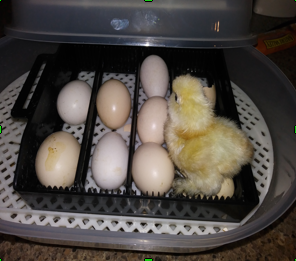 I also incubator-hatch ornamental silkie chicks and barnyard chicks. Our incubator is small (12 small to medium size eggs or 6 large eggs); our hatch rate this spring has improved to 70%. I’ve found that keeping the incubator at the correct humidity level results in higher hatch rates. It is important to let the new hatchlings fight their way out of the egg shell, because it strengthens them; resist the urge to help them get out of the egg. As soon as they can stand, I dip their beaks in water to give them a drink, and move them to the hot cage. The chicks stay in the hot cage until feathered (about 2-3 weeks), then go to the transition coop. I’ve included some photos of the incubator hatchlings.
 This past week we hatched five chicks, one died because a club foot prohibited normal progression. Two more hatched today and I quickly added them to the hot cage on the porch in hopes they bond with the existing group. I have three eggs from this batch (of 10 eggs) left to hatch, so we’ll see how that goes. The silkies are quite tiny when they hatch but they have big personalities. The barnyard mix chicks are large and almost all survive.
We sell the year-old laying pullets For $25/ea and the feathered chicks for $5/ea. I normally don’t sell fresh eggs as it takes too much time, but I am thinking about it for this year. I already have 12 dozen eggs in the frig. Free-range, organic eggs sell in the local stores for around $3.90/dz so I may sell mine for $2.50/dz, just to get them moving.
Every summer I harvest the hatched barnyard rosters and any useless eaters, which are then processed into chicken broth and the meat for dog food. The harvesting is another story, for a later update.Continue reading“Spring Update, by Animal House”