SurvivalBlog presents another edition of The Survivalist’s Odds ‘n Sods— a collection of news bits and pieces that are relevant to the modern survivalist and prepper from “JWR”. Our goal is to educate our readers, to help them to recognize emerging threats, and to be better prepared for both disasters and negative societal trends. You can’t mitigate a risk if you haven’t first identified a risk. Today, we look at low-tech tractors.
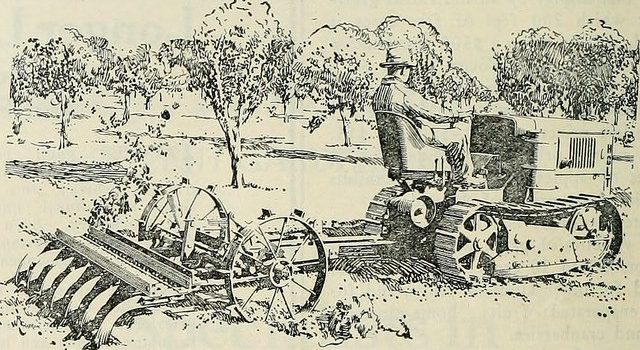
Midwest Farmers Want Older Tractors They Can Fix
Reader Jim L. suggested this sign of the times: Midwest Farmers Are Tired of Tech-Loaded Tractors They Can’t Fix. Here is how the article begins:
“Regardless of who you think the typical Tesla owner is, they don’t—because they can’t—put their car on vehicle ramps to fix whatever problem they’re having. And just like those Tesla owners, farmers with a tractor built in the last decade, and sometimes more, are unable to perform the repairs they once could on their equipment.
Tractors, like cars—electric or otherwise—are becoming more and more reliant on technology and computers, which forces repairs to be done by dealers. And as those changes are phasing out the farmer in the repair process, older tractors are becoming more sought after in the Midwest, according to a report from the Minneapolis Star Tribune newspaper.”
A Summer Carry Fanny Pack Set-Up
Reader W.B. mentioned this instructive video on fanny pack concealed carry: Summer Carry: Fanny Pack Set-Up. JWR’s Comment: I was tickled to see that he’s currently reading one of my books. I didn’t pay him for “product placement.”
Low Countries: Colder-than-Average July. GSM Winter for U.S.?
André in Belgium mentioned this, over at Electroverse: Belgium and the Netherlands suffered Colder-than-Average Julys, as the Farmers’ Almanac Forecasts a ‘Grand Solar Minimum’ Winter for the U.S.. Here is an excerpt:
“July 2021 in Belgium was much cooler than average.
The month delivered record amounts of rain, too.
Average temperature at the Uccle Observatory held at just 17.9C (64.2F) — that’s -0.8C (-1.4F) below the norm:
It was also Belgium’s wettest July on record, and by some margin, too.
A total of 166.5mm (6.6 inches) of rain fell over the course of the month, versus the norm of 76.9mm (3 inches) — this busted previous record of 133.8mm (5.3 inches) set back in the year 2000.”
US And Chinese Officials Spar Over South China Sea
H.L. sent this: US And Chinese Officials Spar Over South China Sea At UN Meeting.