(Continued from Part1. This concludes the article.)
Intermediate Shooting Drills
Once you are accurate and consistent with static supported positions, start practicing static unsupported positions. The prone, kneeling and standing unsupported positions do not have a sandbag or table to support them (hence, unsupported positions), so you must create a stable platform with your body position in order to maintain a clear sight picture.
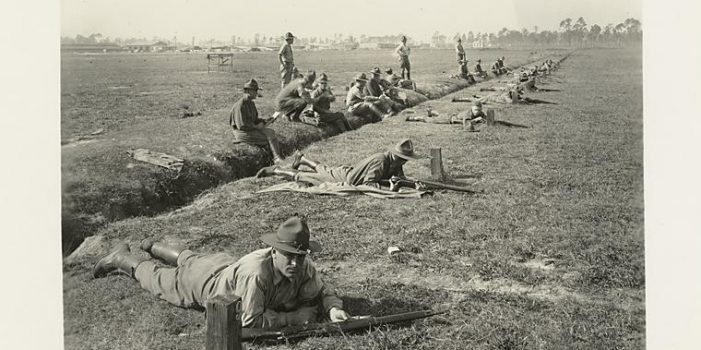
Creating a stable platform in the prone unsupported position is executed by placing your elbows on the ground and driving the buttstock into your shoulder. Your shooting hand should be lightly gripping the handle of the weapon, with most of the weight on your supporting hand. Your supporting hand should be gripping the weapon and pulling it towards you. As you lean forward into the weapon, you will feel very little weight on your shooting hand. This is preferable, as it allows the muscles around your trigger finger to relax and set the conditions for a smooth trigger squeeze.
Just as the prone unsupported position relies on using your elbows to create a stable body position, so too does the kneeling unsupported position. Your shooting hand should feel almost no weight from the weapon, but your supporting hand should be gripping the weapon and pulling it into your shoulder. Place your supporting elbow on your knee, then move it an inch or two lower. By placing the lower tricep on your knee, and your elbow guiding the aim of the weapon, you create a significantly more stable platform. Lean into the weapon and gain a proper sight picture before firing your weapon.
Unlike the previous two, the standing unsupported position does not rely on using your elbows. Because your arms cannot rest on the ground or on your knee, it is purely your muscles holding the weapon steady. Therefore the bend in your elbow would cause you to tire faster and to shake when holding your weapon for long periods of time. Straighten your supporting arm and grip the barrel in a C shape, with your thumb on top and the remaining four fingers on bottom. Just as before, pull the weapon into your shoulder and lean into it, reducing the weight on your shooting hand.Continue reading“Shooting Drills for WTSHTF – Part 2 , by T.Z.”