To be prepared for a crisis, every Prepper must establish goals and make long-term and short-term plans. In this column, the SurvivalBlog editors review their week’s prep activities and planned prep activities for the coming week. These range from healthcare and gear purchases to gardening, ranch improvements, bug out bag fine-tuning, and food storage. This is something akin to our Retreat Owner Profiles, but written incrementally and in detail, throughout the year. We always welcome you to share your own successes and wisdom in your e-mailed letters. We post many of those –or excerpts thereof — in this column, in the Odds ‘n Sods Column, and in the Snippets column. Let’s keep busy and be ready!
Jim Reports:
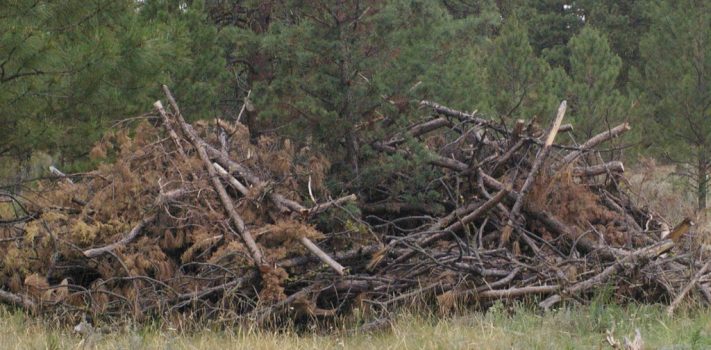
I’ve been quite busy with slash hauling, all through the past week. In addition to the limbs from the deadstanding trees that I’ve recently harvested, I’m also cleaning up deadfallen limbs and lopping off the dozens of little firs and pines that were snow-squashed in the past two winters, and now growing at or near horizontal. There is virtually no chance that these squashed volunteers will ever grow up straight and tall. And, since they are a significant wildfire “laddering” risk, it is best that they get cut and hauled out to one of our pasture burn piles, to be touched off after the fall rains begin. Typically, I burn slash in mid-October, just before the opening of deer and elk season.
My cross-fencing project was nearly stalled by the aforementioned slash hauling. I also had the distractions of some calf dehorning, and helping Lily plant a few sapling trees that we bought in 8-gallon pots. The only progress that I made on the cross fence was moving and positioning some small boulders, as resting stones for the open and closed positions of the new gates. These stones are typically about 18″ in diameter, and carefully chosen to have at least one flat side. Two or more flat sides is better, and two flat sides plus a naturally-occurring notch gets bonus points, in my book. They are too heavy to lift by hand, so I simply roll them onto a cedar slab stone boat that I built 15 years ago. I can drag this stoneboat with any of our ATVs. I also bought another 8-foot tube gate for the far end of the cross fence. I like to have a gate located once every 400 feet (or less), for the sake of efficient cattle pasture rotation and to allow vehicle access for various tasks. And, of course, we like to have plenty of gates to facilitate horseback trail riding, bicycling, hiking, snowshoeing, and cross-country skiing.
There is always a list of pending projects here at the Rawles Ranch. The list gets shorter in winter and longer in the summer. But these activities are almost always fun, and almost invariably they are great exercise. Who needs to buy a gym membership when you get to drive T-posts, wrestle around tree stumps, dig postholes, split firewood, and lift 90-pound potted trees? Fun, fun! Now, over to Lily…