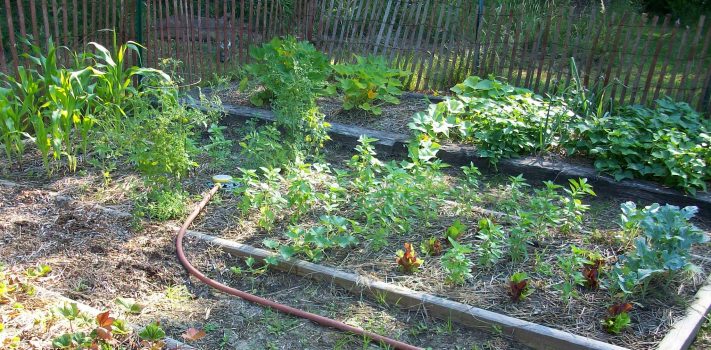
Growing Your Own Food in The Inland Northwest – Part 1, by D.F.

My Background

I grew up on a family farm in the Midwest where at one time or another apple orchards, field crops, cows, pigs and chickens were raised. I assisted my parents in nearly all these endeavors and in the process drove several different farm machines. This experience caused me to feel significant confidence in my gardening skill. However, I subsequently realized that I really only learned how to do farm work as instructed by my parents rather than actually learning how to farm. I am surprised sometimes at things I know that others don’t, but at other times I am forced to realize how much I did not learn as well. This article illustrates the need to make your mistakes at gardening now when food is available at the store before you must rely on your ability to grow it yourself.

I did not take over the farm from my parents. Family farms were no longer profitable at that time. Instead, I earned a Ph.D. in biochemistry, taught briefly at the university level and, among other things, worked in research and development for a pharmaceutical company. During these years my farming experience consisted of backyard gardening in the suburbs. After retiring I moved to a ten-acre plot near a city in the inland northwest where I am now a gentleman farmer. Since I do not now need to make a living by farming I can attempt to grow my own food using hand tools as much as possible. I find this limitation produces at least one insurmountable problem. I must use machines to prepare a seed bed big enough for anything but a very tiny garden.

The Soil

The first learning experience came from the soil. My father’s farm had been primarily sandy soil, but my current plot is heavy clay. My father regarded clay highly because it held water better than sand, but I did not know its disadvantages were also significant.

Sandy soil can be tilled almost any time except during the winter. Clay is quite different. It gets really soggy in the spring because of the winter snow and rains. Attempting to till it in this condition may cause your tractor to become mired and stuck. Furthermore, tilling at this time produces round balls of clay that dry out on the outside to become hard but remain sticky internally for a long time. Trying to plant in a field of clay balls is exceedingly frustrating. Your planter can’t consistently plant at the correct depth and cover the seed because of this uneven surface.

On the other hand waiting too long allows clay to dry too much and become hard—perhaps too hard to till. Furthermore, the low places in the field where drainage occurs do not dry out as soon as the rest of the field so you must not only learn the characteristics of clay but also of your individual field. This knowledge is not difficult to learn, but his takes judgment that usually comes from a few mistakes. Mistakes are not nice if your life depends on instant success.

My first garden was tilled late because of the issues involved with moving into the house. That plus the fact that it was an unusually dry year made tilling with a rented rototiller nearly impossible. Planting was like using a pick axe, and almost nothing grew well. This first year’s garden suffered from an additional problem. My current land was once farmed but for about 20 years had been left to grass and weeds. Consequently, it was a hostile environment with lots of competing weeds. One such competitor is Canada thistle, a noxious weed which I am required by law to combat. I do this by walking the field each year with herbicide in a backpack sprayer. This thistle can convert your field into a very prickly and undesirable place.

For the usual garden plants and for dry field beans, peas and lentils my clay usually becomes tillable in the spring before it is absolutely too late, but I wish it reached this tillable status earlier. Wheat is different. I try to plant winter wheat in the previous fall so it will be already growing during the soggy springtime. This, however, depends on the fall rains. If they don’t come soon enough in the previous fall then planting winter wheat can be less useful. Planting spring wheat instead is a backup plan, but it supposedly does not yield as well; and it requires dealing with the soggy spring issues.

Once planting is done then the advantage of clay can take over. It retains water better than sand so irrigation is less necessary.

Soil improvement is probably necessary regardless of your soil. For clay this means organic matter—lots of it. Manure is not always available, and I have no convenient way to haul it. I have found a source of very nice dark compost which I have used. It is excellent, but my soil could use much more than I can manage. For a plot that has just been converted from untilled weeds some sort of improvement is especially necessary. Green manure such as new immature barley or rye produces foliage that can be tilled into the new soil, but this necessitates planting it which is a problem I will explain below. After a year or two of use my plots are easier to till and plant.

Machinery

I have no hope of planting enough crop to live on without a tractor and tiller. Rototillers will handle a vegetable garden but a quarter-acre or half-acre for wheat or dry legumes is really too much for them. Hiring someone with equipment to till my small plot can be difficult and inconvenient for them.

So I now have a 15 horsepower diesel tractor. I purposely chose an older tractor because it does not have all the electronics of the current ones, but this has necessitated spending for repairs although it has still cost less than a new tractor. However, I have also learned that four-wheel drive tractors are not usually necessary for field work. If four-wheel drive is needed then the field is too soggy to be tilled anyway. Two-wheel drive is sufficient for my field work, and would have allowed me to buy a bigger tractor and tiller for the same money. This would probably have been fine although four-wheel drive does make turning easier when using a front loader and gives better traction when snow plowing in the winter. Since my tractor can handle only a small load in its front loader without dangerously unbalancing the rear wheels it would have been wiser not to insist on four-wheel drive. In a truly WTSHTF time plowing snow in the winter might be a bad idea anyway.

I have a tiller that came with the tractor and a mower/bush hog purchased separately. The bush hog is useful in mowing the tall grass and weeds in the late summer. It beautifies the place which also decreases wildfire risk during fire season. In WTSHTF times perhaps this also would be neglected so I could remain as inconspicuous as possible and to conserve precious diesel fuel.

Planting

Planting has been done by hand or by using tools pushed by hand.

Making a small trench with a hoe followed by dropping seeds at desired spacing and covering the trench with my feet works for most garden plants such as green beans, green peas, squash, onions, beets, sweet corn and lettuce. Carrots are planted so shallow that they can be covered by sprinkling dirt over them. This process was used for a couple years with some success for the vegetable garden, but for large plots of grain or legumes it is impractical.

Then I obtained an Earthway planter which is pushed by hand. This was horrible to push in a new field because my tiller does not completely break up the sod the first year. Soft soil would make things easier, but this takes a year or two of cultivation to develop. This planter has plates that catch the seed from a seed chamber during the beginning of their revolution around a spindle and then drop the seed into a tube for planting during the end of their revolution. Each plate has its own sized holes, and it is intended that a plate can be found that works for the size and shape of whatever seed you have. This works for most more or less round garden seeds and speeds up the process considerably. Planting long and narrow seeds like oats or wheat is much more difficult. Using slick electrical tape to alter the size and/or shape of the holes in its plates has made it barely usable for these grain seeds after struggling.

I now have a Hoss planter which is not as hard to push as the Earthway but still is not easy when working in new soil. It also has plates with holes through which the seeds must fit. It also is not intended for grain planting, but I have managed to plant wheat with it although it requires frequent attention to remove plugs. Because it is easier to push I now prefer it even though it is still quite a workout. Round seeds like peas present much less problem when using these plates.

Broadcasting wheat or oats has not been satisfactory for me. The birds snatch some of the seed. Furthermore, seed needs to be planted at more or less the proper depth so it must be covered after broadcasting. It is best if the covering dirt is pressed down onto the seed somewhat firmly. I have not devised a satisfactory way to produce these conditions by hand so my yields from broadcasting have been poor. That was the impetus to buy the Earthway and Hoss planters.

(To be continued tomorrow, in Part 2.)



SurvivalBlog’s News From The American Redoubt

This weekly column features news stories and event announcements from around the American Redoubt region. (Idaho, Montana, eastern Oregon, eastern Washington, and Wyoming.) Much of the region is also more commonly known as The Inland Northwest. We also mention companies of interest to preppers and survivalists that are located in the American Redoubt region. Today, we focus on a new military vehicle museum in Wyoming. (See the Wyoming section.)

Idaho

This property caught my eye.  Not only is it in a remote and very defensible locale, but it also has amazing line of sight (LOS) for any ham radio operator:  20 ridgetop acres on the southern end of the Island Plateau region that I’ve mentioned in two of my books. It is listed at $112,000.

o  o  o

Sixth Grader in custody following Rigby Middle School shooting sending 3 to the hospital.

o  o  o

Judge Hears Cross Motions in Second Festival Gun Suit.

o  o  o

Radio Free Redoubt: Todd Engel Restoration Event Sandpoint, Idaho. The important intro begins at the 6-minute mark.

Continue reading“SurvivalBlog’s News From The American Redoubt”


Preparedness Notes for Monday — May 10, 2021

The Jeff Cooper’s Birthday Sale at Elk Creek Company begins today (May 10th, 2021), and ends on May 21st.  This is the time to round out your collection of pre-1899 Federally-exempt guns!  I’ve reduced the prices on more than half of my pre-1899 gun inventory, and all of my replica percussion-fired revolvers.

May 10th is the birthday of the late Col. Jeff Cooper (born 1920, died September 25, 2006).

On May 10, 1972. Top Gun Graduate Randall “Duke” Cunningham and his backseater Wally “Irish” Driscoll shot down three MiGs in a dogfight and became the first Ace of the Vietnam War. He later commanded the Top Gun school when they came to make the first Tom Cruise movie. His Vice Commander? John McCain.

May 10th is also the birthday of the late Janis Pinups (born 1925, died 15 June 2007). He was one of the last of the Forest Brothers anti-communist resistance fighters. He came out of hiding, after five decades, to obtain a Latvian passport in 1994, after the collapse of eastern European communism. (He was never issued any communist government identity papers and by necessity lived as a nonexistent ghost during the entire Soviet occupation of Latvia.) The history of the Forest Brothers movement certainly deserves more recognition.

And May 10th is the 152nd anniversary of the completion of the transcontinental railroad.

Today we present a review written by our Field Gear Editor, Pat Cascio.


Steyr M9 Series Pistols, by Pat Cascio

We don’t see a lot of firearms coming out of Austria, and needed to say, the Glock line-up of handguns is the most recognized Austrian firearm, all around the entire world. Just about every shoot-‘em-up movie shows heavy use of a Glock pistol of some type – both bad guys and the good guys use them. Gaston Glock came out with the Glock 17 about 1985 – at least that’s when they first started appearing in the US marketplace. I spied a Glock 17, 9mm at a drug store when we lived in Colorado Springs, Colorado and it felt so good in my hand, I bought it right then and there. Now to be sure, I’ve mentioned numerous times that the Glock line-up really don’t fit anyone’s hands perfectly. However, my hand has grown to love the Glocks. I originally went into that drug store to purchase a Model 1911 chambered in .38 Super, but once the Glock 17 was in-hand, I purchased that instead.

The handgun we are looking at today, is also from Austria, and is made by Steyr Mannlicher. Many people don’t know that Wilhelm Bubits, the designer of the Steyr M9, actually worked for Glock for many years. Here is a published biographical note at the Military wikia:

Wilhelm Bubits (born October 28, 1954) in Lutzmannsburg, is an Austrian handgun designer and creator of the Caracal Pistol and Steyr Mannlicher M and S model pistols. As a hobby shooter and former police officer, Wilhelm Bubits used his experience and ideas about handguns to advance modern pistol design. Bubits worked for the Glock firearms company and in 1997 joined another Austrian weapons maker, Steyr Mannlicher. At Steyr, Bubits created the Steyr M and S pistols which were released to market beginning in 1999. In late 2002 Bubits worked with weapons experts from the United Arab Emirates in a UAE government sponsored “Small Arms Project” to develop a series of modern pistols. The result of the collaboration was the Caracal Pistol. Weapons manufacturer Caracal International LLC was incorporated in Abu Dhabi at the end of 2006. Wilhelm Bubits currently heads Caracal’s research and development team.”

Bubits approached Gaston Glock about his design. But Glock turned him down, and left the company and went to Steyr, with his design. Now, save your hate mail, and give me a chance to explain a few things. I believe that the Steyr M9 is a considerable improvement over the Glock line of handguns. The angle of the grip feels much better in my hand – and many people agree with this. Plus, there is a very low bore-to-axis between the barrel and the frame. The gun sits lower in the hand, and as a result, there is less felt recoil – not that a 9mm is punishing in recoil, to start with.Continue reading“Steyr M9 Series Pistols, by Pat Cascio”


Recipe of the Week: Bear’s Pumpkin Custard

The following recipe for Pumpkin Custard was kindly sent to us by SirvivalBlog reader Bear. She notes:

“It tastes like dessert but it’s healthy enough to serve for any meal. Pumpkin custard! I copied it from another homeschooling mama years ago and tweaked it. Her family often made it for breakfast, but my family prefers it chilled rather than warm, so I usually make it ahead of time, for lunch or dinner.”
Ingredients
  • 8 eggs (fresh, frozen, or reconstituted powdered)
  • 1 large (29 oz) or 2 small (15 oz) cans pumpkin puree (NOT pumpkin pie mix)
  • 1/2 – 3/4 cup brown sugar (to taste)
  • 2 – 4 tsp. ground cinnamon (to taste)
  • 1 tsp – 1/2 tbsp ginger (to taste)
  • 1/2 tsp – 1 tsp cloves (to taste)
  • 1/2 tsp – 1 tsp nutmeg (to taste)
  • 1 quart milk (fresh, frozen, or reconstituted powdered)
Directions
  1. Beat eggs in a large mixing bowl.
  2. Add in pumpkin, then sugar and spices, then milk–whisking until smooth after each addition.
  3. Pour into a greased 9×13 pan and bake in a 350* oven for 55-70 min (or until solid, or until a knife comes out clean).
NOTE: If you get your pumpkin puree in #10 cans like I do, then here are the useful equivalents: A 15-oz can is about 1-7/8 C, and a 29-oz can is about 3-1/2 C.
SERVING

Serve with any meal. Serve warm or eat cold. Whipped cream optional. You could even serve with Graham crackers and pretend they’re pumpkin pie crust!

The recipe can easily be cut in half and baked in an 8×8 pan if you don’t need this much.

STORAGE

Can be stored in the refrigerator for up to three days. It’s better the second day, if it lasts that long. 

Do you have a favorite recipe that would be of interest to SurvivalBlog readers? In this weekly recipe column, we place emphasis on recipes that use long term storage foods, recipes for wild game, dutch oven and slow cooker recipes, and any that use home garden produce. If you have any favorite recipes, then please send them via e-mail. Thanks!


Economics & Investing For Preppers

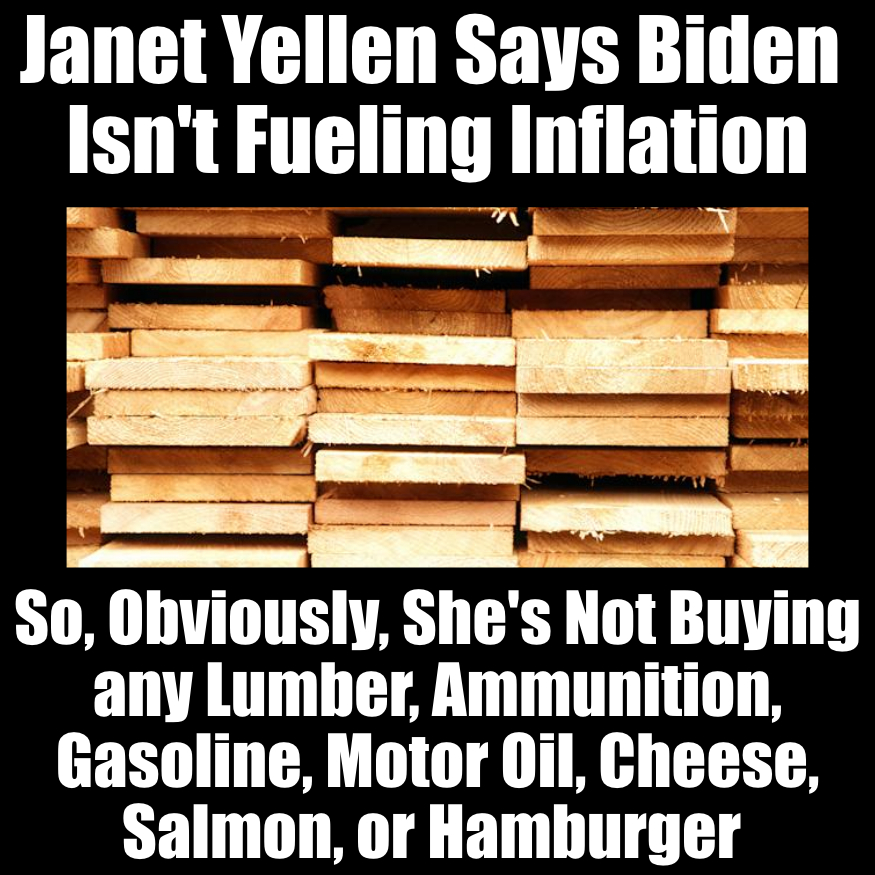
Here are the latest news items and commentary on current economics news, market trends, stocks, investing opportunities, and the precious metals markets. We also cover hedges, derivatives, and obscura. Most of these items are from the “tangibles heavy” contrarian perspective of SurvivalBlog’s Founder and Senior Editor, JWR. Today, we look at the recent spike in lumber prices. (See the Commodities section.)

Precious Metals:

BloombergWhy Sam Zell Bought Gold for the First Time

o  o  o

The Dollar Is Not A Safe-Haven — video interview with Lyn Alden

Economy & Finance:

How COVID ‘Rescue’ Funds Are Mowing Down American Small Businesses

o  o  o

At Zero Hedge: BofA: “Transitory Hyperinflation Ahead”JWR’s Comment: I believe that. Well, that is, all except for the “transitory” part.

o  o  o

The Adverse Consequences Of A $15/Hour Wage Hike. Here is an excerpt:

“What do you think happens when my son, with no experience, is making more than the restaurant manager?

The owner will have to increase the manager’s salary. But wait. Now the manager is making more than the district manager, which requires another pay hike. So forth, and so on.

Of course, none of this is a problem as long as you can pass on higher payroll, benefits, and rising healthcare costs to the consumer.”

o  o  o

Joe A., and H.L. both suggested this article: Here Are The Companies Hiking Prices In Response To Soaring Inflation

o  o  o

Gundlach Warns America’s “Unfunded Liabilities” Are $163 Trillion, More Than 5x National Debt. Here is a quote:

“The other day, DoubleLine released a recording of another talk given by Gundlach where he elaborated on the inflation theme, while also discussing other issues like the outlook for the US dollar in the face of President Biden’s tax-and-spend agenda.

During the course of an hour-plus conversation, much of it accompanied by a slide deck with some of Gundlach’s favorite charts, Gundlach tackled a few key topics that he feels could threaten the Fed’s ability to backstop financial markets.

He started by slamming Biden’s plan to hike capital gains taxes on taxpayers with more than $1 million in earnings, arguing that fears of higher capital gains taxes is already weighing in the market.

Gundlach argued that high-beta stocks and other speculative investments like bitcoin have the most to lose due to a hike in capital gains. After all, who is going to want to take a risk on a long shot if they need to give half of their winnings to the government?”

o  o  o

At Wolf Street: Inflation Jumped by 3.8% in Q1, “Real GDP” Rose 1.6%, Dragged Down by Record Trade Deficit and Drop in Inventories

Continue reading“Economics & Investing For Preppers”


The Editors’ Quote of the Day:

“The business of procuring the necessities of life has been shifted from the wood lot, the garden, the kitchen and the family to the factory and the large-scale enterprise. In our case, we moved our center back to the land.” – Helen Nearing, The Good Life: Helen and Scott Nearing’s Sixty Years of Self-Sufficient Living

Today, another review written by the Redoubtable Pat Cascio.


Preparedness Notes for Sunday — May 9, 2021

On May 9th, 1945, Herman Goering– commander in chief of the Luftwaffe, president of the Reichstag, head of the Gestapo, prime minister of Prussia, and Hitler’s designated successor– was taken prisoner by the U.S. Seventh Army in Bavaria. Goering, who was addicted to painkillers due to a wound, was instrumental in creating concentration camps for political enemies. It was Goering who ordered the purging of German Jews from the economy following Kristallnacht in 1938, initiating an “Aryanization” policy that confiscated Jewish property and businesses. Tried and convicted at the Nuremberg trials, he was sentenced to hanging, but before he could be executed he committed suicide by swallowing a cyanide tablet he had hidden from his guards.


Readying Yourself for Inflationary Times

As a boy, I can remember my grandfather, Ernest E. Rawles, saying to me: “If you consistently save ten percent of what you earn, then you’ll never go to The Poor House.” That was great advice, coming from someone who had lived through the truly traumatic deflationary Great Depression of the 1930s.

But today, we can see the looming threat of another economic depression, and this one will most likely be a traumatic inflationary depression. And this one may last even longer than a decade. In an inflationary depression, even millions of dollars in “savings” in cash (that is: greenbacks or digits on deposit in a bank) will not carry you through. Once general price inflation roars up into the double digits, we will see the purchasing power of our Dollars melt away. At a 25% annualized inflation rate, a $20 bill that would have bought 50 pounds of grain a year ago will only buy you 37.5 pounds. And 28.1 pounds the next year. And 21 pounds the third year. And what if general price inflation heats up to 50% or 150%, or higher? Instead of saying: “Cash is king”, people will be saying: “Cash is trash.”

Just ask anyone who has lived our toured an inflation-wracked country what it was like. Zimbabwe, Indonesia, and Venezuela are some recent examples. When wages don’t keep up with mass inflation, there is genuine suffering. In such times, anyone on a fixed income will be wiped out, very quickly. Sadly, given the chronic over-spending by western governments, it appears that destruction through mass inflation will be the fate of all of the world’s major currencies in the 2020s and 2030s.

Mitigating Inflation Threats

To be ready for inflationary times, we need to adopt a much different outlook on saving, spending, and investing. In times of inflation “money in the bank” will be a liability, not an asset. Barterable tangibles will be an asset that constitutes an investment. Think of cash savings like holding a handful of sand. Over time, it will eventually slip through your fingers. In a truly hyperinflationary period, each time that you receive a paycheck, you will be in a rush to spend it on groceries, fuel, and other essential tangibles before that currency loses too much value.Continue reading“Readying Yourself for Inflationary Times”


The Editors’ Quote of the Day:

“Then Jesus said unto them, My time is not yet come: but your time is alway ready.

The world cannot hate you; but me it hateth, because I testify of it, that the works thereof are evil.

Go ye up unto this feast: I go not up yet unto this feast: for my time is not yet full come.

When he had said these words unto them, he abode still in Galilee.

But when his brethren were gone up, then went he also up unto the feast, not openly, but as it were in secret.

Then the Jews sought him at the feast, and said, Where is he?

And there was much murmuring among the people concerning him: for some said, He is a good man: others said, Nay; but he deceiveth the people.

Howbeit no man spake openly of him for fear of the Jews.

Now about the midst of the feast Jesus went up into the temple, and taught.

And the Jews marvelled, saying, How knoweth this man letters, having never learned?

Jesus answered them, and said, My doctrine is not mine, but his that sent me.

If any man will do his will, he shall know of the doctrine, whether it be of God, or whether I speak of myself.

He that speaketh of himself seeketh his own glory: but he that seeketh his glory that sent him, the same is true, and no unrighteousness is in him.

Did not Moses give you the law, and yet none of you keepeth the law? Why go ye about to kill me?” – John 7:6-19 (KJV)


Preparedness Notes for Saturday — May 8, 2021

Today is the 76th anniversary of V-E Day, otherwise known as Victory in Europe Day.

May 8th is the birthday of missionary and U.S. military intelligence officer John Birch. (Born, 1918, died August 25, 1945.) He is considered by many to be the first American casualty of the Cold War.

SurvivalBlog Writing Contest

Today we present another entry for Round 94 of the SurvivalBlog non-fiction writing contest. The prizes for this round include:

First Prize:

  1. The photovoltaic power specialists at Quantum Harvest LLC  are providing a store-wide 10% off coupon. Depending on the model chosen, this could be worth more than $2000.
  2. A Gunsite Academy Three Day Course Certificate. This can be used for any of their one, two, or three-day course (a $1,095 value),
  3. A course certificate from onPoint Tactical for the prize winner’s choice of three-day civilian courses, excluding those restricted for military or government teams. Three-day onPoint courses normally cost $795,
  4. DRD Tactical is providing a 5.56 NATO QD Billet upper. These have hammer forged, chrome-lined barrels and a hard case, to go with your own AR lower. It will allow any standard AR-type rifle to have a quick change barrel. This can be assembled in less than one minute without the use of any tools. It also provides a compact carry capability in a hard case or in 3-day pack (a $1,100 value),
  5. Two cases of Mountain House freeze-dried assorted entrees in #10 cans, courtesy of Ready Made Resources (a $350 value),
  6. A $250 gift certificate good for any product from Sunflower Ammo,
  7. American Gunsmithing Institute (AGI) is providing a $300 certificate good towards any of their DVD training courses.

Second Prize:

  1. A Front Sight Lifetime Diamond Membership, providing lifetime free training at any Front Sight Nevada course, with no limit on repeating classes. This prize is courtesy of a SurvivalBlog reader who prefers to be anonymous.
  2. A Glock form factor SIRT laser training pistol and a SIRT AR-15/M4 Laser Training Bolt, courtesy of Next Level Training, that have a combined retail value of $589,
  3. Two 1,000-foot spools of full mil-spec U.S.-made 750 paracord (in-stock colors only) from www.TOUGHGRID.com (a $240 value).
  4. An Israeli CBRN Gas Mask with Hydration Straw and two Extra 40mm NATO Filter s – Manufactured in 2020 (a $229.99 value), courtesy of McGuire Army-Navy.
  5. Naturally Cozy is donating a “Prepper Pack” Menstrual Kit.  This kit contains 18 pads and it comes vacuum-sealed for long term storage or slips easily into a bugout bag.  The value of this kit is $220.
  6. An assortment of products along with a one-hour consultation on health and wellness from Pruitt’s Tree Resin (a $265 value).

Third Prize:

  1. Three sets each of made-in-USA regular and wide-mouth reusable canning lids. (This is a total of 300 lids and 600 gaskets.) This prize is courtesy of Harvest Guard (a $270 value)
  2. A Royal Berkey water filter, courtesy of Directive 21 (a $275 value),
  3. Siege Stoves is generously donating a SIEGE® STOVE kit, including a Titanium Gen 3 Flat-Pack Stove with titanium Cross-Members and a variety of bonus items including a Large Folding Grill, a pair of Side Toasters, a Compact Fire Poker, and an extra set of stainless steel universal Cross-Members. (In all, a $200 value.)
  4. Two Super Survival Pack seed collections, a $150 value, courtesy of Seed for Security, LLC,
  5. A transferable $150 purchase credit from Elk Creek Company, toward the purchase of any pre-1899 antique gun. There is no paperwork required for delivery of pre-1899 guns into most states, making them the last bastion of firearms purchasing privacy!

Round 94 ends on May 31st, so get busy writing and e-mail us your entry. Remember that there is a 1,500-word minimum, and that articles on practical “how-to” skills for survival have an advantage in the judging.


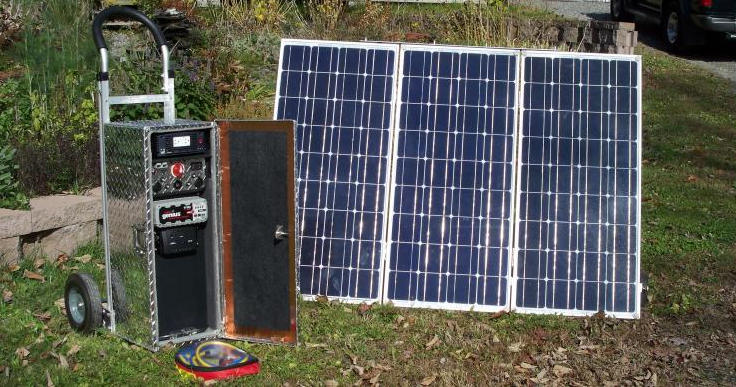
Simple Photovoltaic Power, by A. DoItYourselfer

This article presents my photovoltaic power experiences to give fellow do-it-yourselfers an understanding of what it takes to use the sun for energy.

I am a 69-year-old carpenter with experience in residential, commercial and industrial construction. I abhor relying on others for needs. So that is what drove me in the area of energy, especially stored energy. By “stored energy, I mean propane, solar battery systems, stored food, and so forth.

I live in Arkansas which is considered a subtropical climate in late spring to early fall. The heat in summer coupled with humidity from the Gulf of Mexico is terribly oppressive, even to us natives. And for this reason you need to at least move the air in summer to help with these conditions. I set out on my solar journey about three years ago. I decided that my goal would be to have a system that would run lights (LED), operate fans, and charge Dewalt 20 VDC tool batteries. I ended up with 3 systems and wasted a lot of money. But the “good thing” that I achieved is redundancy (i.e. having backup systems).

My First System

A Zamp 200P (P means Portable) system. I wanted to stay in the 12 volt arena versus the 24V, 36V or 48V systems because I better understand 12V systems because that is what automobiles, boats, etc. use. I also wanted to stay in the Recreational Vehicle arena because of portability as well as the simplicity (plug and play). The Zamp 200P system included:

  • 2 – Zamp brand 100 watt solar panels (for a total of 200 watts of input on a clear day)
  • 1 –  Z15AW (Z means Zamp, A means Amps, W means weatherproof) charge controller

I added the following to the system from separate vendors:

  • 1 – Xantrex ProWatt 2000 inverter (an 1,800 Watt invertor which takes DC battery power and converts it to 120VAC (household) power.
  • 2 – 6-1 volt golf cart batteries connected in series (instead of parallel connection) which make it a single 12 volt battery. These are lead acid batteries similar to a 12V trolling motor battery.

Various wires, cables, connectors, fuses etc.. The Zamp instruction manual explains diagrams to connect all this and is simple to follow).

This system cost around $1,900.. This system would run lights, fans, and charge tool batteries. But it is just enough power to make you wish you had some serious power. This system might be good for emergency storm backup power for 24 to 36 hours of cloudy weather. However, it whetted my appetite for more, so I continued my journey.Continue reading“Simple Photovoltaic Power, by A. DoItYourselfer”


Editors’ Prepping Progress

To be prepared for a crisis, every Prepper must establish goals and make long-term and short-term plans. In this column, the SurvivalBlog editors review their week’s prep activities and planned prep activities for the coming week. These range from healthcare and gear purchases to gardening, ranch improvements, bug out bag fine-tuning, and food storage. This is something akin to our Retreat Owner Profiles, but written incrementally and in detail, throughout the year.  We always welcome you to share your own successes and wisdom in your e-mailed letters. We post many of those –or excerpts thereof — in this column, in the Odds ‘n Sods Column, and in the Snippets column. Let’s keep busy and be ready!

Jim Reports:

I’ve been spending some quality time with my chainsaws. The main woodshed is about half full. I should have that topped off in about 12 days, if the weather cooperates, and my back stays in good shape.  But I will probably carry on for at least another week and cut even more, as is my habit.  As long as I rotate and consistently burn from the various piles each winter, none of my stored firewood will ever go to waste.

Our #2 Son has returned home for a visit, from out-of-state. He plans to help me with some of the felling, hauling, and splitting.  My daughters will probably handle nearly all of the wood stacking, as usual.

I had to do another fence repair, where some of our Bovine Delinquents had decided The Grass is Greener on The Other Side. Grumble, grumble.

I also went into the nearest good-sized town (more than a one-hour drive). At the farm and ranch store, I bought some supplies for a cross-fencing project, and a corral upgrade. I bought just one tube gate, two heavy-duty cattle panels, a roll of 9-gauge smooth wire for the H-braces, and a 330-foot roll of woven Field Fencing.  I nearly had a heart attack when they told me that my bill was around $1,800!  The bill would have been even higher because my original plan was to also buy 20 heavy-duty T-posts. But the store was sold out, and they told me that the other store in town was also sold out of T-posts.  Oh, and I noticed that their supply of cattle panels was very badly depleted–less than 20% of what they normally keep on hand. The supply chain is fraying and perhaps broken, folks!

Our Jeff Cooper’s Birthday Sale at Elk Creek Company will begin on Monday, May 10th, and end on May 21st. Prices will be reduced on more than half of our pre-1899 gun and percussion replica gun inventory. This could be your last chance to grab some federally exempt guns before prices get out of reach. I fully expect pre-1899s to double or more in price once the Feds enact their “Universal Background Checks” scheme. That is actually a ban on private party sales of post-1899 guns. Once that becomes the law of the land, folks will wake up to the unique private transfer status of pre-1899 guns.

Continue reading“Editors’ Prepping Progress”