

“Our rural ancestors, with little blest,
Patient of labour when the end was rest,
Indulged the day that housed their annual grain,
With feasts, and off’rings, and a thankful strain.” – Alexander Pope
- Ad Survival RealtyFind your secure and sustainable home. The leading marketplace for rural, remote, and off-grid properties worldwide. Affordable ads. No commissions are charged!
- Ad USA Berkey Water Filters - Start Drinking Purified Water Today!#1 Trusted Gravity Water Purification System! Start Drinking Purified Water now with a Berkey water filtration system. Find systems, replacement filters, parts and more here.

Preparedness Notes for Wednesday — November 24, 2021
November 24th marks the day that John Knox died, in 1572. (He was born in 1514.) AtheistAgendaPedia says: “Born near Haddington, Scotland. He was influenced by George Wishart, who was burned for heresy in 1546, and the following year Knox became the spokesman for the Reformation in Scotland. After imprisonment and exile in England and the European continent, in 1559 he returned to Scotland, where he supervised the preparation of the constitution and liturgy of the Reformed Church.”
—
SurvivalBlog Writing Contest
Today we present another entry for Round 97 of the SurvivalBlog non-fiction writing contest. The prizes for this round include:
First Prize:
- The photovoltaic power specialists at Quantum Harvest LLC are providing a store-wide 10% off coupon. Depending on the model chosen, this could be worth more than $2000.
- A Gunsite Academy Three Day Course Certificate. This can be used for any of their one, two, or three-day course (a $1,095 value),
- A course certificate from onPoint Tactical for the prize winner’s choice of three-day civilian courses, excluding those restricted for military or government teams. Three-day onPoint courses normally cost $795,
- Two cases of Mountain House freeze-dried assorted entrees in #10 cans, courtesy of Ready Made Resources (a $350 value),
- A $250 gift certificate good for any product from Sunflower Ammo,
- American Gunsmithing Institute (AGI) is providing a $300 certificate good towards any of their DVD training courses.
- Two sets of The Civil Defense Manual, (in two volumes) — a $193 value — kindly donated by the author, Jack Lawson.
Second Prize:
- A Front Sight Lifetime Diamond Membership, providing lifetime free training at any Front Sight Nevada course, with no limit on repeating classes. This prize is courtesy of a SurvivalBlog reader who prefers to be anonymous.
- A Glock form factor SIRT laser training pistol and a SIRT AR-15/M4 Laser Training Bolt, courtesy of Next Level Training, that have a combined retail value of $589,
- Two 1,000-foot spools of full mil-spec U.S.-made 750 paracord (in-stock colors only) from www.TOUGHGRID.com (a $240 value).
- Naturally Cozy is donating a “Prepper Pack” Menstrual Kit. This kit contains 18 pads and it comes vacuum-sealed for long term storage or slips easily into a bugout bag. The value of this kit is $220.
Third Prize:
- Three sets each of made-in-USA regular and wide-mouth reusable canning lids. (This is a total of 300 lids and 600 gaskets.) This prize is courtesy of Harvest Guard (a $270 value)
- A Royal Berkey water filter, courtesy of Directive 21 (a $275 value),
- Two Super Survival Pack seed collections, a $150 value, courtesy of Seed for Security, LLC,
- A transferable $150 purchase credit from Elk Creek Company, toward the purchase of any pre-1899 antique gun. There is no paperwork required for delivery of pre-1899 guns into most states, making them the last bastion of firearms purchasing privacy!
—
More than $725,000 worth of prizes have been awarded since we started running this contest. Round 97 ends on November 30th, so get busy writing and e-mail us your entry. Remember that there is a 1,500-word minimum, and that articles on practical “how-to” skills for survival have an advantage in the judging.
- Ad Prepare for chaos with the essential SIEGE belt. Perfected for CCW with flexible, no-stretch, high-grip custom HD ballistic nylon and capabilities unmatched in any other belt. Go anywhere. Solid 5.5-7 oz of persuasion has saved many. Save $20!SIEGE STOVES: in a fuel crisis twigs are free and abundant. Ultra-compact high-performance portable survival stoves. Enter "SBLOG" at checkout for $20 off any belt. USA-made.
- Ad SurvivalRealty.com: Sell Your Remote LandAdvertise your hard-to-sell remote land to eager buters. We specialize in rural, remote, and off-grid properties worldwide. Affordable ads. No commissions are charged!

Progressive Reloading for Beginners, by Anthony B.
There is nothing in this article about raising chickens, goats, or vegetables. I have done all the above, but there are experts with more knowledge to share. I do, however, have some knowledge to share on loading ammunition, and believe in the importance of having control over personal ammunition supplies given the current political and social situation. How many have tried to buy ammunition in the last year and a half, only to find the shelves bare? Reloading offers a solution to market shortages but requires specialized equipment and knowledge. New loaders typically turn to those with experience for information and are almost invariably advised to begin with a single-stage reloading press and the associated equipment required to produce quality ammo.
A single-stage press uses multiple reloading dies to accomplish each step of the loading process separately and is perceived as the “simplest” way to learn. I agree with that recommendation but can envision some better served by beginning with a progressive press capable of accomplishing multiple tasks at the same time. This article is for those new loaders and I will use commonly loaded 9mm handgun and .223 Remington/5.56 rifle ammunition as examples.
I have been loading ammunition for more than forty years and casting bullets over thirty. I started with a single-stage press as most recommend, and still load most of my ammunition on the same press. Over the years, however, I have managed to acquire several progressive presses and appreciate their advantages. It is strictly a coincidence that my progressive presses are all manufactured by Dillon. I am not trying to sell Dillon products and know several people who are extremely happy with machines from other manufacturers. This article includes only machines I’ve used. Information on other presses is easily available with a little research. The basic advantages remain the same regardless of the press manufacturer.Continue reading“Progressive Reloading for Beginners, by Anthony B.”
- Ad Survival RealtyFind your secure and sustainable home. The leading marketplace for rural, remote, and off-grid properties worldwide. Affordable ads. No commissions are charged!
- Ad STRATEGIC RELOCATION REALTYFOR SALE: Self-sustaining Rural Property situated meticulously in serene locales distant from densely populated sanctuary cities. Remember…HISTORY Favors the PREPARED!

SurvivalBlog Readers’ & Editors’ Snippets
This weekly column is a collection of short snippets: responses to posted articles, practical self-sufficiency items, how-tos, lessons learned, tips and tricks, and news items — both from readers and from SurvivalBlog’s editors. We may select some long e-mails for posting as separate letters.
—
Like most Americans, last week I was relieved to hear that Kyle Rittenhouse was found not guilty, on all charges. His troubles may not yet be behind him. I am quite troubled to see the incredibly biased mass media still referring to the men he shot as “victims.” After much deliberation, the jury conclusively found that they were the aggressors. Kyle Rittenhouse was the victim. I’m confident that if he were of a different skin tone, or had a different political persuasion, then the mass media would characterize the incident differently. It is also troubling to see the mass media continues to call Rittenhouse a “white supremacist”, with no solid evidence to make that claim. Did they notice that all three of the men that he shot were fellow palefaces? Or that Rittenhouse and his friends were there to protect the property of a minority-owned business? (Note the Indian surname Khindri.) I’ve now lost any remaining shreds of faith in the mass media. Clearly, they have been almost completely co-opted by leftist influence. I could see this coming, when I attended journalism school, back in the early 1980s. (I earned a Bachelor of Arts degree in Journalism.) Most of my professors and most of my classmates were flaming liberals. Today’s mass media can no longer be called journalists. They are propagandists. So from now on, that is what I’ll be calling them: Mass Media Propagandists. – JWR
o o o
Cause for concern: Tesla server outage allegedly leaves owners unable to drive their cars.
o o o
H.L. sent us this article;e link that serves as a reminder to be prepared: Disastrous Flooding Cuts Vancouver Off From Rail, Road Service.
o o o
Cathy N. recommend this dated but still fascinating documentary: James Burke Connections, Ep. 1 “The Trigger Effect”
o o o
Pete L. wrote the following in response to the article on ballistic upgrades for stick-built houses:
“Another inexpensive approach would be to fill the cavities with half-inch to three-quarter inch gravel and ply three-quarter inch plywood screwed to the studs over the drywall. If it is new construction, I would recommend steel studs instead of wood. I would also use three-quarter inch plywood on both sides. This will stop virtually all rifle rounds. The bullets are shredded. This is easy to try. Build a 2‘ x 2‘ box made of two by fours with plywood on each side and fill it with gravel. Stand back 20 feet and shoot into it. The results are amazing. Eventually, the gravel will be broken up and begin to settle. But if you were taking this many incoming rounds, then your situation is beyond dire.”
o o o
And on the same topic, David wrote:
“In regard to your article on hardening your stick-built home: One quick and easy method is to access each void. Pour in DRY screened gravel to the top. Close the gap. Advantages: 1″+ DRY(!!!!! — gravel direct from a stream will hold an amazing amount of water) screened gravel should stop most handgun and many rifle rounds. Obviously, each bullet will powder the gravel somewhat, but gravel from above will migrate down to replace the sacrificed gravel. More obviously, gaps will develop at the top of the void. Downfall: Unless you have X-ray vision, voids are hard to visualize. This method only works as long as a: the inside and outside walls (wood, plaster, etc.) do not develop holes large enough for the gravel to escape and b: you have not left any unseen voids unfilled.
A MORE COMPREHENSIVE variation of this method would be to remove the inside wall covering (plaster, paneling, etc.) and line the voids on both sides, outside and inside, with fine chicken netting, then fill each void with 1″+ DRY screened gravel before closing the void. Advantages: all voids can be visualized and the chicken netting will help retain the gravel as holes develop in the wall. Also, as the gravel powders as it sacrifices itself to turn and/or stop the bullet(s), gravel from above will migrate down to fill the new spaces. Disadvantages: more expensive and time consuming AND as the gravel migrates down, new gaps will appear at the top of the void. You will also reduce the R value of the wall.
RECAP: Obviously, this method would be more easily implemented during new construction, where 2×8 and 2×10 studs could be used instead of 2×4 and 2×6 studs, so both the gravel barrier AND insulation could be installed.
FINAL NOTE: For what I consider the ultimate affordable solution in new construction, a home built with insulated concrete forms such as FoxBlocks allow 4″ to 12″ concrete walls to be incorporated in the construction. The blocks are made with Polypropylene (PP) regrind resin cross-ties that secure two pieces of modified Expanded Polystyrene (EPS) foam together, which contains the concrete and reinforcing rebar as the walls are poured. Any further explanation is beyond the scope of this note: Interested readers can google FoxBlocks or ‘Insulated Concrete Forms’. A home near me is constructed in this manner, and the only give-away to its construction (nothing shows outside) are the abnormally thick window- and door-sills that are seen from the inside. In addition, the house would be more resistant to wildfires and fires in adjacent homes. Another plus would be that any or all of the interior walls can be poured the same way at the same time–which also allows for poured in-place safes, fortified closets, safe rooms and/or dedicated gun-vault rooms. These homes do require access to the site by concrete mixer trucks as well as a concrete pump truck, since the forms are filled from the top of the wall (I understand that a few pump trucks can reach a block or more away from the pour site if the mixer trucks can’t get close to the house). Hurricane resistant-rated doors and windows are available, and window ballistic coatings are easily applied. The cost of the new home can be roughly comparable to or slightly higher than stick-built construction, but the security added will more than compensate for any price differences.”
- Ad Elk Creek Company - Federally-Exempt No-Paperwork GunsPre-1899 Antique Cartridge Guns -- No FFL Required. Can be mailed to your doorstep with no Federal paperwork!
- Ad Most “Healthy” Food Isn’t What It ClaimsMost stored food isn’t meant for daily use. If you’ve ever questioned what you’re eating, this shows a clean option you can rely on every day, and even store for years.

The Editors’ Quote of the Day:
“The unthankful heart… discovers no mercies; but let the thankful heart sweep through the day and, as the magnet finds the iron, so it will find, in every hour, some heavenly blessings!” – Henry Ward Beecher
- Ad Elk Creek Company - Percussion Blackpowder Guns - No FFL Required.Elk Creek Company - Percussion Blackpowder Guns - Pre-1899 Guns - Knives - Bayonets - Magazines - The last bastion of privacy!
- Ad California Legal Rifles & Pistols!WBT makes all popular rifles compliant for your restrictive state. Choose from a wide range of top brands made compliant for your state.

Preparedness Notes for Tuesday — November 23, 2021
On November 23rd, 1980, a 7.2-magnitude quake struck southern Italy killing more than 3,000 people. The casualty toll was probably so high because the tremor struck during Sunday night mass, as many residents sat in churches that crumbled in the quake. The quake was centered in Eboli, south of Naples. In nearby Balvano, children were preparing to receive their first communion at the 1,000-year-old Conza Della Comapgna church. The church was demolished and killed dozens of people, including 26 children.
—
We are seeking one or two more prize donors for the SurvivalBlog non-fiction writing contest. It is a great way to promote your business. If you have a product or service that would appeal to SurvivalBlog readers and you are willing to commit to providing a prize with a value of at least $200 for at least three contest rounds (six months), then please contact us. Thanks!
—
SurvivalBlog Writing Contest
Today we present another entry for Round 97 of the SurvivalBlog non-fiction writing contest. The prizes for this round include:
First Prize:
- The photovoltaic power specialists at Quantum Harvest LLC are providing a store-wide 10% off coupon. Depending on the model chosen, this could be worth more than $2000.
- A Gunsite Academy Three Day Course Certificate. This can be used for any of their one, two, or three-day course (a $1,095 value),
- A course certificate from onPoint Tactical for the prize winner’s choice of three-day civilian courses, excluding those restricted for military or government teams. Three-day onPoint courses normally cost $795,
- Two cases of Mountain House freeze-dried assorted entrees in #10 cans, courtesy of Ready Made Resources (a $350 value),
- A $250 gift certificate good for any product from Sunflower Ammo,
- American Gunsmithing Institute (AGI) is providing a $300 certificate good towards any of their DVD training courses.
- Two sets of The Civil Defense Manual, (in two volumes) — a $193 value — kindly donated by the author, Jack Lawson.
Second Prize:
- A Front Sight Lifetime Diamond Membership, providing lifetime free training at any Front Sight Nevada course, with no limit on repeating classes. This prize is courtesy of a SurvivalBlog reader who prefers to be anonymous.
- A Glock form factor SIRT laser training pistol and a SIRT AR-15/M4 Laser Training Bolt, courtesy of Next Level Training, that have a combined retail value of $589,
- Two 1,000-foot spools of full mil-spec U.S.-made 750 paracord (in-stock colors only) from www.TOUGHGRID.com (a $240 value).
- Naturally Cozy is donating a “Prepper Pack” Menstrual Kit. This kit contains 18 pads and it comes vacuum-sealed for long term storage or slips easily into a bugout bag. The value of this kit is $220.
Third Prize:
- Three sets each of made-in-USA regular and wide-mouth reusable canning lids. (This is a total of 300 lids and 600 gaskets.) This prize is courtesy of Harvest Guard (a $270 value)
- A Royal Berkey water filter, courtesy of Directive 21 (a $275 value),
- Two Super Survival Pack seed collections, a $150 value, courtesy of Seed for Security, LLC,
- A transferable $150 purchase credit from Elk Creek Company, toward the purchase of any pre-1899 antique gun. There is no paperwork required for delivery of pre-1899 guns into most states, making them the last bastion of firearms purchasing privacy!
—
More than $725,000 worth of prizes have been awarded since we started running this contest. Round 97 ends on November 30th, so get busy writing and e-mail us your entry. Remember that there is a 1,500-word minimum, and that articles on practical “how-to” skills for survival have an advantage in the judging.
- Ad Click Here --> Civil Defense ManualNOW BACK IN STOCK How to protect, you, your family, friends and neighborhood in coming times of civil unrest… and much more!
- Ad USA Berkey Water Filters - Start Drinking Purified Water Today!#1 Trusted Gravity Water Purification System! Start Drinking Purified Water now with a Berkey water filtration system. Find systems, replacement filters, parts and more here.

Range Report: Mossberg Patriot Predator .243, by The Novice
The Mossberg Patriot Predator chambered in .243 Winchester is an attractive, easily carried, and smoothly operating firearm. It would be an excellent choice as an entry-level deer rifle.
The Backstory
Last year I did a range report on the Browning BAR Mk3 in .243 Winchester.
The BAR is a great gun, but with a manufacturer suggested retail price of $1,339.99 it is a bit pricey for many of us. As a result, I wanted to review a more moderately priced alternative. The Mossberg Patriot Predator in .243 seemed like a good choice. With a manufacturer-suggested retail price of $484 the Mossberg is much more affordable than the BAR.
The recent gun buying panic made it difficult to obtain a sample for testing for a time. But when things calmed down a little, Mossberg kindly remembered my request. They recently sent a Predator for me to review.
First Impressions
With a 22-inch barrel, the rifle is an almost ideal length. It is long enough to get excellent performance from its ammo, but short enough to be easy to handle.
I liked the shape and feel of the stock, and the location and operation of the safety near the right thumb.
The barrel is nicely fluted, and the muzzle is threaded as well. The gun arrived a little oily. It was not saturated with oil like many firearms are when they come from the factory, but I did get the sense that a good cleaning would be in order.Continue reading“Range Report: Mossberg Patriot Predator .243, by The Novice”

SurvivalBlog’s News From The American Redoubt
This weekly column features news stories and event announcements from around the American Redoubt region. (Idaho, Montana, eastern Oregon, eastern Washington, and Wyoming.) Much of the region is also more commonly known as The Inland Northwest. We also mention companies of interest to preppers and survivalists that are located in the American Redoubt region. Today, we focus on small-town vagrants. (See the Central & Eastern Oregon section.)
Idaho
All Idaho residents need to see this. You will lose your water.
o o o
Idaho moves ahead on plan to appraise federal land for taxes.
o o o
Small hydropower proves to be an ally for rural communities. JWR’s Comment: I described the significance “islanding” of power utilities in my novel Survivors.
o o o
Redoubt Surplus & Tactical has moved to a new location, “up the hill” at 32 David Thompson Drive — just south of the Three Mile Junction. Current store hours: Tue. – Sat. 10:00 am to 5:00 pm.
Continue reading“SurvivalBlog’s News From The American Redoubt”

The Editors’ Quote of the Day:
“After a good dinner one can forgive anybody, even one’s own relations.” – in A Woman of No Importance

Preparedness Notes for Monday — November 22, 2021
Today is the birthday of Adelbert Rinaldo Buffington, a well-known designer of military gun parts and accessories. He is best known as the designer of the M1888 Trapdoor Springfield Rod Bayonet and the Buffington Rear Sight.
Today is also remembered as the birthday of the late Eugene M. Stoner. (Born 1922, died April 24, 1997.) He was the designer of the AR-7, AR-10, AR-15, AR-180, the Stoner 63, and several other firearms. (The AR-10 was the basis of the AR-15 which in turn spawned the very widely used M16 and all of its variants including the M4 Carbine.) It has been estimated that as many as 18 million rifles from the AR-15 family are owned by civilians in the United States, and military production M16 variants worldwide exceeds eight million rifles.
—
Today we present a review written by our Field Gear Editor, Pat Cascio.
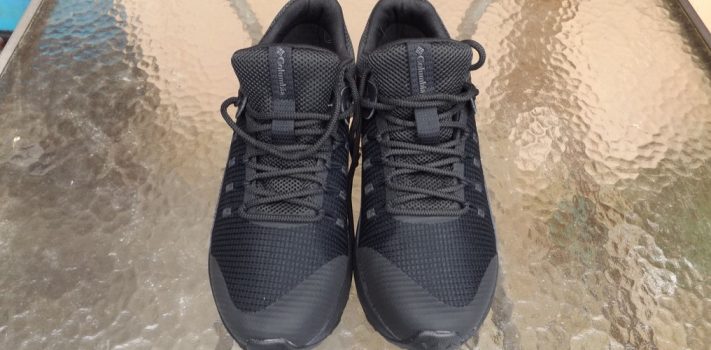
Columbia Trailstorm Hikers, by Pat Cascio
I’m very picky when it comes to footwear! I stopped purchasing cheap shoes at least 35-40-years ago, always remember, you get what you pay for. I don’t purchase footwear from any discount shoe stores, nor at any of the big box stores. I’ve found it much better to save up for better shoes and boots. I want to buy something that will last me a very long, and give me the support I need.
Unlike a lot of senior citizens, I have high arches, instead of fallen arches. So, I wear prescription insoles, instead of the insoles that come with footwear, or off-the-shelf insoles. My prescription insoles cost me in the neighborhood of $450. Yep, that’s a lot of money, no matter how you look at it. However, these insoles were molded to fit my feet precisely. I’ve had these insoles for about 30 years now and they are about at the point, where I need to replace them. I almost did a couple years back. However, the deal I made with the foot doctor changed from the time of my first visit, until I was ready to be fitted with new insoles. And, let’s just say, the price when up – a lot! Don’t take anyone at their word. Get it in writing.
Many people totally neglect their feet, and just get the cheapest shoes they can find. This is a big mistake if you ask me. First of all, you aren’t getting what you think you’re getting, when you purchase cheap footwear. You probably spend at least 14-16 hours per day on your feet, so demand the best you can get – in the end, your feet will thank you – trust me. Our feet take a pounding every single day, so why not treat them to the best you can afford? Just think about how many thousands of pounds of pressure you apply to your feet every single day, each time you put your foot on the ground.
I usually go through a pair of shoes or boots every couple of years. It depends on what time of year it is, if I’m wearing boots, hikers, or athletic footwear. Most of the winter, I wear high-top hikers – waterproof, or I might wear a pair of mud boots – waterproof – if I’m out in the boonies. During the summer months, I wear some lightweight low-cut – waterproof – athletic shoes. It is important to note that almost all of my footwear is waterproof. Why? As a rule, we get a lot of rain in Western Oregon. This past year was very different, and we were behind on the rainfall – facing another severe drought with a lot of wild and forest fires. Still, I put my lightweight hikers away – that are not waterproof – and I’m wearing something new from Columbia clothing.Continue reading“Columbia Trailstorm Hikers, by Pat Cascio”

Recipe of the Week: Survival Chili
The following recipe for Survival Chili is from SurvivalBlog reader John M. He says: “This has been a go-to recipe for years in [cook-off] competition and a family favorite.”
Ingredients
- 2 lbs 90% lean hamburger which does not require draining…. or 80% and drain most of the liquid but not all
- 2 cans (15 oz) tomato sauce
- 1 can (15 oz) diced petite tomatoes
- 3 cups of Bush’s chili beans in sauce — careful adding more will overload the rest of the ingredients
- 1 can (4 oz) green chiles
- 3 tablespoons of garlic, onion powder
- 4 teaspoons of pepper and salt (or less, to taste)
- 4 tablespoon of hot sauce
- 2 tablespoons of maple syrup
- 1/4 stick of butter
Directions
- Deep brown the hamburger in a cast-iron kettle or a large pot.
- Add butter, garlic, and onion powder, salt and pepper, and hot sauce.
- Next turn heat down to low, (never allow the chili to boil, this kills the ingredients )
- Add the rest of the ingredients and continue the low heat setting for a couple of hours.
CHEF’s NOTES
I sometimes cook it for 4 to 8 hours turning the heat off for an hour and then resume. Have used a large crockpot with setting on low and the lid offset to keep it from boiling. But I prefer to use cast iron kettle to control cooking. After the first meal, add a cooked box of elbow macaroni and serve as chili-Mac.
You may add more salt and pepper as needed but you will find even with the amount listed it’s not overbearing.
Nothing better on a cold day, or even on a summer outing.
—
Do you have a favorite recipe that would be of interest to SurvivalBlog readers? In this weekly recipe column, we place emphasis on recipes that use long term storage foods, recipes for wild game, dutch oven and slow cooker recipes, and any that use home garden produce. If you have any favorite recipes, then please send them via e-mail. Thanks!
Economics & Investing For Preppers
Here are the latest news items and commentary on current economics news, market trends, stocks, investing opportunities, and the precious metals markets. We also cover hedges, derivatives, and obscura. Most of these items are from the “tangibles heavy” contrarian perspective of SurvivalBlog’s Founder and Senior Editor, JWR. Today, we look at rising used car prices. (See the Tangibles Investing section.)
Precious Metals:
Reuters: Gold rises as inflation risks buoy safe-haven appeal.
o o o
Economy & Finance:
10 Things Media Won’t Tell You About the Dems’ Big Bill.
o o o
At Zero Hedge: “It’s Dangerous” – Bill Gross Warns Investors Have Been Lulled Into “Dreamland” By Central Banks.
o o o
H.L. spotted this: CVS to close approximately 900 stores over next three years.

The Editors’ Quote of the Day:
“Progressivism was imported from Europe and would result in a radical break from America’s heritage. In fact, it is best described as an elitist-driven counterrevolution to the American Revolution, in which the sovereignty of the individual, natural law, natural rights, and the civil society—built on a foundation of thousands of years of enlightened thinking and human experience—would be drastically altered and even abandoned for an ideological agenda broadly characterized as “historical progress.” Progressivism is the idea of the inevitability of historical progress and the perfectibility of man—and his self-realization—through the national community or collective. While its intellectual and political advocates clothe its core in populist terminology, and despite the existence of democratic institutions and cyclical voting, progressivism’s emphasis on material egalitarianism and societal engineering, and its insistence on concentrated, centralized administrative rule, lead inescapably to varying degrees of autocratic governance. Moreover, for progressives there are no absolute or permanent truths, only passing and distant historical events. Thus even values are said to be relative to time and circumstances; there is no eternal moral order—that is, what was true and good in 1776 and before is not necessarily true and good today. Consequently, the very purpose of America’s founding is debased. To better understand this ideology, its refutation of the American heritage, and its enormous effect on modern American life, it is necessary to become acquainted with some of the most influential progressive intellectuals who, together with others, set the nation on this lamentable course. Given their prolific writings, it is neither possible nor necessary to delve into every manner of their thoughts or the differences among them in their brand of progressivism. For our purposes, it is enough to expose essential aspects of their arguments.” – Mark R. Levin, Rediscovering Americanism: And the Tyranny of Progressivism

Preparedness Notes for Sunday — November 21, 2021
On November 21, 1916, Britannic, the sister ship to the Titanic, sinks in the Aegean Sea, killing 30 people. In the wake of the Titanic disaster, the White Star line had made significant modifications to the design of the ship, but on its way to pick up wounded soldiers near the Gulf of Athens, it was rocked by an explosion causing even more damage than that which had sunk the Titanic. Many of the dead were from some of the crew who attempted to launch lifeboats while the Captain tried to run the ship aground. The lifeboats were sucked up into the propellers, killing all of those on board. The cause of the explosion is still unknown, but many suspect that it hit a mine.
—
Our George Patton’s Birthday sale is continuing, at Elk Creek Company. Check out the reduced prices on all of our pre-1899 antique cartridge guns, percussion replicas, percussion conversion cylinders, bayonets, and knives. The sale ends on Saturday, December 11th, 2021.
—
Today, a guest article, written by Arkadiusz Sieron, PhD. It was first posted by Sunshine Profits.