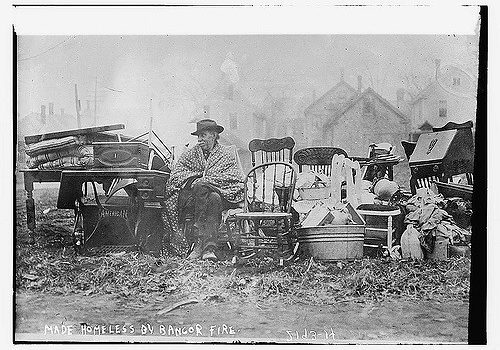
One of the greatest discoveries humankind ever made is fire. Through the many years, mankind has learned a great many things about this process and its benefits. Without a doubt, fire is one of man’s greatest tools. However, like most tools, when used improperly or by the untrained, it can become one of the most destructive forces imaginable. The same tool that can provide life-saving heat in the middle of a brutal winter storm can also reduce an entire forest to smoldering ash. (At this time we’ll leave out any discussion as to the State of California’s terrible forestry management practices.)
As preppers, we must be ready and able to safely and responsibly use fire to help ensure our continued survival. To do this, we need to be aware of how fire functions, how it can get out of control, and what we can do to restrain its spread until it can be controlled. A great deal of the following information will be summarized from my training as a volunteer firefighter and a transportation company safety officer.
To start, please understand that fighting a fire of any size is an extremely dangerous activity even with the proper training, equipment, and manpower. Attempting to combat anything larger than the smallest of fires without proper training and equipment is almost certainly a futile effort and is highly likely to result in injury and/or death to the person(s) attempting to do so. Proper firefighting equipment is highly expensive to purchase and maintain. An adequate house fire fighting operation requires access to hundreds of gallons of water per minute and multiple hose lines, each requiring potentially several 100 feet of hose. This level of equipment and manpower is realistically beyond what most private citizens could obtain and staff.
For the prepared citizen, the best course of action is to take as many steps to prevent a fire from occurring as possible. The next best option is to as quickly as possible determine the extent of the fire, to evacuate everyone from the structure, and to contact 911 for help.
To prevent fire from occurring, we must first understand that fire at its’ basic level is a chemical reaction that combines a fuel source, oxygen, and heat to produce fire. Additional byproducts (aka ash, smoke, etc.) will be produced depending on what the fuel source is and how complete the chemical reaction is. Most of us remember seeing the “Fire Triangle” in some safety class along the years. As long as these three elements are not present, fire will not occur.Continue reading“Fire Prevention and Preparedness, by W.Va. Underground”