Preparedness Notes for Thursday — October 7, 2021

The Battle of Lepanto was a naval engagement taking place on 7 October 1571 in which a fleet of the Holy League, a coalition of European Catholic maritime states arranged by Pope Pius V and led by Spanish admiral Don Juan of Austria, decisively defeated the fleet of the Ottoman Empire on the northern edge of the Gulf of Corinth, off western Greece.

October 7th is the day that we remember the 96 American POWs from Wake Island that were executed in 1943 on the orders of the commander of the Japanese garrison on the island, Rear Admiral Shigematsu Sakaibara. The execution of those American POWs who were blindfolded and shot in cold blood, remains one of the more brutal episodes of the war in the Pacific.


A Look Ahead: Property Values in an Age of Inflation

Several SurvivalBlog readers have contacted me in recent weeks, asking me to gauge where we are in the housing market cycle, here in the United States. My replies to them have reiterated a few key points:

1.) House prices have risen between 15% and 30% in most markets in the past 12 months. This is not sustainable, unless Dollar inflation increases considerably.
2.) There is a wide diversity of regional real estate markets. Some are clearly “over-bought”, while others are likely to continue to rise.
3.) Interest rates will probably continue to remain low, but at some point, they must rise. At that juncture, the real estate market –as well as many other markets—will decline. Your “gains” in real estate may not keep up with inflation. But at least you won’t lose much, in real terms. Compare that with “money in the bank” — where adjusted for inflation, your net worth will decline greatly.
4.) Given the gross over-spending and increase in the National Debt, inflation is unlikely to abate. This may result in a period of “stagflation” wherein the economy stagnates, while inflation continues.
5.) Your only genuine protection from mass inflation is in the form of tangibles. With currency inflation, most Dollar-denominated investments will suffer greatly, while tangibles will hold their value.
6.) You should hold both liquid tangibles (such as precious metals, guns, and ammunition) and less liquid ones like farmland, timberland, and your home.
7.) Avoid debt, unless the inflation rate goes ballistic. Remember: Paying off a load with inflated Dollars is a good thing unless there are mass layoffs, and you end up losing your income. At that point, you won’t be able to service your debt, regardless of the inflation rate or interest rates.
8.) If you must borrow money to buy a house or land, always borrow at a fixed interest rate. In times of mass inflation, an adjustable rate mortgage (ARM) would become a torturous burden.Continue reading“A Look Ahead: Property Values in an Age of Inflation”


The Survivalist’s Odds ‘n Sods

SurvivalBlog presents another edition of The Survivalist’s Odds ‘n Sods— a collection of news bits and pieces that are relevant to the modern survivalist and prepper from “JWR”. Our goal is to educate our readers, to help them to recognize emerging threats, and to be better prepared for both disasters and negative societal trends. You can’t mitigate a risk if you haven’t first identified a risk. Today, we look at the WhatThreeWords (W3W) geolocation tool.

A Three Word Geolocation Tool

Reader F.J. sent this note about a clever new geolocation tool:

“May I call your attention to some possible solutions to the geolocation issue, for rural properties, to direct emergency responders? There is a service called WhatThreeWords (W3W).

Every 3 metre square of the world has been given a unique combination of three words. Used for e-commerce and delivery, navigation, emergencies and more.
and,
Find or enter latitude & longitude
To search for a place, enter the latitude and longitude GPS coordinates on Google Maps. You can also find the coordinates of the places you previously found.

and,

Besides longitude and latitude, you can use plus codes to share a place without an address.

Plus Codes work similar to street addresses. They can help you get and use a simple digital address. They can also help you define a specific location for a conventional address. For example, you can identify different entrances to the same building.

You can use Plus Codes to identify a specific location to receive deliveries, access emergency and social services, or direct people to a location. Since the codes are simple, you can easily share them with others.

Plus Codes are based on latitude and longitude. They use a simple grid system and a set of 20 alphanumeric characters. The character list purposely excludes easy to confuse characters like “1” or “l.”

I’ve used W3W with friends at parks and stuff.  Works much better than when at a recent dog show, my friend said “we’re in front of the big blue and white show tent”.  There were three of them and I had to struggle to walk to all three before finding them.  Argh!  I am still trying to convince my friend that W3W would have been easier on me. “


The Editors’ Quote of the Day:

“It is only when the people become ignorant and corrupt, when they degenerate into a populace, that they are incapable of exercising the sovereignty. Usurpation is then an easy attainment, and an usurper soon found. The people themselves become the willing instruments of their own debasement and ruin. Let us, then, look to the great cause, and endeavor to preserve it in full force. Let us by all wise and constitutional measures promote intelligence among the people as the best means of preserving our liberties.” – James Monroe


Preparedness Notes for Wednesday — October 6, 2021

October 6 is the birthday of Thor Heyerdahl. (Born 1914, died April 18, 2002.) Although his east-to-west theory of Pacific Ocean transmigration was later disproved by genetics studies, his many adventures were still truly remarkable.

Today is also the birthday of science fiction author David Brin. (born, 1950.) He wrote The Postman, which was very loosely the foundation of a movie by Kevin Costner.

SurvivalBlog Writing Contest

Today we present another entry for Round 97 of the SurvivalBlog non-fiction writing contest. The prizes for this round include:

First Prize:

  1. The photovoltaic power specialists at Quantum Harvest LLC  are providing a store-wide 10% off coupon. Depending on the model chosen, this could be worth more than $2000.
  2. A Gunsite Academy Three Day Course Certificate. This can be used for any of their one, two, or three-day course (a $1,095 value),
  3. A course certificate from onPoint Tactical for the prize winner’s choice of three-day civilian courses, excluding those restricted for military or government teams. Three-day onPoint courses normally cost $795,
  4. Two cases of Mountain House freeze-dried assorted entrees in #10 cans, courtesy of Ready Made Resources (a $350 value),
  5. A $250 gift certificate good for any product from Sunflower Ammo,
  6. American Gunsmithing Institute (AGI) is providing a $300 certificate good towards any of their DVD training courses.
  7. Two sets of The Civil Defense Manual, (in two volumes) — a $193 value — kindly donated by the author, Jack Lawson.

Second Prize:

  1. A Front Sight Lifetime Diamond Membership, providing lifetime free training at any Front Sight Nevada course, with no limit on repeating classes. This prize is courtesy of a SurvivalBlog reader who prefers to be anonymous.
  2. A Glock form factor SIRT laser training pistol and a SIRT AR-15/M4 Laser Training Bolt, courtesy of Next Level Training, that have a combined retail value of $589,
  3. Two 1,000-foot spools of full mil-spec U.S.-made 750 paracord (in-stock colors only) from www.TOUGHGRID.com (a $240 value).
  4. Naturally Cozy is donating a “Prepper Pack” Menstrual Kit.  This kit contains 18 pads and it comes vacuum-sealed for long term storage or slips easily into a bugout bag.  The value of this kit is $220.

Third Prize:

  1. Three sets each of made-in-USA regular and wide-mouth reusable canning lids. (This is a total of 300 lids and 600 gaskets.) This prize is courtesy of Harvest Guard (a $270 value)
  2. A Royal Berkey water filter, courtesy of Directive 21 (a $275 value),
  3. Two Super Survival Pack seed collections, a $150 value, courtesy of Seed for Security, LLC,
  4. A transferable $150 purchase credit from Elk Creek Company, toward the purchase of any pre-1899 antique gun. There is no paperwork required for delivery of pre-1899 guns into most states, making them the last bastion of firearms purchasing privacy!

More than $725,000 worth of prizes have been awarded since we started running this contest. Round 97 ends on November 30th, so get busy writing and e-mail us your entry. Remember that there is a 1,500-word minimum, and that articles on practical “how-to” skills for survival have an advantage in the judging.


Seed Harvesting Tips for Survival – Part 2, by R.B.

(Continued from Part 1. This concludes the article.)

How Do I Store Seeds Inexpensively and Efficiently?

During the summer, save empty envelopes from mail received and carefully cut one end open to remove the contents. If it is an envelope with a cellophane window, slice open the end closest to the window. (There is now a reason to open some of that unwanted junk mail you receive.) Also accumulate empty pill and vitamin bottles and save any *tiny* jewelry-size zip-lock bags. Large mouth jugs with screw-top lids that held three to five pounds of food (parmesan cheese, dried onions, etc) make excellent containers for later holding all the partial envelopes filled with seeds.

When seeds on the paper plates are dry, cut a used envelope in half and label it with name of seed, color (if a flower), and year. The seal of the flap may need to be reinforced with tape so as not to leak seed. Gently pull together the two sides of the paper plate to form a “funnel” and pour the seeds into the prepared envelope. Fold down the top of the envelope and seal it with tape. It is now ready for your storage jar. If desired, you may also add a desiccant packet to the jug. Another option is to add a little dry rice. (If it’s good enough for drying out wet cell phones, it is probably good enough to help keep seeds dry.) For larger quantities of seed, pour them into small pill or other bottles and cap. Old mayonnaise jars are useful too. Be sure to affix a clearly legible label. I also like to generate an alphabetical list of the types of seeds contained in the super-size jars in addition to the year the contents were collected. Furthermore, I keep flower seeds in a jar separate from the one for vegetable seeds.

These steps definitely help with locating seeds in the spring! Store all seeds containers in a cool, dry, dark location. Tiny (jewelry size) zip-lock bags are quite useful for holding the “dust-like” seeds of moss rose, purslane, etc. These can also be recycled as long as they are intact.Continue reading“Seed Harvesting Tips for Survival – Part 2, by R.B.”


SurvivalBlog Readers’ & Editors’ Snippets

This weekly column is a collection of short snippets: practical self-sufficiency items, how-tos, lessons learned, tips and tricks, and news items — both from readers and from SurvivalBlog’s editors. We may select some long e-mails for posting as separate letters.

Our Editor-At-Large Michael Z. Williamson sent this:

“Morton and other companies are running into a supply chain delay on the cardboard containers for table salt. It would be a good idea for readers to stock an extra pound, but not totally denude the stores in the process.

If it becomes a long-term issue, both water softener salt and certain animal salt licks are viable sources.”

o  o  o

I received several comments in response to my mention of airless tires. First, from E.M.:

“This idea of airless tires from Michelin isn’t new. I’m wondering what has been taking them so long as I first saw this concept demonstrated on the OLD Discovery Channel show “Beyond 2000” that aired back in the mid-1990s. It was Michelin that was developing it back then too. Back then they called them “Tweels” because the tire and wheel are bonded together.”

Here is one from Lt. Mike, in Alaska:

“There are already tires like this up here in the Arctic. However, they are not cheap. For example if I wanted to outfit my 2000 GMC Sierra pickup truck with them the cost would be $6,000 plus another $1600 for the special rims and then mounting. And there is no balancing of them. You get what you get and take it that way. They ride hard. The units driving the Elliot Highway (Haul Road) to Prudhoe Bay use them. Why? Because at 65 to 80 degrees below zero you ain’t going to get out to change a flat. What I do have on my truck for the winter are Blizzak tires. Again, not cheap, but the very best for road conditions up here when it is far below zero. I have them mounted on rims I bought, and change them out every year. I have nitrogen in them, which I highly recommend since it increases tire life by an order of magnitude in any tire because it doesn’t expand or contract with temperature and doesn’t seep through the rubber causing failure like compressed air does.”

o  o  o

Jimbo sent this link, in response to the request for Christian intentional communities: Bruderhof.

o  o  o

Chris in Arkansas wrote:

“We finally bought a home in N. Central Arkansas, very close to the Missouri border.  This was one of two target areas we had in mind.  Tennessee was the other but the market is so hot there it’s ridiculous.  Homes with acreage routinely had several offers well over asking price in the first week and many were for cash.  Our realtor mentioned that companies were buying some of the homes, even rural properties in very small towns.

The property we bought is not our “perfect” setup as it has a county road running along one side that is busier than we would like with occasional commuters going to and from town.  However, we strongly feel God had this home set aside for us.  The more we prayed, the more doors to other homes kept closing, except for this home and land.  The plus side is that the land is level and has been well managed. Level land is a rarity in N. Arkansas!  We are also located within easy driving distance to good markets in Arkansas and Missouri to support a sideline business we are starting building garden products.

The home sits on several level acres with an attached garage.  There is a productive well, large propane tanks for the stove, water heater, and HVAC, a large insulated workshop with concrete floors and a furnace, another 2 bay garage and a storage shed with a walk-up attic.  There is an RV pad with power, water, and septic.  We also have first dibs on the adjoining cleared small pasture with well and power when the owners decide to sell.  They also sold us a low-hour diesel tractor with implements (backhoe included) for a very fair price.

Our upcoming projects include fencing the entire property to contain our dogs, clearing out woods to put in pasture for small breed livestock, installing a large garden area this fall with deer fence and greenhouse, plus setting up chicken and quail coops.   We are also blessed in that my company is letting me work from home on a permanent basis.

When everything seems bleak and you want to move your family, then PRAY.  It was a long road for us but we believe God had this move planned for us all along.

If anyone would like to connect our email address is available from Jim or Lily.”

o  o  o

Reader A.D. mentioned this at Reuters: Australia’s two largest states trial facial recognition software to police pandemic rules.

o  o  o

My sister sent this at CNN: This man used a garbage can to successfully trap a gator in Florida. Fish and wildlife authorities say to leave the trapping to them.

Continue reading“SurvivalBlog Readers’ & Editors’ Snippets”


Preparedness Notes for Tuesday — October 5, 2021

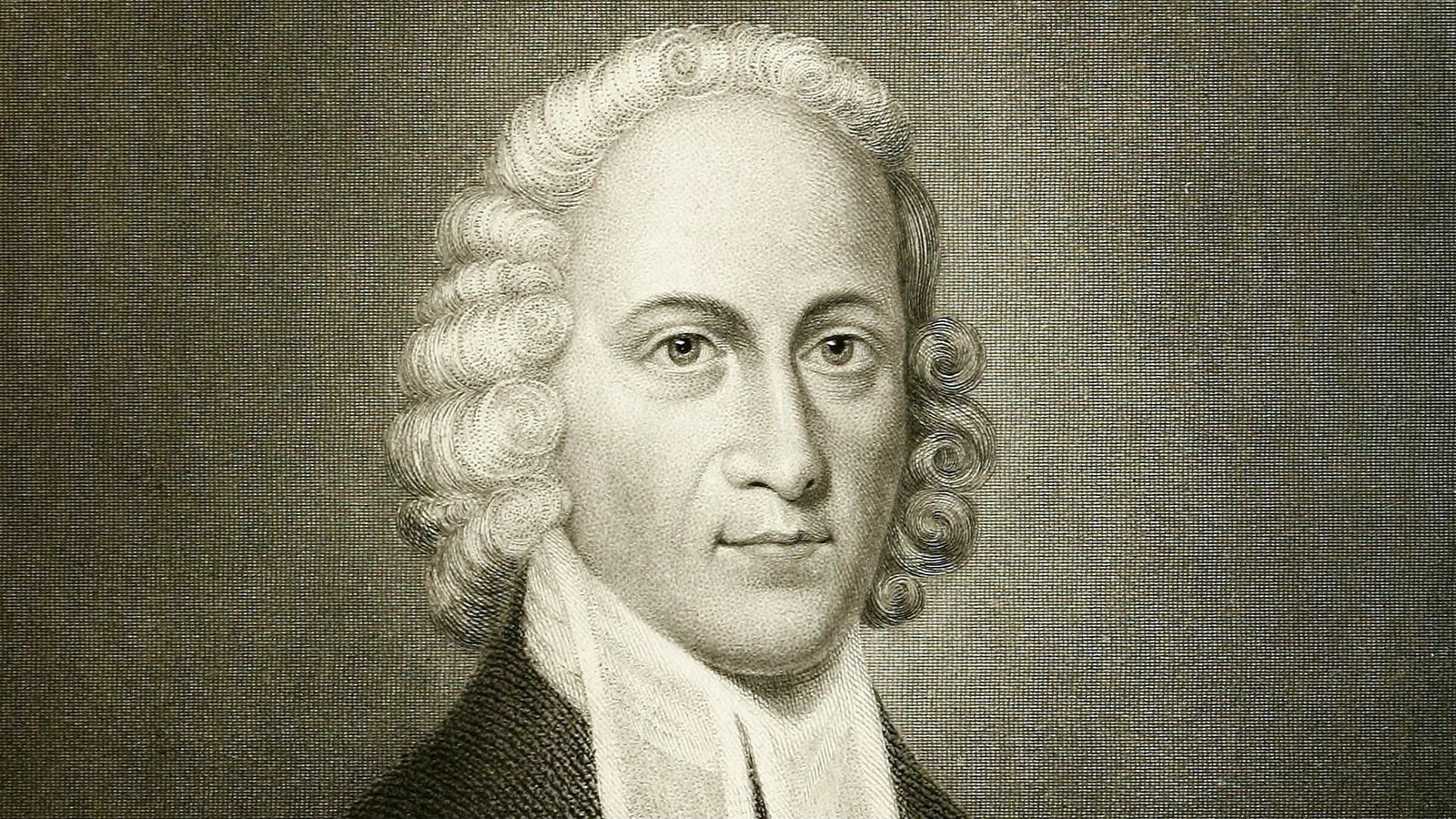
October 5, 1703 was the birthday of Jonathan Edwards. He died March 22, 1758. He was a prolific Calvinist theological writer. Many of his writings were later collected in the multi-volume book The Rational Biblical Theology of Jonathan Edwards that was edited by John Gerstner.

SurvivalBlog Writing Contest

Today we present another entry for Round 97 of the SurvivalBlog non-fiction writing contest. The prizes for this round include:

First Prize:

  1. The photovoltaic power specialists at Quantum Harvest LLC  are providing a store-wide 10% off coupon. Depending on the model chosen, this could be worth more than $2000.
  2. A Gunsite Academy Three Day Course Certificate. This can be used for any of their one, two, or three-day course (a $1,095 value),
  3. A course certificate from onPoint Tactical for the prize winner’s choice of three-day civilian courses, excluding those restricted for military or government teams. Three-day onPoint courses normally cost $795,
  4. Two cases of Mountain House freeze-dried assorted entrees in #10 cans, courtesy of Ready Made Resources (a $350 value),
  5. A $250 gift certificate good for any product from Sunflower Ammo,
  6. American Gunsmithing Institute (AGI) is providing a $300 certificate good towards any of their DVD training courses.
  7. Two sets of The Civil Defense Manual, (in two volumes) — a $193 value — kindly donated by the author, Jack Lawson.

Second Prize:

  1. A Front Sight Lifetime Diamond Membership, providing lifetime free training at any Front Sight Nevada course, with no limit on repeating classes. This prize is courtesy of a SurvivalBlog reader who prefers to be anonymous.
  2. A Glock form factor SIRT laser training pistol and a SIRT AR-15/M4 Laser Training Bolt, courtesy of Next Level Training, that have a combined retail value of $589,
  3. Two 1,000-foot spools of full mil-spec U.S.-made 750 paracord (in-stock colors only) from www.TOUGHGRID.com (a $240 value).
  4. Naturally Cozy is donating a “Prepper Pack” Menstrual Kit.  This kit contains 18 pads and it comes vacuum-sealed for long term storage or slips easily into a bugout bag.  The value of this kit is $220.

Third Prize:

  1. Three sets each of made-in-USA regular and wide-mouth reusable canning lids. (This is a total of 300 lids and 600 gaskets.) This prize is courtesy of Harvest Guard (a $270 value)
  2. A Royal Berkey water filter, courtesy of Directive 21 (a $275 value),
  3. Two Super Survival Pack seed collections, a $150 value, courtesy of Seed for Security, LLC,
  4. A transferable $150 purchase credit from Elk Creek Company, toward the purchase of any pre-1899 antique gun. There is no paperwork required for delivery of pre-1899 guns into most states, making them the last bastion of firearms purchasing privacy!

More than $725,000 worth of prizes have been awarded since we started running this contest. Round 97 ends on November 30th, so get busy writing and e-mail us your entry. Remember that there is a 1,500-word minimum, and that articles on practical “how-to” skills for survival have an advantage in the judging.


Seed Harvesting Tips for Survival – Part 1, by R.B.

As I’m writing this, we are in the full swing of seed gathering here in zone 6 of the northern South. The purpose of this article is to help people in any section of the country learn some easy and inexpensive ways to gather and save seed for now and for harder times to come. Consider the following. Will seed always be available for each type of vegetable, fruit, grain, or flower that you want to grow? Truth be told there are already shortages due to skyrocketing orders following concerns about potential food production failures. What about current price inflation or even future hyperinflation? Prices are already increasing dramatically for seed and are even worse for store-bought garden plants! What if seed companies fail or transportation and mail delivery become unreliable? What if seed sales are banned? As strange as that may seem, the governor of Michigan banned for a time the sale of all garden materials including seeds in certain stores during Spring 2020 due to Covid-19. They were deemed “not necessary.” These are all things to ponder.

A special section is included later in this series about the high protein cereal amaranth which is easy to grow and in a small space producing “up to a half pound of grain” per seed head or more. You won’t want to miss this topic. We’ve tried rye, wheat, and millet with unsatisfactory results so we tried Golden Giant Amaranth with some interesting results. You won’t want to miss this honest review!

Also included is an excellent super productive food to conquer starvation. This is a don’t miss.Continue reading“Seed Harvesting Tips for Survival – Part 1, by R.B.”


SurvivalBlog’s News From The American Redoubt

This weekly column features news stories and event announcements from around the American Redoubt region. (Idaho, Montana, eastern Oregon, eastern Washington, and Wyoming.) Much of the region is also more commonly known as The Inland Northwest. We also mention companies of interest to preppers and survivalists that are located in the American Redoubt region. Today, another flying video from Kitfox pilot Trent Palmer.  (See the Idaho section.)

Idaho

The latest from Kitfox bush pilot Trent Palmer: Fly-In Fishing For Brown Trout.

o  o  o

My friend Commander Zero of the Notes From The Bunker blog tipped me to this news article: Idaho hunter finds remains of man missing for 53 years.

o  o  o

Over at Redoubt News: Idaho’s Kangaroo Court House “Ethics” Committee is Back at it.

Continue reading“SurvivalBlog’s News From The American Redoubt”


The Editors’ Quote of the Day:

“If the basic job of the ‘dissident’ movements is to serve truth, that is, to serve the real aims of life, and if that necessarily develops into a defense of individuals and their right to a free and truthful life (that is, a defense of human rights and a struggle to see the laws respected), then another stage of this approach, perhaps the most mature stage so far, is what Václav Benda called the development of “parallel structures.”

When those who have decided to live within the truth have been denied any direct influence on the existing social structures, not to mention the opportunity to participate in them, and when these people begin to create what I have called the independent life of society, this independent life begins, of itself, to become structured in a certain way. Sometimes there are only very embryonic indications of this process of structuring; at other times, the structures are already quite well developed. Their genesis and evolution are inseparable from the phenomenon of “dissent,” even though they reach far beyond the arbitrarily defined area of activity usually indicated by that term.

What are these structures? Ivan Jirous was the first in Czechoslovakia to formulate and apply in practice the concept of a “second culture.” Although at first he was thinking chiefly of nonconformist rock music and only certain literary, artistic, or performance events close to the sensibilities of those nonconformist musical groups, the term second culture very rapidly came to be used for the whole area of independent and repressed culture, that is, not only for art and its various currents but also for the humanities, the social sciences, and philosophical thought. This second culture, quite naturally, has created elementary organizational forms: samizdat editions of books and magazines, private performances and concerts, seminars, exhibitions, and so on. (In Poland all of this is vastly more developed: there are independent publishing houses and many more periodicals, even political periodicals; they have means of proliferation other than carbon copies, and so on. In the Soviet Union, samizdat has a longer tradition and clearly its forms are quite different.) Culture, therefore, is a sphere in which the parallel structures can be observed in their most highly developed form. Benda, of course, gives thought to potential or embryonic forms of such structures in other spheres as well: from a parallel information network to parallel forms of education (private universities), parallel trade unions, parallel foreign contacts, to a kind of hypothesis on a parallel economy. On the basis of these parallel structures, he then develops the notion of a “parallel polis” or state or, rather, he sees the rudiments of such a polis in these structures.

I believe in structures that are not aimed at the technical aspect of the execution of power, but at the significance of that execution in structures held together more by a commonly shared feeling of the importance of certain communities than by commonly shared expansionist ambitions directed outward.There can and must be structures that are open, dynamic, and small; beyond a certain point, human ties like personal trust and personal responsibility cannot work. There must be structures that in principle place no limits on the genesis of different structures. Any accumulation of power whatsoever (one of the characteristics of automatism) should be profoundly alien to it. They would be structures not in the sense of organizations or institutions, but like a community. Their authority certainly cannot be based on long-empty traditions, like the tradition of mass political parties, but rather on how, in concrete terms, they enter into a given situation. Rather than a strategic agglomeration of formalized organizations, it is better to have organizations springing up ad hoc, infused with enthusiasm for a particular purpose and disappearing when that purpose has been achieved. The leaders’ authority ought to derive from their personalities and be personally tested in their particular surroundings, and not from their position in any nomenklatura. They should enjoy great personal confidence and even great lawmaking powers based on that confidence. This would appear to be the only way out of the classic impotence of traditional democratic organizations, which frequently seem founded more on mistrust than mutual confidence, and more on collective irresponsibility than on responsibility. It is only with the full existential backing of every member of the community that a permanent bulwark against creeping totalitarianism can be established. These structures should naturally arise from below as a consequence of authentic social self-organization; they should derive vital energy from a living dialogue with the genuine needs from which they arise, and when these needs are gone, the structures should also disappear. The principles of their internal organization should be very diverse, with a minimum of external regulation. The decisive criterion of this self-constitution should be the structure’s actual significance, and not just a mere abstract norm.

Both political and economic life ought to be founded on the varied and versatile cooperation of such dynamically appearing and disappearing organizations. As far as the economic life of society goes, I believe in the principle of self-management, which is probably the only way of achieving what all the theorists of socialism have dreamed about, that is, the genuine (i.e., informal) participation of workers in economic decision making, leading to a feeling of genuine responsibility for their collective work. The principles of control and discipline ought to be abandoned in favor of self-control and self-discipline.” – Václav Havel, from: The Power of the Powerless


Preparedness Notes for Monday — October 4, 2021

October 4, 1923 was the birthday of the late Charlton Heston, who was born John Charles Carter. He died April 5, 2008. He is often remembered for movies like Ben Hur, The Ten Commandments, Soylent Green, The Planet of the Apes, and the survivalist classic The Omega Man.

October 4th is also the anniversary of the Tongo Tongo, Niger Ambush, in 2017.  Americans KIA: Staff Sgt. Bryan C Black, Sgt. First Class Jeremiah W Johnson, Sgt. La David T. Johnson, and Staff Sgt. Dustin M Wright.

Today’s feature article is a pistol review written by our Field Gear Editor, Pat Cascio.


Heckler & Koch USP .45 ACP Compact, by Pat Cascio

Anyone who is the least bit familiar with the HK line of USP handguns, will surely know that these are large guns – even their “compact” models are large. Their USP line-up was designed to last a lifetime with very little chance of things breaking or going wrong. I had an early HK USP 9mm full-sized model, and to be sure, it is one big handgun – it was designed for duty use, by military and law enforcement. They are not especially suited for concealed carry – although I carried the full-sized USP 9mm concealed for quite some time – close to a year. It wasn’t an easy pistol to conceal – took the right holster and clothing.

Our own US Navy SEALs have used the HK .45 ACP SOCOM version for many missions – and that gun is much too big to conceal, and if I recall, it weighs about 5-pounds with the suppresor – ouch! However, it was meant to serve many different applications and it carried them all out as designed. I never owned the full-sized civilian version of the USP chambered in .45 ACP – never found one at my usual FFL haunts, either new ones or used versions.

Today, we are looking at the HK USP Compact .45 ACP. It is a great pistol, for concealed carry or even duty use. Now, we have to keep in mind, when talking about an HK USP “compact” pistol, they are still rather large and heavy.

As many readers will no doubt notice in the pictures of my particular Compact version the HK mounting rail that was proprietary to early HK pistols, has been modified, so it is now Picatinny compatible. I purchased this gun used, and whoever owned it before had taken some tools to the rail and opened it up, so it would accept many contemporary accessories. Unfortunately, they did a terrible modification job on the gun. This butchery resulted in the USP being priced “oh-so-right”. So I could overlook the basement modification work, as I rarely mount lights or lasers on my handguns to start with. And I then cleaned up some of the kitchen table sloppy work, as best as I could.Continue reading“Heckler & Koch USP .45 ACP Compact, by Pat Cascio”


Recipe of the Week: Green Tomato and Apple Chutney

The following recipe for Green Tomato and Apple Chutney is from SurvivalBlog reader St. Funogas.  Here is his description:

This recipe is loosely adapted from the Ball Complete Book of Home Preserving and is a great way to use up some of those end-of-season green tomatoes. This is the best chutney I’ve tried, a spicy-sweet mix that goes well with anything from scrambled eggs and omelets, to a topping for those ho-hum pan-fried pork chops, and even makes a great salsa for chips. I typically use generous heaps when I use it. Once you try it I’m sure you’ll like it and find a variety of ways to use it.

This recipe makes 11-12 pints. For 5-6 pints, cut the recipe in half. I make a few half-pints as well to give to friends as a sample to see if they like it before I commit to giving them a whole pint.

INGREDIENTS

1,900 g Apples (about 16 apples)
3,000 g Green Tomatoes (6½ lbs, about ⅓ – ½ of a 5-gallon bucket)
700 g Onions (about 4 large onions)
1,300 g Brown Sugar (about 6 loosely packed cups)
4 cups Cider Vinegar (1 liter)
3 T Pickling Spice (see recipe below)

PICKLING SPICE INGREDIENTS

2 t Cinnamon
2 t Mustard seeds
1 t Mustard powder
1 t Peppercorns (crushed but not ground)
1 t Ginger
1 t Allspice
1 t Cloves

Mix spices together using generous measures of spices and it should produce 3T in total.

This recipe doesn’t need to be precise as far as the measurements of each of the main ingredients. The key to getting 11-12 pints is to be sure the overall weight of the apples, tomatoes, and onions is around 5,600 grams (~12½ lbs), give or take. I use mostly green tomatoes but a few pink ones always sneak in so work with whatever you have available. Things like bell peppers and tomatillos can also be used to fill in any shortages.

Chutney is the same consistency as pickle relish, with perhaps slightly larger pieces. Use a food processor to dice everything to that size, working in small batches.

DIRECTIONS

1. Add 4 cups of cider vinegar to a stainless steel kettle.
2. Peel, core, and dice the apples, then add to the kettle. To keep the apples from turning brown, peel and dice the apples three at a time and stir them into the vinegar before doing the next three.
3. Core and dice the tomatoes. Weigh out 3,000 grams before dicing and adding to the kettle.
5. Weigh out and dice 700 grams of onions, then add to the kettle.
6. Add 3T of pickling spice and blend everything together in the kettle.

Note: The brown sugar will be added later.

7. Bring to a medium boil and boil for 30 minutes, stirring frequently.
8. Add the brown sugar and mix until well dissolved.
9. Reduce the heat and simmer for another 30 minutes, stirring frequently until the chutney will mound on a spoon.
10. The canner and jars should be prepared ahead of time. With the basket removed, an average canner will hold 10-11 pint jars. When the chutney is thick enough, ladle into jars leaving ½” (1 cm) of headspace and remove any air bubbles with a small spatula or chopstick. Wipe the rim, put the lid on and screw the band down finger tight.
11. Process for 15 minutes, turn off the heat and remove the lid, then wait five minutes before removing the jars.

NOTES

• Any pieces that were not diced fine enough can be cut with kitchen shears as they rise to the top of the pot during stirring.
• If you’ve never made relish or chutney before, don’t worry that the four cups of vinegar doesn’t look like enough liquid. As everything boils down, water will be released from the apples and tomatoes, increasing the total liquid.
• To decrease the cooking time it takes to thicken the chutney to the right consistency, I ladle off a pint of the liquid towards the end, 5-10 minutes after adding the brown sugar. Seal it in a pint jar and put it in the refrigerator after it cools. This liquid can be used in stir fries and other dishes.
• The apple peels and cores can be used to make your own apple vinegar, a fairly simple process. The peels and cores from this recipe will fill a 2-quart jar enough for making vinegar.

Do you have a favorite recipe that would be of interest to SurvivalBlog readers? In this weekly recipe column, we place emphasis on recipes that use long term storage foods, recipes for wild game, dutch oven and slow cooker recipes, and any that use home garden produce. If you have any favorite recipes, then please send them via e-mail. Thanks!