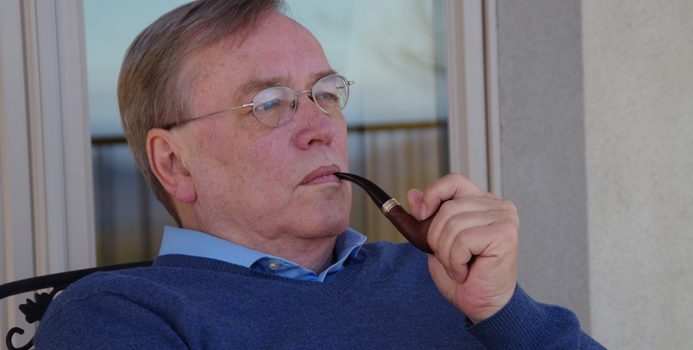
Today is the birthday of novelist William R. Forstchen (born, 1950.) He is best known for his survivalist novel One Second After.
—
Today we are posting a gun review written by our redoubtable Field Gear Editor, Pat Cascio.

Today is the birthday of novelist William R. Forstchen (born, 1950.) He is best known for his survivalist novel One Second After.
—
Today we are posting a gun review written by our redoubtable Field Gear Editor, Pat Cascio.
I used to be a huge fan of Smith & Wesson handguns. At one time, they were my preferred handgun for duty and concealed carry. However, after several bad experiences with their customer service/repair shop, I rarely look at S&W handguns these days. S&W used to have one of the best customer service departments bar none. So, these days, I don’t look at many of their handguns.
I remember when S&W came out with their Model 469, 9mm handgun. It was a winner in my book. At the time, they were a compact pistol, that held a lot of ammo – 12+1 rounds, and they were a great concealed carry pistol – light-weight, compact and reliable. Over the years, S&W made a number of improvements and came out with second generation and third generation models. One of the best improvements was upgraded sights, in particular the rear sight. The earlier models had a very small, rounded-off rear sight, and they were hard to pick-up quickly. The newer generations had a much nicer, combat rear sight/ This made a huge difference in speed shooting. Of course, we had the three white dot aiming system, and that helped for faster and more accurate shooting as well. The trigger pull was another improvement – the trigger pull on the original 469 models were “okay” at best, but the later generation pistols had a much nicer trigger pull.
When the .40 S&W caliber came on the scene, everyone was quick to jump on this round, and S&W started producing some of their little 469 models in .40 S&W. Nice guns, with the exception that, for the most part, all S&W did was install a bigger barrel, in .40 S&W and made a few changes to the magazines, and they only held 10-rds of .40 S&W instead of 12-rounds of 9mm. The recoil spring was a bit stouter as well. The .40 S&W is a punishing round in a little gun – a lot of recoil, to say the least. Many shooters couldn’t accurately shoot the little .40 S&W guns because of the “kick” and soon traded them off.Continue reading“Smith & Wesson Shorty .40, by Pat Cascio”
The following detailed recipe was kindly sent to us by SurvivalBlog reader Debra in Missouri:
Being a bookworm at heart, I’ve amassed a small collection of books on rationing, wartime cooking and famine. Inspiration for this recipe comes from a book by Wong Hong Suen called WARTIME KITCHEN: Food and Eating in Singapore 1942-1950. Published in 2009 by National Museum of Singapore, it contains a wealth of information about the public adaptation to wartime scarcity. “Dish ends became a gourmet food. This was the soup stock made from boiling all the food left over by customers of Chinese restaurants … workers would boil all leftovers in a huge pot … everyday around 1 or pm, people carrying soup bowls and mugs would start to queue up at the back doors of these restaurants to buy the dish-ends” (page 58).
My version draws on our leftovers that need to be used up, the stray vegetable in the crisper that is starting to go limp, the lone piece of bacon or sausage left from breakfast, meager gleanings at the beginning and end of each garden planting cycle, as well as staples from the larder & long-term storage. The good news about this soup is that you can practice this bit of frugality whether you live on a massive ranch, tiny homestead, small town or regularly have your meals delivered by Door Dash or Uber Eats to your luxury apartment. You would be surprised the depth of flavor you get from mixing things you would have never considered before. The example I’ll give is simmering on the back burner of the stove right now.
A few spoonsful of baked beans from yesterday’s noon meal (can of chili beans, 1 diced jalapeno, 1 T of dried onion from the larder, grated carrot, brown sugar, ketchup, mustard, squirt of maple syrup, bacon)
Peas from today’s noon meal (can of peas, a diced jalapeno, a big splash of chicken broth from a carton, a sprinkle of dried onion, some hard salami scraps chopped up, some shredded carrot left over from the cole slaw)
Leftover pieces of the smoked pork chops we had for today’s noon meal cut into bite-sized pieces (I cooked with crushed pineapple & brown sugar, the remains from the cooking pan were dumped into the soup mixture as well)
The smoked pork chop bones
Cole slaw left over from today’s noon meal (shredded cabbage & carrots with a vinegar-based dressing)
1 small apple left over from making apple cider chopped into small pieces which will basically cook down into the broth (I picked the apples from my stepbrother’s tree, had enough apples to make one gallon of cider with my juicer to let ferment into apple cider vinegar. It’s in the “hard cider stage” right now and smells tempting, but I want that apple cider vinegar).
1 small potato peeled and cut into bite-sized pieces (my hubby likes potato in his soup), this helps to stretch the amount, when I don’t have a lot of leftovers, but I don’t want them to go to waste.
Combine all ingredients into an appropriate pan, mine is going on the stove so a large saucepan was my choice. If you are camping, it can go into your dutch oven or stew pot to cook with the heat from your campfire or camp stove.
Add sufficient liquid (I am using water and chicken stock) to cover the ingredients and then stir well.
Bring to a boil and then turn the heat down to simmer, stirring occasionally and adding more liquid if necessary. Depending on your situation you can let it simmer until time to eat or let it simmer until you are happy with the results. At home, I’ll keep enough to eat for the evening meal and freeze the rest for an evening when I don’t feel like cooking.
Keep in mind, this recipe is a pattern to spark your own creativity. Remember, if you don’t have enough leftovers, you can add potatoes, rice, sweet potatoes, beans (great use for those you have in long-term storage) or pasta to the soup to stretch it. The idea is to start thinking frugally, trying to never waste a morsel of food. If you don’t have chicken broth, but want more flavor you can add tomatoes, (canned, fresh, sundried or dehydrated), a can of soup (cream of chicken or mushroom for example), a package of gravy mix, a bouillon cube, or a spoon of marmite. If you have mainly vegetables and need more protein throw in some beans, freeze-dried chicken from your long-term storage, or small tin of chicken from the larder. Be creative and practice.
In the foreword to WARTIME KITCHEN Christopher Tan Yu Wei writes “Wartime Kitchen is really not so much about food as about the lack of it. It is about the mental and physical burdens that come with deprivation, but more importantly, it is also about the creativity that flowers during especially barren times. Not taking food for granted – indeed, having to battle for every scrap – makes one more attentive, and more aware of possibilities.”
—
Do you have a favorite recipe that would be of interest to SurvivalBlog readers? In this weekly recipe column, we place emphasis on recipes that use long-term storage foods, recipes for wild game, dutch oven and slow cooker recipes, and any that use home garden produce. If you have any favorite recipes, then please send them via e-mail. Thanks!
Here are the latest news items and commentary on current economics news, market trends, stocks, investing opportunities, and the precious metals markets. We also cover hedges, derivatives, and obscura. Most of these items are from the “tangibles heavy” contrarian perspective of SurvivalBlog’s Founder and Senior Editor, JWR. Today, we look at rapidly rising car prices — both new and used. (See the Tangibles Investing section.)
Reuters: Gold pops over 1% as U.S. jobs data miss cools Fed taper bets.
o o o
Capital Economics looks for silver prices to drop 5% to $21.50 before year-end.
o o o
Raeder Mark in Montana wrote: “Silver is looking cheap…it may drop more initially as interest rates go up but this is a good time to be accumulating…”
Another sign of default angst: Fed Reverse Repo Use Hits $1.6 Trillion on Last Day of Quarter.
o o o
At Zero Hedge: The Big Trade Hidden Under The Surface.
o o o
Workers Who Maintain Supply Chains Issue Bone-Chilling Warning Every American Needs to Hear.
o o o
Reader Ryan C. spotted this headline: Coca-Cola is so desperate for freight space it’s importing ingredients on coal ships. JWR’s Comment: Most folks don’t realize that many bulk freighter holds are routinely alternated between carrying cargoes including various ores, grain, coal, legumes, salts, and concrete.
o o o
How South Dakota became a haven for both billionaires and full-time RV-ers. (Thanks to H.L. for the link.)
“Inflation is as violent as a mugger, as frightening as an armed robber and as deadly as a hit man.” – Ronald Reagan
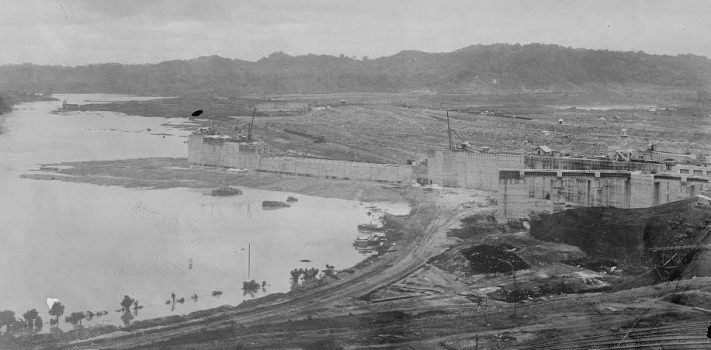
On October 10th, 1913, the Panama Canal officially linked the Atlantic to the Pacific when the Gamboa dike was breached with dynamite charges. Pictured are the canal’s Gatun Locks.
Today is also the birthday of composer Giuseppe Verdi. (Born 1813, died 1901.
—
Today we present another entry for Round 97 of the SurvivalBlog non-fiction writing contest. The prizes for this round include:
—
More than $725,000 worth of prizes have been awarded since we started running this contest. Round 97 ends on November 30th, so get busy writing and e-mail us your entry. Remember that there is a 1,500-word minimum, and that articles on practical “how-to” skills for survival have an advantage in the judging.
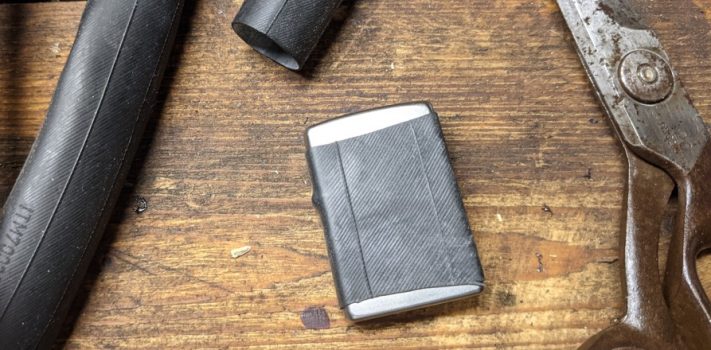
The iconic Zippo lighter is an excellent tool for starting fires. Battlefield tested from World War 2 to the War on Terror, it has proven to be a versatile, durable, and reliable tool in daily use.
One major drawback of the Zippo is that it loses fuel fairly quickly due to evaporation. I had previously read about an old trick for slowing this evaporation by using a piece of bicycle inner tube. I decided to give it a try.
A lighter is a portable and reusable device designed to produce a flame.
Already in the 1600s, the first lighter-type devices were developed. These devices were tinderboxes that used a wheel lock mechanism similar to those employed by the firearms of the time. Sparks from the lock were used to ignite gunpowder or other flammable substances in order to create a flame. When firearms advanced from the wheel lock to the flintlock, these early lighters followed in their footsteps.
Then in the 1800s, chemist Johann Wolfgang Döbereiner invented a device that created a flame by passing hydrogen over a platinum catalyst. The device proved quite popular, although it was unwieldy and somewhat dangerous to use.
The next major step forward in lighter technology was built upon the development of ferrocerium by Carl Auer von Welsbach in 1903. For the next six decades and longer, sparks produced by ferrocerium became the most widely used ignition source for lighters.
During World War I, trench warfare was characterized by some as long periods of boredom punctuated by short interludes of pure terror. Many soldiers coped with the periods of boredom by crafting lighters from readily salvageable battlefield materials like spent cartridge cases of various sizes. Their frequent exposure to the elements inspired these soldiers to introduce design improvements like perforated chimneys intended to help protect the lighter’s flame from the wind. These improvements were adopted into the lighter designs of the interwar period.
In the early 1930s, George G. Blaisdell observed a friend using an Austrian-made lighter. Blaisdell felt that he could improve on the concept, and in 1932 he introduced his new “Zippo” lighter.Continue reading“Slowing Evaporation From a Zippo Lighter, by The Novice”
The latest meme created by JWR:

To share this, you can find it here: https://kapwi.ng/c/eJ59DRcD9i
Meme Text:
What Do You Mean By “Blowing My Diet”?
This Is A COVID Test, To See If I’ve Lost My Sense Of Taste!
“Judge not, that ye be not judged.
For with what judgment ye judge, ye shall be judged: and with what measure ye mete, it shall be measured to you again.
And why beholdest thou the mote that is in thy brother’s eye, but considerest not the beam that is in thine own eye?
Or how wilt thou say to thy brother, Let me pull out the mote out of thine eye; and, behold, a beam is in thine own eye?
Thou hypocrite, first cast out the beam out of thine own eye; and then shalt thou see clearly to cast out the mote out of thy brother’s eye.
Give not that which is holy unto the dogs, neither cast ye your pearls before swine, lest they trample them under their feet, and turn again and rend you.
Ask, and it shall be given you; seek, and ye shall find; knock, and it shall be opened unto you:
For every one that asketh receiveth; and he that seeketh findeth; and to him that knocketh it shall be opened.
Or what man is there of you, whom if his son ask bread, will he give him a stone?
Or if he ask a fish, will he give him a serpent?
If ye then, being evil, know how to give good gifts unto your children, how much more shall your Father which is in heaven give good things to them that ask him?
Therefore all things whatsoever ye would that men should do to you, do ye even so to them: for this is the law and the prophets.
Enter ye in at the strait gate: for wide is the gate, and broad is the way, that leadeth to destruction, and many there be which go in thereat:
Because strait is the gate, and narrow is the way, which leadeth unto life, and few there be that find it.
Beware of false prophets, which come to you in sheep’s clothing, but inwardly they are ravening wolves.
Ye shall know them by their fruits. Do men gather grapes of thorns, or figs of thistles?
Even so every good tree bringeth forth good fruit; but a corrupt tree bringeth forth evil fruit.
A good tree cannot bring forth evil fruit, neither can a corrupt tree bring forth good fruit.
Every tree that bringeth not forth good fruit is hewn down, and cast into the fire.
Wherefore by their fruits ye shall know them.
Not every one that saith unto me, Lord, Lord, shall enter into the kingdom of heaven; but he that doeth the will of my Father which is in heaven.” – Matthew 7:1-21 (KJV)
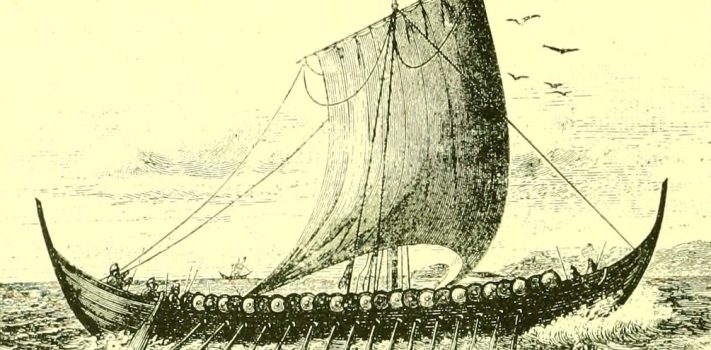
On October 9, 1000, Leif Ericson discovered “Vinland” (possibly at what was later named L’Anse aux Meadows, Canada) reputedly becoming first European to reach North America.
—
Today we present another entry for Round 97 of the SurvivalBlog non-fiction writing contest. The prizes for this round include:
—
More than $725,000 worth of prizes have been awarded since we started running this contest. Round 97 ends on November 30th, so get busy writing and e-mail us your entry. Remember that there is a 1,500-word minimum, and that articles on practical “how-to” skills for survival have an advantage in the judging.
Editor’s Introductory Note: The following is not medical advice. It is presented for informational purposes only. Consult your family doctor before undertaking any self-administered procedures.
—
While I don’t suggest anyone get a COVID vaccine, some people have told me that they feel they have no choice. One case in point, a mother with a special needs child who can’t afford to lose her job. Another, a man who has served 18 years in the military who doesn’t want to lose his retirement benefits. Finally, if it gets dystopian enough, hypothetically consider the plight of an anti-vax patriot traveling with his family that gets vaxxed at gunpoint at an unexpected police or military checkpoint.
As such, let us discuss post facto vaccine countermeasures.
We are going to treat the vaccination like a bite from a poisonous snake. In both cases, vaccination and snakebite, the poison goes into the soft tissue, then the lymphatics, then general circulation.
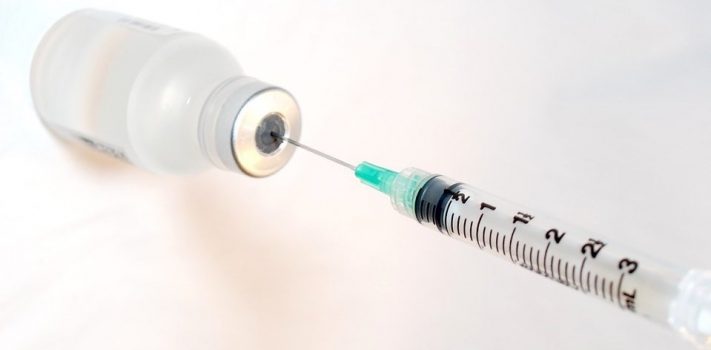
Our goal is to keep the poisons at the injection site and away from the internal organs for as long as possible. This buys us the time to do the second part, which is the administration of anti-toxins to neutralize the poisons.Continue reading“Post Facto Vaccine Countermeasures, by S.F. in Oregon”
To be prepared for a crisis, every Prepper must establish goals and make long-term and short-term plans. In this column, the SurvivalBlog editors review their week’s prep activities and planned prep activities for the coming week. These range from healthcare and gear purchases to gardening, ranch improvements, bug out bag fine-tuning, and food storage. This is something akin to our Retreat Owner Profiles, but written incrementally and in detail, throughout the year. We always welcome you to share your own successes and wisdom in your e-mailed letters. We post many of those –or excerpts thereof — in this column, in the Odds ‘n Sods Column, and in the Snippets column. Let’s keep busy and be ready!
Since returning the Rawles Ranch, I have plunged into my chores and projects. At the top of my list was burning slash piles. There were seven piles, most of them small. Only one of them could be called “medium-size.” It was 15 feet long, eight feet wide, and seven feet tall. Since these piles included only a couple of 18″ diameter stumps, the burning project only took two days.
Next, with the help of our daughters, I removed the tarp covers from the tops of our chicken tractors. That will hopefully keep the tractors from collapsing under snow, this winter. Next on the “Honey Do” list was draining, coiling, and stowing more than 800 feet of garden hoses. Then it was back to the summer firewood project. After 2.5 hours and four refills of mixed gas, I had the last of the year’s firewood all cut to length. The girls are stacking the last of that, as I’m writing this. There are a few rounds that need to be split, but now we’ll have all the firewood under cover. It feels so good to be ready for winter! Having that sense of self-sufficient contentment is almost indescribable.
While I was helping the girls get started stacking stove-length rounds, I saw M. — one of our younger barn cats — chasing our resident wild turkey hen across the barnyard. What a naughty cat! I shouted at him, but he just looked over his shoulder in my direction, but then kept on chasing until that hen took flight. Someday that big hen may turn around teach him a lesson. She’s at least twice the weight of that teenager cat.
I’ve also been busy packing and mailing out orders for our home-based mailorder biz, Elk Creek Company. Now, over to Lily…
“Hear ye the word which the Lord speaketh unto you, O house of Israel:
Thus saith the Lord, Learn not the way of the heathen, and be not dismayed at the signs of heaven; for the heathen are dismayed at them.
For the customs of the people are vain: for one cutteth a tree out of the forest, the work of the hands of the workman, with the axe.
They deck it with silver and with gold; they fasten it with nails and with hammers, that it move not.
They are upright as the palm tree, but speak not: they must needs be borne, because they cannot go. Be not afraid of them; for they cannot do evil, neither also is it in them to do good.
Forasmuch as there is none like unto thee, O Lord; thou art great, and thy name is great in might.
Who would not fear thee, O King of nations? for to thee doth it appertain: forasmuch as among all the wise men of the nations, and in all their kingdoms, there is none like unto thee.
But they are altogether brutish and foolish: the stock is a doctrine of vanities.” – Jeremiah 10:1-8 (KJV)
On October 8, 1957 Jerry Lee Lewis recorded “Great Balls Of Fire” in Memphis, Tennessee.
October 8th is the birthday of economist and libertarian commentator J. Orlin Grabbe. (Born, 1947, died March 15, 2008.)
—
Today we present another entry for Round 97 of the SurvivalBlog non-fiction writing contest. The prizes for this round include:
—
More than $725,000 worth of prizes have been awarded since we started running this contest. Round 97 ends on November 30th, so get busy writing and e-mail us your entry. Remember that there is a 1,500-word minimum, and that articles on practical “how-to” skills for survival have an advantage in the judging.
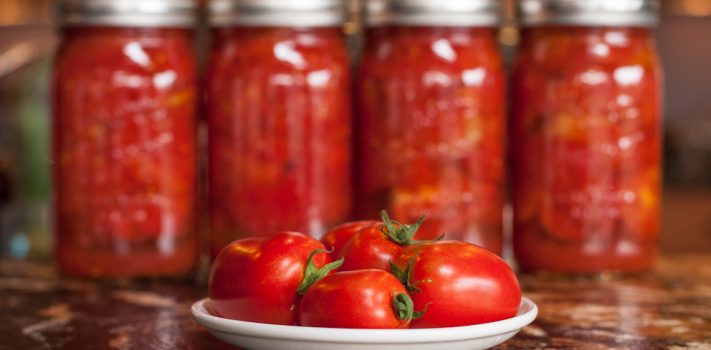
It was one of those intolerably hot and muggy days of August. My sister in the Redoubt called to say they could see the smoke from the big fires in California and the Northwest and how hot the weather had gotten even near the Tetons. She said in no uncertain terms, “Only a fool would be trying to get any work done today instead of lounging in a hammock with some lemonade!” And there I was slaving over a hot stove canning three-bean salad before the beans got overripe, the steam making the muggy day even muggier.
And yet, I was enjoying myself. I suppose that makes me a fool according to my sister, something she’s known all along anyway, but the joys of canning can’t be put on hold just because the mercury is threatening to bust out of the top of the thermometer.
I started canning in high school when my dad showed me how to can the many types of fruits from the orchards scattered everywhere in our little hamlet in the boonies. I earned money during the summers picking cherries, apricots, and peaches and after quitting for the day we could take home any fruit lying on the ground. While much was canned, most of the apricots went straight to the solar dryer. They were easy to prepare: in one quick motion pull them in half along the seam and with a flick of the wrist, send the pit flying. No fruit was easier to dry and peaches were a close second. Both were sweeter than candy and a real treat while splitting firewood or backpacking in the nearby pine-forested mountains.Continue reading“The Joys of Canning, by St. Funogas”