(Continued from Part 2. This concludes the article.)
External Antennas, Detecting Potential threats at greater distances
When using a scanner to sweep the band, or scan a list of frequencies, the scanner is much more sensitive and hears weak signals as well as strong signals. When using the Close Call feature that also sweeps the band, only strong signals that are very nearby (within 100 to 200 yards), might be detected. Some brands of scanners other than Uniden, may also have a similar Close Call feature, and might have more a sensitive receiver Sofware Defined Radio (SDR) frequency counter or a better antenna so they could intercept traffic further away.
To greatly increase the possible range of detection of our Close Call feature, and that of the standard scanner, it should be connected to an exterior antenna that is mounted above the roofline and otherwise, as high above the ground as reasonably feasible. Watch out for power lines, and mount it preferably, at least 15 feet above the ground for the best reception at the lowest height. Remember that in the radio world, height is might. Cable loss will be higher with longer runs, but the height attained can more than offset that line loss. Those interested in the weakest signals could go all out and use LMR400 cable. Folks like myself can use cable TV antenna coax. There are coax connector adapters from ‘F’ type to BNC so that one can easily utilize this cable. Use one antenna per scanner, unless the proper splitter is used, and those splitters should not be the simple cable TV type.
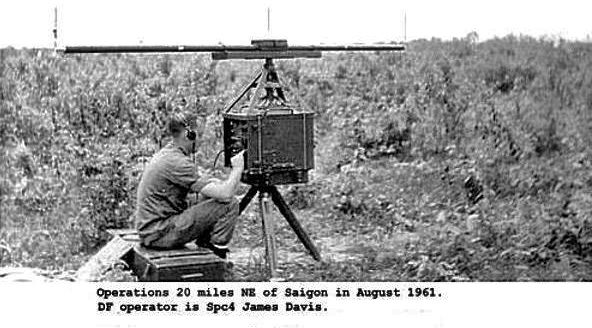
Any antenna that is approximately 18 to 19.5 inches in length will work much better than the attached antenna, and it does not have to be tuned. But if it has a magnetic mount used for vehicles, then attach it to a large metal can, or best yet, a pizza pan, or other sheet metal of similar large size. This kind of antenna needs such a ground plane to operate at it’s best. A high gain dual banded UHF/VHF ground plane antenna can be purchased with an attached ground plane and the correct mounting hardware for building installations, will work even better.
My favorite homemade antenna is the Slim Jim, or lower-cost J-pole. These are ruggedly built and have a gain of about 2.1Dbi. Use one tuned for UHF with a center frequency of 465.000MHz to listen to both UHF and VHF, if only one antenna can be purchase. Use a second one with a center frequency of 149MHz to listen to the VHF band. These make good all-around antennas with a low signal-to-noise ratio.
If an external antenna is needed for a transmitter for 2 Meter, MURS, or GMRS, the scanner can be removed and a transceiver connected to the appropriate antenna. These can be purchased on the Internet from KB9VBR. The frequencies of most interest for preppers are in the UHF/VHF bands good all around, all band antenna made for scanners is the discone type, such as the Tram 1141.
Any external antenna is a game-changer. The Close Call feature, depending on the terrain and foliage, might now pick up 5 watt transmissions from a handheld up to a mile away, instead of only a few hundred feet. It would pick up traffic further away if the signal might be from a mobile transceiver on its highest power setting. That would typically be from 25 to 70 watts depending on the model. The Close Call feature requires a strong signal that exceeds its threshold before it will record the transmission. Putting it on an external antenna on it, greatly increases what the scanner, or any receiver can ‘hear’.
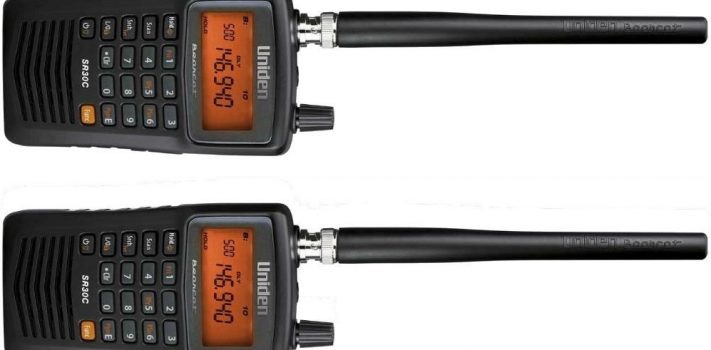
Uniden scanner’s Close Call feature, does provide an advantage, yet I would not rely upon it to hear the very low powered FRS/GMRS radios that transmit at a maximum of 1/4 watt. The Close Call feature could prove to be a lifesaver, however, as with most things, we should understand its limitations. Uniden scanners with the Close Call feature, can be programmed to cover only one, or the other band: either UHF, or VHF, but not both simultaneously. If possible, it would be good to have at least two Uniden scanners that have the Close Call feature, one for VHF, and one for UHF, each on their respective antennas for their band. If I could only have one, then it would be set to VHF frequencies, and I would use a standard scanner to scan a list that includes FRS/GMRS frequencies.Continue reading“A Scanner for TEOTWAWKI – Part 3, by Tunnel Rabbit”