Preparedness Notes for Wednesday — January 5, 2022

My sincere thanks to the 83 readers who responded to my post yesterday, requesting Ten Cent Challenge subscriptions. Several folks sent $100, one sent $200, and one sent $365–presumably as a “catch-up’  payment for a decade of reading the blog without previously subscribing. Your generous support is greatly appreciated!

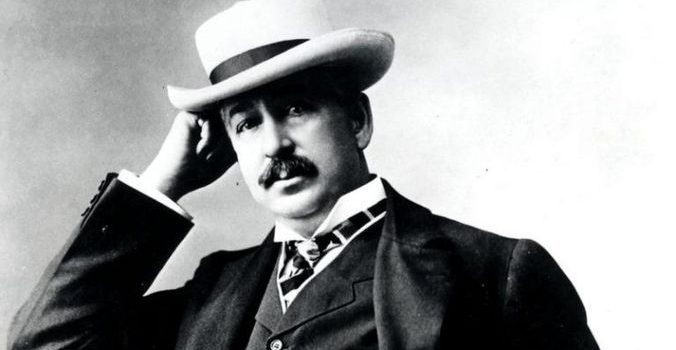
January 5th, 1855 was the birthday of King Camp Gillette (pictured), who invented the safety razor.

Today is also the birthday of actor Robert Duvall (born 1931.) His roles in Open Range and Apocalypse Now are unforgettable.

This is also the birthday of General Courtney Hodges (born 1887 – January 16, 1966). Kicked out of West Point for low math scores, he enlisted as a private but soon became a maverick officer and went on to a distinguished career.

Today’s feature article was written by the newest member of our staff, Thomas Christianson. He will become Field Gear Editor, when Pat Cascio semi-retires, to become our Field Gear Editor, Emeritus. Pat plans to gradually reduce his writing schedule. Since it was staff-written, today’s Review article is not part of the SurvivalBlog non-fiction writing contest judging.

Tom provided this biographical sketch and introduction:

My motto as Field Gear Editor is taken from 1 Thessalonians 5:21: “Prove all things; hold fast that which is good.”

I grew up in a small town in a semi-rural area in the Midwest, where everyone was acutely aware that food came from a farm before it ever came from a grocery store. We learned gun safety in school, and on the first day of hunting season, all the young men were absent from school.

I began writing as a stringer for a local newspaper while still in high school, and have enjoyed writing ever since.

After college and seminary, my wife and I spent a decade overseas as missionaries. We then returned to my hometown where I joined the staff of my sending church. One of my responsibilities there is to care for our missionaries. Sometimes I have opportunities to test field gear while on trips to work with our missionaries.

If you happen to know of any field gear that would be helpful to SurvivalBlog readers, please contact me at ThomasKChristianson at gmail dot com to tell me about it.


Review: A Light, A Battery, A Book, and A Radio, by Thomas Christianson

Editor’s Introductory Note:  This review was written by a long-time content contributor to SurvivalBlog who wrote his articles under the pen name “The Novice.”  Thomas Christianson just had his name added to our masthead. Since he will be a paid member of the SurvivalBlog editorial staff, he will no longer be eligible for our writing contest.

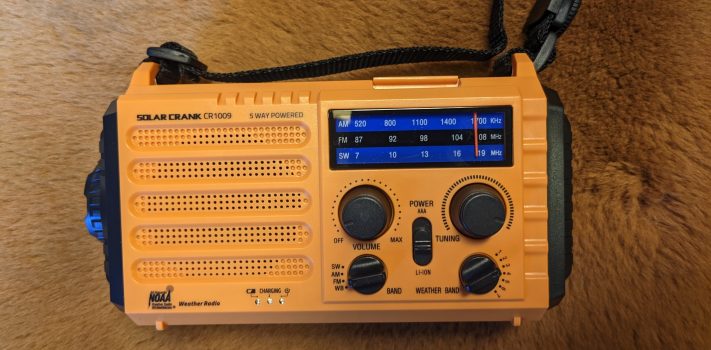
From time to time in my daily life, I run across items that may be of interest to SurvivalBlog readers. This article is a collection of short reviews about some of those items. These items include a heat-powered lantern, a battery bank, a book, and a radio.

A Heat-Powered Lantern

Recently, a powerful windstorm swept through our area. Our electricity was down for a couple of days. Fortunately, we have a generator. We ran it for a couple of hours each morning and each evening. This kept the food in the refrigerator and freezer adequately cooled and provided us with hot and cold running water for a portion of each day. Our woodstove kept the house warm, so all in all, we were well provided for.Continue reading“Review: A Light, A Battery, A Book, and A Radio, by Thomas Christianson”


SurvivalBlog Readers’ & Editors’ Snippets

This weekly column is a collection of short snippets: responses to posted articles, practical self-sufficiency items, how-tos, lessons learned, tips and tricks, and news items — both from readers and from SurvivalBlog’s editors. We may select some long e-mails for posting as separate letters.

Reader Jim. L. sent this: How tech’s richest plan to save themselves after the apocalypse.

o  o  o

An interesting study that I heard about by way of the American Partisan site: The effects of QuikClot Combat Gauze and Celox Rapid on hemorrhage control. JWR’s Comment: It appears that QuikClot provides superior clotting. But note that some of their products are “heat free”, while others reportedly  generate considerable heat that could cause necrosis.

o  o  o

SurvivalBlog Editor-At-Large Michael Z. Williamson spotted this article: Indy’s First Shipping-Container House Just Listed.  Mike’s Comment: They put vinyl over the wood, and they want $700,000 for 1,200 square feet (by my math) of container space. Pass.”

o  o  o

John A. sent this: The Criminalization Of Preppers In Turkey: Will Your Country Be Next?

o  o  o

This piece from Laurence Vance at the Libertarian Christian Institute dates back a decade, but it provides a quite concise and well-reasoned view: Romans 13 and Obeying the Government.Continue reading“SurvivalBlog Readers’ & Editors’ Snippets”


The Editors’ Quote of the Day:

“Speculative stock #bubbles ultimately see the gamblers take on too much debt. #MarginDebt popularity accelerates at peaks. At this point the market is dancing on a knife’s edge. Passive investing’s IQ drain, and #stonksgoup hype, add to the danger…

…The first step is to recognize that 5:1 is not a natural ratio. It is a product of a paradigm. So what will continue this paradigm? What may reverse it? This is the knife’s edge, because we are at 5:1. It may go to 100:1. Or become -5:-1. But parabolas don’t resolve sideways.” – Dr. Michael Burry, from March 2020 tweets commenting on the ongoing passive investing bubble.


Preparedness Notes for Tuesday — January 4, 2022

January 4th is the birthday of George Hyde, who was born “Heide” in 1888, in Arpfingen, Germany. He was the chief gun designer for the Inland Division of General Motors (GM) in Dayton, Ohio during World War II. Hyde was best-known as the co-designer of the M3 “Grease Gun” SMG and the Liberator pistol, but he also designed the Bendix-Hyde Carbine and the M2 Hyde submachinegun. He immigrated to the United States in 1927. A gent at the Nitro Express Forums mentioned some details on his life before World War II:

“Before 1935 Hyde was the shop foreman and metal man at Griffin & Howe. He quit there and went into business for himself. Samuel A. “Harry” Leonard teamed up with Hyde, and their rifles are marked “Leonard & Hyde New York” on the barrel. In May of 1935 [school teacher and New York National Guard Major N.H.] Ned Roberts and his father-in-law [well-known carte-de-visite photographer] W.G.C. Kimball went into business together as “Roberts and Kimball” in Woburn, Massachusetts. Their idea was to make high-quality sporting and varmint rifles on Mauser actions in the then-popular cartridge that bears Roberts’ name, the .257 Roberts. Metal work on these Roberts & Kimball guns was done by George Hyde, and the stocking was done by Harry Leonard. Some information suggests that Leonard and Hyde did not relocate to Massachusetts but that the work was sent to them in New York City. Roberts & Kimball company lasted less than a year, and their rifles are not found very often.”

Today we present a guest article by author Wayne Bosak. Since he is a blog advertiser, this article is not part of the SurvivalBlog non-fiction writing contest judging.

Round 98 of the contest ends on January 31st, so get busy writing and e-mail us your entry. Remember that there is a 1,500-word minimum, and that articles on practical “how-to” skills for survival have an advantage in the judging.

But up first is our annual subscription reminder.


Supporting SurvivalBlog, Post-Amazon

We make just one appeal for Ten Cent Challenge subscriptions each year, and for 2022, this is it:

As most SurvivalBlog readers know, we severed all ties with Amazon, in January of 2021. With their blatant censorship and unconscionable business practices, we simply couldn’t continue any partnership with them. Quitting the Amazon Associates program has cost us more than $30,000 per year in commissions.

We had hoped that the number of Ten Cent Challenge subscriptions would greatly increase, but unfortunately, they only went up by about 10% — not nearly enough to make up for what we lost in leaving Amazon.

We’re Not Making Much Profit

Let me summarize where things stand with SurvivalBlog’s finances:

Our expenses to operate the blog are around $37,000 per year. That includes around $21,000 to pay our Managing Editor Hugh Latimer, $9,000 for Pat Cascio’s articles, $1,480 for our combined phone and Internet bill, $1,188 for our backup Internet connection, and $3,948 per year for our offshore server.

On the income side, we earn about $13,500 per year for hosting paid banner ads and text ads, $4,500 per year in profit from archive USB stick sales, and $2,500 per year from affiliate advertising. Our other main source of income for operating the blog comes from voluntary subscriptions, dubbed The Ten Cent Challenge. Those voluntary subscriptions bring in about $31,000 per year. I ask readers to pony up just 10 cents a day ($36.50 per year.) I’ve asked that same amount since the blog began, in 2005.  So, in all, the blog’s gross income is about $51,500. After expenses, that leaves me a net annual blog income of $14,500. That is not a lot to show for me putting in about 35 hours per week, writing and editing the blog. It equates to earning $8.63 per hour.

For those of you who are already subscribers, I want to express my sincere thanks for your loyal support.

Analyzing Ten Cent Challenge Support

Here are the statistics on Ten Cent Challenge subscriptions:

Gross revenue: $31,000 per year.

Only about 840 blog readers subscribe, with an average donation of $39 per year.

We have a readership of about 120,000 regular readers, mostly in the U.S. and Canada.

So, based on 840 subscribers, that means that only 7/10ths of one percent of readers actually subscribe.  A lot of you have been faithfully subscribing for more than a decade. I greatly appreciate your generosity! But human nature being what it is, the other 99.3% of readers have decided that they’ll let “someone else” subscribe.

So, here is my appeal in a nutshell: If you find that you get more than 10 cents worth of value per day in reading SurvivalBlog, then please donate 10 cents a day ($36.50 per year) to help cover the blog’s costs.

Unless our Ten Cent Challenge revenue increases substantially, I will probably be forced to go back to working 30+ hours a week as a contract technical writer and/or freelance magazine writer. Hence, the volume of what I post in SurvivalBlog will have to dramatically decrease. I might discontinue writing most of my regular columns and I may switch to posting just one or two feature articles per week — instead of the usual seven features.

The bottom line is that we need about twice as many subscribers, to make up for the loss of the Amazon Associates revenue.

How to Subscribe

There are several payment options for subscriptions including PayPal, cash, checks, money orders, booklets of “Forever” U.S. postage stamps, and even mailing us a few silver dimes or quarters taped to a piece of cardboard.

Your contributions are needed and greatly appreciated.

If sending your subscription by mail, then please use this address for a check or money order payable either to “James Rawles” or “SurvivalBlog.com”:

James Rawles
P.O. Box 303
Moyie Springs, Idaho 83845

Note that this will be my only request for Ten Cent Challenge subscriptions in 2022. I won’t pester you. I don’t do PBS-style begging marathons.

Other Ways to Help

Please consider other ways that you can help support SurvivalBlog. Consider investing in an antique gun or two, through my side business, Elk Creek Company.

Even just placing a few links helps a lot, to grow our readership.

And if you sell food storage, communications, night vision, body armor, water filtration, alternative energy, shooting, or other preparedness-related products or services, then please consider either advertising your products or services in SurvivalBlog or becoming a writing contest prize donor. You’ll find the publicity very beneficial to your business.

Many Thanks!, – JWR



Reflections of an Aging Prepper, by Wayne Bosak

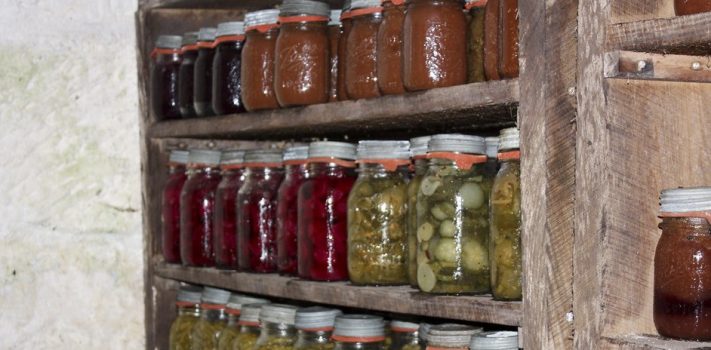
I was a city boy, but my wife was a country girl. In our early years while raising young children we learned how to garden and my wife used the skills she had learned from her mother preserving the food we raised. Raising our own food had become a way of life.

After ten years of married life living in the city life we moved to rural Tennessee. For me, it was a huge change, but one that I embraced fully. Sometime during that first year in the rural life, I realized that I had found my home and lifestyle. We were lucky to meet with people that were willing to share their knowledge with us.

I bought a small farm at auction. The house was livable but needed a lot of work. The pastures were fenced and it had a good sturdy barn. The only heat in the house was a large fireplace in the living room. We moved into the house from out of state in the month of January. We had no wood for heat; all we had was a small electric heater.

A neighbor that I had met when I bought the farm at auction showed up the morning after we arrived and announced he was there to help us unload the U-Haul truck. I had talked to the man for five minutes at the auction and here he was ready to spend the day helping us. And he did. He called a friend of his and told him we needed firewood. A couple of hours later a man arrived with a pickup load of firewood and refused payment. He just welcomed us to Tennessee. That kind of thing didn’t happen in the big city.

The man that lived across the road came over and introduced himself. He was a much older man and he informed me that I had bought his family’s old home place and he had been raised in our house. He and his wife turned out to be our best friends, even though they were forty years older than us. We learned so much from these people.

My wife and I spent many hours sitting at their kitchen table drinking coffee and learning what their life had been like. They told us about raising their own food to survive. What they couldn’t raise themselves they traded to get the things they needed, such as something so common as salt. Jack told us about his first alarm clock when they were a young married couple. Jack had to get up early and walk a mile to the country store to catch a ride to town where he worked for the county for twenty-five cents an hour. He didn’t have an alarm clock, so every night he would bring in a rooster and set him on the back of a chair. When the rooster crowed in the morning it was time to get up. One morning the rooster crowed, they got up and his wife made breakfast and Jack walked to the store. When he got there he found he was two hours early. When he got home that evening, he killed the rooster and that was their supper the next day.Continue reading“Reflections of an Aging Prepper, by Wayne Bosak”


SurvivalBlog’s News From The American Redoubt

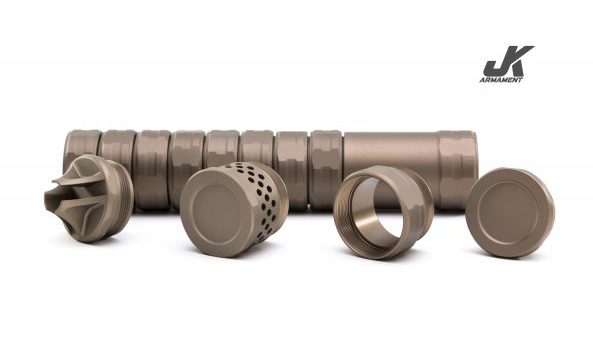
This weekly column features news stories and event announcements from around the American Redoubt region. (Idaho, Montana, eastern Oregon, eastern Washington, and Wyoming.) Much of the region is also more commonly known as The Inland Northwest. We also mention companies of interest to preppers and survivalists that are located in the American Redoubt region. Today, we focus on JK Armament solvent traps. (See the Idaho section.)

Region-Wide

Jeremy LaGoo’s 2021-2022 winter forecast: What La Niña could bring to Spokane, North Idaho.

o  o  o

After a brief price spike, forestry experts now say that log prices are back down to normal in the Inland Northwest. But demand for logs from private land is still strong, since the U.S. Forest Service is still being stingy about issuing timber sales from public lands.

o  o  o

The Inland Northwest RV Show & Sale is scheduled for January 20-23, 2022, in Spokane.

Idaho

JK Armament in Bruneau, Idaho makes some great solvent traps and other gun cleaning equipment.  Their solvent traps are so well built that I wouldn’t hesitate to file a Form 1 (Federal $200 tax) registration for a suppressor with the ATF, and then, after approval of the Form 1, drill it out. (All NFA rules apply!)  Here is a video that shows some of their very well-made solvent trap kits and drilling fixtures.

o  o  o

Sniper competition in Idaho: 29 Facts About the NASTI Plus the Gear Fielded.

o  o  o

Off the AP newswire, from the formerly conservative Idaho Statesman: ‘As offensive as it is, it’s not illegal’: Idaho deals with violent, ‘nasty’ rhetoric.

Continue reading“SurvivalBlog’s News From The American Redoubt”


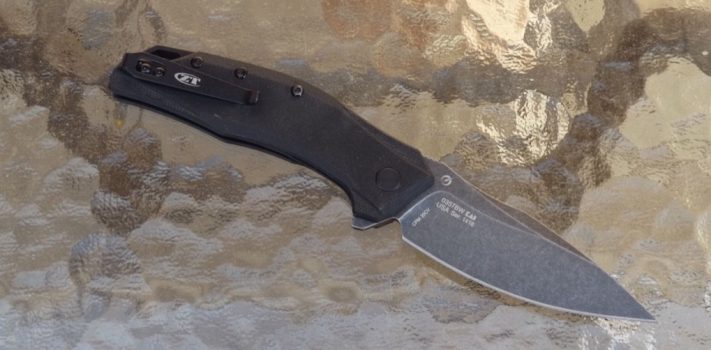
Zero Tolerance 0357BW, by Pat Cascio

Before Zero Tolerance (ZT) knives came out, I was touring the Kershaw Knives factory, and I was sworn to secrecy, about the new ZT line of knives that they were coming out with. Needless to say, it was hard to keep it all secret, but I did. Many months later, the ZT line of knives became a reality. I had several samples of the first ZT knives given to me during the tour, and several more were sent to me, for testing some time after my tour. I was really impressed with the products I saw and tested – and I still am!

All Zero Tolerance knives, are made in the good ol’ USA – right here in my home state of Oregon. And I say, it’s really tough to top most things that are made in the USA. Maybe I’m biased – but I don’t think so. Yeah, a lot of knives are made overseas, and some of them have great quality. And by being manufactured overseas, the consumer saves a lot of hard-earned money, too. Still, I prefer made-in-USA products.

The ZT lineup was designed for hard use, and that means military and law enforcement – however, the sales of ZT products are not restricted to military and law enforcement. The public can purchase these knives, as well. Over the years, I can attest that almost all of the ZT line is what I’d call “over-built” and that’s not a bad thing at all, their products are meant for super hard use, especially when it comes to military use – where knives are used every day, for regular chores, or in harsh combat conditions. You’ve got to have a knife that you know won’t fail you, no matter what you put it through.Continue reading“Zero Tolerance 0357BW, by Pat Cascio”


Recipe of the Week: Mrs. Alaska’s Horseradish Sauce

The following Horseradish Sauce recipe is from Mrs. Alaska.

Mrs. Alaska’s Introductory Note: 

“Horseradish is the northerner’s alternative to spicy peppers, that do not grow well in our short summer season and seem milder in flavor, too.  It has several advantages.

1) It is a perennial plant.  In certain locations, it is so prolific it is considered invasive, so many people who grow it are happy to share or trade plants.  We got our first three plants in barter for our honey.

2) You can make your sauce hotter or milder by choosing when you add the vinegar, which stops the enzymatic action of the plant’s sulfur compounds.

3) You can harvest part of the root in early spring or late fall, replant, and let it continue to grow for years.

4) The young leaves are edible too, much milder than the root.

5) A little root goes a long way.

Your sauce will be MILDER by adding the vinegar to the roots as soon as you cut them.  You can make your sauce HOTTER by delaying the vinegar – one friend waits 45 minutes!  Personally, I like 20 minutes.

You can color your sauce by adding other plants that grow nearby, like red beets or the spicy green leaves of nasturtium, or the citrusy leaves of sorrel.

Enjoy!”

Ingredients
  • ¼ cup of horseradish root with its skin scraped off and then grated or chopped finely.
  • ¼ cup mayonnaise
  • ¾ cup sour cream or plain yogurt
  • 1 tsp – 1 TBS vinegar  (to taste)
  • 1 tsp – 1 TBS dijon mustard (to taste)
  • Salt and pepper (to taste)
Directions
  1. Combine all ingredients and mix thoroughly.
STORAGE

This sauce has about the same refrigerated storage life as the shortest shelf-life ingredient: sour cream or yogurt

Do you have a favorite recipe that would be of interest to SurvivalBlog readers? In this weekly recipe column, we place emphasis on recipes that use long term storage foods, recipes for wild game, dutch oven and slow cooker recipes, and any that use home garden produce. If you have any favorite recipes, then please send them via e-mail. Thanks!


Economics & Investing For Preppers

Here are the latest news items and commentary on current economics news, market trends, stocks, investing opportunities, and the precious metals markets. We also cover hedges, derivatives, and obscura. Most of these items are from the “tangibles heavy” contrarian perspective of SurvivalBlog’s Founder and Senior Editor, JWR. Today, we look at Bidenflation. (See the Inflation Watch section.)

Precious Metals:

o  o  o

Christopher Weber: Silver will show the way.

Economy & Finance:

Dr. Ron Paul, over at Redoubt News: Is the Crack-up Boom Here?

o  o  o

Be Ready for a 30-70% Stock Market Crash in 2022.

o  o  o

This is why Glenn Beck thinks the economy won’t get better in 2022.

o  o  o

Will the Fed raise interest rates in 2022? Here’s what experts are saying.

o  o  o

Wolf Street had this report: Fed Drains $1.9 Trillion in Liquidity from Market via Overnight Reverse Repos.

Continue reading“Economics & Investing For Preppers”


Preparedness Notes for Sunday — January 2, 2022

On this date in 1936, the first night vision electron tube was revealed in St. Louis, Missouri.

January 2nd, 1776 is the anniversary of the first revolutionary flag to be displayed.

SurvivalBlog Writing Contest

Today we present another entry for Round 98 of the SurvivalBlog non-fiction writing contest. The prizes for this round include:

First Prize:

  1. The photovoltaic power specialists at Quantum Harvest LLC  are providing a store-wide 10% off coupon. Depending on the model chosen, this could be worth more than $2000.
  2. A Gunsite Academy Three Day Course Certificate. This can be used for any of their one, two, or three-day course (a $1,095 value),
  3. A course certificate from onPoint Tactical for the prize winner’s choice of three-day civilian courses, excluding those restricted for military or government teams. Three-day onPoint courses normally cost $795,
  4. Two cases of Mountain House freeze-dried assorted entrees in #10 cans, courtesy of Ready Made Resources (a $350 value),
  5. A $250 gift certificate good for any product from Sunflower Ammo,
  6. American Gunsmithing Institute (AGI) is providing a $300 certificate good towards any of their DVD training courses.
  7. Two sets of The Civil Defense Manual, (in two volumes) — a $193 value — kindly donated by the author, Jack Lawson.

Second Prize:

  1. A Front Sight Lifetime Diamond Membership, providing lifetime free training at any Front Sight Nevada course, with no limit on repeating classes. This prize is courtesy of a SurvivalBlog reader who prefers to be anonymous.
  2. A Glock form factor SIRT laser training pistol and a SIRT AR-15/M4 Laser Training Bolt, courtesy of Next Level Training, that have a combined retail value of $589,
  3. Two 1,000-foot spools of full mil-spec U.S.-made 750 paracord (in-stock colors only) from www.TOUGHGRID.com (a $240 value).
  4. A transferable $150 FRN purchase credit from Elk Creek Company, toward the purchase of any pre-1899 antique gun. There is no paperwork required for delivery of pre-1899 guns into most states, making them the last bastion of firearms purchasing privacy!

Third Prize:

  1. Three sets each of made-in-USA regular and wide-mouth reusable canning lids. (This is a total of 300 lids and 600 gaskets.) This prize is courtesy of Harvest Guard (a $270 value)
  2. A Royal Berkey water filter, courtesy of Directive 21 (a $275 value),
  3. Two Super Survival Pack seed collections, a $150 value, courtesy of Seed for Security, LLC,
  4. A transferable $100 FRN purchase credit from Elk Creek Company, toward the purchase of any pre-1899 antique gun.

More than $725,000 worth of prizes have been awarded since we started running this contest. Round 98 ends on January 31st, so get busy writing and e-mail us your entry. Remember that there is a 1,500-word minimum, and that articles on practical “how-to” skills for survival have an advantage in the judging.