SurvivalBlog’s News From The American Redoubt

This weekly column features news stories and event announcements from around the American Redoubt region. (Idaho, Montana, eastern Oregon, eastern Washington, and Wyoming.) Much of the region is also more commonly known as The Inland Northwest. We also mention companies of interest to preppers and survivalists that are located in the American Redoubt region. Today, we focus on Stag Arms, now headquartered in Wyoming. (See the Wyoming section.)

Idaho

This article about Moscow, Idaho originated in the UK Guardian, and was later syndicated: ‘Make it a Christian town’: the ultra-conservative church on the rise in Idaho.

o  o  o

Here is a new blog site, where they also have plans to also launch a podcast: Idaho Preparedness.

o  o  o

This Is America’s Fastest Growing State.

o  o  o

Anyone living in the Boise area interested in a classic Jeep pickup should check out this Craigslist ad: 1969 Kaiser M715$40,000. (JWR’s Comment: I can’t vouch for the seller. A reader just sent me the ad link.)

Continue reading“SurvivalBlog’s News From The American Redoubt”


The Editors’ Quote of the Day:

“The young men thought it was too hot to sleep inside their kaia, Bwana,” he replied. “Also,” he said, shuffling the dirt with a big toe, “they were a little bit drunk.” He shrugged with typical African fatalism. Most Africans believe it can never happen to them, something like the attitude of front-line troops.” – Peter Hathaway Capstick, Death in the Long Grass: A Big Game Hunter’s Adventures in the African Bush


Preparedness Notes for Monday — January 10, 2022

On January 10, 1976 the song “Convoy” by C.W. McCall was the #1 song on the U.S. pop charts. This song, in part, led to huge interest in Citizen’s Band (C.B.) radio for the next year, in the United States.

January 10th, 1776 is the day that North Carolina Governor, Josiah Martin issued a proclamation calling on the king’s loyal subjects to raise an armed force to combat the “rebels”. This ultimately led to Colonel Donald McLeod leading the men on an assault on the Patriots that ended with fifty of his men dead and 880 captured. The Patriots lost only two of their number.

Today we present a review written by our Field Gear Editor, Emeritus, Pat Cascio.

But first, some details on the latest edition of the SurvivalBlog archive stick:


Expanded SurvivalBlog Archive USB Sticks Now Available

An Update: The waterproof/EMP-resistant 2005–2021 SurvivalBlog Archive USB sticks are now orderable. Deliveries will begin in mid-February, 2022. Take note that only 1,000 sticks will be made for this batch, and they are selling rapidly.

Why You Need It: The archive sticks emulate most of the behavior of the online edition. With this stick, you can access everything that was ever posted in SurvivalBlog up to December 31, 2021, almost as if you were online — even if you are in a remote area in a grid-down situation or otherwise don’t have access to the Internet. And you never know when censorious internet providers, governments, or malicious hackers might want to make SurvivalBlog disappear. With this USB stick, you will always have all of this valuable, life-saving information.

If you already own a previous edition of the stick, then we recommend that you use it as a gift for a like-minded friend. Give the gift of knowledge! You can also over-write the contents of any older edition sticks and use them for waterproof storage of copies of your family photos and important documents.

These sticks sell out quickly each year, so be sure to order your sticks soon!

This updated edition of the SurvivalBlog Archive stick has even more bonus content than last year’s. In fact, this stick is so packed that the contents just barely fit on a 16 Gigabyte (GB) stick, with only about 86MB left over. As a comparison: The Kindle edition of the 1,500-page novel War and Peace is 2.092 Megabytes (just 0.002092 of one Gigabyte).

What Is Included

I had a reader ask me for a full list of what is included in the sticks. Here it is:

The entire SurvivalBlog Archives from 2005-2021: By Date, and By Category. (All articles have an icon that you can click for a printable version.) Just as examples, this includes 35,300+ articles and columns, 513 Recipes of the Week, and 5,985 Quotes Of The Day.

All of the SurvivalBlog static pages (See details, below.)

Voluminous Useful Bonus Content

Hundreds of bonus books with tens of thousands of pages, including:

King James Bible
English World Messianic Bible

New BonUs Books for 2021:
  • 10,000 Mispronounced Words
  • Boston Cooking-School Cookbook
  • Famous Paintings of the American Revolution
  • Milk and its Place in Good Cookery
  • Nocturne Militaire
  • The Complete Works of Thomas Dick (A useful formulary)
Other Bonus Books

Epidemics – How to Meet Them
Fairs and Fetes
How to Feed the Dairy Cow
Hoyle’s Games
Sun Tzu on The Art of War
The Book of the Sailboat – How to Rig Sail and Handle Small boats
The New Butterick Cook Book
Uncooked Foods and How to Use Them, by Eugene Christian
Wilderness Survival Guide – Military. Abridged Edition
Preserving Game Meats
Preparing and Canning Fermented Foods and Pickled Vegetables
Food Storage: Use It or Lose It
Canning Principles
Culinary Herbs – Their Cultivation, Harvesting, Curing and Uses
Backyard Composting
Basic Knots
Concrete and Masonry
Carpentry
The Practical Poultry Keeper
Farm Knowledge – Volume 1 (Farm Animals)
Farm Knowledge – Volume 2 (Soils)
Farm Knowledge – Volume 3 (Implements)
Nut Growing, by Robert T Morris
Where There is No Dentist
Wound Closure Manual
Terrain Analysis
Soldier’s Handbook for Individual Operations and Survival in Cold-Weather Areas (1986)
Nuclear War Survival Skills (1987)
The Individual’s Guide for Understanding and Surviving Terrorism
How to Start and Train a Militia Unit
The Effects of Nuclear Weapons (1957)
CIA Lock Picking Field Manual
Basement Fallout Shelter
The Nameless Island A Story of Some Modern Robinson Crusoes
Foxe’s Book of Martyrs
Western Europe in the Eighth Century and Onward
Pioneering Knots & Lashings
History of the Fall of the Roman Empire Vol 1
History of the Fall of the Roman Empire Vol 2
Forensic Spoorology
Counter Insurgency Lessons
Winter Survival Course Handbook
Civilization During the Middle Ages, by George Burton Adams
Games, Contests, and Relays, by Seward Charle Staley
Seven Thousand Words Often Mispronounced, by William Henry P Phyfe
Sports and Pastimes, Young and Old, by Mrs. Grace Townsend
The Guardians of the Columbia, by John H Williams
The Science of Everyday Life, by Edgar F Van Buskirk
Nine Hundred Successful Recipes, by Lulu Thompson SilvernailContinue reading“Expanded SurvivalBlog Archive USB Sticks Now Available”


G Force P3 Shotgun, by Pat Cascio

In another life, people used to ask my recommendations on survival gear, especially firearms. Of course, there is no one simple answer to these types of questions. The first thing I’d ask folks, is was what kind of a budget they were on. Needless to say, we all have budgets, like it or not. If a person didn’t have a lot of money to spend on a firearm, I’d recommend they go with some kind of 12 Gauge shotgun, and preferably a short-barrel model. This way it could be used for home defense, and short-range hunting purposes. Of course, a lot depended on where a person lived – in a big city, you probably wouldn’t do much hunting when things got really bad. Then I’d tell these folks to stock up on a variety of different types of ammo, with 00 buckshot being at the top of the list.

Over the years, and with much training in military, hunting, and survival topics, I’ve come to a different point of view: If a person can only afford one firearm for survival. Today, I’d recommend a good .22 LR rifle of some sort – and I mean a “good” rifle in this caliber. If a person could afford it, a handgun in .22 LR would be a great choice as well. With a good .22 LR-chambered firearm, you can not only defend yourself, but you could do some hunting as well. Save the nasty e-mails, I’m not saying a .22 LR firearm of any type is the best choice for this purpose. However, you can still find some great .22LR firearms at reasonable prices – even today, with elevated gun and ammo prices.Continue reading“G Force P3 Shotgun, by Pat Cascio”


Recipe of the Week: Layered Taco Dip

The following recipe for Layered Taco Dip variants is from reader S.A.

S.A.’s Introduction:

We know the phrase “Beans, Bandaids, and Bullets.” While I love beans, in fact, almost any bean except for kidney beans, and can eat them everyday, some people can’t or don’t want to.  A nice alternative to a bowl of beans is Layered Taco Dip. This easy recipe has many, many variations, and is well-loved in Texas and perhaps other places, as well. It can be served as an appetizer, main dish (if you include plenty of protein), or a side dish.

I prefer Frito Lay Bean Dip with its flavor. Beans plus shredded cheddar = complete protein. But canned frijoles are much cheaper and really, in a pinch can make an acceptable dip. Just add more salsa and perhaps canned jalapeño slices to ramp up the flavor. Canned frijoles are boring compared to Frito-Lay Bean Dip. You can also mix in a can of yellow corn or tasty little shoepeg corn as a layer for even more protein.

Serve with tortilla corn chips or fried flour tortilla triangles. Enjoy!

BASIC Ingredients
  • Can of Bean Dip
  • 8 oz Guacamole Dip
  • 8 oz Sour Cream
  • 1/2 Jar or more of medium  Salsa — any brand you prefer
  • 8 oz Shredded Cheese
Additional Optional Ingredients

Any of the following may be added, to suit your taste:

  • Can of refried beans or store brand of bean dip in place of Frito-Lay Bean Dip
  • 16oz sour cream with a packet of taco mix stirred in
  • Ground beef cooked with a taco mix packet
  • Sliced avocado
  • Lime juice (squeezed over guacamole)
  • Storebought or homemade guacamole
  • Jalapeño slices from a jar
  • Diced yellow onions
  • Fresh cilantro, as a topping
  • Diced tomatoes
  • Chopped green onions
  • Chopped chives
  • Sliced black olives
  • Shredded lettuce
Optional Ingredients FROM YOUR GARDEN
  • Lettuce
  • Tomatoes
  • Yellow or White Onions
  • Corn
  • Green onions
Optional Ingredients From Your DEEP PANTRY
  • Stored, dried pinto beans in Mylar bags
  • Dried reconstituted sour cream
  • Dehydrated ground beef rocks
  • Dehydrated or freeze-dried vegetables
Directions

My basic recipe calls for a large, shallow, pretty dish with sides. Spread and layer the ingredients starting first with bean dip, finishing by topping with shredded cheese, then everything else in between.

Do you have a favorite recipe that would be of interest to SurvivalBlog readers? In this weekly recipe column, we place emphasis on recipes that use long-term storage foods, recipes for wild game, dutch oven and slow cooker recipes, and any that use home garden produce. If you have any favorite recipes, then please send them via e-mail. Thanks!


Economics & Investing For Preppers

Here are the latest news items and commentary on current economics news, market trends, stocks, investing opportunities, and the precious metals markets. We also cover hedges, derivatives, and obscura. Most of these items are from the “tangibles heavy” contrarian perspective of SurvivalBlog’s Founder and Senior Editor, JWR. Today, we look at strong U.S. Mint gold sales. (See the Precious Metals section.)

Precious Metals:

U.S. Mint sees strongest gold coin sales in 12 years, sells 1.25 million ounces in 2021.

o  o o

What To Expect In 2022 From The Precious Metals Sector.

Economy & Finance:

Ford Posts 7 Percent Fall in 2021 US Auto Sales.

o  o  o

At Zero Hedge: FOMC Minutes Preview: Look For Rate Hike Clues.

o  o  o

Not enough U-Haul trucks for fleeing Californians in 2021 amid ongoing blue-to-red flight: report.

o  o  o

“Year Of The Super Billionaire” – World’s Richest Earned More Than $1 Trillion In 2021.

o  o  o

Reader C.B. sent this news item:  Inefficient California ports cost farmers billions.

Continue reading“Economics & Investing For Preppers”


Preparedness Notes for Sunday — January 9, 2022

January 9, 1943 was the birthday of gunsmith Paris Theodore, developer of the ASP modifications to the S&W M39 pistol.

January 9, 1890 birthday of Karel Capek, a Czech writer who wrote the play “R.U.R.” and coined the word “robot”.

On this day in 1776, writer Thomas Paine published his pamphlet “Common Sense,” setting forth his arguments in favor of American independence. Although little used today, pamphlets were an important medium for the spread of ideas in the 16th through 19th centuries.

Today we present a guest article by author Joe Dolio.


You Need to Train, by Joe Dolio

I think that the biggest gap and blind spot that we have in preparedness circles is training. A quick look at social media will confirm this. You’ll find discussions and photos of all the latest whiz-bang gadgetry we buy, photos of our food stockpiles, photos of guns and ammo, but not a lot of discussion on the training we do. Now, I‘m not really a fan of discussing anything on social media, which I’ll get into in a second, but most people narrative their lives on it, and the lack of discussion is proof that training isn’t happening for most.

The main reason to avoid social media discussions is Operational Security (OPSEC). The DHS has publicly stated that they believe preparedness to be an indicator of “potential right wing domestic violent extremism”, right alongside “a strong belief in the Constitution”. Yes, really. Not only is being flagged by the DHS a concern, but the Defense Production Act is as well. In an emergency, the local FEMA director can declare an item as “critical” and therefore declare anyone keeping more than “immediate personal use” quantities to be “hoarding” in violation of 50 USC 4512. This allows them to arrest you and seize whatever you have, whether it be food, ammunition, gasoline, GPS units, radios, etc.

It’s important to know that the DPA lists “any item on the International Trafficking in Arms Regulation (ITAR)” as automatically authorized for a “critical” designation. What’s on that list? Well, aside from actual arms and ammunition, anything used militarily is listed. Things we don’t normally consider “arms” but are. GPS receivers, compasses, optics (night observation and rifle scopes), radios, and anything else that can be used by a military force. In other words, most things that we in the preparedness community gather and stockpile. It will do no one any good for your stuff to seized on Day 12, because you had a viral post about your “hidden wall of cans”.

But, to get back to our original point, it’s one thing to amass a mountain of gear and supplies, but it’s quite another to actually get out and know how to use that gear. As sad as it is, a good-sized portion of those who call themselves ‘preppers’ haven’t even tried living outdoors for 3 days, let alone making a two-week trek on foot, carrying enough gear to 14 days.

Let’s start there. We live in our climate-controlled houses, drive our climate-controlled cars to either our climate-controlled workplaces or climate-controlled stores and back again. We live our lives in a bubble of 65-70 degrees. For most people, if you vary that by 5 degrees, they are either very cold or very warm. You need to begin acclimating your body to variations in temperature. For example, I live in Michigan. Most people in Michigan have lost their cold tolerance completely. I get strange looks because I refuse to wear a coat at all until the temperature gets below 30 degrees. Then I wear a light jacket until it gets below 20. I don’t put on a heavy parka until its under 10 degrees. By living this way, I’ve retained my tolerance for cold, in the event that I need it.

When I bring this up with people who claim to be “prepared”, they say things like “Well, I’ll wear shorts and a T-shirt” if it gets too hot. If you are living in a collapsed society/Without Rule of Law (WROL) environment, shorts and short sleeves will lead to cuts and bites, which will lead to infections. Without a functioning medical system, an infected insect bite can (and will) kill you.

So, we begin our training by learning to acclimate ourselves to being outdoors and in the weather. It seems like a no-brainer to most of us, but many have never considered it.

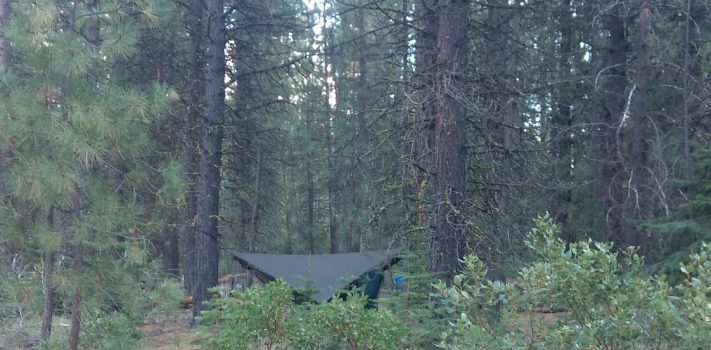
Next, you need a regimen to develop outdoor skills, but not just “camping”. We need to remove that from our lexicon because it denotes a large campfire, people sitting around singing, and generally having a good time. Camping out in the wilderness during a collapse will not be anything like that. You will need your fires out be dark, you will need to select concealed campsites, and operate as quietly as possible.

I have a suggested training regimen for people and groups to begin getting more realistic in their training, and it allows them to learn more about their gear, and what does or does not work. The time to realize that your sleeping bag is inadequate is not on Day 4 of a societal collapse.

The first skill and ability we need to work on is the ability to cover distances on foot while carrying a load. Again, it seems like a no-brainer, but putting on your backpack and walking around your yard to “see how it feels” is very different than moving 15 miles over rough terrain, while trying to avoid contact, wearing the backpack.

Start small. If you aren’t active at all, spend the first week just walking, getting your body used to moving. The next week, add your backpack with a little weight. A lot of you will recognize this as the new fitness craze of “rucking” among veterans, but we are going to do it slightly differently. Those who are into rucking for fitness, do it with actual weights and are going for speed. We’re going to do it by packing our ruck with actual field gear, and we’re going to be more concerned with quiet movement than we are with speed.

A good drill, once you’ve gotten used to carrying the weight, is what I call the “lunch test”. When packing your ruck, put some of your portable survival food and a way to cook it in your ruck. This could backpacking food, MRE’s, canned food, or whatever you plan on actually using. This is vital because if you’ve never used an MRE heater or never prepared a Mountain House packet, you don’t want to be making rookie mistakes when your life is on the line. Hike out for one hour. Find yourself a covered and concealed spot to take your “lunch break”. Take out only the items you intend to use (stove/food/water). Get in the habit of stashing your ruck in a camouflaged spot while you are eating. In a real WROL/Collapse situation, you may need to run, and come back to it later. Prepare and eat the lunch, and then sterilize the site, making it appear that you were never there. Retrieve the ruck and walk the hour back out.

Now, you’ve established some habits, you’ve learned that you can do it, and have developed a little confidence. Do this at least once a month, in all weather conditions. Yes, in the rain and snow, too. The Collapse won’t happen only on sunny spring days. Acclimate yourself to being uncomfortable.

After you have this under your belt, work on the “Overnight Test”. Select a campsite that will require 4-5 hours of hiking to get to from a parking spot. This is to enable you to practice movement skills and to prevent you from deciding to just go back to the car if things don’t go well. Get out, gear up, throw on the ruck, and begin stealthy movement from your car to the campsite. Once you get there, remember our purpose: training, not camping.

Run the site like you would in a collapse environment. Don’t set up your tent or tarp and sleeping system until the last possible moment. Ensure that any cooking fires are done and out before dark. Only take out of your ruck things that you are using right now. Keep the camp low-profile and camouflaged. In the morning, rise before first light and take down and stow your sleeping system and tarp/tent first, just like you would do in a tactical environment.

After your gear is stowed, make your breakfast, perform self-administration like hygiene and brushing teeth/changing clothes, etc. Then, just before leaving, sterilize the site, removing any large traces of your presence.

The next step in your training progression is then to do a “weekend test”, where you combine these. First, you start exactly like the “overnight test”. In the morning, you then hike out a few hours, and stop for lunch, essential conducting the “lunch test” process. Then, hike a few more hours to your second overnight site. In the morning, hike back to the car, stopping again with another “lunch test” on the way.

As you can see, this will start acclimating you to life in a collapse. It’s important that you actually change locations each night. Staying in the same spot in a tactical environment increases the chance that someone will find you. Even in the US military, they generally don’t occupy one “patrol base” or overnight site for more than 24 hours. Get in the habit of moving.

With a group, you can do all of the same things, but add in group dynamics. For example, every time you eat, half the group eats while half man the perimeter, then switch. Assign security roles overnight. Practice movement formations while moving. It can be a fun and revealing event.

Now, once when I suggested these skills in a group on social media, one guy replied “Look, I want to be prepared, but I have no desire to play soldier”. That’s a fine attitude to have, but what if the other side decides that “Soldier” is the game that you are playing? Many seem to have this mistaken belief that you could just live out your entire existence after a collapse in some type of Little House on the Prairie cosplay, but reality is that even the most remote bug out location may get overrun and you need to at least have the skills to enable you to survive and deal with that.

Even living your ideal life on the prairie is going to eventually require you to leave the house. If you want to be safe, you need to at least conduct local patrolling, and these skills will help you with that.

I like to compare it to frontier living in the US. The pioneers were families and farmers, but they were ready to be warriors when called upon. Families would all fort up and then band together to put an armed force in the field to deal with whatever threat came their way. That should be our goal.

Don’t just be a gear collector. Get out and actually train with every piece of gear you have, and do so in actual field conditions. It may help you realize that most of the latest whiz-bang gadgets that we spend our money on are junk with no real-world purpose or practicality.

Get training, friends.

About The Author:  Joe Doilo is the author several books on field training and tactics, including: Fieldcraft: TW-02 (Tactical Wisdom).


JWR’s Meme Of The Week:

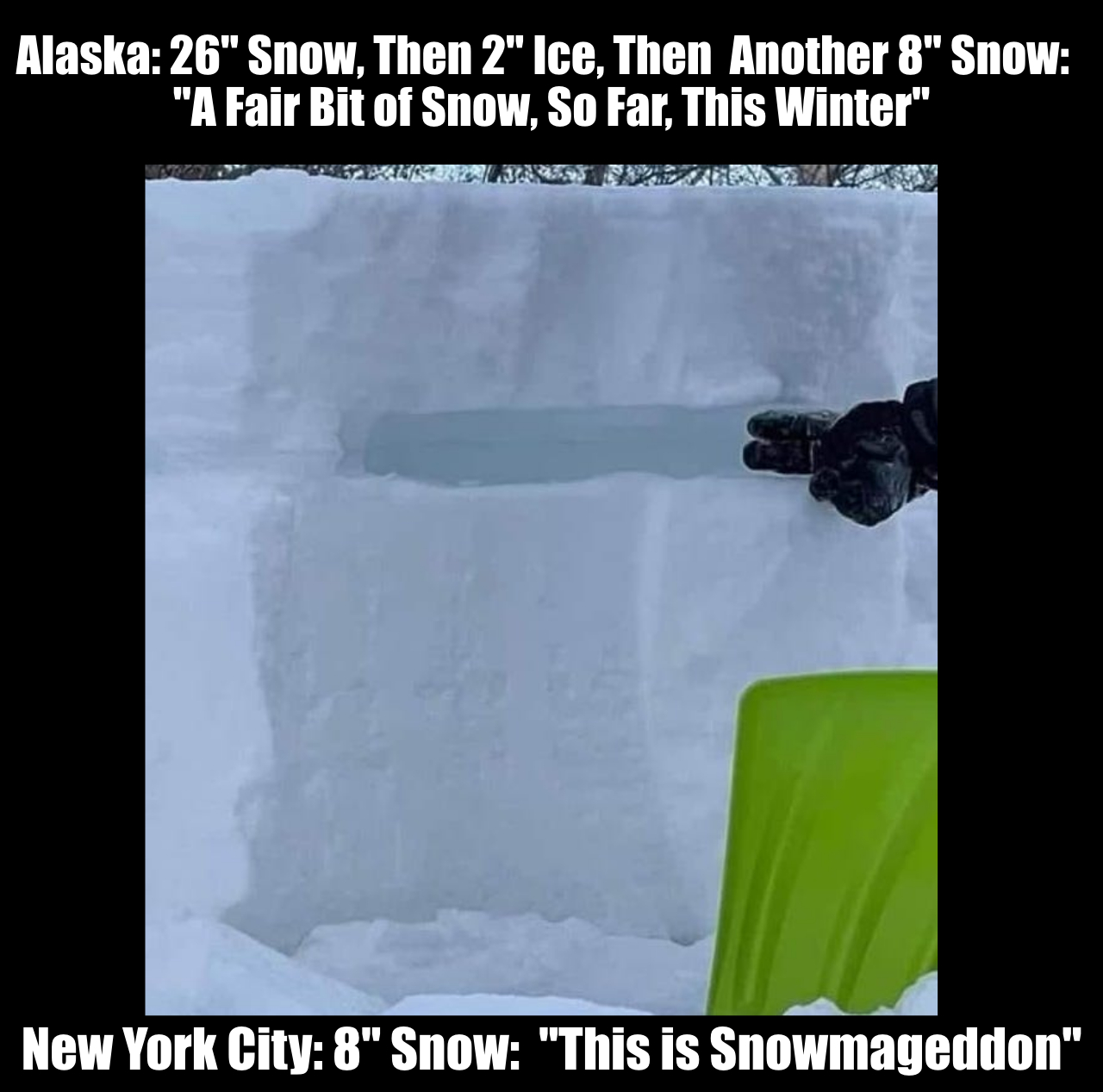
The latest meme created by JWR:

To share this, you can find it here: https://kapwi.ng/c/C0S0j_wvAZ

Meme Text:

Alaska: 26″ Snow, Then 2″ Ice, Then Another 8″ Snow: “A Fair Bit of Snow, So Far, This Winter”

New York City: 8″ Snow: “This is Snowmageddon”

News Links: 


The Editors’ Quote of the Day:

Stand fast therefore in the liberty wherewith Christ hath made us free, and be not entangled again with the yoke of bondage.

Behold, I Paul say unto you, that if ye be circumcised, Christ shall profit you nothing.

For I testify again to every man that is circumcised, that he is a debtor to do the whole law.

Christ is become of no effect unto you, whosoever of you are justified by the law; ye are fallen from grace.

For we through the Spirit wait for the hope of righteousness by faith.

For in Jesus Christ neither circumcision availeth any thing, nor uncircumcision; but faith which worketh by love.

Ye did run well; who did hinder you that ye should not obey the truth?

This persuasion cometh not of him that calleth you.

A little leaven leaveneth the whole lump.

I have confidence in you through the Lord, that ye will be none otherwise minded: but he that troubleth you shall bear his judgment, whosoever he be.

And I, brethren, if I yet preach circumcision, why do I yet suffer persecution? then is the offence of the cross ceased.

I would they were even cut off which trouble you.

For, brethren, ye have been called unto liberty; only use not liberty for an occasion to the flesh, but by love serve one another.

For all the law is fulfilled in one word, even in this; Thou shalt love thy neighbour as thyself.

But if ye bite and devour one another, take heed that ye be not consumed one of another.

This I say then, Walk in the Spirit, and ye shall not fulfil the lust of the flesh.

For the flesh lusteth against the Spirit, and the Spirit against the flesh: and these are contrary the one to the other: so that ye cannot do the things that ye would.

But if ye be led of the Spirit, ye are not under the law.

Now the works of the flesh are manifest, which are these; Adultery, fornication, uncleanness, lasciviousness,

Idolatry, witchcraft, hatred, variance, emulations, wrath, strife, seditions, heresies,

Envyings, murders, drunkenness, revellings, and such like: of the which I tell you before, as I have also told you in time past, that they which do such things shall not inherit the kingdom of God.

But the fruit of the Spirit is love, joy, peace, longsuffering, gentleness, goodness, faith,

Meekness, temperance: against such there is no law.

And they that are Christ’s have crucified the flesh with the affections and lusts.

If we live in the Spirit, let us also walk in the Spirit.

Let us not be desirous of vain glory, provoking one another, envying one another.” – Galatians 5 (KJV)


Preparedness Notes for Saturday — January 8, 2022

January 8, 1783: Connecticut became the first state to pass a copyright statute. It was entitled “Act for the Encouragement of Literature and Genius” and was enacted with the help of Dr. Noah Webster.

On this day, in 1835, the U.S. National Debt reached zero for the first and only time.

Good news!  The waterproof/EMP-resistant 2005–2021 SurvivalBlog Archive USB stick is now orderable.  Deliveries will begin in mid-February.  It has even more bonus content than last year’s. In fact, this stick is so packed that the contents just barely fit on a 16 Gigabyte stick.  These sticks sell out quickly each year, so be sure to get your order in soon.

SurvivalBlog Writing Contest

Today we present another entry for Round 98 of the SurvivalBlog non-fiction writing contest. The prizes for this round include:

First Prize:

  1. The photovoltaic power specialists at Quantum Harvest LLC  are providing a store-wide 10% off coupon. Depending on the model chosen, this could be worth more than $2000.
  2. A Gunsite Academy Three Day Course Certificate. This can be used for any of their one, two, or three-day course (a $1,095 value),
  3. A course certificate from onPoint Tactical for the prize winner’s choice of three-day civilian courses, excluding those restricted for military or government teams. Three-day onPoint courses normally cost $795,
  4. Two cases of Mountain House freeze-dried assorted entrees in #10 cans, courtesy of Ready Made Resources (a $350 value),
  5. A $250 gift certificate good for any product from Sunflower Ammo,
  6. American Gunsmithing Institute (AGI) is providing a $300 certificate good towards any of their DVD training courses.
  7. Two sets of The Civil Defense Manual, (in two volumes) — a $193 value — kindly donated by the author, Jack Lawson.

Second Prize:

  1. A Front Sight Lifetime Diamond Membership, providing lifetime free training at any Front Sight Nevada course, with no limit on repeating classes. This prize is courtesy of a SurvivalBlog reader who prefers to be anonymous.
  2. A Glock form factor SIRT laser training pistol and a SIRT AR-15/M4 Laser Training Bolt, courtesy of Next Level Training, that have a combined retail value of $589,
  3. Two 1,000-foot spools of full mil-spec U.S.-made 750 paracord (in-stock colors only) from www.TOUGHGRID.com (a $240 value).
  4. A transferable $150 FRN purchase credit from Elk Creek Company, toward the purchase of any pre-1899 antique gun. There is no paperwork required for delivery of pre-1899 guns into most states, making them the last bastion of firearms purchasing privacy!

Third Prize:

  1. Three sets each of made-in-USA regular and wide-mouth reusable canning lids. (This is a total of 300 lids and 600 gaskets.) This prize is courtesy of Harvest Guard (a $270 value)
  2. A Royal Berkey water filter, courtesy of Directive 21 (a $275 value),
  3. Two Super Survival Pack seed collections, a $150 value, courtesy of Seed for Security, LLC,
  4. A transferable $100 FRN purchase credit from Elk Creek Company, toward the purchase of any pre-1899 antique gun.

More than $725,000 worth of prizes have been awarded since we started running this contest. Round 98 ends on January 31st, so get busy writing and e-mail us your entry. Remember that there is a 1,500-word minimum, and that articles on practical “how-to” skills for survival have an advantage in the judging.


Actionable Information on COVID 19 – Part 3, by J.B.H.

(Continued from Part 2. This concludes the article.)

Despite the unclear science, there are several other things that I think one can do of practical value in this environment. This is very important, since, as previously noted, coronavirus may have always been a bigger issue than the flu that everyone has been talking about for decades. And it may continue to be a bigger issue.
First, stay flexible and keep a close eye on the vaccine situation. Watch the current vaccines. Look for new vaccines. Collect what data you can including data from personal friends on their safety and effectiveness. Above all, be flexible. If you are unvaccinated and over time a new vaccine comes around or the old ones appear to be working, get vaccinated. If you are vaccinated, and what you were vaccinated with appears to be dangerous or ineffective, don’t get vaccinated again or wait for a new, better vaccine.

Perhaps if you are young, it may make sense to forego the vaccine for a number of years but then start getting it later on as you get older and perhaps your risk from the disease gets higher in relation to vaccine risk. There might be a “crossover point” between the disease risk and the vaccine risk. The virus is mutating and will continue to which will change the vaccine decision-making process. The vaccines available will possibly change which will change the decision-making process.Continue reading“Actionable Information on COVID 19 – Part 3, by J.B.H.”


Editors’ Prepping Progress

To be prepared for a crisis, every Prepper must establish goals and make long-term and short-term plans. In this column, the SurvivalBlog editors review their week’s prep activities and planned prep activities for the coming week. These range from healthcare and gear purchases to gardening, ranch improvements, bug out bag fine-tuning, and food storage. This is something akin to our Retreat Owner Profiles, but written incrementally and in detail, throughout the year.  We always welcome you to share your own successes and wisdom in your e-mailed letters. We post many of those –or excerpts thereof — in this column, in the Odds ‘n Sods Column, and in the Snippets column. Let’s keep busy and be ready!

Jim Reports:

We had another snowy but fairly restful week, here at the Rawles Ranch.

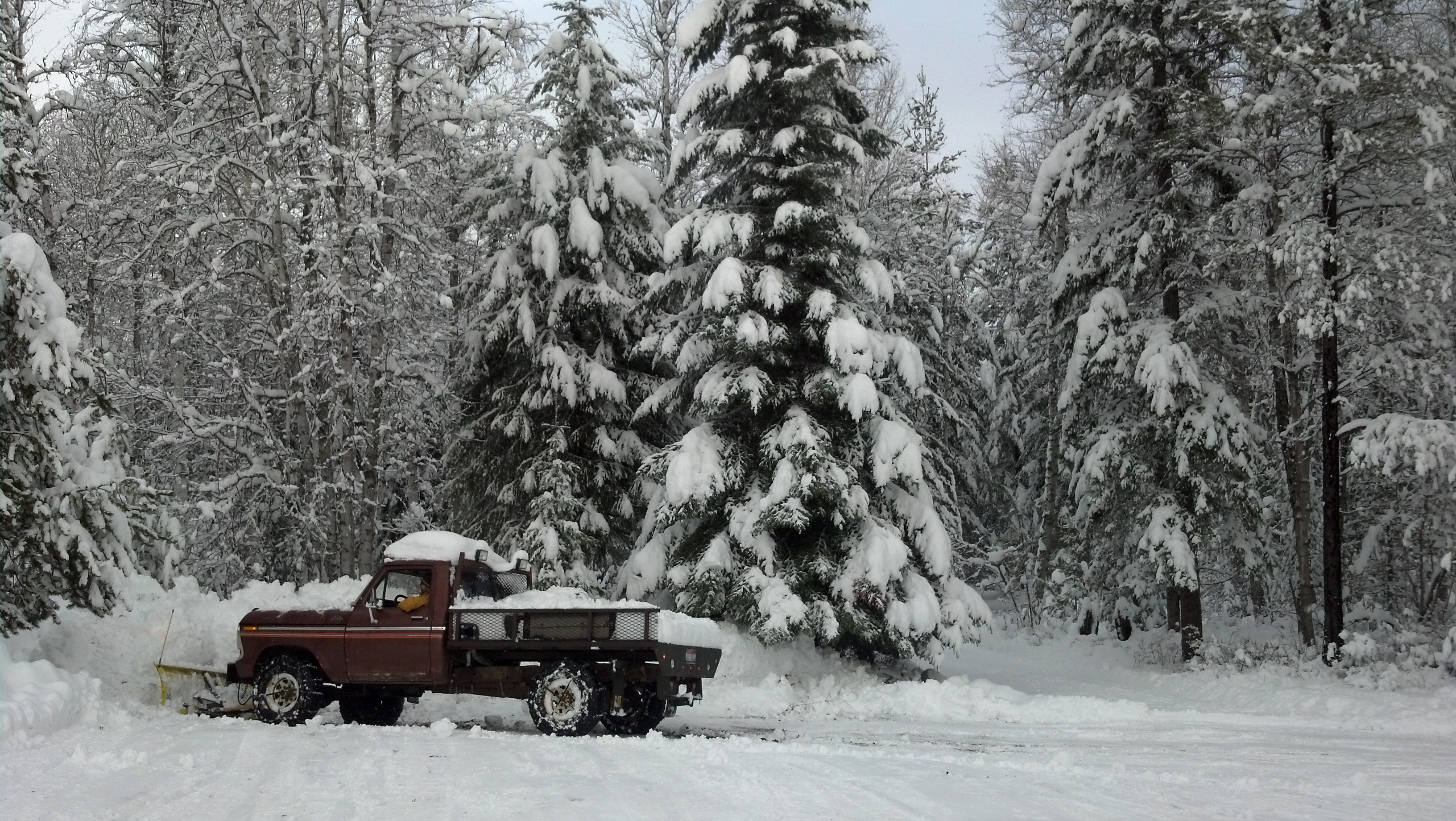
The Jet Stream has been over the top of us, about half the time, for the past couple of weeks. So… I did a lot of snow plowing. I had to be out there almost daily, to keep up.  Lily and I also drove a half-mile down the road to one of our nearest neighbors, to plow their road open. They bought that property less than a year ago, and they are still living mostly out of state. They are hoping to move up here full-time, this summer. We want to keep their road passable for them, for when they come up for a planned ski trip, in February.

As an aside, I’d like to reiterate my thanks to the more than 100 readers who responded to my annual post on Tuesday, requesting Ten Cent Challenge subscriptions. Several folks sent $100, one sent $200, and one gent sent  $365–presumably as a “catch-up’  payment for a decade of reading the blog without subscribing. Your generous support is greatly appreciated!

Both our half-grown puppies and our cats have been getting into mischief. With all of them spending so much time indoors in the cold weather, I suppose this was inevitable. Surprisingly, the newly-arrived interloper dogs and the well-established cats haven’t many outright conflicts. They seem to have some sort of truce in effect. The cats have strategically moved to higher ground: The top of the piano, on a tall cabinet, and perched up on the backs of our ancient couch and our aging Barcalounger. I’m not sure if they will ever be on friendly terms, but for now, they seem to be coexisting without destroying the house.

Continue reading“Editors’ Prepping Progress”