Consider Your Socks, by Pat Cascio

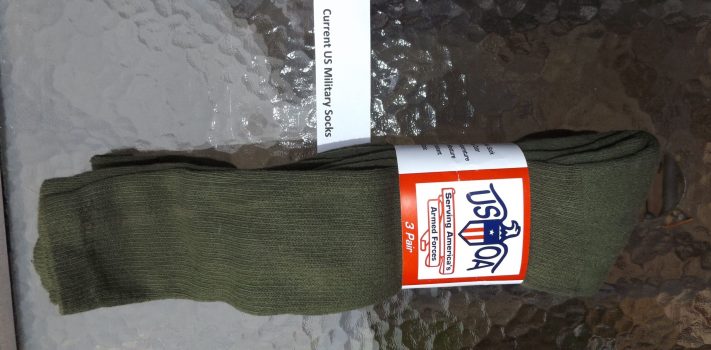
Everyone has a sock drawer! Most of us don’t give any thought to socks – for the most part. We just reach in and grab whatever is in our hand, and put those socks on for the day. As I’ve stated in the past, when it comes to footwear, I’m very particular about the kinds of shoes and boots I wear. I mainly wear boots. Matter of fact, the only pair of shoes I own came from the Salvation Army. Bought those used shoes to go to out oldest daughter’s college graduation – I wore a suit. I still have those dress shoes, and haven’t worn them since.

Today, it seems like the fashion for some men, is wearing shoes without any socks at all – I don’t even try to figure this stuff out. Socks are meant to protect your feet from getting blisters and hot spots from the friction of wear shoes and boots. Secondly, socks absorb the moisture from your feet sweating. Experts say that, we lose about a pint or more of sweat through our feet, daily. If you’re not wearing socks with your shoes, then your shoes pick up that moisture and in short order, your shoes will stink – plain and simple.

For the longest time, women wore either silk or Nylon stockings or pantyhose, and they liked the look of their legs with those stockings. The trend now, are for women to not wear any long stockings with their dresses or skirts. I personally don’t like the look.

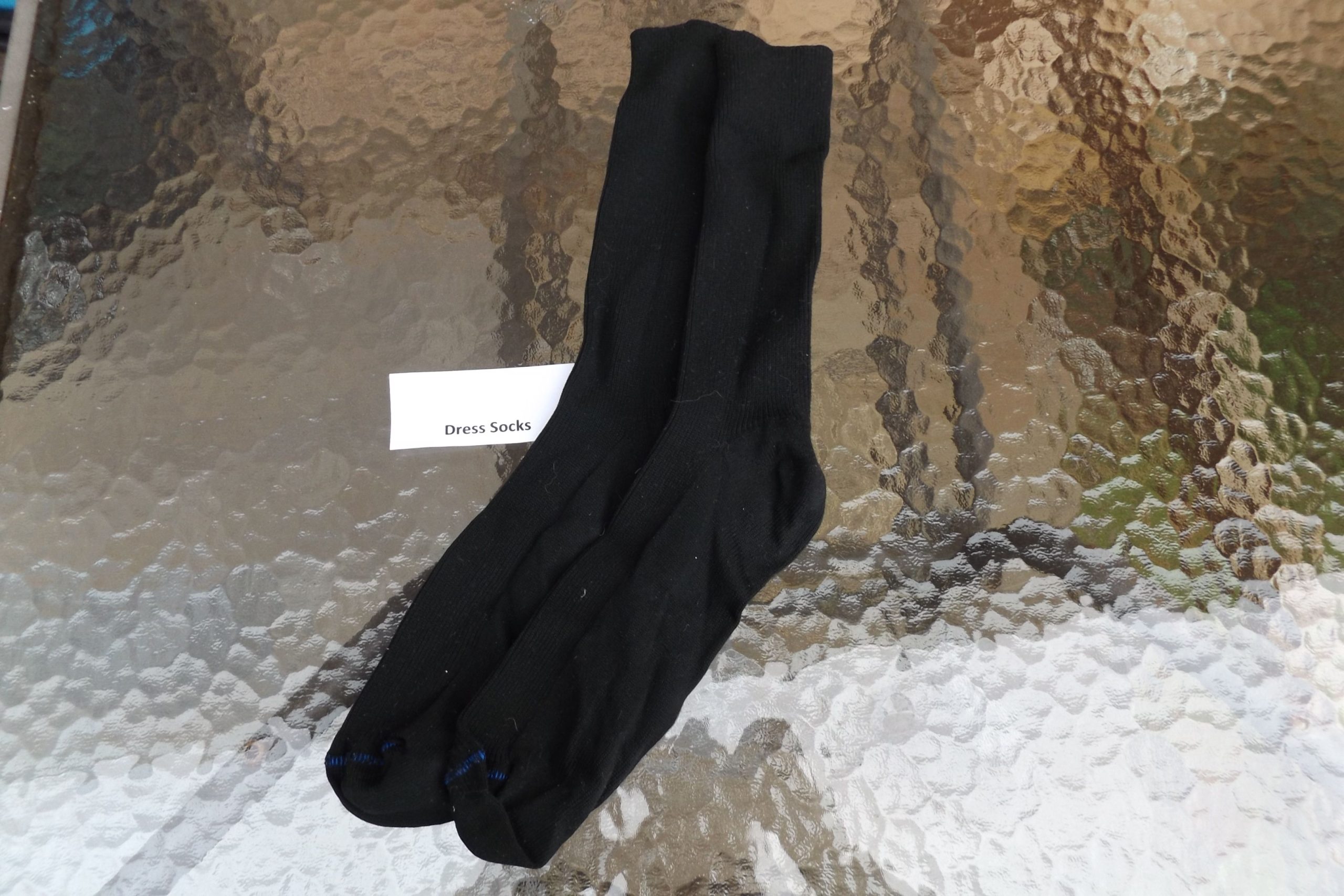
I’m going to cover several different types of socks in this article, and maybe shed some light on why there are so many different types of materials used in socks. First up are men’s dress socks, and they are usually a combination of Nylon and cotton – and they are very thin, to say the least. Now, while these socks might work when you are dress-up and going to the office or to church, they don’t really provide your feet with much protection from the elements. And, odds are, those socks then tend to slip down below your ankle. When I was in my teen years, I wore similar socks. However I opted for the socks that went over the calf, so they didn’t slide down to my ankle. There are also dress socks made out of wool – at least partially made out of wool.Continue reading“Consider Your Socks, by Pat Cascio”


Recipe of the Week: Trailside Spaghetti With Tuna

The following recipe for a Seasoned Trailside Spaghetti With Tuna — intended for fellow backpackers or for campers — was sent to us by Tammy D. This recipe makes two servings.

Ingredients
  • 1 8-ounce package of dried angel hair pasta
  • 1 6-ounce retort pouch or can of tuna in oil. (Bring a key-ring can opener!)
  • 8 dried tomatoes, sliced
  • 4 cups of water, filtered.
  • 1 tsp dried basil
  • 1 tsp oregano
  • 1/4 cup Parmesan cheese
  • 1/2 tsp garlic powder
Dry Mix Making Directions — At Home
  1. Mix the basil, oregano, Parmesan cheese, and garlic powder.
  2. Place this mixture in two thicknesses of ziplock bags.
  3. Store this mixture packet in a cool, dry place or in your refrigerator until just before your backpacking trip. Store the other ingredients separately.
Cooking Directions — At The TrailSIDE
  1. Soak the dried tomato slices in 4 cups of water for at least 10 minutes or until fully rehydrated.
  2. Remove the tomato slices from water and set them aside.
  3. Bring water to a boil.
  4. Break the angel hair pasta into palm-lengths and add to the boiling water.
  5. Cook the pasta until soft.
  6. Drain the water–well away from your camp if you are in bear country.
  7. Leave noodles in the pot and add tuna the tomato slices
  8. Add the contents of the cheese and spice bag.
  9. Stir well.
  10. Serve while still hot.

Do you have a favorite recipe that would be of interest to SurvivalBlog readers? In this weekly recipe column, we place emphasis on recipes that use long term storage foods, recipes for wild game, dutch oven and slow cooker recipes, and any that use home garden produce. If you have any favorite recipes, then please send them via e-mail. Thanks!


Economics & Investing For Preppers

Here are the latest news items and commentary on current economics news, market trends, stocks, investing opportunities, and the precious metals markets. We also cover hedges, derivatives, and obscura. Most of these items are from the “tangibles heavy” contrarian perspective of SurvivalBlog’s Founder and Senior Editor, JWR. Today, we look at rising interest rates and their nascent effect on the housing market.

Precious Metals:

Gold SWOT: Gold Is Headed For The Longest Run Of Gains In More Than A Month.

o  o  o

Metals shortages ahead, net-zero targets at risk — BofA.

o  o  o

Is global ‘slavery’ coming? Gold guards against ‘total control’ – Bob Moriarty.

Economy & Finance:

UCLA: Global, domestic impediments will slow economy, but no recession yet.

o  o  o

At Fortune: Don’t get too excited about the stock market’s recent rally. Some Wall Street experts say it could be a trap—and the bear market will still wreak havoc.

o  o  o

Costco membership price hike: ‘It’s not a question of if,’ analyst explains.

o  o  o

Reuters: Peak interest rates may be lower than expected as growth slowdown looms.

Continue reading“Economics & Investing For Preppers”


The Editors’ Quote of the Day:

“The third group is the largest, in my view, and these are the ones who see and detest the vile fruit that this revolution is generating, but to date have shown no awareness of their own ongoing complicity in the whole thing. This post is primarily for this third group, and particularly for members of this group who are starting to radicalize, but without repentance. […] That is where our real problem is. They are very angry with school board officials in charge of a secular school system, and why? They are angry with the officials of a secular school system because they have governed it as though it really were a secular school system.” – Pastor Doug Wilson


Preparedness Notes for Sunday — June 5, 2022

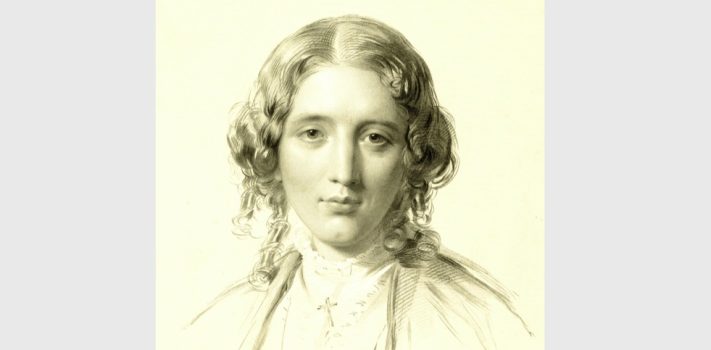
On June 5, 1851, Harriet Beecher Stowe published the first installment of Uncle Tom’s Cabin in The National Era. She was the sister of firebrand abolitionist Henry Ward Beecher.

SurvivalBlog Writing Contest

Today we present another entry for Round 101 of the SurvivalBlog non-fiction writing contest. The prizes for this round include:

First Prize:

  1. The photovoltaic power specialists at Quantum Harvest LLC  are providing a store-wide 10% off coupon. Depending on the model chosen, this could be worth more than $2000.
  2. A Gunsite Academy Three Day Course Certificate. This can be used for any of their one, two, or three-day course (a $1,095 value),
  3. A course certificate from onPoint Tactical for the prize winner’s choice of three-day civilian courses, excluding those restricted for military or government teams. Three-day onPoint courses normally cost $795,
  4. Two cases of Mountain House freeze-dried assorted entrees in #10 cans, courtesy of Ready Made Resources (a $350 value),
  5. A $250 gift certificate good for any product from Sunflower Ammo,
  6. American Gunsmithing Institute (AGI) is providing a $300 certificate good towards any of their DVD training courses.
  7. Two sets of The Civil Defense Manual, (in two volumes) — a $193 value — kindly donated by the author, Jack Lawson.

Second Prize:

  1. A Front Sight Lifetime Diamond Membership, providing lifetime free training at any Front Sight Nevada course, with no limit on repeating classes. This prize is courtesy of a SurvivalBlog reader who prefers to be anonymous.
  2. A SIRT STIC AR-15/M4 Laser Training Package, courtesy of Next Level Training, that has a combined retail value of $679
  3. Two 1,000-foot spools of full mil-spec U.S.-made 750 paracord (in-stock colors only) from www.TOUGHGRID.com (a $240 value).
  4. Two Super Survival Pack seed collections, a $150 value, courtesy of Seed for Security, LLC,
  5. A transferable $150 FRN purchase credit from Elk Creek Company, toward the purchase of any pre-1899 antique gun. There is no paperwork required for delivery of pre-1899 guns into most states, making them the last bastion of firearms purchasing privacy!

Third Prize:

  1. Three sets each of made-in-USA regular and wide-mouth reusable canning lids. (This is a total of 300 lids and 600 gaskets.) This prize is courtesy of Harvest Guard (a $270 value)
  2. A Royal Berkey water filter, courtesy of Directive 21 (a $275 value),
  3. A LogOX 3-in-1 Forestry MultiTool (a $189 value) and a WoodOx Sling (a $79.95 value), courtesy of LogOx, both made in USA.
  4. A transferable $100 FRN purchase credit from Elk Creek Company, toward the purchase of any pre-1899 antique gun.

More than $725,000 worth of prizes have been awarded since we started running this contest. Round 101 ends on July 31st, so get busy writing and e-mail us your entry. Remember that there is a 1,500-word minimum, and that articles on practical “how-to” skills for survival have an advantage in the judging


Grow Food in Summer That Lasts All Winter – Part 2, by J.T.

(Continued from Part 1. This concludes the article.)

Cabbage:
One cabbage plant only produces one head weighing about two and half pounds.
We like coleslaw, cabbage rolls, cooked cabbage with potatoes, and stews with cabbage. One cabbage each week should be sufficient for eating. Like broccoli, cabbage will not survive after year end, so we will plan to harvest only about 8 heads. (I harvested one cabbage in December. It lasted in our refrigerator until it was eaten 8 months later). These plants will need an area 5′ by 6′ of garden space for 8 plants placed 2′ apart in two rows.
Start the seeds in a pot about July 1st then transplant each to a separate pot July 15th. Keep them warm and with light during daytime. Transplant them outside August 1st and expect a crown to begin showing in about two months. Cabbage can be left on the plant after maturing for 30 days or more before it becomes necessary to harvest.
One pound of cabbage will provide about 100 calories and several additional nutrients.
One frost will prevent further growth, but the plant will still survive unless the temperature falls below 26’F. A row cover will help protect this plant from a short-term hard freeze.

Carrots:
Each carrot seed only produces one carrot, but a teaspoon of seeds will grow over 1,000 carrots.
This plant has many uses such as: grate and put in salads or Jell-O, eat it raw, add to your stew, squeeze for carrot juice, boil them, or cut them up raw for snacks. The carrots that I grow will weigh about one fifth of a pound each; five carrots will make one pound. On average, we will consume about 10 carrots every week, or about two pounds. So, for 30 weeks, we need 300 carrots. This will only require a garden space of about 5′ by 4′.

I am going to paraphrase part of what I wrote in the tow-part article that was published in SurvivalBlog, about planting carrots, called Volume Vegetable Gardening. “Here is the planting method I recommend. On August 1st, mix 1,000 seeds in a 3 gallon bucket filled with 2 gallons of potting soil. Make sure the soil where the seed is to be planted is wet by putting at least 1″ of water on the bed just prior to planting. Spread the mixture in an area 5′ by 4′. Keep the area damp twice daily until the seeds emerge and then water at least once a week.” Of the 1,000 seeds planted, you will easily be able to harvest 300 carrots. These will need to be weeded but not thinned.

One pound of carrots will provide about 190 calories and several additional nutrients.
Like brussels sprouts, carrots do well in cold winters. However, before winter sets in, mulch carrots with 3+” of compost or straw to keep them protected from freezing which can happen if the thermometer stays below freezing over several days.Continue reading“Grow Food in Summer That Lasts All Winter – Part 2, by J.T.”


The Editors’ Quote of the Day:

I say then, Hath God cast away his people? God forbid. For I also am an Israelite, of the seed of Abraham, of the tribe of Benjamin.

God hath not cast away his people which he foreknew. Wot ye not what the scripture saith of Elias? how he maketh intercession to God against Israel saying,

Lord, they have killed thy prophets, and digged down thine altars; and I am left alone, and they seek my life.

But what saith the answer of God unto him? I have reserved to myself seven thousand men, who have not bowed the knee to the image of Baal.

Even so then at this present time also there is a remnant according to the election of grace.

And if by grace, then is it no more of works: otherwise grace is no more grace. But if it be of works, then it is no more grace: otherwise work is no more work.

What then? Israel hath not obtained that which he seeketh for; but the election hath obtained it, and the rest were blinded.

(According as it is written, God hath given them the spirit of slumber, eyes that they should not see, and ears that they should not hear;) unto this day.

And David saith, Let their table be made a snare, and a trap, and a stumblingblock, and a recompence unto them:

Let their eyes be darkened, that they may not see, and bow down their back alway.

I say then, Have they stumbled that they should fall? God forbid: but rather through their fall salvation is come unto the Gentiles, for to provoke them to jealousy.

Now if the fall of them be the riches of the world, and the diminishing of them the riches of the Gentiles; how much more their fulness?

For I speak to you Gentiles, inasmuch as I am the apostle of the Gentiles, I magnify mine office:

If by any means I may provoke to emulation them which are my flesh, and might save some of them.

For if the casting away of them be the reconciling of the world, what shall the receiving of them be, but life from the dead?

For if the firstfruit be holy, the lump is also holy: and if the root be holy, so are the branches.

And if some of the branches be broken off, and thou, being a wild olive tree, wert grafted in among them, and with them partakest of the root and fatness of the olive tree;

Boast not against the branches. But if thou boast, thou bearest not the root, but the root thee.

Thou wilt say then, The branches were broken off, that I might be grafted in.

Well; because of unbelief they were broken off, and thou standest by faith. Be not highminded, but fear:

For if God spared not the natural branches, take heed lest he also spare not thee.

Behold therefore the goodness and severity of God: on them which fell, severity; but toward thee, goodness, if thou continue in his goodness: otherwise thou also shalt be cut off.

And they also, if they abide not still in unbelief, shall be grafted in: for God is able to graft them in again.

For if thou wert cut out of the olive tree which is wild by nature, and wert grafted contrary to nature into a good olive tree: how much more shall these, which be the natural branches, be grafted into their own olive tree?

For I would not, brethren, that ye should be ignorant of this mystery, lest ye should be wise in your own conceits; that blindness in part is happened to Israel, until the fulness of the Gentiles be come in.

And so all Israel shall be saved: as it is written, There shall come out of Sion the Deliverer, and shall turn away ungodliness from Jacob:

For this is my covenant unto them, when I shall take away their sins.” – Romans 11:1-27 (KJV)


Preparedness Notes for Saturday — June 4, 2022

Today is the anniversary of the Tiananmen Square Massacre, in 1989.

On this day, June 4th, in 1944 United States Navy Task Group 22.3 captured U-505, a German submarine and with it an intact Enigma cipher machine. This was the first time since the USS Peacock seized HMS Nautilus in 1815 that the USN had captured an enemy vessel at sea. The sub, reunited with its periscope more than a decade ago, is displayed at the Museum of Science and Industry in Chicago.

SurvivalBlog Writing Contest

Today we present another entry for Round 101 of the SurvivalBlog non-fiction writing contest. The prizes for this round include:

First Prize:

  1. The photovoltaic power specialists at Quantum Harvest LLC  are providing a store-wide 10% off coupon. Depending on the model chosen, this could be worth more than $2000.
  2. A Gunsite Academy Three Day Course Certificate. This can be used for any of their one, two, or three-day course (a $1,095 value),
  3. A course certificate from onPoint Tactical for the prize winner’s choice of three-day civilian courses, excluding those restricted for military or government teams. Three-day onPoint courses normally cost $795,
  4. Two cases of Mountain House freeze-dried assorted entrees in #10 cans, courtesy of Ready Made Resources (a $350 value),
  5. A $250 gift certificate good for any product from Sunflower Ammo,
  6. American Gunsmithing Institute (AGI) is providing a $300 certificate good towards any of their DVD training courses.
  7. Two sets of The Civil Defense Manual, (in two volumes) — a $193 value — kindly donated by the author, Jack Lawson.

Second Prize:

  1. A Front Sight Lifetime Diamond Membership, providing lifetime free training at any Front Sight Nevada course, with no limit on repeating classes. This prize is courtesy of a SurvivalBlog reader who prefers to be anonymous.
  2. A SIRT STIC AR-15/M4 Laser Training Package, courtesy of Next Level Training, that has a combined retail value of $679
  3. Two 1,000-foot spools of full mil-spec U.S.-made 750 paracord (in-stock colors only) from www.TOUGHGRID.com (a $240 value).
  4. Two Super Survival Pack seed collections, a $150 value, courtesy of Seed for Security, LLC,
  5. A transferable $150 FRN purchase credit from Elk Creek Company, toward the purchase of any pre-1899 antique gun. There is no paperwork required for delivery of pre-1899 guns into most states, making them the last bastion of firearms purchasing privacy!

Third Prize:

  1. Three sets each of made-in-USA regular and wide-mouth reusable canning lids. (This is a total of 300 lids and 600 gaskets.) This prize is courtesy of Harvest Guard (a $270 value)
  2. A Royal Berkey water filter, courtesy of Directive 21 (a $275 value),
  3. A LogOX 3-in-1 Forestry MultiTool (a $189 value) and a WoodOx Sling (a $79.95 value), courtesy of LogOx, both made in USA.
  4. A transferable $100 FRN purchase credit from Elk Creek Company, toward the purchase of any pre-1899 antique gun.

More than $725,000 worth of prizes have been awarded since we started running this contest. Round 101 ends on July 31st, so get busy writing and e-mail us your entry. Remember that there is a 1,500-word minimum, and that articles on practical “how-to” skills for survival have an advantage in the judging


Grow Food in Summer That Lasts All Winter – Part 1, by J.T.

Gardeners: You can grow crops in your summer garden that will feed your family during the non-growing season. It’s all about the proper timing for starting your seeds and knowing which plants can make it through the winter.

When summer comes to an end and you no longer have those wonderful veggies that came from your garden, what are your options? Well, for many of us gardeners, we are at the mercy of shopping for produce at Safeway from November until next year’s summer crop which won’t become available until June or July. Therefore, through winter and spring you will need to acquire food from a source that is outside of your control.

Let’s get real with what’s going on now with the prospect that food may not be available from your favorite outlet during the upcoming winter and spring. What then?

I’ve got a plan that can work. Eight plants that I grow each year will be available for your family to consume through next winter and spring. These plants will provide food that is wholesome and trustworthy because you grew them in your own garden.

Before getting into the details, here are some assumptions:

You can survive on the garden food you have saved for the non-growing season, but my recommendations assume you have stored some beans, grain, rice, fish, and meat to supplement these vegetables. If you don’t have these protein and carbohydrate supplement foods, then you will need to grow a significantly larger quantity than I have suggested for you to survive the seven-month non-growing season.

Decide the quantity of veggies you want to eat each week, taking in consideration the number of the people you need to feed and the growing space that will become available. In my descriptions of food quantities that I am recommending, I will estimate the number of pounds of produce desired to feed two people each week.

Although I suggest a certain amount of seeds to plant, think ahead about other people’s needs if food shortages become critical. You probably have family and friends that don’t garden and have not stored food for future disasters. If you have the growing space, double or triple the seeds you personally need, especially if food shortages occur, as some people are predicting in the coming months.Continue reading“Grow Food in Summer That Lasts All Winter – Part 1, by J.T.”


Editors’ Prepping Progress

To be prepared for a crisis, every Prepper must establish goals and make long-term and short-term plans. In this column, the SurvivalBlog editors review their week’s prep activities and planned prep activities for the coming week. These range from healthcare and gear purchases to gardening, ranch improvements, bug out bag fine-tuning, and food storage. This is something akin to our Retreat Owner Profiles, but written incrementally and in detail, throughout the year.  We always welcome you to share your own successes and wisdom in your e-mailed letters. We post many of those –or excerpts thereof — in this column, in the Odds ‘n Sods Column, and in the Snippets column. Let’s keep busy and be ready!

Jim Reports:

I’ll start out with my recently-visited Radio.Garden stations:

(Note: Radio.Garden has been glitchy with recent releases of Firefox, but it works well with the Opera browser.)

  • WUMB – Traditional Folk — Boston
  • KILI Radio 90.1 — Porcupine South Dakota
  • Radio Riel Ragtime – Detroit, Michigan
  • KBBI-AM 890 — Homer, Alaska
  • KSUN 103.7 FM — Sun Valley, Idaho

This past week, I did some more firewood cutting. I also hauled home some cedar chips from a local sawmill, for my wife Avalanche Lily to use as pathway cover material and as mulch in her garden and greenhouse. And I put in some time running our rototiller.

A few errands and a trip to the dentist kept me away from the ranch for several days.

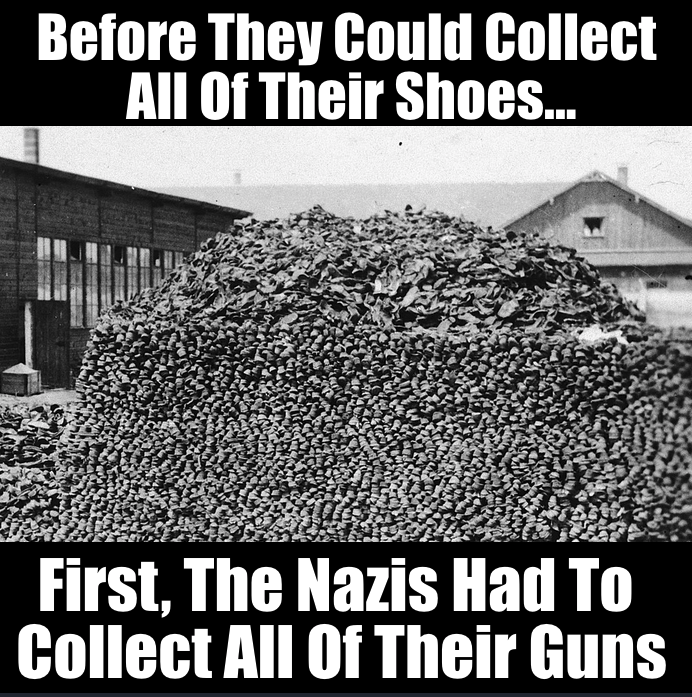
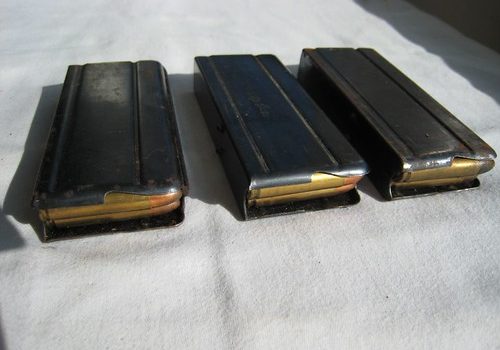
With Federal legislation brewing, I’ve also been heavily stocking up on magazines. I’ll discuss my strategy on that in the Tangibles Investing section of my bi-weekly Economics and Investing column.

Now, over to Lily…

Continue reading“Editors’ Prepping Progress”


The Editors’ Quote of the Day:

“Then they cry unto the Lord in their trouble, and he saveth them out of their distresses.

He sent his word, and healed them, and delivered them from their destructions.

Oh that men would praise the Lord for his goodness, and for his wonderful works to the children of men!” – Psalm 107:19-21 (KJV)


Preparedness Notes for Friday — June 3, 2022

June 3rd can be considered the “birthday” of the U.S. Army. (It was established by Congress on June 3rd, 1784.)

On June 3rd, 1539, Spanish explorer Hernando De Soto claimed Florida for Spain.

SurvivalBlog Writing Contest

Today we present another entry for Round 101 of the SurvivalBlog non-fiction writing contest. The prizes for this round include:

First Prize:

  1. The photovoltaic power specialists at Quantum Harvest LLC  are providing a store-wide 10% off coupon. Depending on the model chosen, this could be worth more than $2000.
  2. A Gunsite Academy Three Day Course Certificate. This can be used for any of their one, two, or three-day course (a $1,095 value),
  3. A course certificate from onPoint Tactical for the prize winner’s choice of three-day civilian courses, excluding those restricted for military or government teams. Three-day onPoint courses normally cost $795,
  4. Two cases of Mountain House freeze-dried assorted entrees in #10 cans, courtesy of Ready Made Resources (a $350 value),
  5. A $250 gift certificate good for any product from Sunflower Ammo,
  6. American Gunsmithing Institute (AGI) is providing a $300 certificate good towards any of their DVD training courses.
  7. Two sets of The Civil Defense Manual, (in two volumes) — a $193 value — kindly donated by the author, Jack Lawson.

Second Prize:

  1. A Front Sight Lifetime Diamond Membership, providing lifetime free training at any Front Sight Nevada course, with no limit on repeating classes. This prize is courtesy of a SurvivalBlog reader who prefers to be anonymous.
  2. A SIRT STIC AR-15/M4 Laser Training Package, courtesy of Next Level Training, that has a combined retail value of $679
  3. Two 1,000-foot spools of full mil-spec U.S.-made 750 paracord (in-stock colors only) from www.TOUGHGRID.com (a $240 value).
  4. Two Super Survival Pack seed collections, a $150 value, courtesy of Seed for Security, LLC,
  5. A transferable $150 FRN purchase credit from Elk Creek Company, toward the purchase of any pre-1899 antique gun. There is no paperwork required for delivery of pre-1899 guns into most states, making them the last bastion of firearms purchasing privacy!

Third Prize:

  1. Three sets each of made-in-USA regular and wide-mouth reusable canning lids. (This is a total of 300 lids and 600 gaskets.) This prize is courtesy of Harvest Guard (a $270 value)
  2. A Royal Berkey water filter, courtesy of Directive 21 (a $275 value),
  3. A LogOX 3-in-1 Forestry MultiTool (a $189 value) and a WoodOx Sling (a $79.95 value), courtesy of LogOx, both made in USA.
  4. A transferable $100 FRN purchase credit from Elk Creek Company, toward the purchase of any pre-1899 antique gun.

More than $725,000 worth of prizes have been awarded since we started running this contest. Round 101 ends on July 31st, so get busy writing and e-mail us your entry. Remember that there is a 1,500-word minimum, and that articles on practical “how-to” skills for survival have an advantage in the judging


Semi-Secure Digital Communications for Civilians, by R.T.D.

In times of emergency, many American citizens have found both amateur radio and FRS/GMRS radios very useful to keeping in touch with friends and family as well as keeping local, state, and federal disaster response agencies up-to-date with the latest information on road conditions and disaster area damages.

All of those radio communications are made entirely in the clear as there is no need for encryption, obfuscation, or brevity codes for such work. It’s done as a public service to assist others in times of natural or man-made disasters and just part of being a good neighbor.

But just how does one communicate during times of civil unrest or on a future civilian battlefield against rogue agents of the state or an invading near-peer enemy force without making themselves a target?

The vast majority of U.S. citizens won’t have access to the encrypted radio infrastructures that the U.S. military and law enforcement use as well as the computers required to program such radio equipment to include installing digital encryption keys on each radio to ensure secure communications.

Should semi-secure communications be required, one should look to the amateur radio world for their communications needs but with a twist: Using amateur radio digital voice modes on non-amateur radio frequencies.

A Quick Primer on Digital Voice Radio Technology

So just what is a “digital voice mode”? In a nutshell, a digital voice mode on a radio takes the analog sound of any speech it hears and encodes it into a series of digital bits – ones and zeroes – and transmits that data over the airwaves where other compatible digital voice radios then convert that digital data back into analog sound. It’s very similar to how Skype or Zoom allows one to make voice calls on a computer, but uses the airwaves instead of the internet. Digital voice modes on amateur radio equipment are usually not encrypted – indeed, the C4FM Fusion and D-STAR modes don’t even have any way to encrypt the voice traffic at all while most DMR handhelds do allow for encryption keys to be set. However, most amateur radio DMR mobiles and handhelds are not able to use the highest form of AES-256 bit encryption that one would prefer and instead use lower-level forms of encryption that while not easily cracked can still be cracked by federal-level agencies given enough time and a large enough sample of suspected encrypted digital voice radio traffic.

There are several high-quality and affordable amateur radio handhelds that provide a wide array of digital voice modes, usually only a single mode per handheld. Those most prevalent digital voice modes in use today are DMR, C4FM Fusion, and D-STAR and although other modes exist such as P25 and LMR, those systems are often more expensive and more difficult to obtain than the three amateur radio digital voice modes previously mentioned and thus will not be covered in this presentation however if one has the equipment and ability they can easily be substituted for any of those main three. Just bear in mind that those systems are usually not front-panel-programmable (FPP) making them near-impossible to reprogram on-the-fly in the field without the use of a laptop and programming cable.

Also keep in mind that using encryption on amateur radio frequencies is considered a violation of the FCC rules regarding the use of those frequencies and can result in fines and legal actions (very rare), so as always your current situation would dictate your communications means and methods. I would only use it in a “balloon goes up” situation myself, but would make sure that all my radios capable of it have it pre-programmed in so it can be quickly implemented if need be. Grab radios with wired earpieces, turn them on, switch them over to pre-programmed frequencies and pre-set encryption keys and then hand them out to security/combat forces and conduct radio checks to verify everyone’s hearing each other. Should only take about 10-15 minutes.

The “Why” of using Digital Voice for Radio Communications

Why digital voice? Why not just use analog voice on cheap Baofeng radios and utilize brevity codes and OTP verification codes and pump more money into food and ammo? Why not use these special radios I found online that have a “voice scrambler” capability built-in?

Well, first off that “voice scrambler” you may choose to use is still an analog voice signal and can be pretty easily descrambled. Voice scramblers haven’t been used for secure government communications in decades for very good reasons – every adversarial agency or department on the planet knows *exactly* what it is when they hear it and they already have the equipment on-hand to quickly descramble it in real time. Farmer Jimmy next door might not know what it is but you’re not expecting to go up against your good neighbor Farmer Jimmy, now are you? He should already be part of your own area’s security team.

Citizens should switch over to digital voice modes for the very same reason why law enforcement switched over to digital voice modes many years ago – increased clarity, obfuscation, and encryption. With digital voice there is no “picket-fencing” or fading in and out of a voice signal. You either hear it or your radio doesn’t even break squelch and thus you don’t hear it at all.

Digitally-encoded voice traffic on a radio sounds the same at 10 feet as it does at 10 miles between stations. There’s also the hidden benefit of simple obfuscation when using it outside the amateur radio bands on FRS/GMRS/MURS frequencies as well. Anyone hearing a digital voice transmission on an analog radio doesn’t hear anyone talking, they just hear a bunch of indecipherable-to-the-human-ear digital noise, if their analog radio even breaks squelch at all if they’re using “privacy codes” on FRS/GMRS radios. Using brevity codes at the same time keeps transmission times down and tends to lead the typically-uninformed analog FRS/GMRS radio user thinking there’s an electric fence, strong radio antenna tower, LED/fluorescent lights, or a bad vehicle alternator “breaking in” at times especially if you keep your radio communications very brief.

The Three Main Digital Voice Modes

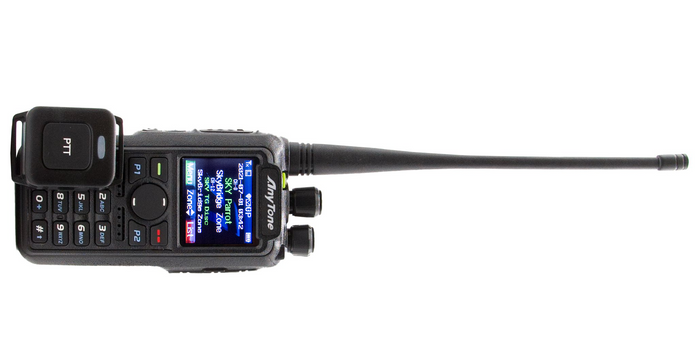
DMR – or Digital Mobile Radio – handheld and mobile radios can be found in a lot of the cheaper Chinese-made handhelds one can purchase easily online at various websites. While originally not designed for FPP, recent widespread adoption by the amateur radio community has resulted in many new DMR radio models specifically designed for FPP use such as the Anytone AT-D878UVII-Plus ($300) or Alinco DJ-MD5XT ($190) as well as comparable models from Wouxun and Baofeng. While these are not as cheap as the $30 Baofeng UV-5R radios most preppers tend to utilize, they do offer two things that those cheaper radios do not – digital voice and encryption. Indeed, the Anytone D878UVII-Plus is not only capable of using the DMR digital voice mode but that digital voice traffic can be completely AES-256 bit encrypted and I’d wish anyone good luck on trying to decrypt that traffic in a timely manner to make anything gained useful. Not only that but the D878UVII-Plus is capable of storing up to 32 different AES-256 encryption keys as well as 4,000 channels making timed, manual “roll-over” of not only frequencies in use but the encryption keys used on each channel fairly easy to program in and is thus nigh on impossible to be decrypted. That particular model of radio can also use digital or analog voice on pretty any frequency in the VHF (136-174Mhz) and UHF (400-480Mhz) ranges, which not only includes amateur radio but FRS/GMRS, Marine, MURS, Itinerant Business, and Railroad frequencies as well as receiving the WX (weather) and local FM radio frequencies for keeping up with changing weather conditions as well as local civilian information.

There is one caveat with DMR radios however and that is that they are very complex to understand and require pre-programing of IDs, talk groups, and encryption keys from a PC as the FPP programming is very basic usually just limited to selecting pre-programmed talk groups, channels, IDs, encryption keys, etc. But once you clear the DMR knowledge hurdle, the benefits are huge. Some DMR radios can even do APRS position beaconing should the need arise and you need to let another station know your exact GPS coordinates.

C4FM Fusion is an unencrypted digital voice mode implemented by Yeasu on a lot of their digital-voice-capable handhelds and mobiles for the amateur radio market. Pretty much all of those radios can also be “hacked” to allow transmitting outside of the amateur radio VHF & UHF frequency ranges for use on FRS/GMRS, MURS, Marine, Itinerant Business, and Railroad frequencies as well as WX weather stations.

While the digital voice traffic itself cannot be encrypted and is always sent “in the clear” and able to be decoded and listened to by just about anyone, bear in mind doing so requires not only skill and a PC but also knowing that *what* you’re hearing is actually C4FM Fusion digital voice traffic. Unless you know that the signals you’re hearing are C4FM Fusion then you won’t know what to use to “listen in” on it. Sure, an amateur radio operator might know what it sounds like but they don’t tend to be monitoring FRS/GMRS/MURS/Itinerant Business frequencies all that often and when they do it’s with scanners that may not even break squelch on such digital voice traffic. If it does break squelch they might just dismiss what they’re hearing as some sort of local neighborhood interference from someone’s noisy internet modem or Internet-over-Powerline noise because most hams just can’t believe anyone would willingly break the FCC rules and use digital voice modes on non-amateur frequencies.

Out of the three main digital voice modes, C4FM Fusion is literally the easiest to use – just set the radio to your chosen frequency and press the mode button to “turn on” the digital voice mode and that’s it. Unlike DMR or D-STAR there’s no pre-programming of any special talk groups or IDs required. An excellent C4FM Fusion radio can be found in the Yaesu FT5DR handheld radio ($460). Not only does it do digital voice and can be hacked to operate outside of the amateur radio brands but it also has extreme wideband capabilities to include air band & CB radio and it can even pickup shortwave radio stations with a simple, easy-to-make long-wire antenna connected to the radio’s antenna connector. Whenever I’m traveling across the country, an FT5DR HT is usually strapped to the driver’s A-pillar in my vehicle and set on CB radio channel 19 which it picks up easily thus keeping my Bearcat SDS-100 freed up to scan public safety frequencies as I drive. The FT5DR is an expensive handheld radio to be sure but very, very capable and much like Icom you get what you pay for when it comes to Yaesu radios.

D-STAR is a digital voice mode invented by Japanese amateur radio users in 2001 specifically for use on amateur radio bands. And by “bands” I really do mean all bands to include HF. D-STAR hams with Icon HF rigs regularly check-in on world-wide D-STAR nets. D-STAR is also capable of PC data transmission however it’s limited to 4800bps on the 2m and 70cm bands and thus really, really, really slow making it of limited benefit outside of the amateur radio hobby.

The D-STAR digital voice protocol requires pre-programming in various call groups and station IDs and can be overly-complex for new users, even those who have already mastered programming DMR handhelds. Honestly, a lot of the D-STAR repeater programming procedures are just flat-out confusing. Luckily the digital voice mode itself in simplex mode requires no programming at all other than programming in your amateur radio call sign – or your station identifier callsign if going outside the bounds of amateur radio use during emergency or battlefield conditions – and selecting a frequency and hitting the mode button to turn on Digital Voice (DV) mode. Same C4FM Fusion limits and obfuscation rules apply – no encryption available however it does require a potential eavesdropper to know that you’re using D-STAR on that frequency in order to setup a PC to listen to it and decode it in real-time. All D-STAR handhelds can be easily modded to allow for use outside of the amateur radio VHF/UHF bands and can even pickup FM radio, but that’s about it. They do not have extreme wideband receive capabilities like the Yaesu FT5DR handheld, however they are very, very easy to operate, program on-the-fly without a PC, and both the hardware and signal qualities are excellent.

And let’s also not forget that Icom HF radios with D-STAR built-in are very useful for clear, concise, and somewhat obfuscated communications between remote sites that are a long distance away from each other. The new Icom IC-705 portable HF radio is very much capable of this as are most new Icom HF radios. With D-STAR-on-HF there’s no picket-fencing, fading in and out, and the other station could be located 1000 miles away yet sound like they’re right next to you. That capability is well worth the time and monetary investment for those that require it.

Final Thoughts

So which digital voice mode should you use? That’s entirely for you to decide. Honestly, for me it’s DMR using Anytone UV878UVII-Plus handhelds that have been programmed in advance. Using the full encryption capabilities and a good radio ops SOP that rotates both the frequency and the encryption keys every 24 hours, it would be almost impossible to eavesdrop on communications between two of my handhelds no matter how long an adversary takes or what type of gear they have access to. And jumping frequencies and keys is as simple as turning a knob or pressing a button provided you’ve done your job and properly pre-programmed the radios. And with 4000 channels and 32 different AES-256 encryption keys for you to completely customize your $300 gets you encrypted handheld radio comms on par with local, state, and federal law enforcement agencies and can easily be obtained via a quick visit to any number of online store websites.

An adversary would have to actually capture one of the handhelds and given that it’s easy to wipe those radios on-the-move, with good SOPs it’s another non-issue. Just don’t forget and leave your handheld DMR radio in the barn you’re hiding out in and you should be fine.

There are also ways to use stand-alone DMR/C4FM/D-STAR digital voice radio hotspots connected to encrypted private digital voice servers located overseas in “safe” countries via the internet to keep units scattered across the planet in real-time voice communications with each other but that’s an article for a different time.

This is just a subset of general radio digital voice communications knowledge being presented to get people thinking about secure real-time communications in times of great need and I highly suggest readers to explore the subject and learn as much as they can about it.

Disclaimer:  Nothing in the foregoing article is intended as legal advice. It is presented as a purely academic exercise, for informational purposes only.

Economics & Investing For Preppers

Here are the latest news items and commentary on current economics news, market trends, stocks, investing opportunities, and the precious metals markets. We also cover hedges, derivatives, and obscura. Most of these items are from the “tangibles heavy” contrarian perspective of SurvivalBlog’s Founder and Senior Editor, JWR. Today, we look at the looming threat of full-capacity magazine bans. (See the Tangibles Investing section.)

Precious Metals:

Emerging market central banks represent new demand for gold as they de-dollarize – Société Générale.

o  o  o

The Month Of June: A Gold Price Swoon.

Economy & Finance:

Global leaders warn of economic dangers as crises multiply.

o  o  o

Gas prices surge again and hit new record highs as they get closer to $5 a gallon.

o  o  o

Cracks in US Economy Start to Show as Recession Warnings Mount.

o  o  o

At Wolf Street: The Most Splendid Housing Bubbles in America, May Update: Mania at the Eve of Holy-Moly Mortgage Rates.

Continue reading“Economics & Investing For Preppers”