
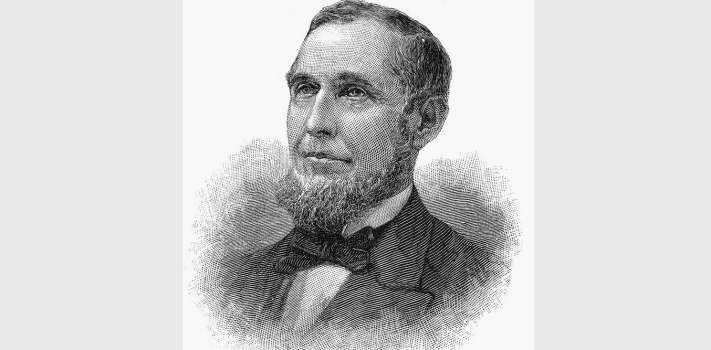
“Real estate is an imperishable asset, ever increasing in value. It is the most solid security that human ingenuity has devised. It is the basis of all security and about the only indestructible security.” – Russell Sage (August 4, 1816 – July 22, 1906)
- Ad Survival RealtyFind your secure and sustainable home. The leading marketplace for rural, remote, and off-grid properties worldwide. Affordable ads. No commissions are charged!
- Ad USA Berkey Water Filters - Start Drinking Purified Water Today!#1 Trusted Gravity Water Purification System! Start Drinking Purified Water now with a Berkey water filtration system. Find systems, replacement filters, parts and more here.
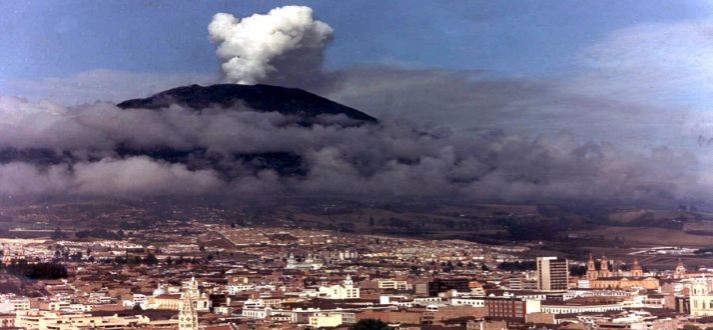
Preparedness Notes for Monday — November 14, 2022
On November 14th, 1985, the Nevado del Ruiz Volcano erupted in Colombia, killing over 20,000 as nearby towns are buried in mud, ice, and lava. Scientists studying the volcano believed an eruption was imminent and had recommended an evacuation of the area which was largely ignored, resulting in the high number of casualties.
—
To help make up for the loss of so many subscriptions when folks quit PayPal, we have greatly expanded our list of affiliate advertisers. (See the full list of more than 130 links, below the square graphic ads.) Please shop with our paid banner advertisers first. But if they don’t have what you are looking for, then take a look at the websites of our affiliate advertisers. Thanks! – JWR
—
Today’s feature article was penned by Field Gear Editor Thomas Christianson.
- Ad Click Here --> Civil Defense ManualNOW BACK IN STOCK How to protect, you, your family, friends and neighborhood in coming times of civil unrest… and much more!
- Ad USA Berkey Water Filters - Start Drinking Purified Water Today!#1 Trusted Gravity Water Purification System! Start Drinking Purified Water now with a Berkey water filtration system. Find systems, replacement filters, parts and more here.
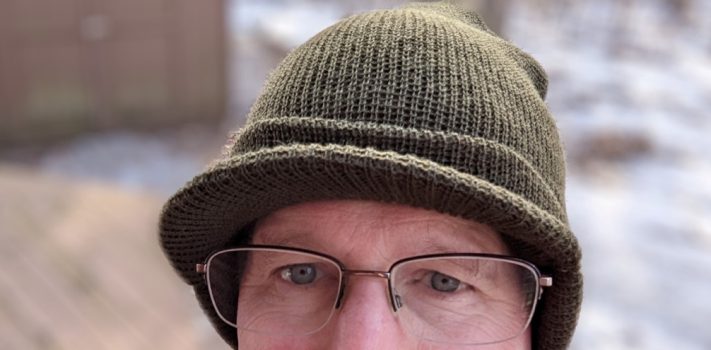
Rothco Genuine G.I. Jeep Cap, by Thomas Christianson
Early in 2022, I acquired a Rothco 100% Wool Jeep Cap. I have worn it while walking the dog, stoking the outside wood boiler, clearing snow, and caring for other outside tasks. I have found it to be both warm and comfortable. The cap keeps my head and ears protected from the cold, while the visor protects my glasses from precipitation. It is made in the U.S.A. It has become my default headgear for winter outdoor work.
At the time of this writing, the cap was available from Rothco’s website for $11.99.
The Backstory
During warm weather, I typically wear a ball cap when I am working outside. The cap protects my bald spot from sunburn, and the visor protects my glasses from precipitation.
When more extensive exposure to sun or rain is expected, I typically wear a broad-brimmed hat. This provides additional protection from the elements for my ears and the back of my neck.
During cold weather, I used to wear a watch cap. It helped to keep my head and ears warm, but it did little to protect my glasses from falling snow or sleet.
A number of years ago, I found a jeep cap knock-off at a local thrift store. I snatched it up. The knit portion of the cap helped to keep my head and ears warm. The visor helped to protect my glasses. That jeep cap received a lot of heavy use over the years.
Because the knock-off cap was acrylic rather than wool, it was not quite as warm as I would have liked. I kept my eye out for a wool jeep cap in the local thrift stores, but I never found one.Continue reading“Rothco Genuine G.I. Jeep Cap, by Thomas Christianson”
- Ad STRATEGIC RELOCATION REALTYFOR SALE: Self-sustaining Rural Property situated meticulously in serene locales distant from densely populated sanctuary cities. Remember…HISTORY Favors the PREPARED!
- Ad Survival RealtyFind your secure and sustainable home. The leading marketplace for rural, remote, and off-grid properties worldwide. Affordable ads. No commissions are charged!

Recipe of the Week: Yogurt from Dry Milk
Mrs. Alaska provided directions for an easy-to-make yogurt with dry (or fresh) milk and a few tablespoons of store-bought yogurt (with live cultures) per quart of milk.
“I have successfully done so with dried, non-fat milk and even from store-bought yogurt that had frozen.
Motivations: I do not raise milk-producing animals.
It is challenging for us to transport dairy products to our home.
With yogurt, I can replace sour cream in any dip, sauce, gravy, baked goods (like pancakes and quick breads) as well as using it for a topping for fruit or granola.
Directions:
Heat 1 quart of milk to 180 degrees F. (I use 6 cups of water mixed with 2 cups of dry milk.) Cool to 115 degrees F. (I just put the pan outside in Alaska for 20 minutes). Add 4 TBS of yogurt (with live cultures, but for me, frozen still works). Stir.
Pour into containers. (I use three pint Mason jars).
Keep warm overnight: I have put them in the bottom of my gas oven (with pilot light) and also in an insulated cooler. Both worked.
Check the next day to see if the liquid has congealed. Since you may experience some hits and misses, try this out before you use up your store-bought yogurt. I keep one pint indoors for quick use and let the others freeze outside in Alaska, but other readers could refrigerate theirs.
When you get low, just make another batch, using several tablespoons from your existing homemade yogurt to provide a culture.”
—
Mrs. Alaska has her own blog: Alaska Bush Life, Off-Road, Off-Grid.
—
Do you have a favorite recipe that would be of interest to SurvivalBlog readers? In this weekly recipe column, we place emphasis on recipes that use long term storage foods, recipes for wild game, dutch oven and slow cooker recipes, and any that use home garden produce. If you have any favorite recipes, then please send them via e-mail. Thanks!
- Ad Most “Healthy” Food Isn’t What It ClaimsMost stored food isn’t meant for daily use. If you’ve ever questioned what you’re eating, this shows a clean option you can rely on every day, and even store for years.
- Ad California Legal Rifles & Pistols!WBT makes all popular rifles compliant for your restrictive state. Choose from a wide range of top brands made compliant for your state.

Economics & Investing For Preppers
Here are the latest news items and commentary on current economics news, market trends, stocks, investing opportunities, and the precious metals markets. We also cover hedges, derivatives, and obscura. Most of these items are from the “tangibles heavy” contrarian perspective of SurvivalBlog’s Founder and Senior Editor, JWR. Today, we again look at a potential derivatives crisis. (See the Derivatives section.)
Precious Metals:
Silver price predictions to 2030.
o o o
Gold/Silver: Two charts you must watch.
Economy & Finance:
o o o
Jeffrey Snider had this lengthy but insightful analysis of yield curves and foreign reserve flows, in this video: Storm warning: almost a trillion in global reserves gone, a quarter ‘missing’ from Swiss.
o o o
Moody’s cuts outlook for European banks, including Germany’s, on credit woes.
o o o
Protests and strikes erupt across Europe as soaring inflation, cost of living drives ‘winter of discontent’. (Thanks to blog reader C.B. for the link.)
o o o
FedEx Parks Planes, Maersk Cancels Sails: World Trade Appears To Be Rapidly Deteriorating. (A hat tip to D.S.V. for the link.)
o o o
A recent JWR interview: Fed In Panic Mode; Inflation Out Of Control — James Wesley Rawles.
Continue reading“Economics & Investing For Preppers”
- Ad SurvivalRealty.com: Sell Your Remote LandAdvertise your hard-to-sell remote land to eager buters. We specialize in rural, remote, and off-grid properties worldwide. Affordable ads. No commissions are charged!
- Ad Even in permissive states guns are often locked up - a glaring security gap which must be filled with a dependable tool. Pepper sprays & stun guns fail often. Stunning travel-anywhere SIEGE Belts have been a proven life-saver over decades. Made in USASIEGE STOVES: Get ready for summer in the great outdoors with the ultimate portable stove. In a fuel crisis twigs are FREE. Use code "SBLOG" at checkout for $20 off BELTS!
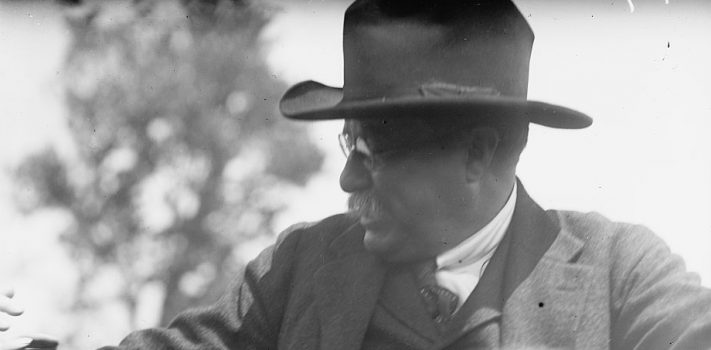
The Editors’ Quote of the Day:
“No possible rapidity of fire can atone for habitual carelessness of aim with the first shot.” – Theodore Roosevelt, The Wilderness Hunter, 1893
- Ad Elk Creek Company - Federally-Exempt No-Paperwork GunsPre-1899 Antique Cartridge Guns -- No FFL Required. Can be mailed to your doorstep with no Federal paperwork!
- Ad Elk Creek Company - Percussion Blackpowder Guns - No FFL Required.Elk Creek Company - Percussion Blackpowder Guns - Pre-1899 Guns - Knives - Bayonets - Magazines - The last bastion of privacy!
Preparedness Notes for Sunday — November 13, 2022
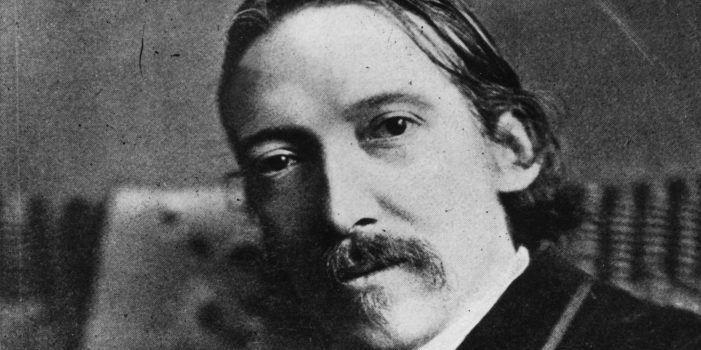
Robert Louis Stevenson, author of Treasure Island, Kidnapped, and Doctor Jekyll and Mr. Hyde, was born in Scotland on November 13th, 1850.
—
Continental Army Brigadier General Richard Montgomery took Montreal, Canada without opposition on this day in 1775. Ironically, shortly after this Montgomery was killed while fighting the British in Quebec, and the British retook the territory.
—
Please pray for the victims of this tragic accident: Two Planes, Including A World War II-Era Heavy Bomber, Collide At Dallas Air Show.
—
In honor of Veteran’s Day, Next Level Training (one of our long-time advertisers and writing contest prize donors) is offering a special price bundle: $378 for a STIC and a SIRT Performer. (A $100 savings.) If you are not familiar with the STIC, see their video in the product page.
—
Today we present a guest article by Brandon Smith, of the highly-recommended Alt-Market blog.
—
We are seeking entrires for Round 103 of the SurvivalBlog non-fiction writing contest. More than $750,000 worth of prizes have been awarded since we started running this contest. Round 103 ends on November 30th, so get busy writing and e-mail us your entry. Remember that there is a 1,500-word minimum, and that articles on practical “how-to” skills for survival have an advantage in the judging.
WEF’s Stakeholder Capitalism Is Just Global Fascism By Another Name, by Brandon Smith
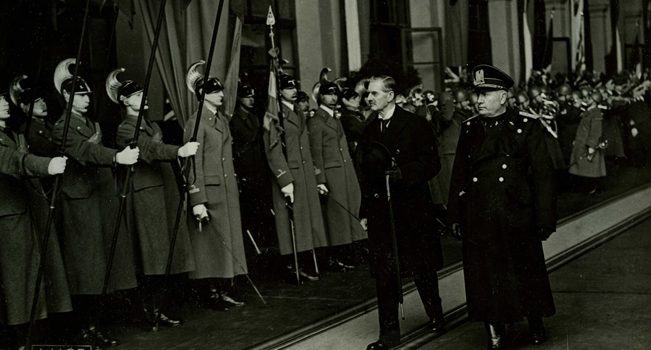
The concept of “fascism” was originally entered into the Encyclopedia Italiana by Italian philosopher Giovanni Gentile, who stated that “Fascism should more appropriately be called corporatism because it is a merger of state and corporate power.” Benito Mussolini would later take credit for the quote as if he had written it himself, but it’s important to note because it outlines the primary purpose of the ideology rather than simply throwing the label around at people we don’t like as a dishonest means to undermine their legitimacy.
Despite the fact that leftists today often attack conservatives as “fascists” because of our desire to protect national boundaries and western heritage, the truth is that all fascism is deeply rooted in leftist philosophies and thinkers.
Mussolini was a long time socialist, a member of the party who greatly admired Karl Marx. He deviated from the socialists over their desire to remain neutral during WWI, and went on to champion a combination of socialism and nationalism, what we now know as fascism. Adolph Hitler was also a socialist and admirer of Karl Marx, much like Mussolini. It is actually hard to find where Marx, the communists and the fascists actually differ from each other – A deeper sense of nationalism seems to be one of the few points of contention.Continue reading“WEF’s Stakeholder Capitalism Is Just Global Fascism By Another Name, by Brandon Smith”
JWR’s Meme Of The Week:
The latest meme created by JWR:
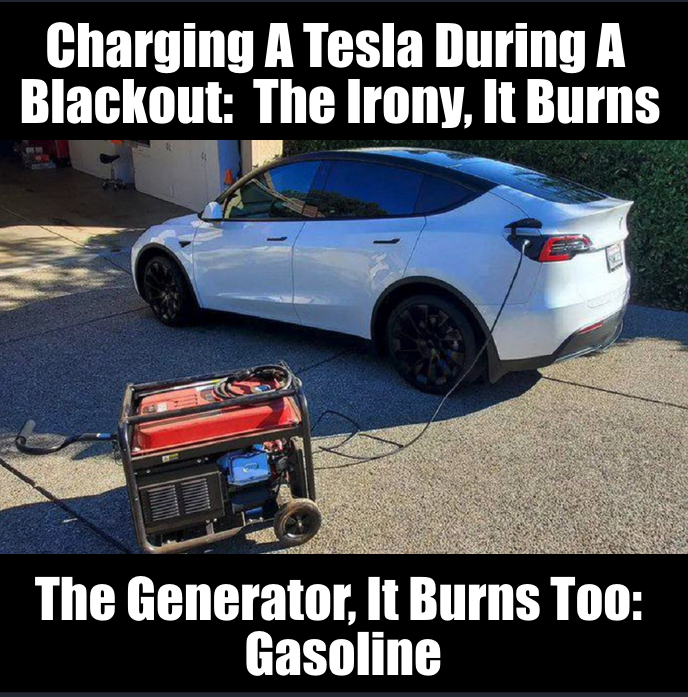
Meme Text:
Graphic of Tesla being charged by a generator.
Charging a Tesla During a Blackout: The irony, it burns.
The Generator, It Burns Too: Gasoline.

The Editors’ Quote of the Day:
“Now when they had passed through Amphipolis and Apollonia, they came to Thessalonica, where was a synagogue of the Jews:
And Paul, as his manner was, went in unto them, and three sabbath days reasoned with them out of the scriptures,
Opening and alleging, that Christ must needs have suffered, and risen again from the dead; and that this Jesus, whom I preach unto you, is Christ.
And some of them believed, and consorted with Paul and Silas; and of the devout Greeks a great multitude, and of the chief women not a few.
But the Jews which believed not, moved with envy, took unto them certain lewd fellows of the baser sort, and gathered a company, and set all the city on an uproar, and assaulted the house of Jason, and sought to bring them out to the people.
And when they found them not, they drew Jason and certain brethren unto the rulers of the city, crying, These that have turned the world upside down are come hither also;
Whom Jason hath received: and these all do contrary to the decrees of Caesar, saying that there is another king, one Jesus.
And they troubled the people and the rulers of the city, when they heard these things.
And when they had taken security of Jason, and of the other, they let them go.
And the brethren immediately sent away Paul and Silas by night unto Berea: who coming thither went into the synagogue of the Jews.
These were more noble than those in Thessalonica, in that they received the word with all readiness of mind, and searched the scriptures daily, whether those things were so.
Therefore many of them believed; also of honourable women which were Greeks, and of men, not a few.” – Acts 17:1-12 (KJV)
Preparedness Notes for Saturday — November 12, 2022
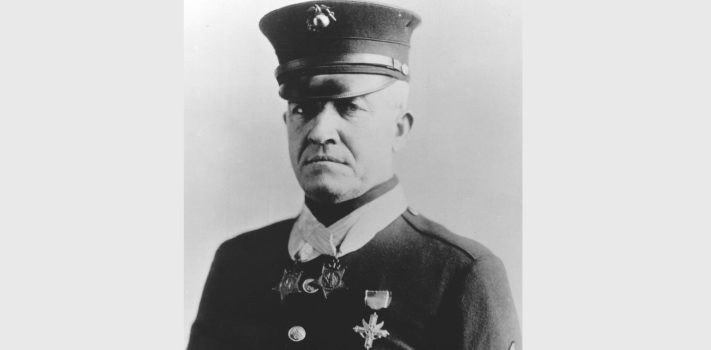
Today is the birthday of USMC Sergeant Major Daniel Joseph “Dan” Daly (born 1873, died April 27, 1937). He was one of only nineteen men (including seven Marines) to twice receive the Medal of Honor.
—
November 12th, 1950 was the birthday of Corporal John Alan Coey (died 19 July 1975). He was the first American volunteer killed in Rhodesia.
—
GunMagWarehouse.com (one of our affiliate advertisers) is running a pre-Black Friday special: ASC mil-spec AR-15 .223 / 5.56 30-round Allloy Magazines for just $8.99 each. Stock up!
—
SurvivalBlog Writing Contest
Today we present another entry for Round 103 of the SurvivalBlog non-fiction writing contest. The prizes for this round include:
First Prize:
- The photovoltaic power specialists at Quantum Harvest LLC are providing a store-wide 10% off coupon. Depending on the model chosen, this could be worth more than $2000.
- A Gunsite Academy Three Day Course Certificate. This can be used for any of their one, two, or three-day course (a $1,095 value),
- Two cases of Mountain House freeze-dried assorted entrees in #10 cans, courtesy of Ready Made Resources (a $350 value),
- A $250 gift certificate good for any product from Sunflower Ammo,
- American Gunsmithing Institute (AGI) is providing a $300 certificate good towards any of their DVD training courses.
- Two sets of The Civil Defense Manual, (in two volumes) — a $193 value — kindly donated by the author, Jack Lawson.
Second Prize:
- A course certificate from onPoint Tactical for the prize winner’s choice of three-day civilian courses, excluding those restricted for military or government teams. Three-day onPoint courses normally cost $795,
- A SIRT STIC AR-15/M4 Laser Training Package, courtesy of Next Level Training, that has a combined retail value of $679
- Two 1,000-foot spools of full mil-spec U.S.-made 750 paracord (in-stock colors only) from www.TOUGHGRID.com (a $240 value).
- Two Super Survival Pack seed collections, a $150 value, courtesy of Seed for Security, LLC,
- A transferable $150 FRN purchase credit from Elk Creek Company, toward the purchase of any pre-1899 antique gun. There is no paperwork required for delivery of pre-1899 guns into most states, making them the last bastion of firearms purchasing privacy!
Third Prize:
- Three sets each of made-in-USA regular and wide-mouth reusable canning lids. (This is a total of 300 lids and 600 gaskets.) This prize is courtesy of Harvest Guard (a $270 value)
- A Royal Berkey water filter, courtesy of Directive 21 (a $275 value),
- A transferable $150 FRN purchase credit from Elk Creek Company, toward the purchase of any pre-1899 antique gun.
—
More than $750,000 worth of prizes have been awarded since we started running this contest. Round 103 ends on November 30th, so get busy writing and e-mail us your entry. Remember that there is a 1,500-word minimum, and that articles on practical “how-to” skills for survival have an advantage in the judging.

YOYO Civil Defense, by 3AD Scout
Sometime between the First World War and the start of the Second World War the concept of civil defense or civil protection was born. The original purpose was to protect civilians from aerial bombing. After World War Two, the United States dismantled its civil defense corps. With the US the sole possessor of atomic weapons, there was no perceived need to spend money on civil defense. That perception did not last long due to the Soviet Union testing their first nuclear weapon in 1949. President Truman re-established civil defense with the goal of protecting the civilian population against a nuclear attack.
Over the next 29 years there would be several renditions of civil defense until the Federal Emergency Management Agency (FEMA) was formed. President Carter empowered FEMA to prepare for disasters and to continue civil defense efforts. In 1994, with the repeal of the Civil Defense Act of 1950, FEMA suspended preparations for nuclear attack. Without the federal mandates and grant requirements many states started to follow suit. Following the terror attacks of 2001 and the advent of the Department of Homeland Security (DHS), FEMA started to plan for a nuclear terrorist attack. The problem with the current DHS/FEMA nuclear terrorist attack planning is that DHS/FEMA assumes that only one city will be attacked. Other assumptions include a relatively low-yield weapon and that the unaffected surrounding areas can assist with the response. The current DHS/FEMA guidance is totally insufficient to address the needs from multiple nuclear weapons detonating across the nation.
With the current situation in Eastern Europe it is extremely important to understand both the past civil defense capabilities and the current non-existent civil defense capabilities of the United States but we also need to understand the civil defense capabilities of the former Soviet Union and those of Russia today.Continue reading“YOYO Civil Defense, by 3AD Scout”

Editors’ Prepping Progress
To be prepared for a crisis, every Prepper must establish goals and make long-term and short-term plans. In this column, the SurvivalBlog editors review their week’s prep activities and planned prep activities for the coming week. These range from healthcare and gear purchases to gardening, ranch improvements, bug out bag fine-tuning, and food storage. This is something akin to our Retreat Owner Profiles, but written incrementally and in detail, throughout the year. We always welcome you to share your own successes and wisdom in your e-mailed letters. We post many of those –or excerpts thereof — in this column, in the Odds ‘n Sods Column, and in the Snippets column. Let’s keep busy and be ready!
Jim Reports:
With snow now on the ground and the high temperatures in the 20s, I’ve been concentrating on indoor work. Now that the wall insulation is completed, I’ve mostly been paneling the inside of the workshop with Oriented Strand Board (OSB). It is a sort of low-budget substitute for plywood with a random pattern that looks like it was designed by a drunken Salvador Dali. It is stronger than particle board, but uglier and less expensive than plywood. It works fine for my needs, because most of it will be covered by Masonite pegboard and my license plate collection. And after all, it is just a utility building, not a beauty contest. My Inner Scotsman has urged me to use up a lot of short pieces of scrap lumber — from 2″ to 6″ widths — for most of the “nailer” backing boards behind the OSB. And my Inner Scotsman also dictates working in the shop without a heater running. The temperature usually hovers around a brisk 30 degrees. I just wear a heavy coat, insulated boots, and a watch ca — and I press on. My kind of fun, in 3- to 5-hour sessions. When the interior of the shop gets down to around 20 Fahrenheit, then I might consider turning on a small space heater.
Outdoors, I made adjustments to a stock tank heater and a heat tape. I also did some cursory snowplowing. The plowing won’t begin in earnest until after the next big storm. But at least I’ve confirmed that our Western brand plow is working properly.
Now, over to Lily…Continue reading“Editors’ Prepping Progress”

The Editors’ Quote of the Day:
“Hear ye this word which I take up against you, even a lamentation, O house of Israel.
The virgin of Israel is fallen; she shall no more rise: she is forsaken upon her land; there is none to raise her up.
For thus saith the Lord God; The city that went out by a thousand shall leave an hundred, and that which went forth by an hundred shall leave ten, to the house of Israel.
For thus saith the Lord unto the house of Israel, Seek ye me, and ye shall live:
But seek not Bethel, nor enter into Gilgal, and pass not to Beersheba: for Gilgal shall surely go into captivity, and Bethel shall come to nought.
Seek the Lord, and ye shall live; lest he break out like fire in the house of Joseph, and devour it, and there be none to quench it in Bethel.
Ye who turn judgment to wormwood, and leave off righteousness in the earth,
Seek him that maketh the seven stars and Orion, and turneth the shadow of death into the morning, and maketh the day dark with night: that calleth for the waters of the sea, and poureth them out upon the face of the earth: The Lord is his name:
That strengtheneth the spoiled against the strong, so that the spoiled shall come against the fortress.
They hate him that rebuketh in the gate, and they abhor him that speaketh uprightly.
Forasmuch therefore as your treading is upon the poor, and ye take from him burdens of wheat: ye have built houses of hewn stone, but ye shall not dwell in them; ye have planted pleasant vineyards, but ye shall not drink wine of them.
For I know your manifold transgressions and your mighty sins: they afflict the just, they take a bribe, and they turn aside the poor in the gate from their right.
Therefore the prudent shall keep silence in that time; for it is an evil time.
Seek good, and not evil, that ye may live: and so the Lord, the God of hosts, shall be with you, as ye have spoken.
Hate the evil, and love the good, and establish judgment in the gate: it may be that the Lord God of hosts will be gracious unto the remnant of Joseph.” – Amos 5:1-15 (KJV)
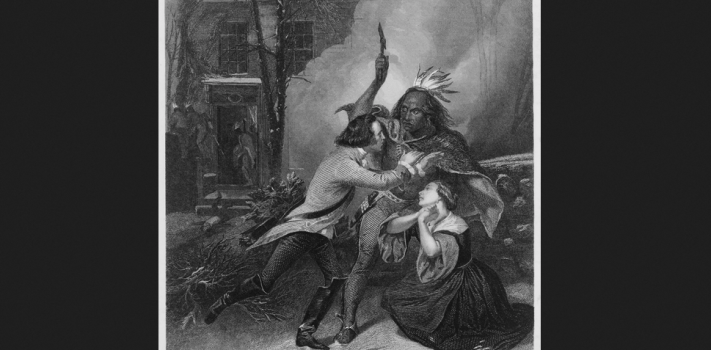
Preparedness Notes for Friday — November 11, 2022
November 11th is a bit crowded with significant history notes…
The Cherry Valley Massacre took place November 11, 1778. According to the Infogalactic wiki:
“The Cherry Valley Massacre was an attack by British and Iroquois forces on a fort and the village of Cherry Valley in eastern New York on November 11, 1778, during the American Revolutionary War. It has been described as one of the most horrific frontier massacres of the war. A mixed force of Loyalists, British soldiers, Seneca and Mohawks descended on Cherry Valley, whose defenders, despite warnings, were unprepared for the attack. During the raid, the Seneca in particular targeted non-combatants, and reports state that 30 such individuals were slain, in addition to a number of armed defenders.”
—
November 11th is of course Veteran’s Day, set in remembrance of the 11th of November 1918 ceasefire in World War I. If you value your freedom, then thank a veteran.
—
It is also the birthday of General George S. Patton, Jr. (born 1885, died December 21, 1945).
—
November 11th also marks Rhodesia’s Unilateral Declaration of Independence (UDI), in 1965. Remember Rhodesia!
—
Optics Planet (one of our affiliate advertisers) is running a 10% off sale, for any order over $75, just for Veteran’s Day weekend. The sale started on November 10th and ends on November 13th.
—
Today’s feature article is by Don Shift. It is an excerpt from his book Basic SHTF Radio: A cop’s brief guide for understanding simple solutions for SHTF radio communication, available on Amazon.com. This article is not eligible for judging in the SurvivalBlog non-fiction writing contest, because the author is a SurvivalBlog advertiser.
Get your article in for Round 103! More than $750,000 worth of prizes have been awarded since we started running this contest. Round 103 ends on November 30th, so get busy writing and e-mail us your entry. Remember that there is a 1,500-word minimum, and that articles on practical “how-to” skills for survival have an advantage in the judging.