The Survivalist’s Odds ‘n Sods

SurvivalBlog presents another edition of The Survivalist’s Odds ‘n Sods. This column is a collection of news bits and pieces that are relevant to the modern survivalist and prepper from JWR. Our goal is to educate our readers, to help them to recognize emerging threats, and to be better prepared for both disasters and negative societal trends. You can’t mitigate a risk if you haven’t first identified a risk. In today’s column, we look at some saber-rattling in Venezuela.

Venezuela Mobilizing Millions in Its Militia

Reported on Wednesday by the leftist Time4,000 Troops and 4,500,000 Militiamen: What to Know About the U.S.-Venezuela Standoff.

FEMA Now Requires Disaster Victims to Have an E-mail Address

Over at Wired: FEMA Now Requires Disaster Victims to Have an Email Address.  A pericope:

The Federal Emergency Management Agency (FEMA) will now require disaster survivors to register for federal aid using an email address—a departure from previous policy where email addresses were optional.”

Long Gun Open Carry Legalized in DC?

Fletch sent the link to this New York Post report: Pirro to ease prosecutions for carrying registered rifles, shotguns — calls DC law ‘violation of the Supreme Court’s holdings’.

Continue reading“The Survivalist’s Odds ‘n Sods”


Preparedness Notes for Wednesday — August 20, 2025

On or about August 20, 480 BC: The Battle of Thermopylae.  In one of history’s most famous “last stands”, 7,000 warriors from an alliance of Greek states led by Leonidas I blocked the pass of Thermopylae for a week against an invading Persian army estimated at 120,000-300,000 strong, led by Xerxes I.

August 20, 1935 was the birthday of former Congressman Ron Paul. Dr. Paul is to be commended for fighting the good fight for many years. Happy 90th Birthday!

August 20th, 1866 was the day that President Andrew Johnson formally declared the end of the Civil War.

Today’s feature article is by JWR.

We are in great need of entries for Round 120 of the SurvivalBlog non-fiction writing contest. More than $960,000 worth of prizes have been awarded since we started running this contest.  Round 120 ends on September 30th, so get busy writing and e-mail us your entry. Remember that there is a 1,500-word minimum, and that articles on practical “how-to” skills for survival have an advantage in the judging. In 2023, we polled blog readers, asking for suggested article topics. Please refer to that poll if you haven’t yet chosen an article topic.


The “Come as You Are” Collapse–Have the Right Tools and Skills

Introductory Note From JWR: This article is an update and small expansion to a succinct post that I made back in February, 2008.

When the Second World War broke out in September, 1939, the United States had nearly two full years to ramp up military training and production before decisively confronting the Axis powers. In the mid-1970s, looking at the recent experience of the 1973 Arab-Israeli War, the Pentagon’s strategic planners came to the realization that the next major war that the US military would wage would not be like the Second World War. There would not be the luxury of time to train and equip their forces. They realized that we would have to fight with only what we had available on Day One. They dubbed this the “Come as you are war” concept.

In my opinion, the same “come as you are” mindset should be applied to family preparedness. We must recognize that in these days of rapid news dissemination, it may take as little as 10 hours before supermarket shelves are cleaned out. It may take just a few hours for queues that are literally blocks-long to form at gas stations–or at bank branches in the event of bank runs. Worse yet, it may take just a few hours before the highways and freeways leading out of urban and suburban areas are clogged with traffic. This is the dreaded “Golden Horde” that I often write about. Do not make the false assumption that you will have the chance to make “one last trip” to the big box store, or even the chance to fill your Bug Out Vehicle’s fuel tank. This will be the “come as you are” collapse.Continue reading“The “Come as You Are” Collapse–Have the Right Tools and Skills”


SurvivalBlog Readers’ & Editors’ Snippets

Our weekly Snippets column is a collection of short items: responses to posted articles, practical self-sufficiency items, how-tos, lessons learned, tips and tricks, and news items — both from readers and from SurvivalBlog’s editors. Note that we may select some long e-mails for posting as separate letters.

Mark J. in Oregon wrote:

“I run honey bees. I have 16 hives going. Russian bee genetics. I get the queens from Foley in Iowa.   They don’t get the mites… they fly in 45 degree weather — snow and rain…. They don’t have hive collapse. The first queen I got was pure black. A called her “Natasha”.  The workers are generally brown/black or pure black markings. I’m trying to avoid feeding sugar water and so forth…see how much they can produce without help.   I usually fog two treatments, twice a year with oxylic acid, veg glycerine…a shot of vodka to help emulsify.   You have to treat twice…first time kills the open mites.   ~ 30 days later you fog again to get the mites that were laid with the eggs when the bees hatch. Mites like to lay in the drone brood the most.

I canned up some hot salsa out of the garden.   Fermenting the store-bought chicken feed to make it ‘alive’ again. Trying the Southern home-made “7-Up / Sprite” recipe. That one is a handful of cleaned and trimmed pine needles in a quart mason jar.   1/4 cup sugar.   Let it ferment for 5 days. All the old rural folks say it’s really good as far as taste.”

o  o  o

Hamas Agrees to Ceasefire-Hostage Release Deal With Israel.

o  o  o

Reader R.T. sent this summer gardening report:

“Our small backyard garden, not far from the central Minnesota and Wisconsin river border, has had it’s unique challenges this year; not enough sunlight, not enough rain and now too much rain and still not enough sunlight due to Canadian smoke and storms. Last summer drought-like conditions is to blame for our rhubarb patch and asparagus not even bothering to make an effort this year. Now with buckets of rain (which we maintain under the eaves) there is a lot of foliage but the tomatoes are small and struggling to ripen.

The green Provider beans that we got from SurvivalBlog vendor “Seed for Security” going out of business sale last year are living up to their name. Their eggplant seeds are also doing well. We’ve canned dilly beans plus have them frequently at meals. We decided to can, but not ferment, our cukes this year. We have switched to using the steam canner as it uses considerably less energy than the water bath canner with similar results. We’ve had to replant the beets several times until they sprouted, too dry at first. The dry weather attracted flocks of sparrows to burrow up the soil where we had planted to “bathe” themselves. Now the carrot worms are eating the tops. We haven’t had a problem with rabbits this year after fortifying the fence. Strong gusts of wind toppled our fruit-laden pepper plants, but they were rescued and survived.

We are very thankful for having the garden as we also have relied upon the local farmer’s market but due to the weather this year some products are not showing up and often the market has not shown up due to a stormy session. Like I heard Roseanne Roseannadanna say back when I used to listen to Saturday Night Live some 45 years ago “It just goes to show you, it’s always something. If it’s not a thing, it’s another.”

o  o  o

The Reduction of Kerosene Lamp Emissions through Solar Lighting. (Thanks to F.J. for the link.)

Continue reading“SurvivalBlog Readers’ & Editors’ Snippets”


Preparedness Notes for Tuesday — August 19, 2025

On August 19, 1561, Mary Queen of Scots arrived in Leith, Scotland to assume the throne after spending 13 years in France.

August 19th is the birthday of Philo Taylor Farnsworth (1906-1971). Farnsworth was an American inventor who is best known for his image pickup device that formed the basis for the fully functional and complete all-electronic television system. Among his many other inventions was the Farnsworth-Hirsch fusor, a small nuclear fusion device that remains a viable source of neutrons. At his death, he held over 300 patents, mostly in radio and television.

Today’s feature article is by SurvivalBlog’s founder, James Wesley, Rawles (JWR).

We need entries for Round 120 of the SurvivalBlog non-fiction writing contest. More than $960,000 worth of prizes have been awarded since we started running this contest.  Round 120 ends on September 30th, so get busy writing and e-mail us your entry. Remember that there is a 1,500-word minimum, and that articles on practical “how-to” skills for survival have an advantage in the judging. In 2023, we polled blog readers, asking for suggested article topics. Please refer to that poll if you haven’t yet chosen an article topic.


A 2025 Assessment: The Emerging Artificial Intelligence Threat

The rise of artificial intelligence (AI) has been alarmingly rapid since 2022. Before then, AI was considered little more than a plaything or a novelty.  But now it is transforming businesses, wiping out entire categories of office jobs, and threatening human liberty. The first practical release of the Claude AI code-writing tool just by itself has completely transformed the global software industry. I’m talking about a Buggy Whips level of industry transformation. As a personal illustration, I should mention that my youngest son is now in his third year at a university here in The American Redoubt, studying for a degree in computer science. His prospects for finding a job when he graduates in 2027 have dropped dramatically since his freshman year. I’m now advising him to pursue a career in software design rather than programming. Otherwise, he’ll be another buggy whip maker.

AI has also changed the blogosphere.  It has been estimated that by the end of 2026, nearly 90 percent of blogs will be written by AI. The Internet will be flooded with AI-generated schlock, and it will become more difficult to differentiate between that which is human-written and AI-written. The same is happening with video blogs (“vlogs”). In another year, it will be hard to tell if a vlog host is a real living, breathing individual, or something AI-generated.  By the way, don’t worry about SurvivalBlog. We shall stalwartly remain one of the last of the Old School blogs. Take that, you Clankers!Continue reading“A 2025 Assessment: The Emerging Artificial Intelligence Threat”


SurvivalBlog’s News From The American Redoubt

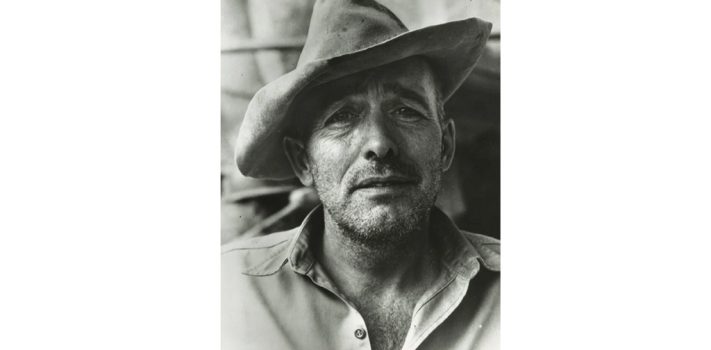
This weekly column features news stories and event announcements from around the American Redoubt region. (Idaho, Montana, eastern Oregon, eastern Washington, and Wyoming.) Much of the region is also more commonly known as The Inland Northwest. We also mention companies located in the American Redoubt region that are of interest to preppers and survivalists. Today, I’m offering an eclectic assortment of videos from inside the American Redoubt region. These describe and show geography, historical tidbits, amazing scenery, wildlife, and some genuine characters. Pictured above is Salmon, Idaho, circa 1940.

Idaho

A video of a visit to Salmon, Idaho by some sans-clue eastern RVers: The People Behind a Town Cut Off From the World.  (“A ‘claim’, what is that?”)

o  o  o

An update from the Good Simple Living vlogging (and now podcasting) family in North Idaho: Years of Firewood, Full Winter Prep In the Northern Rockies + Big Changes for Our Family.

o  o  o

Let The Adventure Begin – Idaho BDR.

o  o  o

An interesting video: Run the Rails — Following 30 miles of Abandoned Idaho Railway.

Continue reading“SurvivalBlog’s News From The American Redoubt”


The Editors’ Quote of the Day:

“A lot of country music is sad. I think most art comes out of poverty and hard times. It applies to music. Three chords and the truth – that’s what a country song is. There is a lot of heartache in the world.” – Willie Nelson


Preparedness Notes for Monday — August 18, 2025

On August 18, 1564, Spanish King Philip II joined the Council of Trent.

August 18, 1769: A lightning strike on the Bastion of San Nazaro in Brescia, Italy, ignited 90 tons of gunpowder. The resulting explosion killed 3,000 people.

August 18th is also the birthday of Meriwether Lewis, an American explorer, soldier, politician, and public administrator who is best known for his role as the leader of the Lewis and Clark Expedition.

Today’s feature piece was written by SurvivalBlog Field Gear Editor Tom Christianson.

We are seeking entries for Round 120 of the SurvivalBlog non-fiction writing contest. More than $960,000 worth of prizes have been awarded since we started running this contest.  Round 120 ends on September 30th, so get busy writing and e-mail us your entry. Remember that there is a 1,500-word minimum, and that articles on practical “how-to” skills for survival have an advantage in the judging. In 2023, we polled blog readers, asking for suggested article topics. Please refer to that poll if you haven’t yet chosen an article topic.


Mossberg 590RM Pump Shotgun, by Thomas Christianson

Mossberg continues to innovate tactical shotgun design with their new 590RM Pump Shotgun. The “R” in the name refers to the ambidextrous rotary safety that gives the shotgun more AR-like ergonomics and handling features. The “M” refers to the 10-round detachable magazine that allows faster reloads.

Other key features include a Magpul pistol grip with a storage compartment in the grip, a buttstock adjustable for LOP, a recoil pad, and a heat shield over the barrel.

The model that I tested also features a Picatinny rail for mounting optics, adjustable Magpul MBUS3 two-piece pop-up sights, and a front M-Lok adapter by the take-down nut (the take-down nut is the part that would be known as the magazine cap in a 590 with a standard tubular magazine).

For those who train often with AR-pattern firearms, the familiarity and friendly ergonomics of the 590RM will be a real asset.Continue reading“Mossberg 590RM Pump Shotgun, by Thomas Christianson”


Recipe of the Week: 

The following recipe for Raisin-Walnut Cookies is from SurvivalBlog reader R.E.. This recipe makes about 6 dozen cookies.

Ingredients
  • 1 cup water
  • 2 cups raisins
  • 1 teaspoon baking soda
  • 1 cup vegetable shortening
  • 2 cups white granulated sugar
  • 1 teaspoon vanilla extract
  • 3 large eggs
  • 4 cups all-purpose flour
  • 1 teaspoon baking powder
  • 1 teaspoon cinnamon
  • 1/2 teaspoon nutmeg
  • 1 teaspoon table salt
  • 1.5 cups chopped walnuts
Directions
  1. In a small saucepan, combine water and raisins, bring to boil, reduce heat, and simmer 5 minutes. Remove from heat and cool completely.
  2. While the raisin mixture is cooling, stir together flour, baking powder, cinnamon, nutmeg, and salt. Set aside.
  3. After raisins have cooled completely, stir baking soda into cooled raisins and set aside.
  4. Preheat your oven to 350°F.
  5. Cream together shortening and sugar until well blended. Add vanilla, eggs, and raisin mixture and blend well.
  6. Add flour mixture to wet ingredients and blend until just a small amount of white flour is still visible. Add the nuts and blend just until no white flour is visible and nuts are evenly distributed throughout the mixture.
  7. Drop by rounded teaspoonfuls onto ungreased baking sheets, allowing room for cookies to spread. Bake at 350°F for 15 minutes.
  8. Remove from the oven and cool on a cookie sheet for 5-10 minutes before placing the cookies on a cooling rack to cool completely.

Do you have a well-tested recipe that would be of interest to SurvivalBlog readers? In this weekly recipe column, we place emphasis on recipes that use long-term storage foods, recipes for wild game, dutch oven recipes, slow cooker recipes, and any recipes that use home garden produce. If you have any favorite recipes, then please send them via e-mail. Thanks!


Graphic of the Week:

Today’s graphic:  A map showing that 95% of ocean plastic originates from 10 rivers in Asia and Africa. (Graphic courtesy of Reddit.)

The thumbnail below is click-expandable.


Please send your graphics or graphics links to JWR. (Either via e-mail or via our Contact form.) Any graphics that you send must either be your own creation or uncopyrighted.


The Editors’ Quote of the Day:

“I prefer to analogize the global currency milieu as a Leper Colony. The fiat currencies are all lepers. They are all dying slow, painful deaths. Some of them are just dying more slowly than others. The Swiss Franc and the U.S. Dollar are two of the healthier lepers, with a few more fingers and toes than their neighbors. But inevitably they will also die.” – James Wesley, Rawles