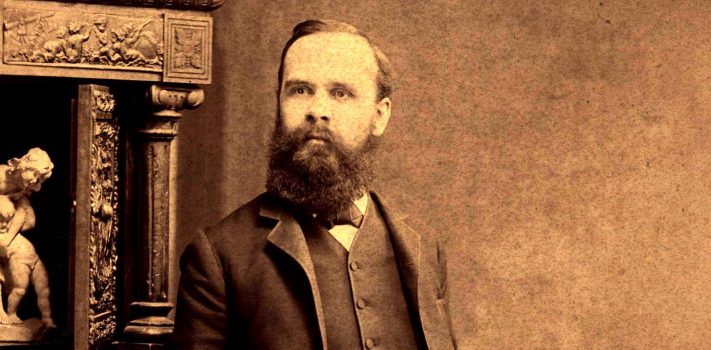
The Three Stages of TEOTWAWKI – Part 3, by St. Funogas

(Continued from Part 2.  This concludes the article.)

STAGE 2: SURVIVAL MODE

The survival phase is the intermediate period between the very short-term emergency phase and the time when things finally settle down to the New Normal phase.

Once everyone is finally gathered together at the homestead, defenses set up, the freezer contents are canned, freeze dried, smoked, or those blueberries made into cobbler as a comfort food during those first few stressful days, and once we’ve got meals back to some sort of a schedule, chores divvied out, watch times established, and water and propane conservation rules tacked to the wall, we can begin to relax just a little as we transition into survival mode.Continue reading“The Three Stages of TEOTWAWKI – Part 3, by St. Funogas”


The Survivalist’s Odds ‘n Sods

SurvivalBlog presents another edition of The Survivalist’s Odds ‘n Sods. This column is a collection of news bits and pieces that are relevant to the modern survivalist and prepper from JWR. Our goal is to educate our readers, to help them to recognize emerging threats, and to be better prepared for both disasters and negative societal trends. You can’t mitigate a risk if you haven’t first identified a risk. In today’s column:  Louder War Drums, in Europe.

A Run on Canned Goods and Radios

Over In Denmark: A Run on Canned Mackerel and Emergency Radios. The Reason? Drones.

The BBC on Doomsday Bunkers

From the ever-optimistic BBC: Most doomsday preppers have it wrong. This is actually how to survive the apocalypse.

Popular Mechanics Goes Prepper

SurvivalBlog Staffer Tom Christianson sent this, from Popular Mechanics: Emergencies Happen. Here’s How to Prepare.

Continue reading“The Survivalist’s Odds ‘n Sods”


The Editors’ Quote of the Day:

“Citizens were truly free when they could engage ‘what is just and good without fear.’ Liberty was therefore a positive act of will. Liberty was not an ‘enemy of all authority’ but ‘a civil and moral’ quality that made it possible for individuals, singly or in groups, to realize their potential. Tocqueville, who believed in the possibilities of human achievement, embraced the idea of liberty as capable of fostering equality. With liberty empowering individuals, equality could spread. There began the great challenge of modern history, that of balancing liberty and equality.

Tocqueville kept arguing in successive formulations that the two concepts of liberty and equality, so easily at odds, actually touch and join. For one cannot be free without being equal to others; and one cannot be equal to others, in a positive sense, without being free.

For Tocqueville, the combination of equality and liberty was the best possible human condition, while equality without liberty was among the worst, as he had argued in the prison report. Although Tocqueville asserted that equality and liberty ideally should be mutually reinforcing in democratic life, he recognized that men loved equality passionately but often resented the kind of demanding liberty that democracy required. It was simply too much work to set positive liberty in motion and sustain it. Indeed, Tocqueville underscored that ‘nothing is harder than the apprenticeship of liberty.’ As a result, Tocqueville charged, too many accept ‘equality in servitude’ (the result of leveling) and prefer it over the more demanding condition of ‘inequality in freedom.’

Only by acquiring the habit of liberty, Tocqueville argued throughout the book, could a democratic society make creative use of equality and liberty was the precondition for the dogma of popular sovereignty to ’emerge from the towns,’ take possession of the government,’ and become ‘law of laws.” – Olivier Zunz, from The Man Who Understood Democracy: The Life of Alexis de Tocqueville




Preparedness Notes for Wednesday — October 8, 2025

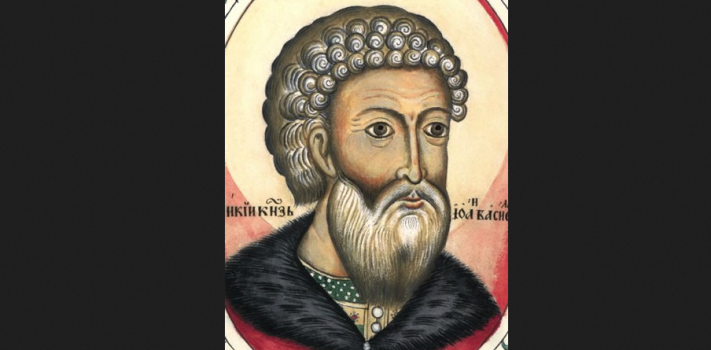
October 8, 1480: Great Stand on the Ugra River: A standoff between the forces of Akhmat Khan, Khan of the Great Horde, and Ivan III, Grand Prince of all Rus (pictured), ended with a Tatar-Mongol retreat, leading to the disintegration of the Horde. Ivan III, a.k.a. Ivan The Great, sometimes referred to as the “gatherer of the Russian lands”, tripled the territory of his state, ended the dominance of the Golden Horde over the Rus, renovated the Moscow Kremlin, and laid the foundations of the Russian state.

October 8th, 1947 was the birthday of economist and libertarian commentator J. Orlin Grabbe. He passed away on March 15, 2008.

SurvivalBlog Writing Contest

Today we present another entry for Round 121 of the SurvivalBlog non-fiction writing contest. The prizes for this round include:

First Prize:

  1. A Gunsite Academy Three Day Course Certificate. This can be used for any of their one, two, or three-day course (a $1,095 value),
  2. A Peak Refuel “Wasatch Pack” variety of 60 servings of premium freeze-dried breakfasts and dinners in individual meal pouches — a whopping 21,970 calories, all made and packaged in the USA — courtesy of Ready Made Resources (a $350 value),
  3. American Gunsmithing Institute (AGI) is providing a $300 certificate good towards any of their DVD training courses. Their course catalog now includes their latest Survival Gunsmithing course.
  4. HSM Ammunition in Montana is providing a $350 gift certificate. The certificate can be used for any of their products.

Second Prize:

  1. A SIRT STIC AR-15/M4 Laser Training Package, courtesy of Next Level Training, that has a combined retail value of $679
  2. Two 1,000-foot spools of full mil-spec U.S.-made 750 paracord (in-stock colors only) from TOUGHGRID.com (a $287 value).
  3. Preparedness author Jennifer Rader is offering a $200 purchase credit for any of her eight published food storage and medical preparedness books, including the Good Eats at the TEOTWAWKI Café series, the Armageddon Pharmacy series, and the Medicine Surrounds Us series.
  4. A transferable $150 FRN purchase credit from Elk Creek Company, toward the purchase of any pre-1899 antique gun. There is no paperwork required for delivery of pre-1899 guns into most states, making them the last bastion of gun purchasing privacy!

Third Prize:

  1. A Berkey Light water filter, courtesy of USA Berkey Filters (a $305 value),
  2. Two sets of The Civil Defense Manual, (in two volumes) — a $193 value — kindly donated by the author, Jack Lawson.
  3. A $200 credit from Military Surplus LLC that can be applied to purchase and/or shipping costs for any of their in-stock merchandise, including full mil-spec ammo cans, Rothco clothing and field gear, backpacks, optics, compact solar panels, first aid kits, and more.
  4. A transferable $150 FRN purchase credit from Elk Creek Company, toward the purchase of any pre-1899 antique gun.

More than $970,000 worth of prizes have been awarded since we started running this contest.  Round 121 ends on November 30th, so get busy writing and e-mail us your entry. Remember that there is a 1,500-word minimum, and that articles on practical “how-to” skills for survival have an advantage in the judging. In 2023, we polled blog readers, asking for suggested article topics. Please refer to that poll if you haven’t yet chosen an article topic.


The Three Stages of TEOTWAWKI – Part 2, by St. Funogas

(Continued from Part 1.)

CLASSES OF PREPPERS

Truly prepared preppers – These preppers took things seriously, even if the chance of a SHTF event wasn’t highly probable. They weighed the probabilities against the consequences of not being prepared and chose to prepare. For many, the self-reliance skills learned, knowledge gained, and talents developed while prepping made it worth it, SHTF or not. The psychological benefit of being ready for anything is also a big plus.

The most prepared preppers will have a written plan to employ as soon as they realize that today’s The Day. They’ve done simulations and practice runs and everyone knows what their job is without a second thought. A short meeting is held anyway, calmly explaining it’s time to put the plan into action and quickly reviewing everyone’s responsibilities for Day One. Their Emergency Phase will be fairly calm and short, only lasting for a week or so, before they fully transition into stage two, Survival Mode.Continue reading“The Three Stages of TEOTWAWKI – Part 2, by St. Funogas”


SurvivalBlog Readers’ & Editors’ Snippets

Our weekly Snippets column is a collection of short items: responses to posted articles, practical self-sufficiency items, how-tos, lessons learned, tips and tricks, and news items — both from readers and from SurvivalBlog’s editors. Note that we may select some long e-mails for posting as separate letters.

Blizzard traps nearly 1,000 hikers on slopes of Mount Everest.  (The Creative Commons photo above is by Göran Höglund.)

Update: Mount Everest rescuers battle heavy snow with hundreds still stranded — BBC News.

o  o  o

Reader Richard T. was the first of several readers to mention this video: After 5 Years, I Found The Only Fuel Stabilizer That Works!

o  o  o

The current precious metals bull market has prompted me to increase our silver coinage divisor at Elk Creek Company to an unprecedented 35.3. So, if you’d like to diversify from one tangible investment into another, this is a great time to make your purchases from your stockpile of pre-1965 U.S. “junk” silver coins.  At checkout, you will see the message:  “Do you want to pay in Pre-1965 silver coinage? If so, then divide the price by 35.3.”  Just select “cash or check” at checkout and then send me an e-mail, telling me that you will be paying with 90% silver dimes, quarters, or half-dollars.  You may round down to the nearest 10 cents.  Here is an example:  Say that the total (with postage) for your order is $280.  Divide that by 35.3 and you get $7.93.  Rounding down, you would mail just $7.90 face value in pre-1965 U.S. silver coins, in a small, well-padded rattle-free package. It is quite simple to do. – JWR

o  o  o

My e-mail inbox is often populated with the same sorts of questions from newbie preppers.  Most of those are answered in our Quick Start Guide static page. I coincidentally had two new SurvivalBlog readers ask the same question on the same day: They both wanted to know my criteria for selecting a survival retreat property.  That question is answered in this 2022 blog article:  A Retreat Locale Selection Criteria Update. – JWR

Continue reading“SurvivalBlog Readers’ & Editors’ Snippets”


Preparedness Notes for Tuesday — October 7, 2025

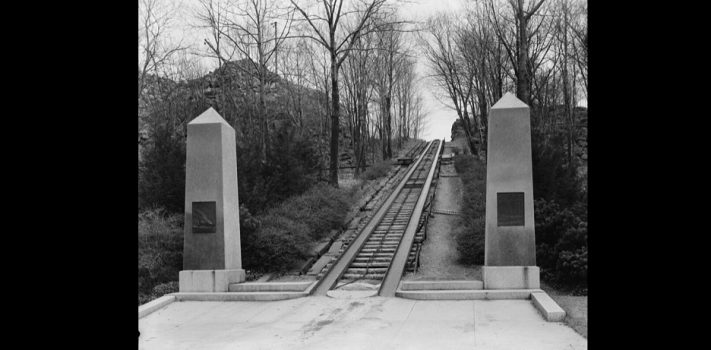
On October 7, 1826, the Granite Railway began operations. It was the first chartered railway in the United States. It was built to carry granite from a quarry in Quincy, Massachusetts, to a dock on the Neponset River in Milton. From there, boats carried the heavy stone to Charlestown, for construction of the Bunker Hill Monument. The railway ran three miles (4.8 km) from quarries to the Neponset River. Its wagons had wheels 6 ft (1.83 m) in diameter and were pulled by horses. Pictured is the railway’s incline section, photographed in 1934.

On October 7, 1909, the British Security Service, commonly known as MI5 (Military Intelligence, Section 5), was formed as part of the Secret Service Bureau. The agency is tasked with domestic counter-intelligence and security. It is now headquartered at Thames House, in London. The service is sometimes jokingly called “Box” or “Box 500″, in reference to its wartime address at P.O. Box 500, London.

SurvivalBlog Writing Contest

Today we present another entry for Round 121 of the SurvivalBlog non-fiction writing contest. The prizes for this round include:

First Prize:

  1. A Gunsite Academy Three Day Course Certificate. This can be used for any of their one, two, or three-day course (a $1,095 value),
  2. A Peak Refuel “Wasatch Pack” variety of 60 servings of premium freeze-dried breakfasts and dinners in individual meal pouches — a whopping 21,970 calories, all made and packaged in the USA — courtesy of Ready Made Resources (a $350 value),
  3. American Gunsmithing Institute (AGI) is providing a $300 certificate good towards any of their DVD training courses. Their course catalog now includes their latest Survival Gunsmithing course.
  4. HSM Ammunition in Montana is providing a $350 gift certificate. The certificate can be used for any of their products.

Second Prize:

  1. A SIRT STIC AR-15/M4 Laser Training Package, courtesy of Next Level Training, that has a combined retail value of $679
  2. Two 1,000-foot spools of full mil-spec U.S.-made 750 paracord (in-stock colors only) from TOUGHGRID.com (a $287 value).
  3. Preparedness author Jennifer Rader is offering a $200 purchase credit for any of her eight published food storage and medical preparedness books, including the Good Eats at the TEOTWAWKI Café series, the Armageddon Pharmacy series, and the Medicine Surrounds Us series.
  4. A transferable $150 FRN purchase credit from Elk Creek Company, toward the purchase of any pre-1899 antique gun. There is no paperwork required for delivery of pre-1899 guns into most states, making them the last bastion of gun purchasing privacy!

Third Prize:

  1. A Berkey Light water filter, courtesy of USA Berkey Filters (a $305 value),
  2. Two sets of The Civil Defense Manual, (in two volumes) — a $193 value — kindly donated by the author, Jack Lawson.
  3. A $200 credit from Military Surplus LLC that can be applied to purchase and/or shipping costs for any of their in-stock merchandise, including full mil-spec ammo cans, Rothco clothing and field gear, backpacks, optics, compact solar panels, first aid kits, and more.
  4. A transferable $150 FRN purchase credit from Elk Creek Company, toward the purchase of any pre-1899 antique gun.

More than $970,000 worth of prizes have been awarded since we started running this contest.  Round 121 ends on November 30th, so get busy writing and e-mail us your entry. Remember that there is a 1,500-word minimum, and that articles on practical “how-to” skills for survival have an advantage in the judging. In 2023, we polled blog readers, asking for suggested article topics. Please refer to that poll if you haven’t yet chosen an article topic.


The Three Stages of TEOTWAWKI – Part 1, by St. Funogas

This article discusses some of the thoughts I’ve had about the different stages of post-SHTF life while writing my upcoming article, “A Realistic Top-10 Prepping List.” Consider this a preface to that article.

Everything presented here is my opinion of course. As I’ve prepped and worked towards living a self-reliant lifestyle, I’ve thought a lot about things over the years. Many of my conclusions are based on history, ideas presented in some of the post-apocalyptic novels and movies, reading daily SurvivalBlog articles for the past seven years, and concerns about my current situation if the Schumer hits the fan next Thursday. Some of the possibilities presented here may come to pass if we were to end up in a long-term grid-down world.Continue reading“The Three Stages of TEOTWAWKI – Part 1, by St. Funogas”


SurvivalBlog’s News From The American Redoubt

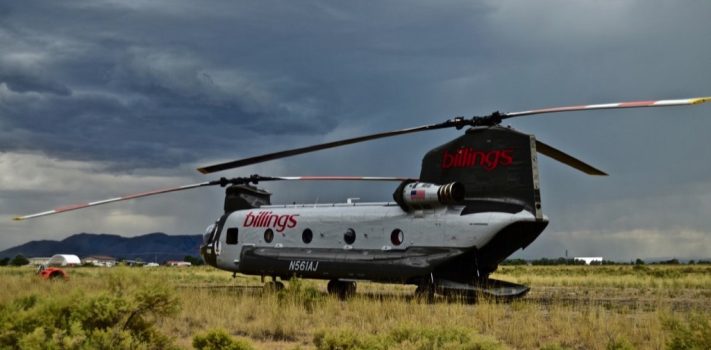
This weekly column features news stories and event announcements from around the American Redoubt region. (Idaho, Montana, eastern Oregon, eastern Washington, and Wyoming.) Much of the region is also more commonly known as The Inland Northwest. We also mention companies located in the American Redoubt region that are of interest to preppers and survivalists. Today, news about some CH-47 Chinook firefighting helicopters based in Montana.  (See the Montana and Wyoming sections. The photo above is courtesy of Billings Fyling Service and Lost In The Woods Photography.)

Idaho

Idaho’s small arms market anticipates more growth.

o  o  o

Reader C.B.  flagged this one: Protests Erupt as School Board Stands by Decision to Suspend Football Players over Airsoft Photo.

o  o  o

Primary Weapons Systems in Boise is ramping up to meet the expected demand for their 3D-printed suppressors in 2026. JWR’s Comment: With the $200 suppressor transfer tax scheduled to be dropped to zero in January, the demand will surely be tremendous.

Continue reading“SurvivalBlog’s News From The American Redoubt”


Preparedness Notes for Monday — October 6, 2025

On October 6, 1889: The first recorded ascent of the summit of Mount Kilimanjaro, Africa’s highest peak, by German climber Hans Meyer and Austrian Ludwig Purtscheller.

October 6, 1890: The General Conference of the Latter-day Saints belatedly outlawed polygamy. Their foot-dragging delayed Utah’s admission as a state until 1896.

Today is the birthday of science fiction author David Brin (born, 1950.) He wrote The Postman, which was very loosely the foundation of a movie of the same name by Kevin Costner.

Today’s feature is a review by Field Gear Editor Tom Christainson.


Christensen Arms Ranger in .22LR, by Thomas Christianson

Every gun cabinet should contain at least one rifle chambered in .22LR. The .22LR rimfire ammo is available in a wide variety of loads at reasonable prices. There is minimal recoil, minimal noise, and .22LR is a whole lot of fun to shoot. For training, for pest control, and for an all-around good time, there are few chamberings to match .22LR.

Weighing in at just 5.1 pounds, the Christensen Arms Ranger in .22LR is an amazingly light and well-balanced bolt-action tack-driver with an excellent trigger.

The threaded, 18-inch, hand-lapped, carbon-fiber-tension-over-stainless-steel-core barrel is well matched with a carbon-fiber stock with a black-with-gray-webbing finish. The muzzle is threaded with the ubiquitous ½×28 — the same that is used on most small-bore ARs — so it can accommodate a suppressor, a linear muzzle brake, or a wide range of other muzzle devices.

It comes standard with a Ruger BX-1 magazine, which opens the possibility of using the compatible, higher-capacity BX-15, BX-25, or clone magazines, as well.

The rifle was a pleasure to shoot.

With a manufacturer-suggested retail price of $849.99 at the time of this writing, the Ranger is more expensive than budget .22s and less expensive than most high-end .22s, while offering premium performance. If you are looking for a mid-range-priced .22 rimfire that gives high-end results, you would be hard-pressed to find a better choice than the Ranger.Continue reading“Christensen Arms Ranger in .22LR, by Thomas Christianson”


Recipe of the Week:

The following brief recipe for End of Season Vegetable Broth is from SurvivalBlog reader Mrs Alaska.

She writes:  “I make broth from end-of-season greens that aren’t great for fresh eating.

The peas that burst.  The hairy squash and cucumber leaves.  The celery that is great now but will not winter well.   Avoid any leaves that you should NOT eat, like tomatoes, rhubarb, and (flowers: sweet peas).

When the temperatures drop to the low 40s, I clean the gardens of vegetable leaves that will not overwinter and plop them in a 5-gallon pot of water, along with garlic and onion.

The recipe from Ball’s Blue Book of Canning is to boil gently for 2 hours with a lid on, and 2 hours with the lid off (to concentrate the flavor) and then pressure can for about 30 minutes (check your own books and resources).

I just canned 12 quarts of End of Season Vegetable Broth to flavor rice, noodles, and sauces throughout the winter.  More for a future day.”

About the Author:  “Mrs. Alaska” and her husband live at a very remote Alaska homestead.  She blogs at Alaska Bush Life, Off-Road, Off-Grid, and she is the author of Log Cabin Reflections, available as an E-book on Kindle for $5.)  She can be contacted at Alaskauu1@gmail.com


SurvivalBlog Graphic of the Week

Today’s graphic: Map of United States Oil and Gas Wells, 2017 — U.S. Geological Survey. (Public domain USGS graphic.)

The thumbnail below is click-expandable.


Please send your graphics or graphics links to JWR. (Either via e-mail or via our Contact form.) Any graphics that you send must either be your own creation or uncopyrighted.