Imagine a time when radio was just some experiment in the labs or basements of inventors trying to figure out the phenomenon of sounds being heard over the air. Seems a bit of a stretch? During the period of 1904 to 1915 the first types of radio transmitters were developed which produced continuous sinusoidal waves: the arc converter (Poulsen Arc) and the Alexanderson alternator. These slowly replaced the old damped-wave spark gap transmitters. Besides having a longer transmission range, these transmitters could be modulated with an audio (voice or music) signal to transmit sound by amplitude modulation (AM) radiotelephony.
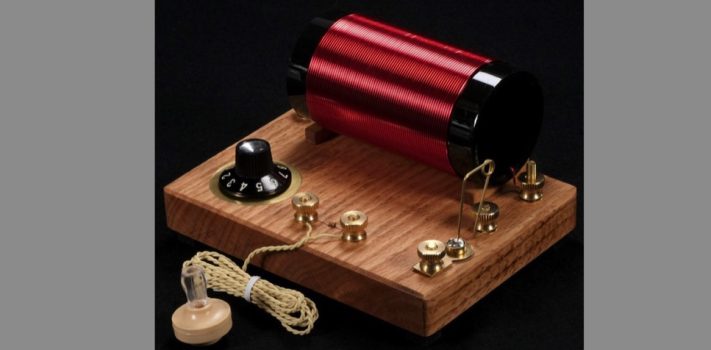
So why bother with such an archaic form of technology when modern electronics offer so many finer ways to listen to music or voice programs? Imagine a world that would have very few radio transmissions going because there is no electricity. Think TEOTWAWKI: Something has happened, we may or may not know what but no matter the reason for some time there is no electrical grid and may not be one coming back for who knows how long. You say, well then if there’s no electrical grid then we won’t have to worry about listening to the radio will we? And you would be correct to some degree; however, sooner or later someone, the “nice government folks” or maybe someone setting in their basement (or cave) is going to start broadcasting something that you will be able to hear.Continue reading“A Crystal Radio Kit for TEOTWAWKI – Part 1, by Mike in Alaska”