Most SurvivalBlog readers are probably familiar with the rule of threes:
- You can survive 3 minutes without breathable air or in icy water before losing consciousness.
- You can survive 3 hours without adequate shelter/clothing in conditions of extreme heat and (especially) cold.
- You can survive 3 days without water. Drinking unpotable water may extend your survival somewhat, but you may ultimately succumb to illness due to waterborne pathogens or toxins.
- You can survive 3 weeks without food.
This rule outlines your priorities in a survival situation. If you fall through the ice into a frozen lake, obtaining an adequate supply of food is not your first priority.
In light of this, imagine that a severe weather event has taken down your local power grid and blocked avenues of transportation. You are safely at home. Your air supply is unaffected. Your home is undamaged, and is providing adequate protection from the elements. But your water supply is cut off, and it does not look like it will be restored for more than a week. What can you do to remain properly hydrated until your water supply is restored?
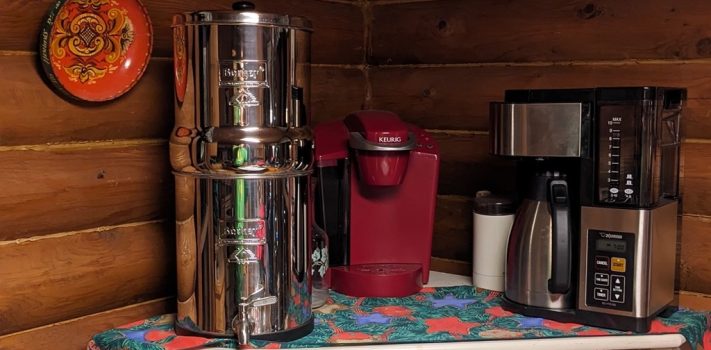
In my case, I have access to alternate sources of water. Among others, these sources include a pond, rain barrels, and a high water table that could be easily accessed via a shallow well. In someone else’s case, these sources might include rivers, lakes, swimming pools, and similar bodies of water. Unfortunately, it would not be advisable to drink water taken from many of these sources without treating that water somehow first. Fortunately, my wife, “Kari” and I have a Travel Berkey Water Filter. The Berkey would enable us to filter water from surface or near-surface sources in order to obtain potable water in a grid-down situation.Continue reading“Travel Berkey Water Filter, by Thomas Christianson”