Prologue: The Dacian Wars: 101-102 and 105-106 AD
During all of their far-flung campaigns, the Roman Legions had never faced a weapon as fearsome as the Dacian falx (“sickle”). The large falx was a two-handed weapon with a roughly 3-foot blade mounted on a roughly 3 foot handle. The long handle provided a tremendous amount of leverage, giving the weapon enough power to split a legionnaire’s helmet or shield with a single blow.
After seeing a large number of Roman corpses with gruesome head wounds, the armorers accompanying the legions adopted a field expedient: they riveted two transverse reinforcing iron straps to the crown of the imperial helmet. The straps worked, and became a permanent feature of the imperial helmet. During the more than 500 years that the Roman Empire existed, this alteration was the most significant modification to the equipment of the Roman Legionnaire.
The Bottom Line, Up Front
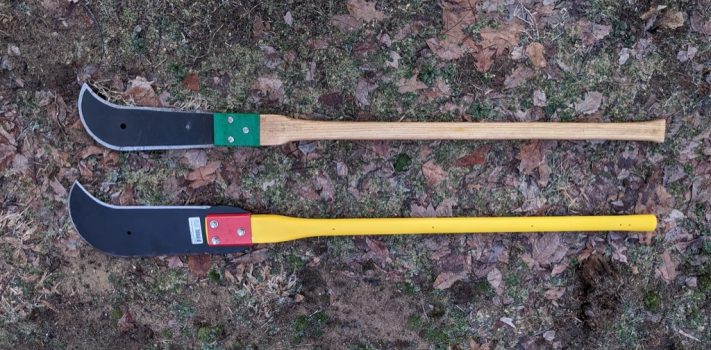
I recently acquired a tool that has much in common with the Dacian falx. It is a Valley GTDB-48 Ditch Bank Blade. A yellow 42-inch fiberglass handle topped by a double-edged 16-inch blade provides tremendous cutting power for clearing brush along my driveway.Continue reading“Valley GTDB-48 Ditch Bank Blade, by Thomas Christianson”