“Be not afraid of any man
No matter what his size
If danger threatens, call on me
And I will equalize.”
– An inscription seen on several Colt Single Action Army Revolvers

“Be not afraid of any man
No matter what his size
If danger threatens, call on me
And I will equalize.”
– An inscription seen on several Colt Single Action Army Revolvers
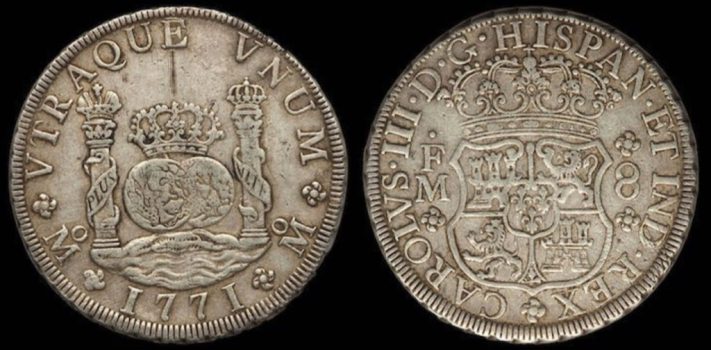
On August 8, 1786, the US Congress unanimously chose the Dollar as the monetary unit for the United States of America. The coin’s specifications were based on the silver composition, diameter, and weight of the Spanish Dollar. Also known as the piece of eight (Spanish: real de a ocho), the famous Spanish Miilled Dollar (pictured) was a silver coin of approximately 38 mm (1.5 in) diameter, worth eight Spanish reales.
—
 A reminder: I will have five tables at the Missoula, Montana Gun Show on August 9-10-11, 2024. This is your chance to shop from about 80% of the Elk Creek Company inventory, including more than 30 antique cartridge guns and percussion guns that have not yet been cataloged. This will include a new batch of several antique Model 1896/11 Swiss rifles. The show will be held in the modest convention center of the Hilton Garden Inn, on North Reserve Street, just south of I-90. To find my tables, look for a five-foot-wide tan “Pre-1899 Federally-Exempt Antique Guns…” banner sign, five tables with dark blue table drapes, and beau coup Mausers. Out-of-state buyers are welcome, but of course, consult your state and local laws before you make a purchase. Thankfully, both pre-1899 guns and blackpowder replicas are exempt in most states.
—
Today we present another entry for Round 114 of the SurvivalBlog non-fiction writing contest. The prizes for this round include:
—
More than $900,000 worth of prizes have been awarded since we started running this contest. In 2023, we polled blog readers, asking for suggested article topics. Please refer to that poll if you haven’t yet chosen an article topic. Round 114 ends on September 30th, so get busy writing and e-mail us your entry. Remember that there is a 1,500-word minimum, and that articles on practical “how-to” skills for survival have an advantage in the judging.
This article is a response to an article on SurvivalBlog.com and other recent discussions that are beginning to examine this threat. To wit, here is the most recent:
As Ukrainian Defenses Collapse, What Can US Patriots Learn?, by Brandon Smith. Therein, Smith observes:
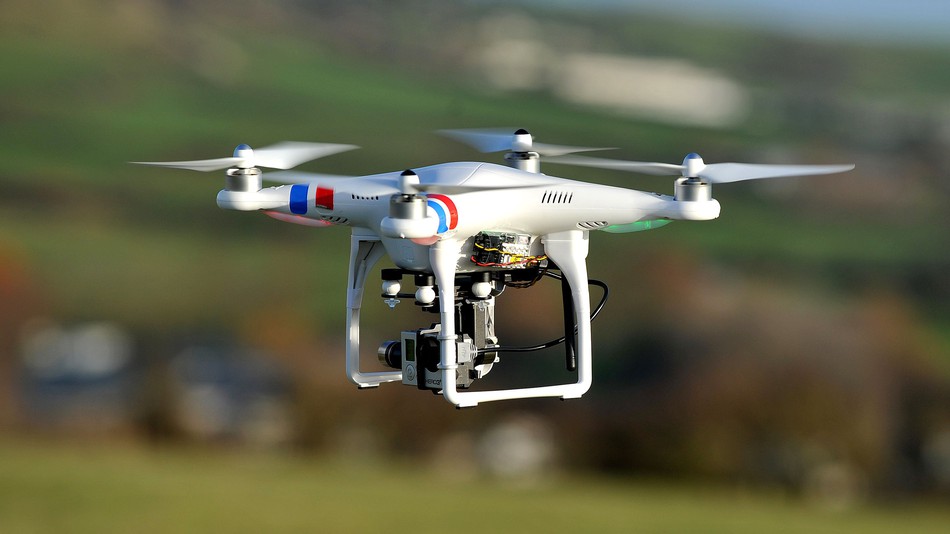
“The real danger is in constant air-based surveillance, 24/7, around the clock, always watching. Maneuver warfare requires the swift relocation of larger units without the enemy being aware; with cheap drones this is no longer possible. All large-scale troop movements can be predicted and countered using nothing more than a handful of $3,000 toys.”
As the discussion on the Internet in patriot circles increases, we continue to examine the threat from drones. In previous articles, I’ve offered several ways to mitigate the threat. In this article, I will review the topic in light of recent discussions such as this example, and and once again offer several of my methods of mitigation that are discussed in detail in my early articles on the topic. But it would be productive to first appreciate the threat that is more than simply a small drone that delivers a High Explosive (HE) device.Continue reading“Mitigating the Drone Threat, by Tunnel Rabbit”
SurvivalBlog presents another edition of The Survivalist’s Odds ‘n Sods. This column is a collection of news bits and pieces that are relevant to the modern survivalist and prepper from JWR. Our goal is to educate our readers, to help them to recognize emerging threats, and to be better prepared for both disasters and negative societal trends. You can’t mitigate a risk if you haven’t first identified a risk. In today’s column, we look at some handloading Canadian homesteaders.
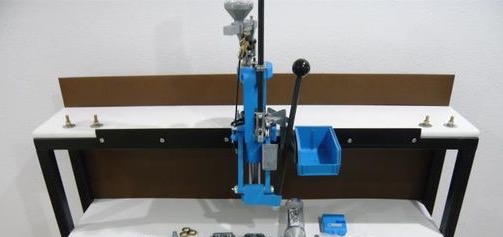
Over at the always entertaining Canadian homesteading Gridlessness vlog: We Made 10,000 Rounds in 24 Hours! DIY Ammo Factory. JWR’s Comments: “Always keep plenty of spare de-priming (a.k.a. “de-capping”) pins on hand. You never know when you’ll run into Berdan-primed brass that you missed, during your initial brass inspection. By the way, that family lives near Williams Lake, British Columbia, which is in the same region where I set part of my novel Liberators.
Reader C.B. sent this: Wargames show the US could burn through its ammo in ‘as few as 3 to 4 weeks’ in a war with China, commission warns. A pericope:
“A new high-profile report on US national defense acknowledged that the Pentagon could deplete its munitions within “three to four weeks” in a protracted war with China.
The 114-page report, published on Monday by a bipartisan commission appointed by Congress, warned urgently that the US is unprepared for a sustained conflict with China or Russia, much less both at the same time.
Many of its assessments were based on previously reported material. Still, the review concentrates a slew of recent findings and dozens of officials’ testimonies into a formal and dire recommendation for the US to increase defense spending and streamline its forces.”
“There are only two ways of telling the complete truth — anonymously and posthumously.” – Thomas Sowell
On August 7, 1420, construction began on the dome of Florence Cathedral, designed by Renaissance architect Filippo Brunelleschi.
—
August 7th, 1933 was the birthday of Jerry Pournelle. He, along with Larry Niven authored the survivalist classic Lucifer’s Hammer.
—
Today we present another entry for Round 114 of the SurvivalBlog non-fiction writing contest. The prizes for this round include:
—
More than $900,000 worth of prizes have been awarded since we started running this contest. In 2023, we polled blog readers, asking for suggested article topics. Please refer to that poll if you haven’t yet chosen an article topic. Round 114 ends on September 30th, so get busy writing and e-mail us your entry. Remember that there is a 1,500-word minimum, and that articles on practical “how-to” skills for survival have an advantage in the judging.
(Continued from Part 1. This concludes the article.)
When most people think of the word ‘barter,’ they think ‘trade,’ or ‘like-for-like.’ The following is a list of possible items that you might want to consider having for bartering purposes, or charitable giving, should the need ever arise. These are merely suggestions.
Barter Item Categories & Suggestions
| Air Gun/Archery: BBs/pellets, CO2 cartridges Spare bow strings, arrows/bolts |
Food: Freeze dried, #10 cans, MRE Flour, yeast, sugar, wheat Coffee/tea, drink mixes Hand crank grinder (meat/grain), spare parts |
| Alcohol: Homemade wine/liquor Airline mini-bottles |
Fuel: 93-octane, diesel, kerosene, white camp fuel, 1 lb. Propane Fuel stabilizer, anti-bacterial, injector cleaner Spare gas cans, assorted gallons, siphon |
| Ammunition: See the ‘Equivalent Value’ section |
Games/Entertainment: Boardgames, card games, dice Books (assorted reading levels) |
| Baby Supplies: Cloth diapers, pins, powder, rash ointments Clothing |
Honey and Salt
(Both have an almost unlimited shelf life, if properly stored.) |
| Batteries: AA, AAA, C, D, 6V, 9V (rechargeable and non-rechargeable) Small solar charger, charging station |
Hunting: See ‘Air Gun/Archery’, ‘Ammunition’, ‘Sling Shot’, and ‘Fishing Gear’ section |
| Cabling: Assorted thickness, cable clamps |
Hygiene (feminine): Diva Cups, pads, tampons Yeast infection cream, UTI pain relief (see ‘Medical Supplies’ section) |
| Candle Making Supplies: Beeswax, tallow, molds, wick material |
Hygiene (general): Soap, cleaning products, razors, shampoo, conditioner, solar shower, lime (for outhouse) Hair/nail clippers, scissors, combs/brushes Toothbrushes/toothpaste, lotion, ChapStick |
| Canning Supplies: Jars, rims, lids, funnels, tongs |
Fire: Matches (all-weather), magnesium flint, Zippo fuel, lighters Lint, fire starting cubes, kindling, firewood |
| Communication: Handie-talkies, hand-crank radio, CB Portable solar panels Paper, pens/pencils, pencil sharpener |
Fishing Gear: Line, weights, bobbers, lures, nets Rod and reel |
| CondomsDuct Tape: Muted colors, assorted roll lengths |
Kitchen Supplies: Aluminum foil, plastic wrap, baggies, plastic ware Assorted tools (whisk, knives, measuring cups/spoons) |
| Duct Tape: Muted colors, assorted roll lengths |
Laundry Detergent |
Continue reading“Bartering in a Post SHTF World – Part 2, by D.K.”
This weekly Snippets column is a collection of short items: responses to posted articles, practical self-sufficiency items, how-tos, lessons learned, tips and tricks, and news items — both from readers and from SurvivalBlog’s editors. Note that we may select some long e-mails for posting as separate letters.
—
Reader H.L. sent us this link: How Appalachia Has Become a Hot—Even Hip—Place To Live That’s Still Dirt Cheap. Here are H.L.’s Comments:
“No one has to tell me how beautiful and affordable West Virginia is. I lived there for 10 years. I loved the land and the people. The four seasons are wonderful, no tornadoes nor hurricanes to speak of, fairly low crime rates, helpful folks, and a reasonable cost of housing. There is lots to do, like fishing, hunting, skiing, and white water rafting. There are four seasons that rival much of New England. West Virginia is great for church-goers. They may be Rednecks, but they are a proud people with a very interesting heritage.”
o o o
A fascinating and inspiring video for all you gardeners and orchardists: I Filmed Plants For 15 Years — Time-lapse Compilation.
o o o
“I see the liberty of the individual not only as a great moral good in itself (or, with Lord Acton, as the highest political good), but also as the necessary condition for the flowering of all the other goods that mankind cherishes: moral virtue, civilization, the arts and sciences, economic prosperity. Out of liberty, then, stem the glories of civilized life.” – Murray N. Rothbard
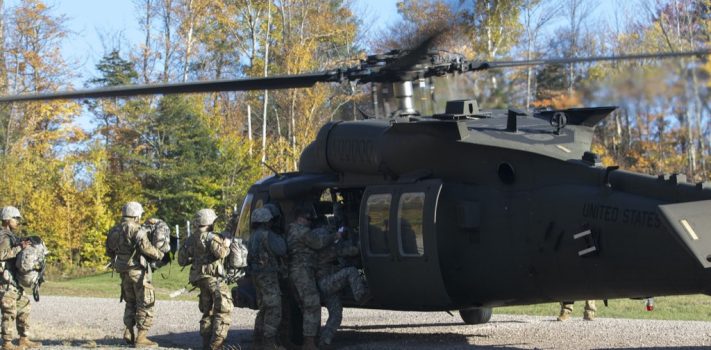
On August 6, 1819, Norwich University was founded in Vermont as the first private military school in the United States. Pictured is a squad of Norwich Army ROTC cadets on an air movement via a 10th Mountain Division Blackhawk helicopter, in 2021. (U.S. Army photo by PFC Ethan Scofield.)
—
August 6, 1699, HMS Roebuck, captained by “explorer and pirate” William Dampier, landed at Shark Bay, Western Australia on the first British scientific expedition to Australia.
—
August 6, 2011, a U.S. CH-47D Chinook military helicopter operating with the call sign Extortion 17 (spoken “one-seven”) was shot down while transporting an Immediate Reaction Force attempting to reinforce a Joint Special Operations Command unit of the 75th Ranger Regiment in the Tangi Valley in Maidan Wardak province, southwest of Kabul, Afghanistan. The resulting crash killed all 38 people on board – 25 US Navy SEALs, one pilot and two crewmen of the United States Army Reserve, one pilot and one crewman of the United States Army National Guard, seven members of the Afghan National Security Forces, and one Afghan interpreter, as well as a U.S. military working dog.
—
On August 6th, 1945 at 8:16 a.m. (Japanese time), an American B-29 bomber– the Enola Gay– dropped the world’s first war-time atom bomb over the city of Hiroshima. Approximately 80,000 people were killed as a result of the blast, with another 35,000 injured. At least another 60,000 would be dead by the end of the year from the effects of the fallout. History is always written by the victors, so the reasoning and justification for this will be argued for years to come. But one thing is for sure: this action officially ushered in the nuclear age in war and has generated mass fear among civilization ever since, even though the firebombing of Japanese cities caused far more damage and loss of life. An interesting side note is Tsutomu Yamaguchi was 3km from the Hiroshima blast but survived. Along with a few other survivors, he made his way to his hometown, Nagasaki, and was again within 3km of the second blast yet survived this one also.
—
Today we present another entry for Round 114 of the SurvivalBlog non-fiction writing contest. The prizes for this round include:
—
More than $900,000 worth of prizes have been awarded since we started running this contest. In 2023, we polled blog readers, asking for suggested article topics. Please refer to that poll if you haven’t yet chosen an article topic. Round 114 ends on September 30th, so get busy writing and e-mail us your entry. Remember that there is a 1,500-word minimum, and that articles on practical “how-to” skills for survival have an advantage in the judging.
Bartering is the exchange of goods and services between two interested parties that does not utilize the current U.S. fiat monetary system, or any national currency system for that matter. Movies and television have presented numerous visuals that help people conceptualize what this might look like on a large scale like “The Hob” in the movie The Hunger Games. In lay terms, incorporating barter items in your preparedness plans is an attempt to anticipate the future needs of those near you or at your destination if bugging out.
Words of caution when it comes to bartering:
First things first, let’s differentiate between some common terms often found floating around the concept of bartering. How does bartering differ from preparing and hoarding?
| Preparing | Hoarding | Bartering |
Optimal Purchasing Prices
|
Sub-Optimal Purchasing Prices
|
Tradeable Commodities, Goods, and Services |
| Goal Oriented | Price Gouging | Fill Gaps in Planning |
| Buy in Bulk | Non-Christian and Sociopathic | Replenish Resources and Rebuild Local Economy |
| Survival/Preparedness Driven | Greed-Driven | Mutual Self-Interest |
Continue reading“Bartering in a Post SHTF World – Part 1, by D.K.”
This weekly column features news stories and event announcements from around the American Redoubt region. (Idaho, Montana, eastern Oregon, eastern Washington, and Wyoming.) Much of the region is also more commonly known as The Inland Northwest. We also mention companies located in the American Redoubt region that are of interest to preppers and survivalists. In today’s column, we cover some “remote” possibilities.
Video: The Great Scenic Loop Of Idaho And Montana.
o o o
SurvivalRealty.com land search: Off-grid properties.
Idaho Off the Grid: An Intimate Look at One of America’s Most Remote States.
o o o
Clark County, Idaho: The least densely populated county in Idaho. Population: 982.
o o o
o o o
Explore It All: Adams Ranger Station, Nez Perce-Clearwater National Forest, Idaho.
Continue reading“SurvivalBlog’s News From The American Redoubt”
“Liberty is not collective, it is personal. All liberty is individual liberty.” – Calvin Coolidge, from an address to the Holy Name Society, Washington, D.C., September 21,1924
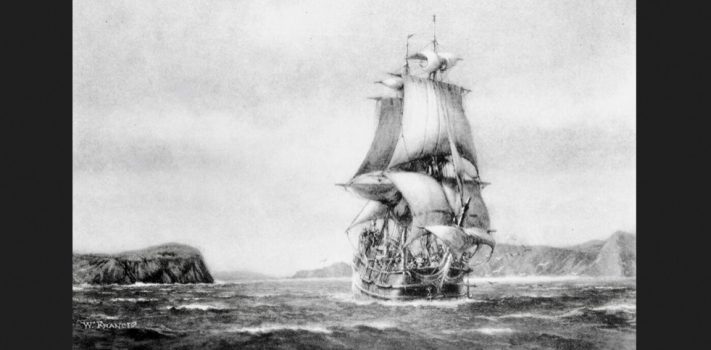
On August 5, 1775, the Spanish packet boat San Carlos entered San Francisco Bay for the first time. It was under the command of Lieutenant Juan Manuel de Ayala. He and his crew of 30 men spent six weeks surveying the bay from its shallow southern end to the northern end of what is now known as Suisun Bay.
—
August 5, 1861: President Lincoln signed the first US personal Income Tax into law. It levied 3% of incomes over $800.
—
On August 5, 1846, the Oregon territory was divided between the United States and Britain at the 49th Parallel.
—
August 5th is also the sad anniversary of the Mann Gulch Fire in Montana that took the lives of 13 firefighters (including 12 smokejumpers and one former smokejumper), in 1949. The intense, fast-moving forest fire took place in what later became the Gates of the Mountains Wilderness. The events of that fire were chronicled in the book Young Men and Fire by Norman Maclean and immortalized in the haunting lyrics of the ballad “Cold Missouri Waters“, by James Keelaghan.
—
A reminder: I will have five tables at the Missoula, Montana Gun Show on August 9-10-11, 2024. This is your chance to shop from about 80% of the Elk Creek Company inventory, including more than 30 antique cartridge guns and percussion guns that have not yet been cataloged. This will include a new batch of several antique Model 1896/11 Swiss rifles. The show will be held in the modest convention center of the Hilton Garden Inn, on North Reserve Street, just south of I-90. To find my tables, look for a five-foot-wide tan “Pre-1899 Guns” banner sign, five tables with dark blue table drapes, and beau coup Mausers. Out-of-state buyers are welcome. But of course, consult your state and local laws before you make a purchase. Thankfully, both pre-1899 guns and blackpowder replicas are exempt in most states.
—
Today’s feature article is a review penned by SurvivalBlog Field Gear Editor Tom Christianson.
—
We are seeking entries for Round 114 of the SurvivalBlog non-fiction writing contest. More than $900,000 worth of prizes have been awarded since we started running this contest. In 2023, we polled blog readers, asking for suggested article topics. Please refer to that poll if you haven’t yet chosen an article topic. Round 114 ends on September 30th, so get busy writing and e-mail us your entry. Remember that there is a 1,500-word minimum, and that articles on practical “how-to” skills for survival have an advantage in the judging.
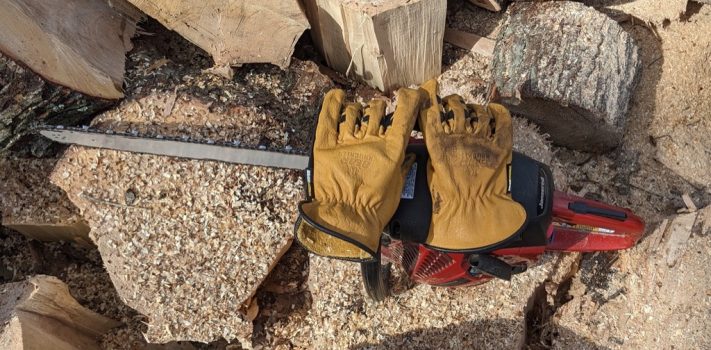
I recently tested several pairs of work gloves that I am really enthusiastic about. They are tough, supple, comfortable, and have excellent dexterity relative to their thickness. They provide the best grip of any gloves that I have ever used. They are Bear Knuckles Gloves.
Bear Knuckles Gloves were originally designed by bareback rider Shawn Schild to give himself a better grip during rodeo competition. The gloves utilize a double wedge pattern along the sides of the fingers to conform to the natural curve of the fingers. This provides a better grip while producing less resistance and fatigue.
I tested one pair of HD361 Double Wedge Heavy Duty Cowhide Driver Gloves (Gen 2) in size large, one pair of the same model in size extra large, and one pair of D357 Double Wedge Water Resistant Cowhide Driver Gloves in size large. All three pairs provided outstanding performance. I liked the water-resistant gloves best.Continue reading“Bear Knuckles Work Gloves, by Thomas Christianson”