
“Democracy is the form of government that gives every man the right to be his own oppressor.” – James Russell Lowell
- Ad Survival RealtyFind your secure and sustainable home. The leading marketplace for rural, remote, and off-grid properties worldwide. Affordable ads. No commissions are charged!
- Ad California Legal Rifles & Pistols!WBT makes all popular rifles compliant for your restrictive state. Choose from a wide range of top brands made compliant for your state.
Preparedness Notes for Monday — December 2, 2024
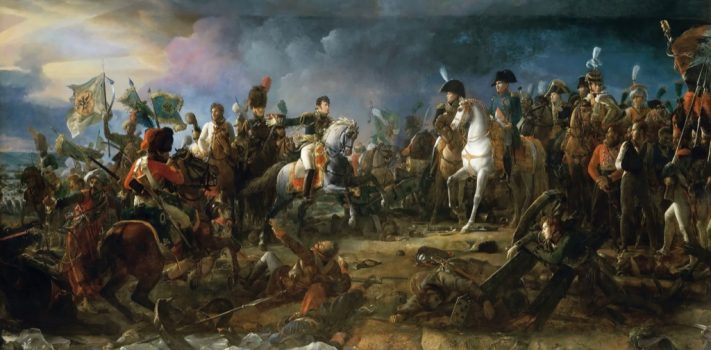
On December 2, 1805, Napoleon defeated the Russians and Austrians at Austerlitz. The painting is a romanticized rendition by French artist François Gérard, circa 1810.
—
December 2, 1927: The first Model A Ford sold, for $385. In paper currency, that would be the equivalent of $6,984.52 in inflated 2024 U.S. Dollars. But in terms of U.S. gold coins that were still circulating in 1927? $385 divided by $20.67 per ounce = 18.63 ounces of gold. The 2024 value of gold of $2,640 x 18.63 = $49,183.20.
—
Our Big Sale Ends at Midnight! We’ve been running a Black Friday sale at Elk Creek Company. All of our pre-1899 shotguns and all of our percussion revolvers are greatly reduced in price. Most of the shotguns have fluid steel barrels and hence are safe to shoot modern high-pressure shotshells. Today, December 2, 2024, is the last day of the sale. The sale prices end at Midnight, Pacific time, tonight.
—
Several SurvivalBlog advertisers are running Cyber Monday sales. Take a look at their websites, for some bargains.
—
Today’s feature article is a review written by SurvivalBlog Filed Gear Editor Tom Christianson.
- Ad STRATEGIC RELOCATION REALTYFOR SALE: Self-sustaining Rural Property situated meticulously in serene locales distant from densely populated sanctuary cities. Remember…HISTORY Favors the PREPARED!
- Ad Prepare for chaos with the essential SIEGE belt. Perfected for CCW with flexible, no-stretch, high-grip custom HD ballistic nylon and capabilities unmatched in any other belt. Go anywhere. Solid 5.5-7 oz of persuasion has saved many. Save $20!SIEGE STOVES: in a fuel crisis twigs are free and abundant. Ultra-compact high-performance portable survival stoves. Enter "SBLOG" at checkout for $20 off any belt. USA-made.
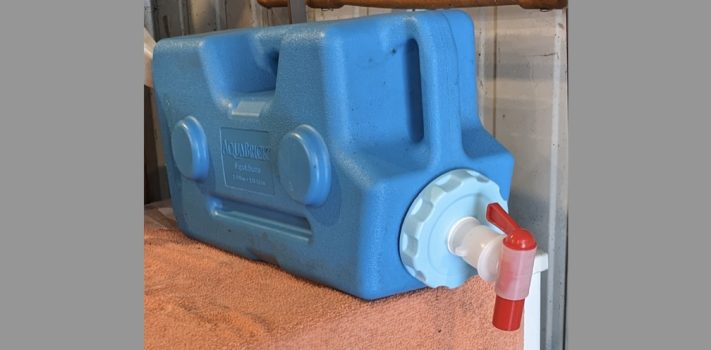
Sagan Life AquaBrick Spigot, by Thomas Christianson
Sometimes small things can have a big impact. A little salt and pepper can really enhance the flavor of a boiled egg. The tiny cruise control can make driving a large vehicle much more pleasant. And a relatively tiny rudder can guide the mightiest ship across the trackless deep.
The Sagan Life AquaBrick Spigot is a small object that greatly enhances the ease of use of the Sagan Life AquaBrick Water Storage Container. Without the spigot, it can be somewhat awkward to pour water from the AquaBrick into a smaller container like a water bottle. With the spigot, the task becomes a breeze.Continue reading“Sagan Life AquaBrick Spigot, by Thomas Christianson”
- Ad SurvivalRealty.com: Sell Your Remote LandAdvertise your hard-to-sell remote land to eager buters. We specialize in rural, remote, and off-grid properties worldwide. Affordable ads. No commissions are charged!
- Ad Elk Creek Company - Federally-Exempt No-Paperwork GunsPre-1899 Antique Cartridge Guns -- No FFL Required. Can be mailed to your doorstep with no Federal paperwork!

Recipe of the Week: Leftover Turkey Casserole
The following recipe for Leftover Turkey Casserole is from SurvivalBlog reader Angie T.. She says: “This mostly uses Thanksgiving dinner leftovers, but I always keep Mozzarella cheese on hand.”
Ingredients
- Turkey
- Mashed potatoes
- Turkey gravy
- Stuffing
- Cooked Rice
- Carrots
- Peas
- Green beans
- Cranberry sauce (Whole berry or jellied type)
- Mozzarella Cheese (can substitute cheddar)
- Garlic powder (if desired)
- Salt and Pepper, to taste
Directions
Just layer the available ingredients together as a casserole. Make some stuffing the top layer, so that it gets slightly crispy. Bake it briefly, at 300 F — just a bit more then re-heating.
—
Do you have a well-tested recipe that would be of interest to SurvivalBlog readers? In this weekly recipe column, we place emphasis on recipes that use long-term storage foods, recipes for wild game, dutch oven recipes, slow cooker recipes, and any recipes that use home garden produce. If you have any favorite recipes, then please send them via e-mail. Thanks!
- Ad Click Here --> Civil Defense ManualNOW BACK IN STOCK How to protect, you, your family, friends and neighborhood in coming times of civil unrest… and much more!
- Ad Survival RealtyFind your secure and sustainable home. The leading marketplace for rural, remote, and off-grid properties worldwide. Affordable ads. No commissions are charged!
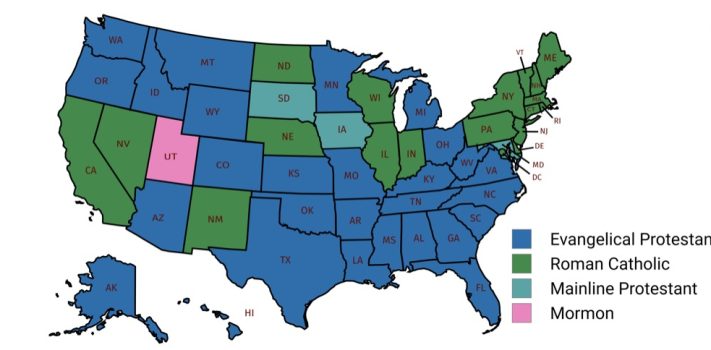
SurvivalBlog Graphic of the Week
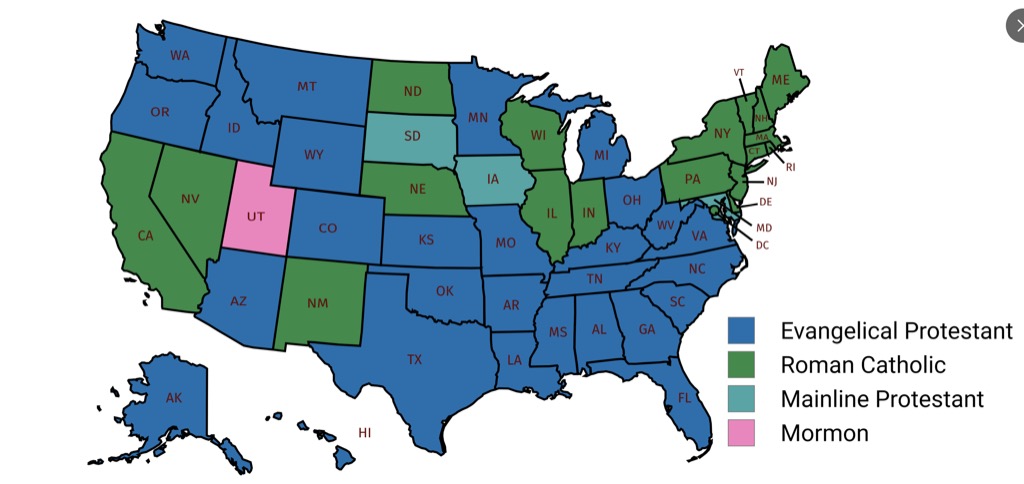
Today’s graphic: A map showing the largest Christian group in every U.S. state. (Graphic courtesy of Reddit.)
The thumbnail below is click-expandable.
—
Please send your graphic ideas to JWR. (Either via e-mail or via our Contact form.) Any graphics that you send must either be your own creation or uncopyrighted.
- Ad USA Berkey Water Filters - Start Drinking Purified Water Today!#1 Trusted Gravity Water Purification System! Start Drinking Purified Water now with a Berkey water filtration system. Find systems, replacement filters, parts and more here.
- Ad USA Berkey Water Filters - Start Drinking Purified Water Today!#1 Trusted Gravity Water Purification System! Start Drinking Purified Water now with a Berkey water filtration system. Find systems, replacement filters, parts and more here.

The Editors’ Quote of the Day:
“There is no provision by a bill of rights to guard against the dangerous encroachments of power in too many instances to be named: but I cannot pass over in silence the insecurity in which we are left with regard to warrants unsupported by evidence — the daring experiment of granting writs of assistance in a former arbitrary administration is not yet forgotten in the Massachusetts; nor can we be so ungrateful to the memory of the patriots who counteracted their operation, as so soon after their manly exertions to save us from such a detestable instrument of arbitrary power, to subject ourselves to the insolence of any petty revenue officer to enter our houses, search, insult, and seize at pleasure. We are told by a gentleman of too much virtue and real probity to suspect he has a design to deceive —” that the whole constitution is a declaration of rights,”— but mankind must think for themselves, and to many very judicious and discerning characters, the whole constitution with very few exceptions appears a perversion of the rights of particular states, and of private citizens. But the gentleman goes on to tell us, “that the primary object is the general government, and that the rights of individuals are only incidentally mentioned, and that there was a clear impropriety in being very particular about them.” But, asking pardon for dissenting from such respectable authority, who has been led into several mistakes, more from his prediliction in favour of certain modes of government, than from a want of understanding or veracity. The rights of individuals ought to be the primary object of all government, and cannot be too securely guarded by the most explicit declarations in their favor. This has been the opinion of the Hampdens, the Pyms, and many other illustrious names, that have stood forth in defence of English liberties; and even the Italian master in politicks, the subtle and renouned Machiavel acknowledges, that no republic ever yet stood on a stable foundation without satisfying the common people.” – Mercy Otis Warren, 1788
- Ad Elk Creek Company - Percussion Blackpowder Guns - No FFL Required.Elk Creek Company - Percussion Blackpowder Guns - Pre-1899 Guns - Knives - Bayonets - Magazines - The last bastion of privacy!
Preparedness Notes for Sunday — December 1, 2024
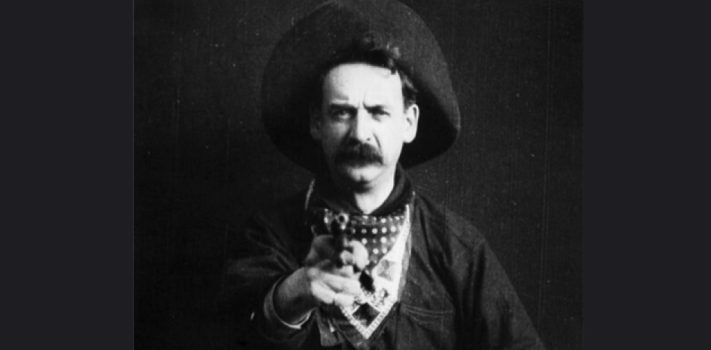
December 1, 1903: Release of “The Great Train Robbery” the first Western film, starring Justus D. Barnes and G. M. Anderson.
December 1, 1966: The radio time signal WWV was moved from Greenbelt, Maryland to Boulder, Colorado.
—
Today is also the birthday of gun designer Charles Cashman Kelsey, Jr. of DEVEL fame. He was born December 1,1935. He was murdered in Texas under mysterious circumstances in April, 2003.
—
This is also the birthday of novelist Rex Stout (1886–1975). Rex Stout was the brother of Ruth Stout, the gardener who wrote about no till, year-round mulching, organic gardening in her book Gardening Without Work: For the Aging, the Busy, and the Indolent.
—
Just One Day Left! We are running a Black Friday sale at Elk Creek Company. Until December 2, 2024, all of our shotguns and all of our percussion revolvers are greatly reduced. Take a look!
—
Today we present a short guest article from a familiar name. It is not an entry for Round 116 of the SurvivalBlog non-fiction writing contest.
But first, the results of the judging for Round 115:

Writing Contest Judging Results (Round 115)
We’ve completed the judging for Round 115 of the SurvivalBlog non-fiction writing contest. The judging for this round was very difficult since there were five very informative Hurricane Helene after-action reports and several excellent technical articles.
First Prize goes to Soyez Ferme, for Hurricane Milton After Action Review. See: Part 1, Part 2, and Part 3. It was posted on October 23-24-25, 2024.
His prizes will include:
- The photovoltaic power specialists at Quantum Harvest LLC are providing a store-wide 10% off coupon. Depending on the model chosen, this could be worth more than $2000.
- A Gunsite Academy Three Day Course Certificate. This can be used for any of their one, two, or three-day course (a $1,095 value),
- A Peak Refuel “Wasatch Pack” variety of 60 servings of premium freeze-dried breakfasts and dinners in individual meal pouches — a whopping 21,970 calories, all made and packaged in the USA — courtesy of Ready Made Resources (a $350 value),
- American Gunsmithing Institute (AGI) is providing a $300 certificate good towards any of their DVD training courses. Their course catalog now includes their latest Survival Gunsmithing course.
- HSM Ammunition in Montana is providing a $250 gift certificate. The certificate can be used for any of their products.
Second Prize goes to A.F. for: Lessons From Hurricane Helene. See: Part 1, Part 2, Part 3, and Part 4. It was posted November 12-to-15, 2024
His prizes will include:
- A SIRT STIC AR-15/M4 Laser Training Package, courtesy of Next Level Training, that has a combined retail value of $679
- Two 1,000-foot spools of full mil-spec U.S.-made 750 paracord (in-stock colors only) from www.TOUGHGRID.com (a $240 value).
- A Laptop EMP Shield and a Smartphone Faraday Bag (a combined value of $200), courtesy of MobileSecSolutions.com.
- Two sets of The Civil Defense Manual, (in two volumes) — a $193 value — kindly donated by the author, Jack Lawson.
- Two Super Survival Pack seed collections, a $150 value, courtesy of Seed for Security, LLC.
- A transferable $150 FRN purchase credit from Elk Creek Company, toward the purchase of any pre-1899 antique gun. There is no paperwork required for delivery of pre-1899 guns into most states, making them the last bastion of gun purchasing privacy!
Third Prize goes to St. Funogas for Just-In-Time Food Storage. See: Part 1, Part 2, Part 3, Part 4, and Part 5. It was posted from October 29 to November 2, 2024.
His prizes will include:
- A Berkey Light water filter, courtesy of USA Berkey Filters (a $305 value),
- Three sets each of made-in-USA regular and wide-mouth reusable canning lids. (This is a total of 300 lids and 600 gaskets.) This prize is courtesy of Harvest Guard (a $270 value)
- A $200 credit from Military Surplus LLC that can be applied to purchase and/or shipping costs for any of their in-stock merchandise, including full mil-spec ammo cans, Rothco clothing and field gear, backpacks, optics, compact solar panels, first aid kits, and more.
- A transferable $150 FRN purchase credit from Elk Creek Company, toward the purchase of any pre-1899 antique gun.
Honorable Menton Prizes (transferable $100 FRN purchase credits toward the purchase of any antique or percussion replica gun from Elk Creek Company) go to the authors of the following 13 articles:
- Our Hurricane Experience in South Carolina, by K.U.
- A Home-Made Water Filter, by Richard T.
- Lessons Learned from Hurricane Helene, by N.C. Ham
- U.S. Military Tent Stoves, by Tunnel Rabbit. See: Part 1, Part 2, Part 3, Part 4, and Part 5.
- Photovoltaic Power and Prepping, by B.S.V.. See: Part 1, Part 2, Part 3, and Part 4.
- Georgia: Hurricane Helene, by Forward Preppers. See Part 1 and Part 2.
- POL for Preppers and Shooters, by Dr. Rick
- Relationships, Communities, and Resources, by 3AD Scout
- Pressure Cooker Lessons Learned, by St. Funogas. See: Part 1, Part 2, and Part 3.
- Making Dosa the Old School Way, by E.P.
- Mentoring: Steps Toward Changing The World, by A Grateful Mechanic. See Part 1 and Part 2.
- Backyard Chicken Tips, by Tractorguy
- Chainsaws for a Decade of Service, by Tunnel Rabbit. See: Part 1, Part 2, Part 3, and Part 4.
Note: I will need USPS and UPS addresses from the Top Three prize winners. Thanks! – JWR
More than $925,000 worth of prizes have been awarded since we started running this contest. In 2023, we polled blog readers, asking for suggested article topics. Refer to that poll if you haven’t yet chosen an article topic. Round 116 is underway and ends on January 31st, so get busy writing and e-mail us your entry. Remember that there is a 1,500-word minimum, and that articles on practical “how-to” skills for survival have an advantage in the judging.

An Important Time For Giving, by SaraSue
If anyone has funds to spare, I want to remind SurvivalBlog readers that the communities in Western North Carolina and Eastern Tennessee are still suffering the devastation from Hurricane Helene. Since our government failed these people, We The People have responded en masse to take care of them. There are people still living in tents as the snow starts to fall. Many many people have donated trailers, Buddy heaters, blankets, clothing, and food to help keep these families intact.
You may ask why those people are still living in those devastated areas. Many have no other place, or the funds, to go somewhere else; many feel that if they leave their property, the government will come in and take it; if they ask for help, CPS will swoop in and take their children. It is a very dire situation. Many local organizations and churches are in the thick of it. So many people have donated [tangible supplies] that they have run out of warehouse space. So now they are asking for only monetary donations so they can meet the very specific needs of each family and their children. Thank you and may the Lord bless you and yours through this season.
This gentleman has kept us all updated on his YouTube channel: Deep River Farm.Continue reading“An Important Time For Giving, by SaraSue”
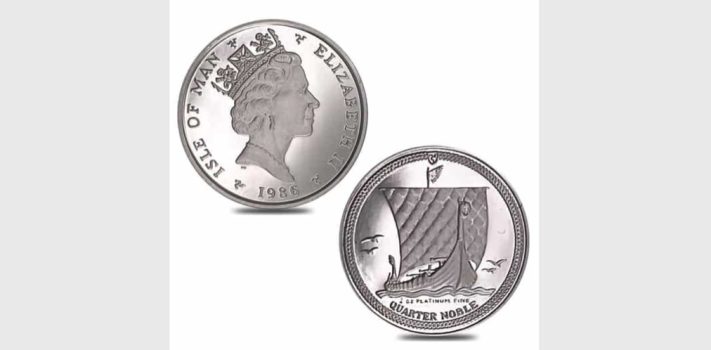
November, 2024 in Precious Metals, by Everett Millman
Welcome to SurvivalBlog’s Precious Metals Month in Review, where we take a look at “the month that was” in precious metals. Each month, we cover gold’s performance and silver’s performance and examine the factors that affected the metal prices.
WHAT DID GOLD AND SILVER DO IN NOVEMBER?
The inevitable finally happened: gold and silver had a down month.
Both metals traded slightly lower on November 1st, with silver dipping to $32.40 per troy ounce and gold holding above $2,730/oz. The following week began with modest gains until the wheels fell off on Wednesday, Nov. 6th: gold lost 3% to fall to $2,660/oz and silver shed $1.46 (-4.5%) to $31.16/oz. Despite rebounding on Thursday, Nov. 7th, those gains were swiftly erased the next day. The week spanning from Nov. 11th to Nov. 15th saw the precious metals post losses during five consecutive trading sessions.
Silver and gold managed to stage another rally the following week (Nov. 18th–Nov. 22nd), which lifted silver to $31.24/oz and gold to $2,709/oz. It was actually the best week for gold percentage-wise since October 2023. Yet on Monday, Nov. 25th both metals took another plunge. Gold slumped 3.3% lower to $2,626/oz—its worst single-day session in four years—while silver lost $1 to $30.29/oz.
Silver ended on a positive note, rising to $30.59/oz on the final trading day of the month to cut its losses to about 6% in November. Gold closed at $2,659/oz, roughly 3% lower on the month.Continue reading“November, 2024 in Precious Metals, by Everett Millman”
JWR’s Meme Of The Week:
The latest meme created by JWR:
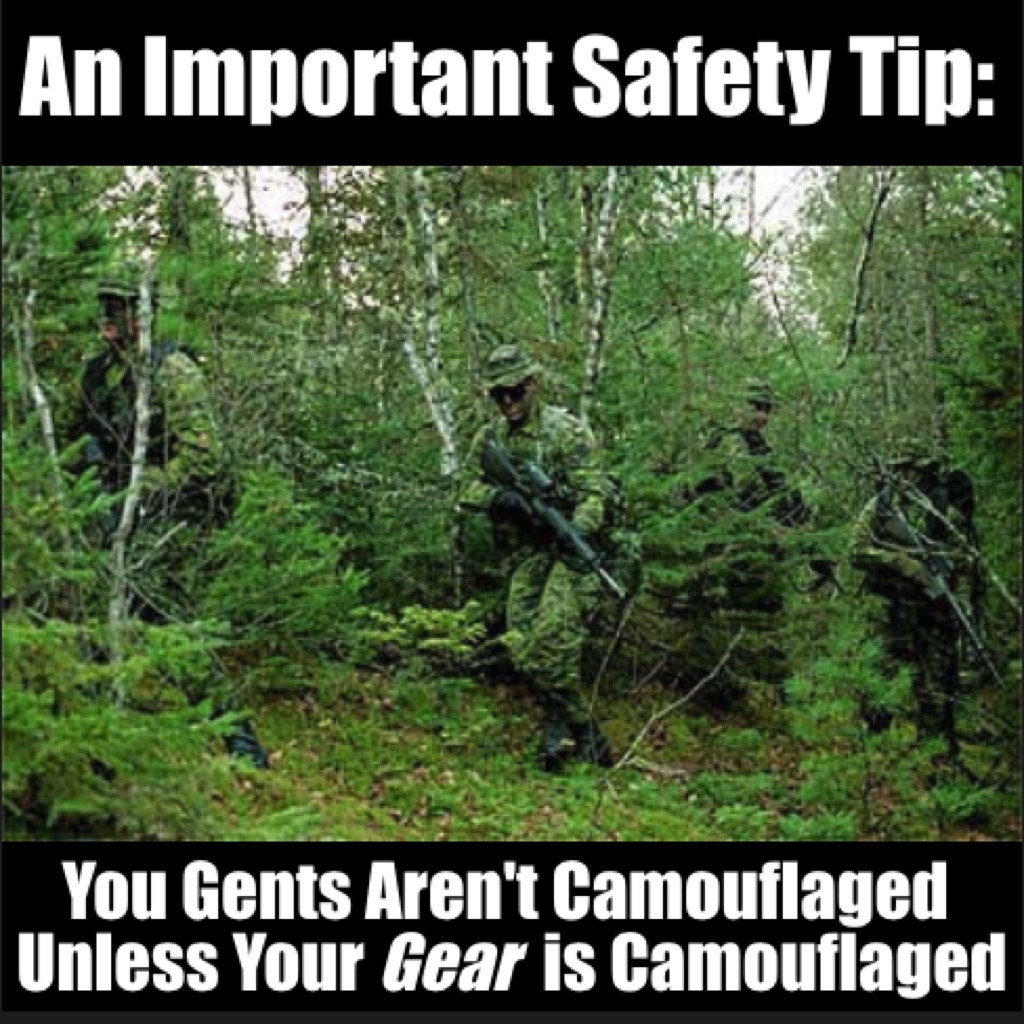
Meme Text:
An Important Safety Tip:
You Gents Aren’t Camouflaged Unless Your Gear is Camouflaged
A Useful Link: SurvivalBlog’s Editor-at-Large Mke Williamson suggested this post on X: Puzzle Piece Camouflage. Mike says: “Should be even better since there are multiple random layers of interference.”
Notes From JWR: Do you have a meme idea? Just e-mail me the concept, and I’ll try to assemble it. And if it is posted then I’ll give you credit. Thanks!
Permission to repost memes that I’ve created is granted, provided that credit to SurvivalBlog.com is included.

The Editors’ Quote of the Day:
“If ye then be risen with Christ, seek those things which are above, where Christ sitteth on the right hand of God.
Set your affection on things above, not on things on the earth.
For ye are dead, and your life is hid with Christ in God.
When Christ, who is our life, shall appear, then shall ye also appear with him in glory.
Mortify therefore your members which are upon the earth; fornication, uncleanness, inordinate affection, evil concupiscence, and covetousness, which is idolatry:
For which things’ sake the wrath of God cometh on the children of disobedience:
In the which ye also walked some time, when ye lived in them.
But now ye also put off all these; anger, wrath, malice, blasphemy, filthy communication out of your mouth.
Lie not one to another, seeing that ye have put off the old man with his deeds;
And have put on the new man, which is renewed in knowledge after the image of him that created him:
Where there is neither Greek nor Jew, circumcision nor uncircumcision, Barbarian, Scythian, bond nor free: but Christ is all, and in all.
Put on therefore, as the elect of God, holy and beloved, bowels of mercies, kindness, humbleness of mind, meekness, longsuffering;
Forbearing one another, and forgiving one another, if any man have a quarrel against any: even as Christ forgave you, so also do ye.
And above all these things put on charity, which is the bond of perfectness.
And let the peace of God rule in your hearts, to the which also ye are called in one body; and be ye thankful.
Let the word of Christ dwell in you richly in all wisdom; teaching and admonishing one another in psalms and hymns and spiritual songs, singing with grace in your hearts to the Lord.” – Colossians 3:1-16 (KJV)
Preparedness Notes for Saturday — November 30, 2024
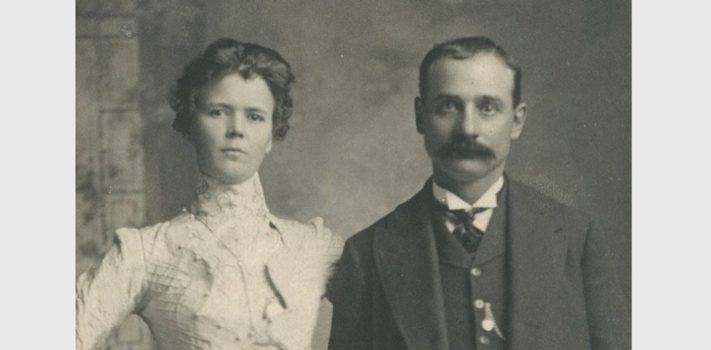
On November 30, 1902, Harvey “Kid Curry” Logan, the second-in-command of Butch Cassidy’s Wild Bunch gang was sentenced to 20 years imprisonment with hard labor.
—
November 30, 1924: The first photo facsimile is transmitted across the Atlantic by radio. (London to New York City.)
—
Satirical novelist Jonathan Swift was born on November 30th, 1667.
—
SurvivalBlog Writing Contest
Today we present another entry for Round 115 of the SurvivalBlog non-fiction writing contest. The prizes for this round include:
First Prize:
- The photovoltaic power specialists at Quantum Harvest LLC are providing a store-wide 10% off coupon. Depending on the model chosen, this could be worth more than $2000.
- A Gunsite Academy Three Day Course Certificate. This can be used for any of their one, two, or three-day course (a $1,095 value),
- A Peak Refuel “Wasatch Pack” variety of 60 servings of premium freeze-dried breakfasts and dinners in individual meal pouches — a whopping 21,970 calories, all made and packaged in the USA — courtesy of Ready Made Resources (a $350 value),
- American Gunsmithing Institute (AGI) is providing a $300 certificate good towards any of their DVD training courses. Their course catalog now includes their latest Survival Gunsmithing course.
- HSM Ammunition in Montana is providing a $250 gift certificate. The certificate can be used for any of their products.
Second Prize:
- A SIRT STIC AR-15/M4 Laser Training Package, courtesy of Next Level Training, that has a combined retail value of $679
- Two 1,000-foot spools of full mil-spec U.S.-made 750 paracord (in-stock colors only) from www.TOUGHGRID.com (a $240 value).
- A Laptop EMP Shield and a Smartphone Faraday Bag (a combined value of $200), courtesy of MobileSecSolutions.com.
- Two sets of The Civil Defense Manual, (in two volumes) — a $193 value — kindly donated by the author, Jack Lawson.
- Two Super Survival Pack seed collections, a $150 value, courtesy of Seed for Security, LLC.
- A transferable $150 FRN purchase credit from Elk Creek Company, toward the purchase of any pre-1899 antique gun. There is no paperwork required for delivery of pre-1899 guns into most states, making them the last bastion of gun purchasing privacy!
Third Prize:
- A Berkey Light water filter, courtesy of USA Berkey Filters (a $305 value),
- Three sets each of made-in-USA regular and wide-mouth reusable canning lids. (This is a total of 300 lids and 600 gaskets.) This prize is courtesy of Harvest Guard (a $270 value)
- A $200 credit from Military Surplus LLC that can be applied to purchase and/or shipping costs for any of their in-stock merchandise, including full mil-spec ammo cans, Rothco clothing and field gear, backpacks, optics, compact solar panels, first aid kits, and more.
- A transferable $150 FRN purchase credit from Elk Creek Company, toward the purchase of any pre-1899 antique gun.
—
More than $925,000 worth of prizes have been awarded since we started running this contest. In 2023, we polled blog readers, asking for suggested article topics. Please refer to that poll if you haven’t yet chosen an article topic. Round 115 ends on November 30th, so get busy writing and e-mail us your entry. Remember that there is a 1,500-word minimum, and that articles on practical “how-to” skills for survival have an advantage in the judging.
Growing Up in a Survivalist Family, by J.W.T.
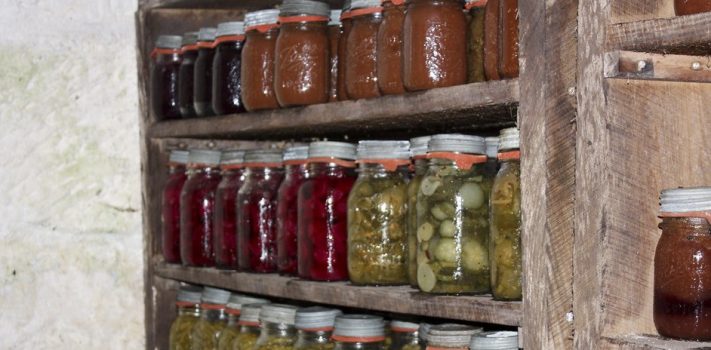
Growing up, I attributed my father’s penchant for hoarding to having had a Depression-era childhood. We were comfortably middle-class in the 1960s—a three-bedroom, one-bathroom ranch house, a Ford in the driveway, and never hungry—but I heard stories of my parents’ lives in the 1920s and 1930s, especially on Thanksgivings, when my uncles drank too much and reminisced about the old days with my father. My mother still made her own clothes if she didn’t can fruits and vegetables as her mother had, and my father threw nothing out: his old Army camouflage duds, every used nut and bolt, and the many rifles both working and otherwise that he had inherited from his gunsmith father. The weapons were safely locked up down there in the cellar to keep me and my brother from playing with them, which we would have.Continue reading“Growing Up in a Survivalist Family, by J.W.T.”
Editors’ Prepping Progress
To be prepared for a crisis, every Prepper must establish goals and make both long-term and short-term plans. In this column, the SurvivalBlog editors review their week’s prep activities and planned prep activities for the coming week. These range from healthcare and gear purchases to gardening, ranch improvements, bug-out bag fine-tuning, and food storage. This is something akin to our Retreat Owner Profiles, but written incrementally and in detail, throughout the year. We always welcome you to share your own successes and wisdom in your e-mailed letters. We post many of those — or excerpts thereof — in the Odds ‘n Sods Column or in the Snippets column. Let’s keep busy and be ready!
Jim Reports:
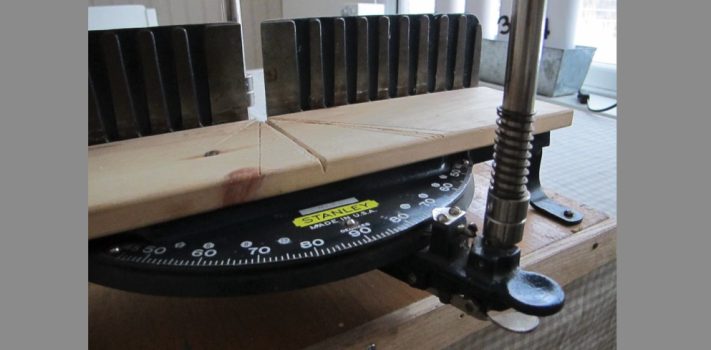
This week I did some “puttering around” in our our shop. For example, I set up a 1960s-vintage Model 60 Stanley miter box with a 28″ backsaw that I had found after some patient searching on eBay. Unlike most folks who now gravitate toward buying a fancy power miter saw, I wanted to go “low-tech.” I can make do with a traditional power table saw, a more mobile Skilsaw, several crosscut and rip hand saws, and a hand saw miter box. Yes, this is slower, but this combination of tools will allow me to continue work without AC power, if need be.
I packed and mailed several Elk Creek Company orders, and I kept busy cataloging several new items.
With some help from Lily, and Miss Violet, I also laid adhesive floor tile in our little guest cabin.
Now, Lily’s report…Continue reading“Editors’ Prepping Progress”