

“The people made the Constitution, and the people can unmake it. It is the creature of their own will, and lives only by their own will.” – John Marshall, 1821
- Ad Elk Creek Company - Federally-Exempt No-Paperwork GunsPre-1899 Antique Cartridge Guns -- No FFL Required. Can be mailed to your doorstep with no Federal paperwork!
- Ad Survival RealtyFind your secure and sustainable home. The leading marketplace for rural, remote, and off-grid properties worldwide. Affordable ads. No commissions are charged!

Preparedness Notes for Monday — December 30, 2024
December 30, 1865 was the birthday of Rudyard Kipling.
December 30, 1903: An electric arc lamp set fire to the Iroquois Theatre in Chicago, Illinois, leaving 602 dead in one of the deadliest single-building blazes in American history.
December 30, 1933: A low temperature of -50°F (-46°C) was recorded in Bloomfield, Vermont. (A state record.)
—
Ready Made Resources is running a big End of Year Night Vision Sale is here! From now until midnight Central Time on December 31st, you can take advantage of some great deals. Stock is extremely limited, so don’t wait—secure your gear today! Plus, every PVS-14 purchase includes a free Wilcox G11 Mount (a $350 value) and a free Helmet (a $200 value).
—
Today’s feature article is a review written by SurvivalBlog Field Gear Editor Tom Christianson.
—
We are in great need of entries for Round 116 of the SurvivalBlog non-fiction writing contest. More than $935,000 worth of prizes have been awarded since we started running this contest. In 2023, we polled blog readers, asking for suggested article topics. Please refer to that poll if you haven’t yet chosen an article topic. Round 116 ends on January 31st, so get busy writing and e-mail us your entry. Remember that there is a 1,500-word minimum, and that articles on practical “how-to” skills for survival have an advantage in the judging.
- Ad Elk Creek Company - Percussion Blackpowder Guns - No FFL Required.Elk Creek Company - Percussion Blackpowder Guns - Pre-1899 Guns - Knives - Bayonets - Magazines - The last bastion of privacy!
- Ad Click Here --> Civil Defense ManualNOW BACK IN STOCK How to protect, you, your family, friends and neighborhood in coming times of civil unrest… and much more!

Tyrant Designs TDC 001 Folding Knife, by Thomas Christianson
The Tyrant Designs TDC 001 Folding Knife is a rugged everyday carry (EDC) knife with outstanding fit and finish. The durability of the materials and the quality of the craftsmanship make it superior to the average EDC knife.
The 3-inch, saber-ground, tanto blade is made of D2 steel and is 0.33 inches thick. The black nitride finish on the blade is unusually resilient. The blade opens easily by rotating around a ball-bearing pivot.
The dual thumb studs are more robust than those on any other knife I have used. The aluminum handle is a convenient shape, and the textured durameter rubber grips enable the user to grasp that handle securely during use.
The reversible deep carry pocket clip makes the knife stealthier than most other EDC knives. The blade is held securely in the open position with a liner lock.Continue reading“Tyrant Designs TDC 001 Folding Knife, by Thomas Christianson”
- Ad USA Berkey Water Filters - Start Drinking Purified Water Today!#1 Trusted Gravity Water Purification System! Start Drinking Purified Water now with a Berkey water filtration system. Find systems, replacement filters, parts and more here.
- Ad California Legal Rifles & Pistols!WBT makes all popular rifles compliant for your restrictive state. Choose from a wide range of top brands made compliant for your state.

Recipe of the Week: No-Alcohol Eggnog
The following recipe for No-Alcohol Eggnog is from SurvivalBlog reader T.W. in New Hampshire.
Ingredients
- 6 egg yolks
- ½ cup sugar
- 1 cup heavy cream
- 2 cups milk
- 2 cinnamon sticks
- 2 cloves
- ½ teaspoon nutmeg
- ½ teaspoon vanilla extract
- 30 mls Lyre’s American Malt (optional)
- Whipped cream for topping (optional)
- Whipped cream and cinnamon for topping (optional)
Directions
- Whisk the eggs and sugar together until the mixture lightens a little in color and goes creamy. An electric beater makes this easier but a traditional handheld whisk works fine.
- Place cream, milk, ground nutmeg, cinnamon and cloves in a saucepan over low-medium heat. Stir to combine until the mixture is steaming slightly. Don’t let it boil.
- Add a large spoonful of the warm milk mixture to your egg mixture, then whisk it quickly to combine. Add another large spoonful and whisk again.
- Repeat this process until half of the milk mixture has been added to the egg mixture.
- Remove the cinnamon sticks from the milk mixture, then pour the egg mixture back into the saucepan on the stove.
- Whisk constantly until the mixture reaches about 160F on a cooking thermometer or thickens a little. This will only take a few minutes. Don’t worry if it doesn’t seem thick enough, it will thicken more as it cools.
- Remove from the stove and stir in the vanilla.
- Place eggnog in a jug, cover and place in the fridge to cool. If you love cinnamon, then add the stick back into jug before placing it in your refrigerator to steep further. Remove the cinnamon stick before serving.
SERVING
Pour into your favorite glasses or mugs and stir in 30ml/1oz of Lyre’s American Malt to each glass right before serving (optional).
Top with whatever you choose. I love whipped cream and powdered cinnamon.
STORAGE
It can be refrigerated for a day or two, and reblended, but eggnog does not store well. So I don’t recommend doubling this recipe unless you are serving a large party.
—
Do you have a well-tested recipe that would be of interest to SurvivalBlog readers? In this weekly recipe column, we place emphasis on recipes that use long-term storage foods, recipes for wild game, dutch oven recipes, slow cooker recipes, and any recipes that use home garden produce. If you have any favorite recipes, then please send them via e-mail. Thanks!
- Ad Prepare for chaos with the essential SIEGE belt. Perfected for CCW with flexible, no-stretch, high-grip custom HD ballistic nylon and capabilities unmatched in any other belt. Go anywhere. Solid 5.5-7 oz of persuasion has saved many. Save $20!SIEGE STOVES: in a fuel crisis twigs are free and abundant. Ultra-compact high-performance portable survival stoves. Enter "SBLOG" at checkout for $20 off any belt. USA-made.
- Ad USA Berkey Water Filters - Start Drinking Purified Water Today!#1 Trusted Gravity Water Purification System! Start Drinking Purified Water now with a Berkey water filtration system. Find systems, replacement filters, parts and more here.
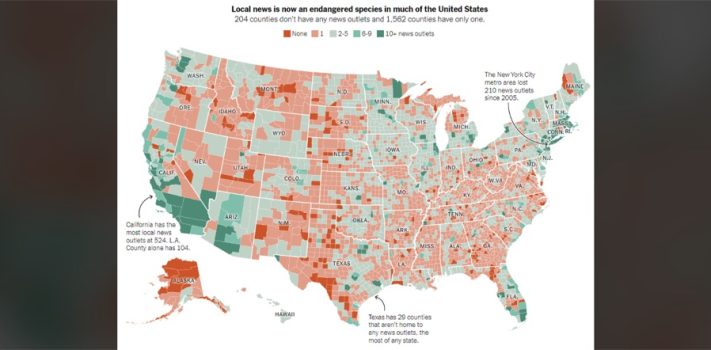
SurvivalBlog Graphic of the Week
Today’s graphic is a map showing The Loss of Local News: America’s Growing News Deserts. (Graphic courtesy of Reddit. This map was created by Taylor Maggiacomo, Local News Initiative, Northwestern University.)
The thumbnail below is click-expandable.

—
Please send your graphics or graphics links to JWR. (Either via e-mail or via our Contact form.) Any graphics that you send must either be your own creation or uncopyrighted.
- Ad SurvivalRealty.com: Sell Your Remote LandAdvertise your hard-to-sell remote land to eager buters. We specialize in rural, remote, and off-grid properties worldwide. Affordable ads. No commissions are charged!
- Ad Survival RealtyFind your secure and sustainable home. The leading marketplace for rural, remote, and off-grid properties worldwide. Affordable ads. No commissions are charged!

The Editors’ Quote of the Day:
“No governmental action, no economic doctrine, no economic plan or project can replace that God-imposed responsibility of the individual man and woman to their neighbors.” – Herbert Hoover, 1931
- Ad STRATEGIC RELOCATION REALTYFOR SALE: Self-sustaining Rural Property situated meticulously in serene locales distant from densely populated sanctuary cities. Remember…HISTORY Favors the PREPARED!

Preparedness Notes for Sunday — December 29, 2024
On December 29, 1812: Under the command of Captain William Bainbridge, the USS Constitution captured the HMS Java off the coast of Brazil, after a three-hour battle.
—
A December 29, 1911 proclamation restored the marking “Dei Gratia” (“By God’s Grace”) on Canada’s coins.
—
And on December 29, 1937 Pan Am began flying boat service between San Francisco and Auckland, New Zealand.
—
Today’s feature article is a guest post by Brandon Smith, a friend and frequent content contributor to SurvivalBlog.com.
—
We are in need of entries for Round 116 of the SurvivalBlog non-fiction writing contest. More than $935,000 worth of prizes have been awarded since we started running this contest. In 2023, we polled blog readers, asking for suggested article topics. Please refer to that poll if you haven’t yet chosen an article topic. Round 116 ends on January 31st, so get busy writing and e-mail us your entry. Remember that there is a 1,500-word minimum, and that articles on practical “how-to” skills for survival have an advantage in the judging.

Unidentified Drones In America’s Skies? Smells Like A False Flag, by Brandon Smith
The term “False Flag” gets thrown around rather haphazardly these days and it’s important to recognize that a real false flag requires a particular end result – The public blaming the wrong culprit for an event that someone else (usually our own government) perpetrated. When it comes to the increasing fervor over major drone activity across the US, I have very little doubt that what we are witnessing is a false flag scenario.
First, let’s outline what has happened so far: Drone sightings have exploded across the country involving a wide variety of devices – but the incidents that concern me the most are those involving the SUV-sized UAVs in places like New Jersey. The sightings have been happening for months. US government agencies including the FBI, DHS, and national security officials claim they have no idea who is behind this activity, even though drones have been seen operating over highly protected areas like US military bases.Continue reading“Unidentified Drones In America’s Skies? Smells Like A False Flag, by Brandon Smith”
JWR’s Meme Of The Week:
The latest meme created by JWR:

Meme Text:
This Week I Made A New Year’s Resolution Clean Out My Refrigerator…
But Then I Found The Box Of Salad Greens That I Misplaced Back In November of 2023
Notes From JWR: Do you have a meme idea? Just e-mail me the concept, and I’ll try to assemble it. And if it is posted then I’ll give you credit. Thanks!
Permission to repost memes that I’ve created is granted, provided that credit to SurvivalBlog.com is included.
The Editors’ Quote of the Day:
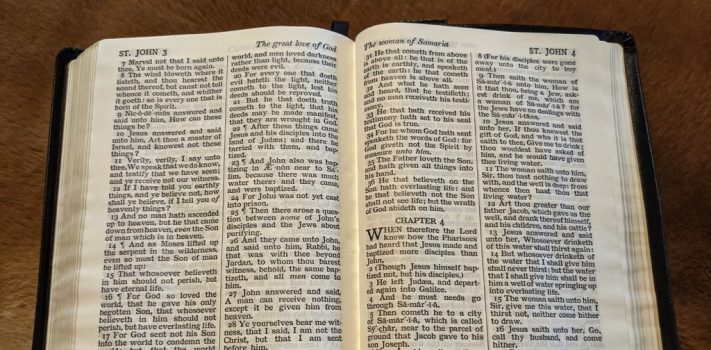
“Verily, verily, I say unto you, He that entereth not by the door into the sheepfold, but climbeth up some other way, the same is a thief and a robber.
But he that entereth in by the door is the shepherd of the sheep.
To him the porter openeth; and the sheep hear his voice: and he calleth his own sheep by name, and leadeth them out.
And when he putteth forth his own sheep, he goeth before them, and the sheep follow him: for they know his voice.
And a stranger will they not follow, but will flee from him: for they know not the voice of strangers.
This parable spake Jesus unto them: but they understood not what things they were which he spake unto them.
Then said Jesus unto them again, Verily, verily, I say unto you, I am the door of the sheep.
All that ever came before me are thieves and robbers: but the sheep did not hear them.
I am the door: by me if any man enter in, he shall be saved, and shall go in and out, and find pasture.
The thief cometh not, but for to steal, and to kill, and to destroy: I am come that they might have life, and that they might have it more abundantly.
I am the good shepherd: the good shepherd giveth his life for the sheep.
But he that is an hireling, and not the shepherd, whose own the sheep are not, seeth the wolf coming, and leaveth the sheep, and fleeth: and the wolf catcheth them, and scattereth the sheep.
The hireling fleeth, because he is an hireling, and careth not for the sheep.
I am the good shepherd, and know my sheep, and am known of mine.
As the Father knoweth me, even so know I the Father: and I lay down my life for the sheep.” – John 10:1-15
(KJV)

Preparedness Notes for Saturday — December 28, 2024
On December 28, 1537 French king Francis I issued a decree to booksellers and printers requiring them to deposit a copy of each of their works in the King’s Library. This was the world’s first legal depository requirement.
—
December 28,1944: Dutch Resistance fighter Corrie ten Boom was accidentally released from the Ravensbrück concentration camp. She lived on another 39 years to speak and write of her experiences in The Hiding Place. She died in 1983 at age 91, in Placentia, California.
—
Today we present a short guest article. It is not part of the judging for Round 116 of the SurvivalBlog non-fiction writing contest.
We are seeking entries for the second month of Round 116. More than $935,000 worth of prizes have been awarded since we started running this contest. In 2023, we polled blog readers, asking for suggested article topics. Please refer to that poll if you haven’t yet chosen an article topic. Round 116 ends on January 31st, so get busy writing and e-mail us your entry. Remember that there is a 1,500-word minimum, and that articles on practical “how-to” skills for survival have an advantage in the judging.

Another Look at Listeroid Engines, by Graham Sliecker
Editor’s Introductory Note: The following is a guest post, rather than a writing contest entry. The author is with Bolton Power Equipment. They have been importing Listeroid engines since 2014.
For long service life, in my opinion, nothing beats a low-RPM engine. Small, high-RPM engines have practical engine llfespans that are often measured in just thousands of hours. But larger, low-RPM engines with flywheels have practical engine llfespans that are often measured in tens of thousands or even hundreds of thousands of hours.
Listeroid engines have been discussed in SurvivalBlog since our early days. See, for example:
Lister Low RPM Engines Still Made in India.
and,
Letter Re: Lister Low RPM Engines Still Made in India.
I highly recommend Listeroid engine generators for warm and temperate climates. – JWR
—
Here are some thoughts about the journey the purchase of a Listeroid power system enables you and your family to embark on.
Some history. The English company R A Lister designed these robust slow-speed diesel engines back in the 1920s and their design has changed only a little. R A Lister manufactured them through the early 1970s. From then on, only Indian factories with the original patterns manufactured them. Indian factories started producing them with the end of the British “Raj” and Indian independence around 1947. They were popular here in the US from the 1970s through the early 2000s when importation slowed down because of regulatory changes.Continue reading“Another Look at Listeroid Engines, by Graham Sliecker”
Editors’ Prepping Progress
To be prepared for a crisis, every Prepper must establish goals and make both long-term and short-term plans. In this column, the SurvivalBlog editors review their week’s prep activities and planned prep activities for the coming week. These range from healthcare and gear purchases to gardening, ranch improvements, bug-out bag fine-tuning, and food storage. This is something akin to our Retreat Owner Profiles, but written incrementally and in detail, throughout the year. We always welcome you to share your own successes and wisdom in your e-mailed letters. We post many of those — or excerpts thereof — in the Odds ‘n Sods Column or in the Snippets column. Let’s keep busy and be ready!
Jim Reports:
We had a fairly quiet week, here at the Rawles Ranch. I caught up on cataloging some antique cartridge guns and some modern blackpowder percussion guns in the Elk Creek Company online catalog. Even more will be added within the next two or three weeks.
I did some End-of-Year reorganizing and cleaning in my office — which is just one end of our bedroom. I cleared my desk, cleared my work table, and reorganized the nearby disorganized closet. The closet wasn’t quite as bad as “Fibber McGee’s Hall Closet“, but it was close to it. A few tools and a Tipton rifle vise on the work table were also moved out to our workshop. I did all this while alternately vacuuming and dusting, as I went. It all now looks neat and tidy.
During a break in the rain, I did some wood splitting and stacking. I’m hoping for dry weather, so that I can get another cord split.
Now, Lily’s part of the report…Continue reading“Editors’ Prepping Progress”

The Editors’ Quote of the Day:
“Keep thy foot when thou goest to the house of God, and be more ready to hear, than to give the sacrifice of fools: for they consider not that they do evil.
Be not rash with thy mouth, and let not thine heart be hasty to utter any thing before God: for God is in heaven, and thou upon earth: therefore let thy words be few.
For a dream cometh through the multitude of business; and a fool’s voice is known by multitude of words.
When thou vowest a vow unto God, defer not to pay it; for he hath no pleasure in fools: pay that which thou hast vowed.
Better is it that thou shouldest not vow, than that thou shouldest vow and not pay.
Suffer not thy mouth to cause thy flesh to sin; neither say thou before the angel, that it was an error: wherefore should God be angry at thy voice, and destroy the work of thine hands?
For in the multitude of dreams and many words there are also divers vanities: but fear thou God.
If thou seest the oppression of the poor, and violent perverting of judgment and justice in a province, marvel not at the matter: for he that is higher than the highest regardeth; and there be higher than they.
Moreover the profit of the earth is for all: the king himself is served by the field.
He that loveth silver shall not be satisfied with silver; nor he that loveth abundance with increase: this is also vanity.
When goods increase, they are increased that eat them: and what good is there to the owners thereof, saving the beholding of them with their eyes?
The sleep of a labouring man is sweet, whether he eat little or much: but the abundance of the rich will not suffer him to sleep.
There is a sore evil which I have seen under the sun, namely, riches kept for the owners thereof to their hurt.
But those riches perish by evil travail: and he begetteth a son, and there is nothing in his hand.
As he came forth of his mother’s womb, naked shall he return to go as he came, and shall take nothing of his labour, which he may carry away in his hand.
And this also is a sore evil, that in all points as he came, so shall he go: and what profit hath he that hath laboured for the wind?
All his days also he eateth in darkness, and he hath much sorrow and wrath with his sickness.
Behold that which I have seen: it is good and comely for one to eat and to drink, and to enjoy the good of all his labour that he taketh under the sun all the days of his life, which God giveth him: for it is his portion.” – Ecclesiastes 5:1-18 (KJV)

Preparedness Notes for Friday — December 27, 2024
December 27, 1943: Following a naval gun battle with British ships, the German battleship Scharnhorst sank. It was sunk by the Royal Navy’s battleship HMS Duke of York with support of cruisers and destroyers, including an onslaught from the destroyer HNoMS Stord of the exiled Royal Norwegian Navy, off the North Cape, Norway.
—
On this day in 1949, four years after nationalist revolutionary leader Sukarno had declared Indonesia’s independence, formal sovereignty over the country was transferred from the Dutch to the United States of Indonesia.
—
And on December 27, 1978 Spain became a democracy after 40 years of dictatorship as King Juan Carlos ratified Spain’s first democratic constitution.
—
SurvivalBlog Writing Contest
Today we present another entry for Round 116 of the SurvivalBlog non-fiction writing contest. The prizes for this round include:
First Prize:
- The photovoltaic power specialists at Quantum Harvest LLC are providing a store-wide 10% off coupon. Depending on the model chosen, this could be worth more than $2000.
- A Gunsite Academy Three Day Course Certificate. This can be used for any of their one, two, or three-day course (a $1,095 value),
- A Peak Refuel “Wasatch Pack” variety of 60 servings of premium freeze-dried breakfasts and dinners in individual meal pouches — a whopping 21,970 calories, all made and packaged in the USA — courtesy of Ready Made Resources (a $350 value),
- American Gunsmithing Institute (AGI) is providing a $300 certificate good towards any of their DVD training courses. Their course catalog now includes their latest Survival Gunsmithing course.
- HSM Ammunition in Montana is providing a $250 gift certificate. The certificate can be used for any of their products.
Second Prize:
- A SIRT STIC AR-15/M4 Laser Training Package, courtesy of Next Level Training, that has a combined retail value of $679
- Two 1,000-foot spools of full mil-spec U.S.-made 750 paracord (in-stock colors only) from www.TOUGHGRID.com (a $240 value).
- A Laptop EMP Shield and a Smartphone Faraday Bag (a combined value of $200), courtesy of MobileSecSolutions.com.
- Two sets of The Civil Defense Manual, (in two volumes) — a $193 value — kindly donated by the author, Jack Lawson.
- A transferable $150 FRN purchase credit from Elk Creek Company, toward the purchase of any pre-1899 antique gun. There is no paperwork required for delivery of pre-1899 guns into most states, making them the last bastion of gun purchasing privacy!
Third Prize:
- A Berkey Light water filter, courtesy of USA Berkey Filters (a $305 value),
- Three sets each of made-in-USA regular and wide-mouth reusable canning lids. (This is a total of 300 lids and 600 gaskets.) This prize is courtesy of Harvest Guard (a $270 value)
- A $200 credit from Military Surplus LLC that can be applied to purchase and/or shipping costs for any of their in-stock merchandise, including full mil-spec ammo cans, Rothco clothing and field gear, backpacks, optics, compact solar panels, first aid kits, and more.
- A transferable $150 FRN purchase credit from Elk Creek Company, toward the purchase of any pre-1899 antique gun.
—
More than $935,000 worth of prizes have been awarded since we started running this contest. In 2023, we polled blog readers, asking for suggested article topics. Please refer to that poll if you haven’t yet chosen an article topic. Round 116 ends on January 31st, so get busy writing and e-mail us your entry. Remember that there is a 1,500-word minimum, and that articles on practical “how-to” skills for survival have an advantage in the judging.