Hugh’s Quote of the Day:

Government-to-government foreign aid promotes statism, centralized planning, socialism, dependence, pauperization, inefficiency, and waste. It prolongs the poverty it is designed to cure. Voluntary private investment in private enterprise, on the other hand, promotes capitalism, production, independence, and self-reliance. – Henry Hazlitt


Notes for Sunday – June 21, 2015

June 21st is the birthday of Rex Applegate (June 21, 1914 – July 14, 1998). He was the friend and mentor of SurvivalBlog’s Senior Field Gear Editor, Pat Cascio.

o o o

Today, we present another entry for Round 59 of the SurvivalBlog non-fiction writing contest. The $12,000+ worth of prizes for this round include:

First Prize:

  1. A Gunsite Academy Three Day Course Certificate, good for any one, two, or three day course (a $1,195 value),
  2. A course certificate from onPoint Tactical. This certificate will be for the prize winner’s choice of three-day civilian courses. (Excluding those restricted for military or government teams.) Three day onPoint courses normally cost $795,
  3. DRD Tactical is providing a 5.56 NATO QD Billet upper with a hammer forged, chromlined barrel and a hard case to go with your own AR lower. It will allow any standard AR type rifle to have quick change barrel, which can be assembled in less than one minute without the use of any tools, and a compact carry capability in a hard case or 3-day pack (an $1,100 value),
  4. Gun Mag Warehouse is providing 20 Magpul pmags 30rd Magazines (a value of $300) and a Gun Mag Warehouse T-Shirt. (An equivalent prize will be awarded for residents in states with magazine restrictions.),
  5. Two cases of Mountain House freeze dried assorted entrees in #10 cans, courtesy of Ready Made Resources (a $350 value),
  6. A pre-selected assortment of military surplus gear from CJL Enterprize (a $300 value),
  7. A Model 120 Series Solar Generator provided by Quantum Harvest LLC (a $340 value),
  8. A $300 gift certificate from Freeze Dry Guy,
  9. A $250 gift certificate from Sunflower Ammo,
  10. KellyKettleUSA.com is donating both an AquaBrick water filtration kit and a Stainless Medium Scout Kelly Kettle Complete Kit with a combined retail value of $304,
  11. TexasgiBrass.com is providing a $300 gift certificate, and
  12. Two cases of meals, Ready to Eat (MREs), courtesy of CampingSurvival.com (a $180 value).

Second Prize:

  1. A Glock form factor SIRT laser training pistol and a SIRT AR-15/M4 Laser Training Bolt, courtesy of Next Level Training, which have a combined retail value of $589,
  2. A FloJak EarthStraw “Code Red” 100-foot well pump system (a $500 value), courtesy of FloJak.com,
  3. Acorn Supplies is donating a Deluxe Food Storage Survival Kit with a retail value of $350,
  4. The Ark Institute is donating a non-GMO, non-hybrid vegetable seed package–enough for two families of four, seed storage materials, a CD-ROM of Geri Guidetti’s book “Build Your Ark! How to Prepare for Self Reliance in Uncertain Times”, and two bottles of Potassium Iodate– a $325 retail value,
  5. A $250 gift card from Emergency Essentials,
  6. Twenty Five books, of the winners choice, of any books published by PrepperPress.com (a $270 value),
  7. TexasgiBrass.com is providing a $150 gift certificate, and
  8. RepackBox is providing a $300 gift certificate to their site.

Third Prize:

  1. A Royal Berkey water filter, courtesy of Directive 21 (a $275 value),
  2. A large handmade clothes drying rack, a washboard, and a Homesteading for Beginners DVD, all courtesy of The Homestead Store, with a combined value of $206,
  3. Expanded sets of both washable feminine pads and liners, donated by Naturally Cozy (a $185 retail value),
  4. Two Super Survival Pack seed collections, a $150 value, courtesy of Seed for Security, LLC,
  5. Mayflower Trading is donating a $200 gift certificate for homesteading appliances,
  6. APEX Gun Parts is donating a $250 purchase credit,
  7. Montie Gear is donating a Precision Rest (a $249 value), and
  8. Two 1,000-foot spools of full mil-spec U.S.-made 750 paracord (in-stock colors only) from www.TOUGHGRID.com (a $240 value).

Round 59 ends on July 31st, so get busy writing and e-mail us your entry. Remember that there is a 1,500-word minimum, and that articles on practical “how to” skills for survival have an advantage in the judging.


One Yukon Learning Event, by S.H.

On a mid-November day years ago, I set out to walk over a high, broad, timbered ridge through some apparently uninhabited spruce, poplar, and birch woods in the Yukon Territory, Canada. I was headed over and down to the lower part of a long creek about seven direct miles away. I carried metal tags that I’d received from the Mining Recorder’s Office for nailing to two sets of placer claim posts that I had cut, labeled, signed, and recorded a few weeks before, one set done by Power of Attorney. Daylight hours were now becoming seriously short at that subarctic latitude, and direct sunlight would be blocked by surrounding ridges, even at midday.

The recent weather had been mild for the season, with daytime temperatures often a little above freezing. The pleasant weather had rendered me complacent, and I was about to experience a Yukon learning event. The sky had become rapidly overcast, and a few snowflakes began to fall. The time was about 10:00am, which was too late to begin my hike with any expectation of reaching the claim posts before late in the evening. I felt prepared to spend the night in the open by a fire and planned to be back at my camp by the next evening at the latest. I had made the trip out and back in about fourteen hours in warmer, sunnier weather. I knew that this time the hike would take longer, but I didn’t realize how much more.

I was dressed and equipped for seriously cold weather, if need be. I wore sturdy, felt-lined shoepacs that were almost as warm as native mukluks, and carried a pair of extra felts. Likewise, I wore and carried thick wool socks. I had on navy blue polypro underwear shirt and trousers; a heavy, long, grey Woolrich wool shirt, military surplus O.D. wool trousers, a combination grey wool/Thinsulate jacket, and over everything a set of baggy, white milsurp poplin trousers and smock. I had an excellent brown sheepskin trooper cap with earflaps, and grey milsurp woolen gloves inside heavy woolen mittens, that in turn were covered by leather chopper mitts.

I wore a Load Bearing Equipment (LBE) patrol harness under the smock, with two canteens optimistically filled with water, although I knew the water would freeze shortly if the air temp dropped much more.. The LBE kit included a metal canteen cup and two ammo pouches filled with compasses, matches, candle stubs, and other paraphernalia. I brought a large, light blue camp coffeepot for thawing snow to make more drinking water. I had six bacon-and-cheese sandwiches packed in the buttpack on the LBE. I carried a very sharp Estwing axe with a blue, 26-inch, plastic-covered metal handle. I had a brown leather sheath for the axe that attached around the yoke on the LBE harness so that the axe rode on the middle of my back. I had a standard, stainless Buck Woodsman knife in a black leather sheath. I toted a permitted, push-feed Winchester Model 70 bolt-action rifle in .375 H & H caliber with a 20-inch barrel with three rounds in the magazine, one round up the spout with the bolt closed and un-cocked, and twelve spare rounds in my pack. I carried the rifle inside a canvas sheath that I had made and that was open at the buttstock to make the weapon quickly accessible but protected the action from getting too wet or soiled.

I was prepared to carry a battery-powered flashlight in one hand and the rifle in the other, often switching the hands. I wore a pair of black plastic, prescription military glasses that served somewhat as goggles. I had a nose band that I had made from a strip of cloth cut out of a beautifully warm, white wool blanket. The nose band served well to keep my nose and cheeks from freezing in severely cold weather. I really didn’t anticipate severe cold to set in for some time yet but did want to be prepared for eventualities. It’s a good thing I had been a Boy Scout and took the “Be Prepared” motto seriously, an attitude strongly reinforced by practical experience.

I was beginning my hike by walking up an established creek trail to a cross-country jumping-off point from which I planned to head directly for several miles over the high ridge and down to the claim posts. Dark fell amazingly fast, as the overcast quickly grew very dense, and the falling snow continued to increase in thickness to about half a foot. I was startled to see a varying hare dart past me uphill to the left side of the trail, followed by several very large wolves. I flipped on the flashlight, cocked the rifle bolt, and fired a 300-grain bullet into the ground at as harmless an angle as possible. I did not necessarily feel directly threatened by the wolves but wanted to discourage them from getting so close to me. They kill daily as a group for a living, sometimes taking moose big enough to challenge an elephant. The farther away from me that the wolves stayed, the more comfortable I remained. No doubt the falling snow had kept the wolves from detecting me in the first place. I hoped. Anyway, the wolves instantly disappeared from my view. My ears rang from firing the heavy .375 round, but I felt some comfort in the feeling that the shot would be heard by potentially dangerous animals for miles around, hopefully making me at least not less safe during my solitary errand to the claim posts and back.

I reached my planned turning-off point, used the flashlight to read a compass heading, and took off up the high ridge. The higher I went, the deeper the snow was already getting, some of it almost knee-deep. I took off the Army wool trousers and the jacket and tied them to my butt-pack. I stayed warm inside the poplin white camo outfit through exertion, although the poplin itself iced up like a tent. Every couple of hours I ate a sandwich, so it didn’t take long to devour all six. The air became continuously colder, and my flashlight batteries became apparently useless. I reached the claim posts some time during the night, built quick fires from downed spruce limbs to supply light near each post as I went along driving nails through the holes in the metal tags, using the blunt head of the Estwing axe for a hammer.

I had drunk most of my water fairly soon into the hike, and what was left in one canteen had frozen. I was operating in near-total darkness most of the time, now. What little ambient light that I had between sunset and sunrise was likely just scanty moonlight or starlight that managed to filter through the overcast and falling snow. I was alright, though, when I could find deadfall spruce, and there was plenty to be found, even in the deepening snow. I found several very long, good-sized, seasoned spruce trunks that I knew had been pushed over by a Caterpillar some years before. I got a fire going and crossed the logs over the fire. I had a nice bit of heat from that fire for several hours, crossing and re-crossing the dwindling logs, as I rested for the return hike back to my camp. I put on my jacket and Army trousers to keep warm while resting, although it was an annoying necessity to remove and re-don the white camo poplin clothes. Sparks from the spruce logs would jump on me and burn small holes in the poplin if I got too close to the fire, so I had to be careful to maintain a proper distance. I eagerly looked forward to seeing daylight again on Day 2 of my hike.

I discovered when I went to trim green spruce boughs to put down on the snow for a mattress that an axe was not the proper tool for the job. The Buck Woodsman knife that I carried was the best kind of blade for making “fuzz-sticks” for fire starting, but it was even more useless than the axe for trimming boughs. I longed deeply for a Bowie-type knife and the efficiency it would have provided. Never, never again will I go without one in a wintry spruce forest.

With the arrival of an overcast, snowy dawn, I was compelled to realize that I had better make straight tracks for camp and not make any foolish navigational errors, or I would too likely fall asleep from exhaustion and not wake up. I was burning fat now like there was no tomorrow, tightening my belt a notch every few hours. An estimate of metabolizing 500 calories an hour might not be too far off. As I traveled upslope towards the high ridge along what I estimated to be my previous route, the snow began to get seriously deeper, first knee-high, then up to my hips, then higher. Walking began to seem more like swimming, one step at a time. The snow was so powdery that my feet would hit the ground with each step. Snowshoes would have been useless, and I was glad that I had not brought mine.

Every hundred yards to be marched in the sometimes shoulder-deep snow started looking like a mile, and daylight quickly passed into near pitch-darkness again. I was consumed with the urge to press on and didn’t even consider trying to look at a compass in the dark, but I put my confidence in God and navigated by the seat of my pants. I had in mind a particular spot to arrive at on the creek trail I had first headed out on at the beginning of the hike. I melted snow continuously in my mouth for moisture and could feel that I was getting some frostbite in the roof of my mouth. Unbelievably, daylight came and went again as I labored up the back side of the high ridge. Exhaustion really began to set in, and I began to wonder if I was actually going to make it back to my camp at all. I’d had a fair amount of experience in wilderness country, though, and never really panicked, but I did my best to maintain a reverent and rational mental approach to the situation. Believe me, though, if I ever was in a continual state of prayer, it was then.

I picked a spot to stop and make a fire. I gained an energy boost when I ate a vitamin pill that I found in my kit. I managed to get a fire going and set in to melt snow in the coffeepot so I could rehydrate. I made a serious error in using a spruce stick for a pole to suspend the pot over the fire. Some spruce sap dripped into the pot and when I drank the water, and the sap attacked the frostbitten roof of my mouth, as well as making me feel very ill. I eventually managed to gather some energy and stepped uphill again.

I finally stopped to rest again, by necessity, and realized that I had crossed back over the ridge. I had instinctively found the almost exact spot on the creek trail that I was looking for, after many miles of sheer dead reckoning through deep snow and often-thick timber. It was a miracle, really.

By now the air was getting seriously cold. By experience I felt that -55 below or lower had found me, which is very dangerous and has killed many. I knew I absolutely had to have a fire. With luck I found a stand of small black spruce that had been scorched by lightning some summer. The tree roots did not go deep in the permafrost, so I was able to push a dozen or so small trees over in the snow to make a platform for starting a fire. The Estwing camp axe did great work, splitting the spruce trunks rapidly to make dry splinters appear. I maybe panicked a little when I found that my windproof matches that I had been saving for last would not ignite. I was down to my second-to-last stick match when I got a fire blazing. The heat from the burning tree trunks had no difficulty in driving away the snow beneath them. I had an earth berm at my back and was able to get really warm from efficiently reflected heat for probably the first time in 72 hours.

As my fire died down from a declining wood supply, I began to get a bad feeling about meeting an undefinable threat and thought about firing a shot from the rifle again as a general precaution. There was definitely a bear den close by, and that bear may not have gone into what used to be called “hibernation” yet. I had been carrying the rifle in a canvas sheath, and I had previously cleaned any oil out of the bolt. Nonetheless, when I went to work the bolt I found that the safety was broken, fortunately in the “Fire” position. I feel that water vapor from my hands or the air had gotten into the works and frozen things up. I held the rifle close enough to the fire to thaw the bolt and enable a shot. The cartridge did not sound normally loud to me. I wonder if the powder hadn’t been cooled enough by the cold air to take quite a bit of the power out of it. Just a guess.

I dozed off a little and woke up to find a clear sky with a bright crescent moon. The brilliance of the snow was like broad daylight. And then the air really began to turn cold. I only had a couple of miles to hike down the creek trail to camp, though, and I barely made it to my canvas tent and sheet-metal stove in time to keep my toes from freezing solid.

Reflecting upon thoughts I had as I trudged through the endless Yukon wilderness snow:

  • How uniquely quiet it is, when all the noise you can hear is from falling snow.
  • How precious is a good axe, although some axes are said to be subject to shattering. All I can say is that the Estwing camp axe stood my torture test, in deep cold, too.
  • The axe could be a useful weapon in a chance encounter with predators and wouldn’t freeze up or jam like a more complicated weapon could.
  • Difficulties with a bolt action rifle versus the virtues of a rifle with an external hammer that you can manipulate, to give you confidence that the weapon is not frozen up, or maybe a hand cannon carried in the properly-designed covered holster, maybe even a fur-equipped holster, would be preferred.
  • There is the question of ability of surviving the unlikely-but-too-possible attack from cougar, wolverine, wolf, moose, or even insomniac bear, when you can barely see your hand in front of your face in the pitch dark. Yes, cougar live surprisingly far north.
  • Silk underwear under woolen clothes might be a best option.
  • Taking the trouble to find a weather forecast before setting out on any hike might be a good idea.
  • Without the poplin white camo outfit that I wore, or any of the other clothes for that matter, I would have either frozen or dropped from exhaustion. The poplin camo was just like wearing a tent.

Letter Re: Android Geiger Counter

Thanks for the reference to the $30 android counter; I bought one!

Also, note that Radioactivity Counter is an Android ap that I have used that detects gamma radiation just using the app; there’s no external devices needed!

You’re wondering how? You tape over the camera lens and the camera itself detects gamma radiation sensitivity depending on phone models. I’ve used it, and it works. – M.R.


Odds ‘n Sods:

An interesting perspective of a movie: What preppers can learn from the movie San Andreas. – J.M.

o o o

Thirty minutes of your time that will be well spent: Brigitte Gabriel Speaks at 2015 Watchmen on the Wall Conference . – J.T.

o o o

Every Mass Shooting Shares One Thing In Common & It’s NOT Weapons. – H.L.

o o o

An automated chicken coop! Because collecting eggs is work enough!. – T.H.

o o o

Belgian Doctors Are Euthanizing Patients Without Their Consent. – H.L.


Hugh’s Quote of the Day:

“And Jesus stood, and commanded him to be brought unto him: and when he was come near, he asked him, saying, What wilt thou that I shall do unto thee? And he said, Lord, that I may receive my sight. And Jesus said unto him, Receive thy sight: thy faith hath saved thee. And immediately he received his sight, and followed him, glorifying God: and all the people, when they saw it, gave praise unto God.” Luke 18:40-43 (KJV)


Notes for Saturday – June 20, 2015

June 20th is the birthday of Audie L. Murphy, who was born in 1925. He died in a plane crash on May 28, 1971. This is also the anniversary of the death of novelist Vince Flynn (born April 6, 1966, died June 19, 2013). His death, at age 47, was a loss to the literary world.


Guest Post: Living On The Edge When The Grid Fails, by A.M.

Using Waldon Pond as a guide and an early Banner motor home as an inspiration, 22+ years ago I wired my 2,000 square foot home for 12-volt and 110-volt solar emergency lighting and light work.

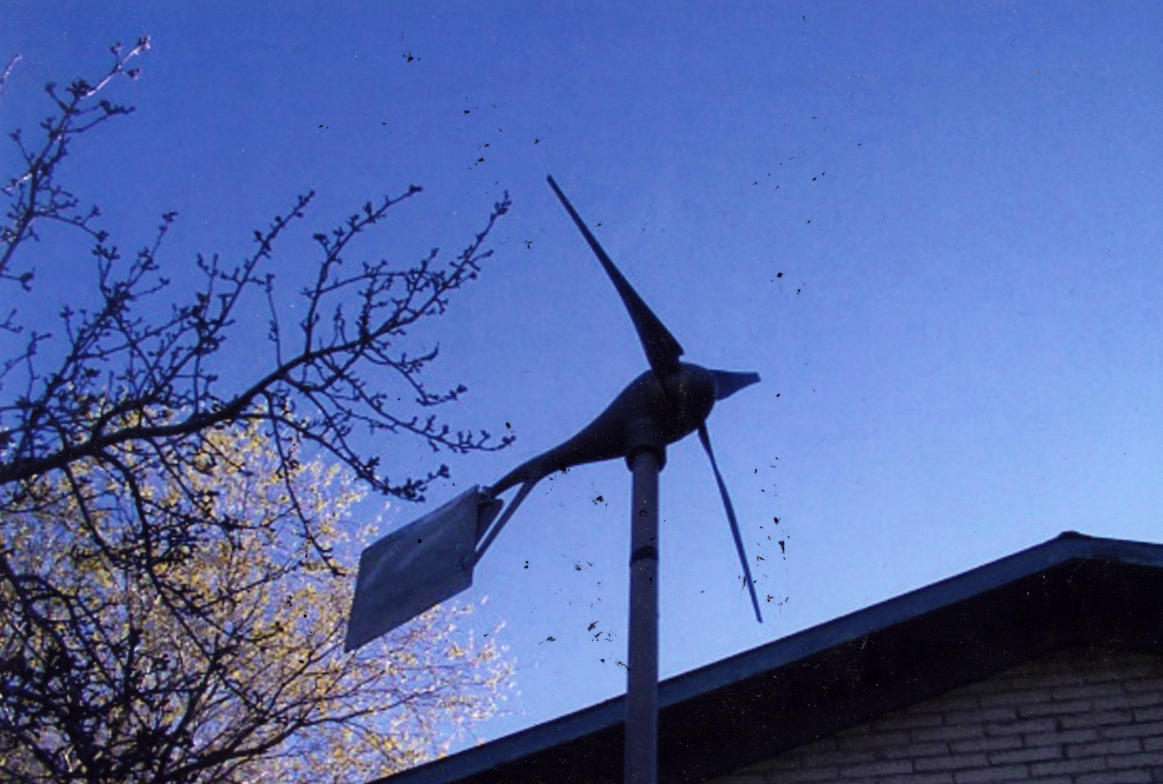
12 Volt Air Marine 300 Watt wind Turbine

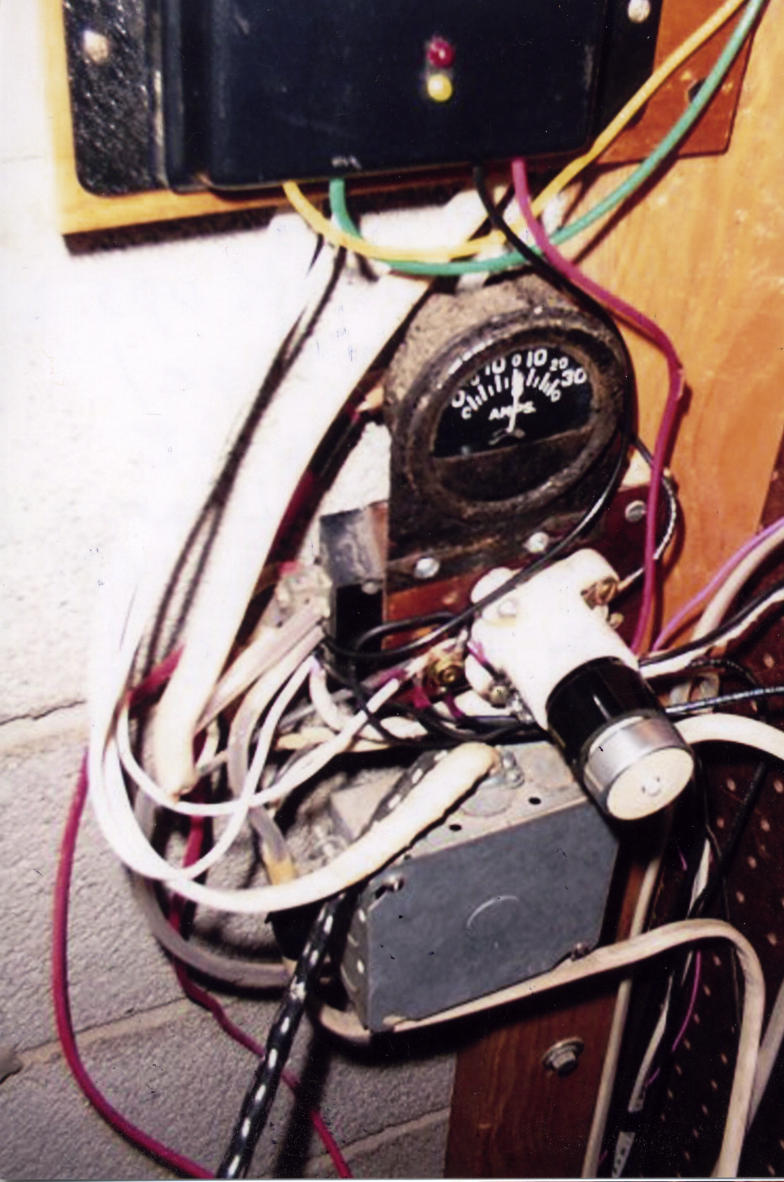
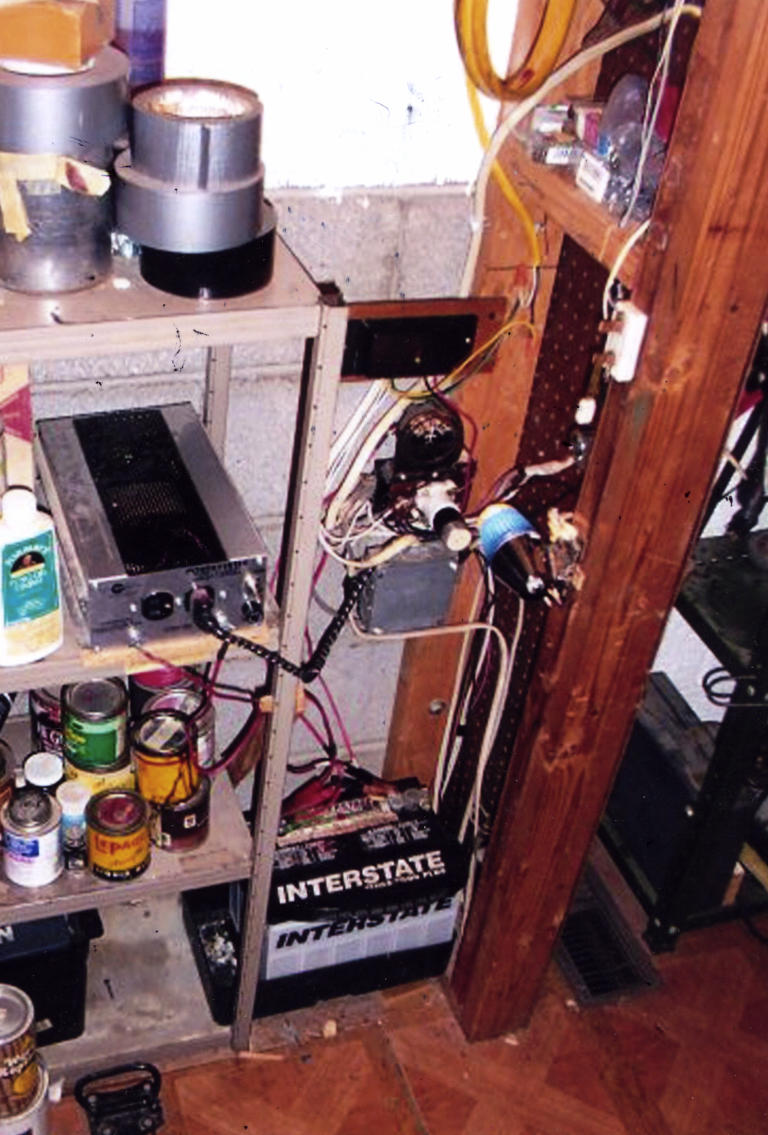
Pictured is the home-built control center for the three panel system, which is 100 watts. The 300 watt wind turbine can be used for pumping water when hooked to the single battery or it may be used to charge a neighbor’s battery for barter.

Control Center - 12V DC fused 15A. Also acts as a battery on/off switch.
Control Center – 12V DC fused 15A. Also acts as a battery on/off switch.

A short-run gas generator (110 volt 22 amp) handles the heavy loads when the grid is down and is disconnected from the home wiring. (This is entirely seperate from the solar electric wiring.) The gas generator is used about two hours per month, as I have use of a propane refrigerator, a window box, hand tools, a non-electric heating system, and a camp stove. This greatly simplifies fuel storage for the generator and maintance.

Close-up shows the regulator amp meter 12VDC hookups

In summer, I have customized this emergency electrical system to meet my expectations and needs. It’s not fancy or expensive, but it will allow me to work and live.

Over these 22+ years, I have noticed that replacing large banks of lead acid type batteries can account for 1/2 to 3/4 of the total cost of the solar electrical system.

LED light and a volt meter (not pictured) allow me to moniter my electric usage and not deep cycle my battery, which is a take out from a friend’s truck. He upgraded at five years, and I have used it two additional years in my home.

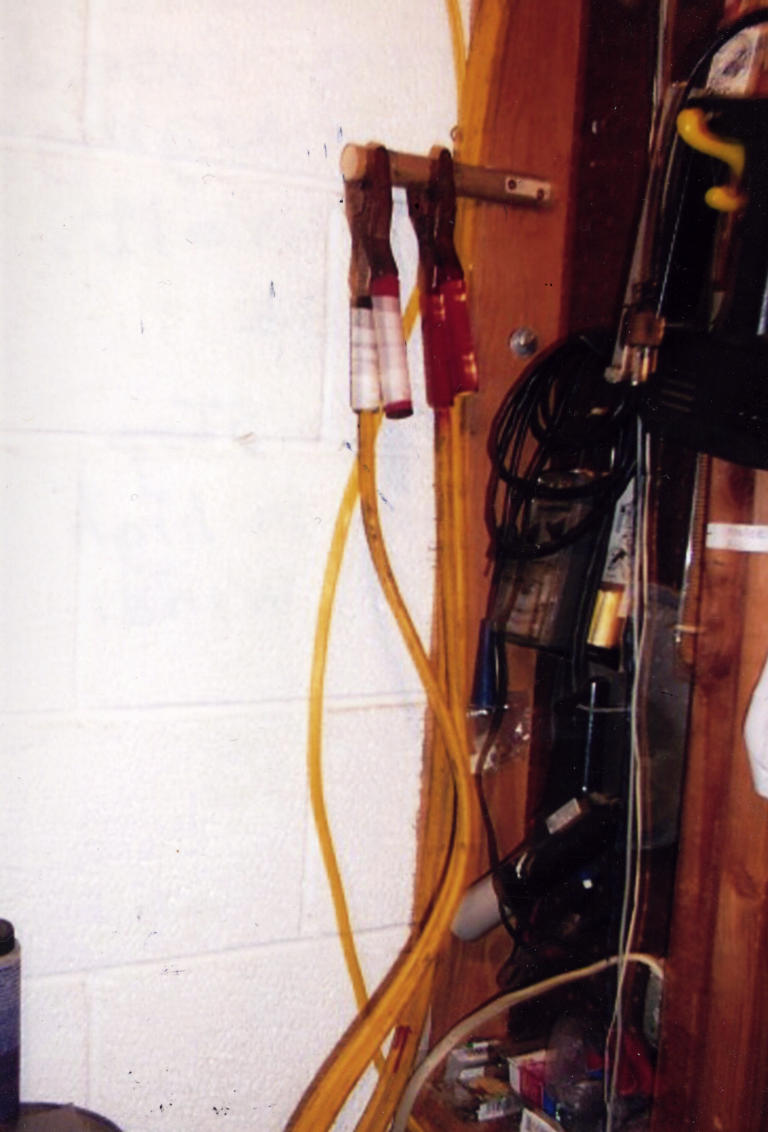
Air marine fused 30 amp charging cables.

All but one of my solar panels was acquired used. The 12-year-old air marine was acquired through traded. The mast came from the used metal yard for $7, as were my glory pile, base, and braces. I made two solar panel mounts and bought the third from Harbor Fraight. I bought two inverters new, and paid only $10 at a swap meet for a regulator. I did the wiring and instillation myself. Yes, a small solar electric system can be affordable. I was tempted to by a RV solar add-on kit, but I didn’t.


Guest Post: 150,000 Cigarettes or 3,275 Ounces of Silver, by Gary Christenson

Suppose on January 1, 1995, over 20 years ago, you quit smoking one pack per day and bought silver instead

Assume:

  • One pack of cigs per day at their average price each month over those 20 years in the United States.
  • Instead of buying cigs, you purchased silver once per month on the last day of the month with the savings.
  • Some states have higher or lower taxes than average. For example, the national average price for a pack of cigs might be $6.50, while some states average over $10 per pack. Use the average price for calculations.

Savings:

  • One pack per day is about 150,000 cigarettes over 20.5 years. Given monthly average prices for cigs and silver, you would have accumulated about 3,275 ounces of silver, which at today’s diminished silver price is worth over $50,000.
  • Using the money saved from NOT buying two packs per day for over 20 years would be about $100,000 in today’s prices. At the peak price for silver in 2011, it would have been over $300,000.

When silver sells for $100 per ounce will cigarettes sell for $40 per pack? This isn’t as outrageous as it sounds. I remember buying Marlboros for 19 cents per pack back in ancient times. Cigarettes are about 35 times as expensive now as they were in my youth. The current price is $6.50 for a pack, and 35 times that price would be about $225 per pack. Outrageous! The loss of purchasing power in fiat currencies is also outrageous.

Other Savings:

What about driving to work? Assume traveling 50 miles round trip five days per week. Assume gasoline costs an average of $4.00 per gallon (U.S. prices) and your mileage changes from 15 mpg to 30 mpg. Total savings is about $145 per month, or the equivalent of ¾ of a pack of cigs per day. A more efficient car saves about 2,500 ounces of silver in 20.5 years.

You can do the math yourself, but consider some possibilities:

  • Instead of consuming one $30 bottle of wine per night, you drink two beers. Savings is about 13,000 ounces of silver in 20.5 years.
  • Instead of a new Mercedes every three years, you might purchase a new Toyota every four years. This could be 26,000 ounces of silver.
  • Instead of a new 150-foot yacht every decade, you might purchase a used 100-foot yacht every second decade. Many ounces of silver!
  • Instead of a dozen new F-35 fighter aircraft … dream on!
  • Instead of a three wars in Iraq … I can’t count the ounces of silver, but it is a huge number.

Another comparison:

According to Steve St. Angelo the major U.S. and European banks have paid over $128 Billion in fines and settlements since 2009. He notes that the mine supply of silver in those six years totaled about $113 Billion. The major banks have paid more in fines than the cumulative value of all silver mined in six years. Moving fiat paper around is quite profitable. The silver is real, but how real are the banking profits?

Summary:

  • A pack of Marlboros cost $0.19 many years ago. A typical price is now $6.50. Since we use unbacked debt based fiat currencies, inflation is here to stay, along with occasional panics, periodic crashes, and wealth transfers to the financial cartel.
  • Exchanging a small expense every day for a purchase of silver will create a considerable stack of silver over 20 years. The expense is gone, but the silver endures.
  • We have choices as individuals and as nations. More silver and less fiat currency is, in my opinion, a good choice.

– Gary Christenson of The Deviant Investor


Letter: Clothes Hanger for Armor

Hugh,

Many in the community have invested in steel plate body armor. Due to the weight, use of ordinary hangers is out of the question, so it ends up sitting in a heap on the floor or hooked to a nail in the wall. Constructing an effective clothes hanger for your rig so that it can hang in the closet and up off the floor takes about 15 minutes, six dollars, and a trip to Home Depot.

Bill of Materials:

  • 1 each 2-ft section of 1.25 inch diameter schedule 40 PVC Pipe $3.23
  • 2 each PVC Pipe end caps 1.25 inch diameter $0.83
  • 1 each vinyl-coated screw-in Bicycle Hook 5/16×6 25lb load $1.74

Usual closet hangers are 16 inches wide. Cut the PVC pipe to 18 inches and then glue the end caps on both ends. The end caps create a raised edge so that the vest is less likely to slide off the end if it is hit or snagged when another garment is placed next to it in the closet. The Bicycle hook is located in the center. Drill a small hole and screw the hook in. The smaller the hole, the better. The hook has an aggressive thread and easily bites into the PVC material.

Remember that the clothes rod has to carry the weight, so locating the vest near the end of the rod rather than in the center of the span will help the rod bear the additional load. – Freeman


Economics and Investing:

U.S. Changing Credit Card Liability on October 1, 2015. – D.F.

o o o

Record number of too big to fail banks: 59 banks in the United States now have over $20 billion in assets. Top 3 US banks hold $6.3 trillion in assets.

o o o

Government Debt Threatens To Send U.S. Economy Into Death Spiral, Social Security Trust Fund Gone In 2029, Entitlement And Debt Payments Will Consume All Taxes In 2032

o o o

Watchdog: IRS cuts had minimal impact on tax collections


Odds ‘n Sods:

Law Enforcement Seizes $11,000 From 24-Year-Old. Lesson is do NOT get caught anywhere with a LOT of cash, especially on public transportation, but cops at routine traffic stops HAVE seized CASH, and some people NEVER get it back. You are GUILTY until you prove yourself innocent. So many Americans smoke or are around pot that many of our folding money bills smell of it to a canine dog. – H.L.
JWR Adds: And, needless to say, NEVER consent to a search of your private conveyance! The police must have “plain view”, “probable cause”, or at least “reasonable and articulable suspicion” grounds to justify a search without your consent. Lacking consent or any of those, anything that they find is not admissible evidence.

o o o

You’ve Been Warned – Calls for Mandatory “National Service” for Americans Aged 18-28 Has Begun. – T.P.

o o o

How Government Stifled Reason’s Free Speech. – T.C.

o o o

Colorado Springs vs. Charleston: The Church Massacre That Ended Differently . – T.P.

o o o

EPA to Monitor Family’s Water Use in Colorado. – JBG


Hugh’s Quote of the Day:

“And it came to pass, as he had made an end of speaking all these words, that the ground clave asunder that was under them: and the earth opened her mouth, and swallowed them up, and their houses, and all the men that appertained unto Korah, and all their goods. They, and all that appertained to them, went down alive into the pit, and the earth closed upon them: and they perished from among the congregation. And all Israel that were round about them fled at the cry of them: for they said, Lest the earth swallow us up also. And there came out a fire from the Lord, and consumed the two hundred and fifty men that offered incense.” Numbers 16:31-35 (KJV)