
“May God help us to follow His leading faithfully. This will prepare us for every emergency.” – C.F.
- Ad Don't wait - get the ultimate US-made ultra-high performance US-made SIEGE Stoves and stunning hand-crafted SIEGE belts for Christmas. For stocking-stuffers see our amazing fire-starters. Gifts that can save lives. Big Sale!Every bespoke SIEGE buckle goes through an hours-long artisanal process resulting in a belt unlike anything else, with blazing fast performance and looks and comfort to match.
- Ad Trekker Water Station 1Gal Per MinuteCall us if you have Questions 800-627-3809
Notes for Monday – August 10, 2015
On October 10th, 1984, Red Dawn, the first PG-13 rated movie, starring Patrick Swayze was released. The movie (the 1984 original, not the 2012 remake) is a favorite of both JWR and HJL, and the characters that the movie is about embody the independent, indomitable spirit that created this country.
- Ad STRATEGIC RELOCATION REALTYFOR SALE: Self-sustaining Rural Property situated meticulously in serene locales distant from densely populated sanctuary cities. Remember…HISTORY Favors the PREPARED!
- Ad Civil Defense ManualClick Here --> The Civil Defense Manual... The A to Z of survival. Looks what's in it... https://civildefensemanual.com/whats-in-the-civil-defense-manual/
Scot’s Product Review: REDHED Modular Tools
Tools are essential for prepping and life in general. One must have them, unless you are a wastrel who hires others to do all of your work. I doubt if that applies to any of our readers. Working with and moving dirt are two of the most important jobs for which we use tools. We might need to rearrange soil for gardening or construction. One could imagine creating protective barriers should things take a bad turn. Removing dirt from places it doesn’t belong could happen after a storm. The shovel is the basic tool for these chores, and we need to have at least one though two is better. The reason to have two is that a shovel with a rounded point is preferred for piercing soil, while a square shovel is best for scooping up dirt or leveling a trench or garden. There are actually a multitude of shovel types, but most jobs can be done with these basic two.
A rake is also a key tool for gardening. It helps you remove weeds, level soil, create small furrows for seeds, and cover them with a thin layer of soil. Again, there are an amazing number of types of rakes, but a good old bow rake is probably the most all around useful member of the rake family.
A clean workspace or abode is another nice thing to have and is actually essential for health as well as good results with many chores, so a broom is another important tool. I actually know people who don’t own brooms, relying on cleaning services or a central vacuum system for all their cleaning. That’s amazing, eh?
These certainly aren’t the only tools one needs to have around, but they are pretty basic and you really ought to have them. I suspect pretty much all of our readers do. However, one problem many of us have is finding space for all of our preps and tools. Then, what if we have to evacuate by vehicle and space is limited inside and on top of it?
REDHED Tools http://www.redhedtools.com/ has a solution for the space issue with a slick set of these four tools that have handles that can be taken apart for storage and a choice of cases to carry them in. You get two shovels, a broom, a rake, an extension and long and short handles. One set of handles is straight and the other has D handles on the end.
Rick Meinzer, a professional landscaper, founded REDHED Tools in Pleasant Grove, Utah, because he was dissatisfied with many of the tools he was using; other tools simply didn’t hold up. The tools his company is making are built with corrosion-resistant and powder-coated metals and hickory handles. The connectors that attach the tools to the handles are composed of aluminum and steel and have a polymer button used to operate the latch mechanism. The D handles at the end of one set of tool handles are made of a sturdy polymer attached to the hickory.
They come in two types of cases. One is a bit like a soft sided suitcase made from a heavy-weight nylon fabric. I very much liked how it is organized. Each tool has a marked spot with Velcro holders to keep everything in place. There are two zipper pockets if you want to keep small items or documents in the case. It has handles and a shoulder strap. The other case is a molded hard case, also with a spot for each tool and a shoulder strap.
REDHED loaned me one of their Essential Gardening Kits that goes for $246.00 on Amazon for this review. It comes with soft sided case.
I was surprised by the weight of the kit. According to my scale, it is about 26.2 pounds, which was more than I expected. In the back of my mind, I thought the tools would be flimsy, but they are actually heavy and solid. One thing I really liked about them is that the handles are larger in diameter than most similar tools. That gives them more heft and, for my size hands at least, a better grip. They were very smooth, which makes them comfortable.
I wondered how well the connector system would work when I first read about the tools. There is a small bit of play in the assembled tools, which I expected would bother me, but I got over it quickly. Overall, I was surprised at how sturdy the tools seemed. I used them for about a month, and I think they will hold up as well as the True Temper tools I usually buy at the home store. The shovels have sufficient weight for digging. A shovel that is too light is not fun to work with, as the weight helps you sink it into the soil.
To assemble the tools, you slide the parts in question together and turn them until two steel pins lock into place. To disassemble, you push two polymer buttons on the side of the connector and twist the pieces apart. A strong spring holds them in place. The mechanism seems pretty well shielded from dirt.
I wish the edges of the shovels had been sharpened, but I have never encountered one that was made that way at the factory. A sharp shovel will cut through sod and roots far better than the typical dull one, and it is worth your time to sharpen it. I use either a bench grinder or my Work Sharp Original Sharpener, depending on how bad the edge is when I start. If it is really dull, I first go to the bench grinder.
You can assemble two tools for use at the same time, but you might not get the length you need with both. I would have liked to have enough pieces to assemble both shovels at the same time in the standard long handled configuration. The push broom bothered me, as I found it to be too short. When I compared it to my standard push broom, it was about a foot shorter. If REDHED were to add a 12-inch extension to the set, it would really help both with the broom and with being able to assemble more than one tool at a time. I also felt the rake was shorter than I liked.
It would be really nice to have some more attachments for the handles. A hoe comes to mind quickly, as does a standard broom. The one you get is a push broom, and they don’t work as well in corners as I like, though they are great for quickly cleaning a large area. A pruning saw could be very handy, and this system would allow you to assemble it with alternate lengths which would be a boon. They could use a folding one, so the blades wouldn’t shred the case. Narrow shovels should be useful as would a leaf rake. I was thinking how nice it would be to have a dustpan in the kit, but it occurred to me that you could use the square shovel for that instead. I momentarily thought about having an axe head too, but decided that would push the envelope dangerously.
Since they sent me this kit to review, they upgraded the concept with the Garden Tool Master kit by reinforcing the connectors with a dowel of hardwood in the center. This kit costs $299.00 in the soft case and $349.00 in the hard case. The enhanced tools have a lifetime warranty, though they do note that you should take reasonable care of them.
You can also purchase a shovel kit for $188.98 with just a long straight handle that would be good for a car kit. There are some other shovel kits, but this one comes with the extension. Without it, the tools are shorter than I like for serious work. There isn’t, alas, a case for it.
I would like to be able to buy some of the parts separately. An extra extension would be very helpful to have.
The kits clearly take up less space than standard tools, and I can see real value in that. The quality also seems good. The price is higher than a comparable set of tools from the home store, which would go for $100 to $125 or so, but I think the REDHED are worth the price for what you are getting. The buyer will have to judge if the space saving is worth the extra cost. I know I would really like to keep a set in each of our vehicles. If I regularly dealt with mud and snow, it would be even more important.
Scot’s Product Review: Rite in the Rain Paper
I suspect that I am not alone in collecting a vast array of useful documents on my computer to help me handle most any chore pre- or post-crisis. The computer is great while everything is working, but what if there is some disturbance that leaves me unable to use it? That question has been nagging me for years, and I have finally resolved to start printing out some of the stuff I have accumulated over the years.
One of the problems, though, is how to protect the printouts. In my part of the country, a hurricane and its attendant rainfall are some of the major threats. Regular printer paper doesn’t fare well when it gets wet. It disintegrates and clumps together in unuseful masses. I have a laminator and have used it for a few things, but the material is expensive, and it sometimes fails. My machine uses adhesive sheets, and heat can compromise it. Sheet protectors help, but they aren’t truly waterproof, so the paper can be damaged.
I’ve run into waterproof notepads, and it suddenly struck me that perhaps there could be waterproof printer paper. Low and behold, a search on Amazon produced Rite in the Rain Copy Paper http://smile.amazon.com/Rite-Rain-White-Copy-Paper/dp/B0016H1RYE/ref=sr_1_1?ie=UTF8&qid=1436655716&sr=8-1&keywords=rite+in+the+rain+printer+paper at $32.00 for 200 sheets, and I decided to give it a try.
The first important note is that this is for laser printers and copiers. It has two problems with inkjet printing. Virtually all ink jet ink is water soluble and depends on the paper absorbing it. Since this paper is water proof, it can’t take the ink; even if it did, most ink jet ink would wash off at worst and at best smear. Rite in the Rain suggests that if you have an inkjet printer, you print your document and then copy it onto their paper with a laser copier.
I found it printed crisply and well on my Brother Laser multi-function machine. I then soaked it for an hour, and it came out intact. When it dried, it looked a bit rumpled, but it was just fine and everything was legible. Encouraged, I left it in the water overnight. Once again, it came out perfectly usable. One thing that worried me was if pages would stick together after drying. So to test this, I folded the wet paper and put a weight on it. Once it was dry, it unfolded without sticking. I then punched binder holes in it and soaked it again for three more hours, and it emerged intact; while a bit more rumpled, it was still as legible and usable as when it first came out of the printer.
I am very satisfied with this stuff and have already begun printing key how-to documents for a binder. First up will be all of the key water purification notes I have. I’m not sure what will be next, but most likely we will search out the manuals for key equipment and tools. I also have some military manuals that will go into the queue; the LDS Preparedness Manual is another candidate. I’m not Mormon, but it has a lot of excellent material in it, though I’m not sure all of it needs printing.
– SurvivalBlog Field Gear Editor, Scot Frank Eire
- Ad USA Berkey Water Filters - Start Drinking Purified Water Today!#1 Trusted Gravity Water Purification System! Start Drinking Purified Water now with a Berkey water filtration system. Find systems, replacement filters, parts and more here.
- Ad Survival RealtyFind your secure and sustainable home. The leading marketplace for rural, remote, and off-grid properties worldwide. Affordable ads. No commissions are charged!
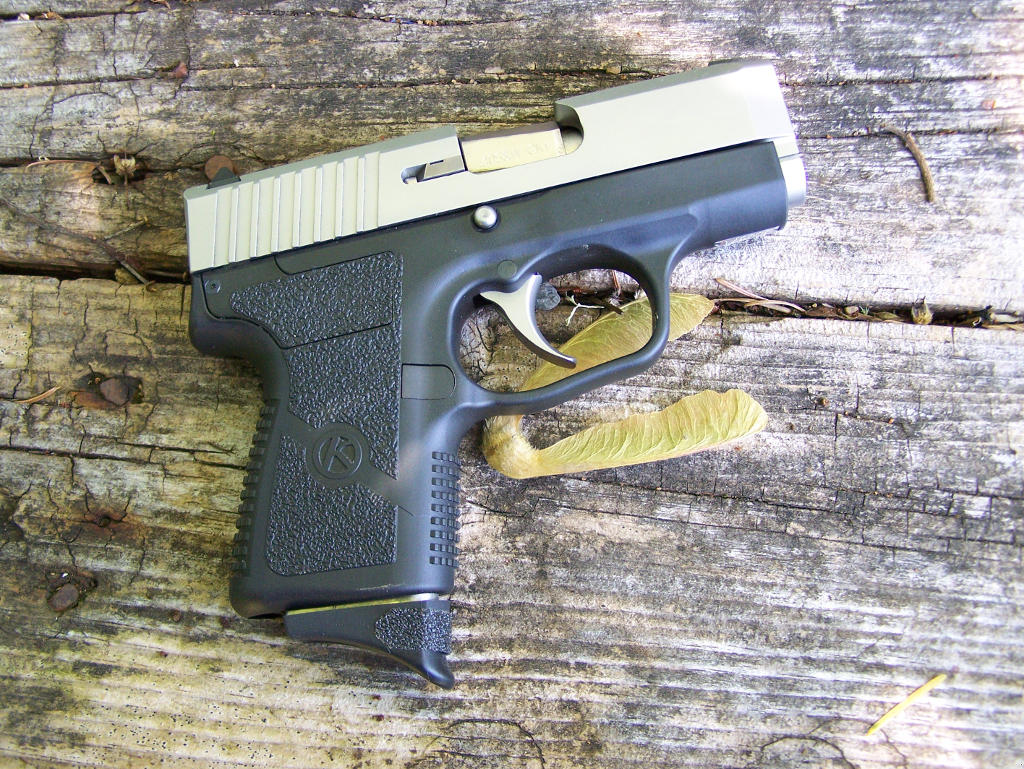
Pat Cascio’s Product Review – Kahr Arms CM40
There was a time, many years back, when some of the first double action only (DAO) semi-auto pistols started appearing on the market. I still remember the first S&W DAO pistols, and I tested quite a few of them, and just didn’t care for the ovey long trigger pull. I could have that on a revolver! To be sure, many of the first DAO pistols that arrived were really lacking in the trigger pull department; besides being long, some overly long, many had a hitch in their “git-along”. They were gritty, with humps and lumps along the entire trigger pull. They were not what I was looking for. Still, I owned quite a few and wrote more than a few articles about these guns. I remember one DAO pistol, the Colt All American 2000. It came in two flavors; one with a polymer frame, which was all the rage, and one with an aluminum frame. For whatever reason, the aluminum framed version had a much smoother trigger pull that was long but very smooth. The polymer framed version had a horrible trigger pull. The Colt All American 2000 is relegated to collector’s status these days, if you can find one. We won’t even go into the disassembly and reassembly of the 2000. It was a nightmare, to say the least.
We also have the GLOCK line-up for DAO handguns. Without a doubt, their trigger pull is “different” to say the least. Most describe it as “mushy”, and I have to agree. Still, their guns are more than accurate and still the most seen handgun in law enforcement holsters. The simplicity of the GLOCK is one of the selling points. Depending on who you talk to, the GLOCK has 33 or 34 parts, and take-down is as easy as can be. Still, the trigger pull isn’t the best.
Some years ago, I read about Kahr Arms. Like all gun makers, they only had one or two handguns that they were manufacturing at the time, and they hand aluminum frames. Still, everything I read about them by other gun writers claimed they had the best DAO trigger pull ever. Many described it as the Rolls Royce of DAO trigger pulls. My local gun shop at the time, never got a Kahr in, and I longed for one. I was determined to put the hype to rest, no gun has a trigger pull “that” good, according to my thinking. However, after moving from Eastern Oregon and the high desert area back to the wet side of the state, which is now experiencing drought and one of the hottest summers on record, I found a new gun shop to haunt. Wouldn’t you know it; one of the first guns I bought from them was a Kahr Arms 9mm with an aluminum frame, and it even came with a custom leather belt holster.
I’ve got to admit, the Kahr had one of the best, if not “the” best, DAO trigger pull I’ve ever experienced, and that includes some really outstanding double action trigger pulls on revolvers. I’ve done more than my share of trigger jobs on revolvers over the years, and none were as good as the trigger pull on the Kahr. I became a huge fame of Kahr handguns, and I own more than a few. Every single one has the same outstanding trigger pull that is buttery smooth, longish, but smooth and with no hitch it the git-along. It’s a smooth pull all the way through as you activate the trigger.
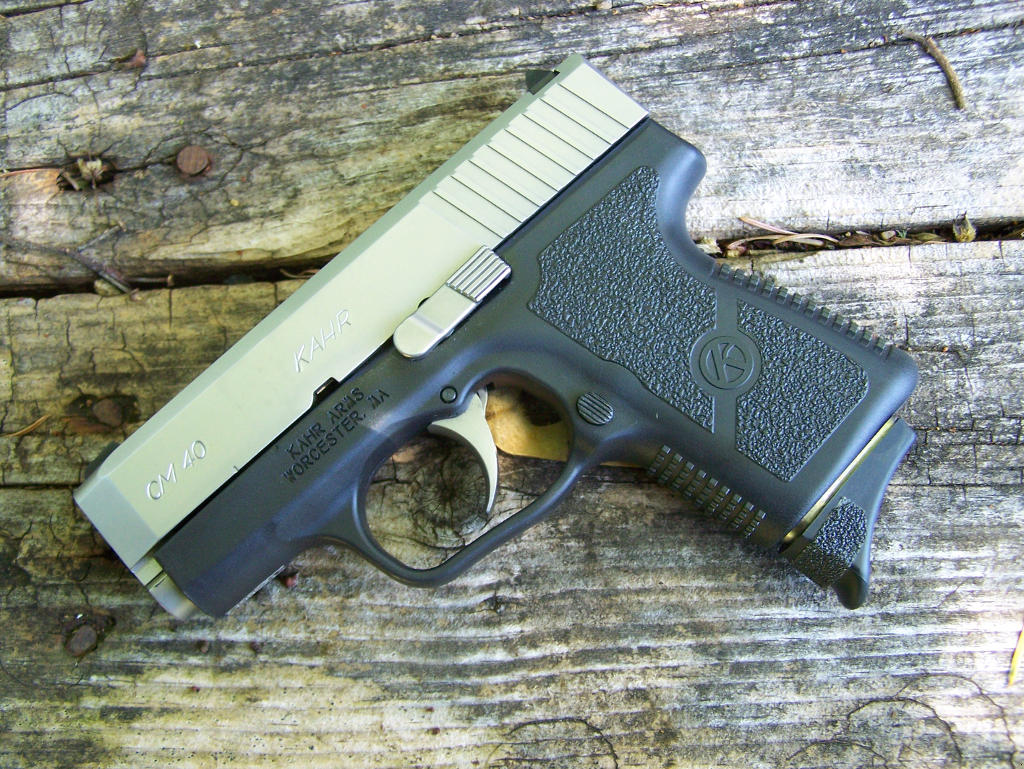
I’ve lost count of the number of Kahr handguns they are producing, in various calibers and sizes. However, I believe it is close to a hundred different models in everything from .380 ACP, all the way up to .45ACP, with more new models on the way all the time. For this article, I tested the Kahr CM40. Kahr sent me a brand new sample, to go along with my well-used CM40, so I did a side-by-side comparison of the two guns in my testing.
The CM40 is one of the “economical” versions in the Kahr line-up. Some of us don’t need some of the fancier features, like a machined slide stop, compared to one Metal Injection Molded, or a barrel that has conventional rifling, instead of match grade polygonal barrels. After all, in my humble thought process, these little guns are best reserved for up-close and person self-defense, not long range target shooting. And, I couldn’t care less how the Kahr name and logo are placed on the slide; whether machined or roll marked, it makes no difference to me.
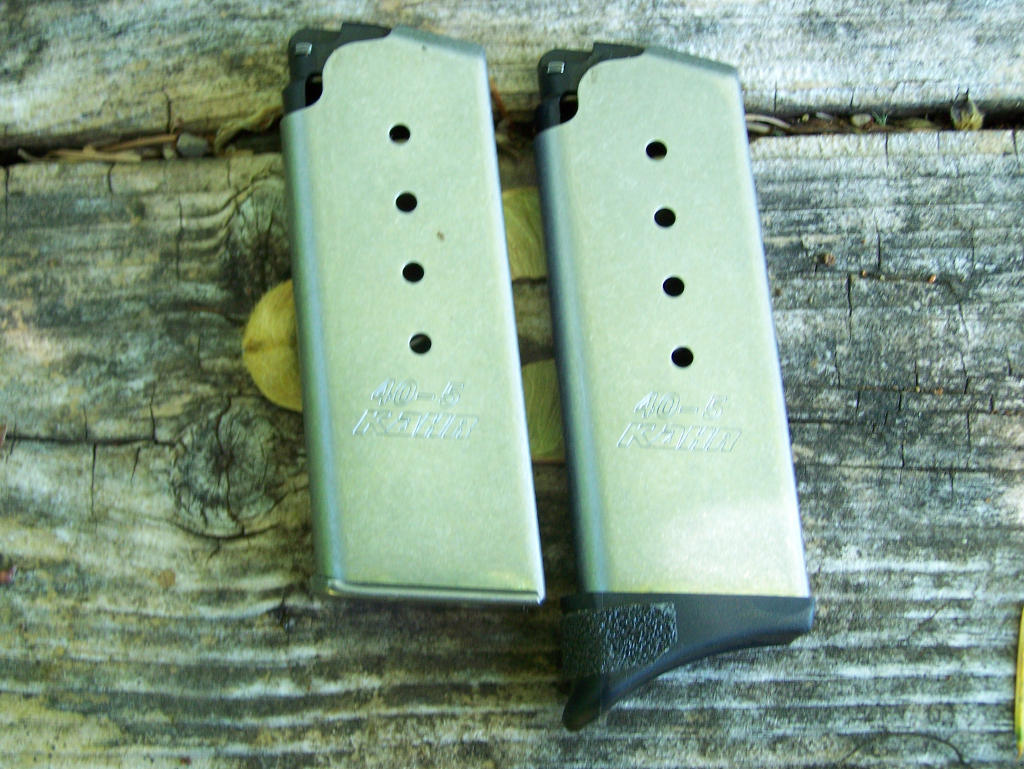
The striker-fired CM40 holds 5-rds in the magazine and one in the chamber. That should be enough for most folks, and if you take my advice you should ALWAYS carry at least one spare magazine anyway, just in case. The barrel is 3.1-inches long, about as short as they can be for reliable functioning. The overall length is 5.47 inches and high is 4.0 inches. This baby is small. The slide width is .94 inches. The little CM40 only weighs 15.8 ounces without the magazine. The frame is textured, rough texture on the grip area, for a sure hold on the gun. The slide is brushed stainless steel with a white dot front sight and a white bar on the rear sight. The gun only comes with one magazine, so please get at least one spare. Right now, Kahr is running a summer special; if you purchase any of their handguns with a “C” (CM or CW) in the designation, you can get one free magazine. Take advantage of this!
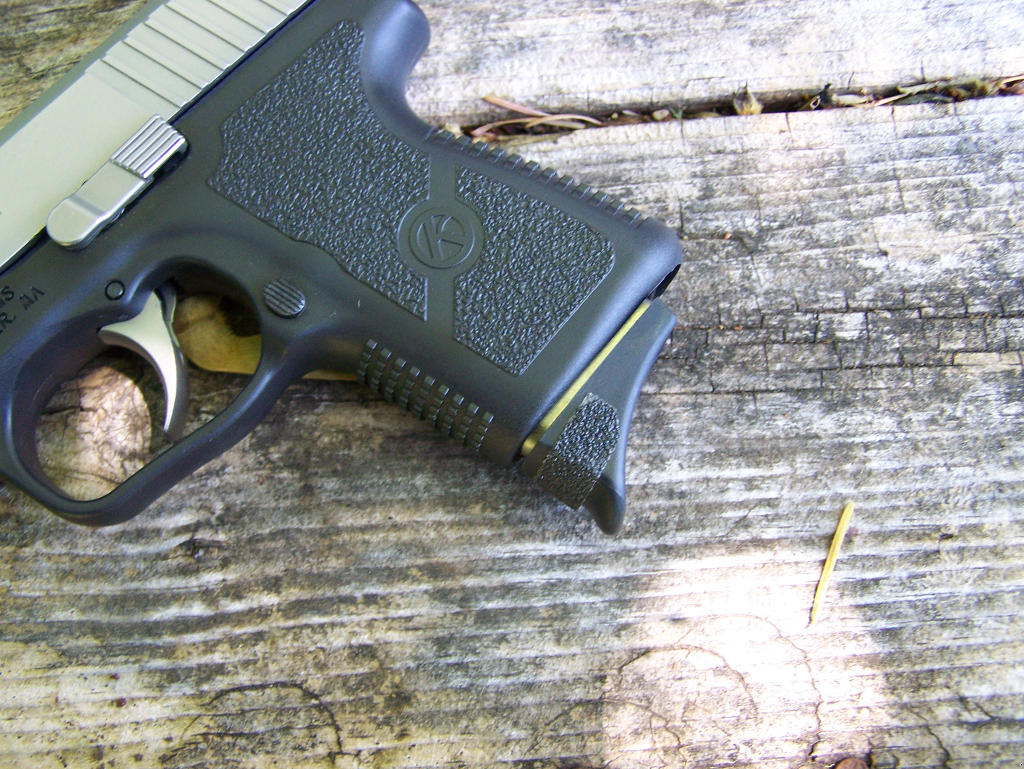
The only operating features on the CM40 is the slide lock, magazine release, and the trigger. The “safety” is the one between your ears, so keep your finger off the trigger until your sights are on the target. It’s real simple. Yes, there are internal passive safeties to prevent the gun from firing if dropped. You have to simply pull the trigger, all the way through, before the gun will fire. As to the texturing on the grip frame, I like it a bit rough. However, on both my CM40s, I found it too “aggressive” to my liking, and so I took some fine sandpaper to it to take off the fine points. That only took a few seconds. The .40 S&W round has some serious recoil in this little pistol, and I found it abrading my hand after long shooting sessions.
The polymer frame features stainless steel inserts embedding in the frame, and the slide rides along those inserts smoothly. As an aside, Kahr holds no less than seven patents on their own guns, resulting in benefits not found on any other handguns. Some have copied and been sued by Kahr. One other thing worth note is the barrel feed ramp. It is offset to one side, allowing the trigger bar attachment to be off to the side, thus allowing the barrel to sit lower in the frame, thus lower in the hand for more control. Unlike some other small framed handguns that state that they are only good for shooting “X” number of rounds during the life of the gun, Kahr doesn’t restrict you on this. You can shoot all you want, and the gun is covered by Kahr’s limited lifetime warranty. I wouldn’t want to go out and purchase a firearm that comes with the claim that they are only good for shooting “X” number of rounds before they wear out. Plus, Kahr states you can even shoot +P ammo through their guns! (I have more on this shortly.)

Kahr states, in their owner’s manual, that you should fire at least 200 rds through their guns before you consider carrying them for self-defense. Why? Well, their guns are tightly fit, and many other gun companies state the same thing, which is instruction to give the gun a good break-in period. My own personal CM40 took close to 200-rds to break in before it worked 100% of the time. The new sample I received from Kahr worked right out of the box with no problems for the most part.
The first thing I did, with both of the CM40s, was add the Pearce Grip magazine floor plate on the magazines. I call them “pinky catchers” because they “catch” your pinky finger. The 5-rd mags that came with the guns allowed my pinky finger to just dangle there, or I would try to curl it under the magazine. For $9.95 the Pearce mag adaptor is the way to go, and it only adds a tiny bit to the overall height of the gun. It is a “must have” accessory in my book for the CM40. It makes the gun feel all that much better in the hand.
I had a decent selection of ammo to test. From Black Hills Ammunition I had their new 155-gr JHP load, which is always a great performer, their 10-r FMJ remanufactured load, and their 140-gr Barnes all-copper TAC-XP hollow point load. From Buffalo Bore Ammunition I had their Heavy 155-gr JHP +P load, their 200-gr Hard Cast Outdoorsman load, and their 140-gr Barnes all-copper, TAC-XP hollow point load. I also had some miscellaneous mixed ammo that I used in my testing that included some reloads and some very old loads.
My accuracy testing was conducted at 15-yards, standing, using a two-hand hold with no rest. This is a very small handgun, meant for up-close serious self-defense. I will say that the Buffalo Bore 155-gr JHP +P load is one that will get your attention right away in the little CM40. Wow! It’s not a load you want to shoot much of during one shooting session; the recoil was punishing. Then again, we are talking about a sub-compact handgun, shooting the .40S&W load that does recoil quite a bit even in full-sized guns. I like the Buffalo Bore 125 and 140 Barnes loads, which are outstanding self-defense loads. They penetrate deeply, mushroom open, and stay together. The Buffalo Bore 200-gr Hard Cast Outdoorsman load would not function in either one of my CM40s, period! Looking over the Buffalo Bore website, and in a conversation with Tim Sundles, who owns Buffalo Bore, it states on their website that this round doesn’t function reliably in the CM40. Sundles said these rounds are made to SAAMI specs, too. You can find 99 types of ammo that will function in a gun, but the 100th type won’t. Sooner or later, you will run across a load that won’t function in any handgun. It’s as simple as that. It’s not the fault of the gun or the ammo. It’s just the way it is.
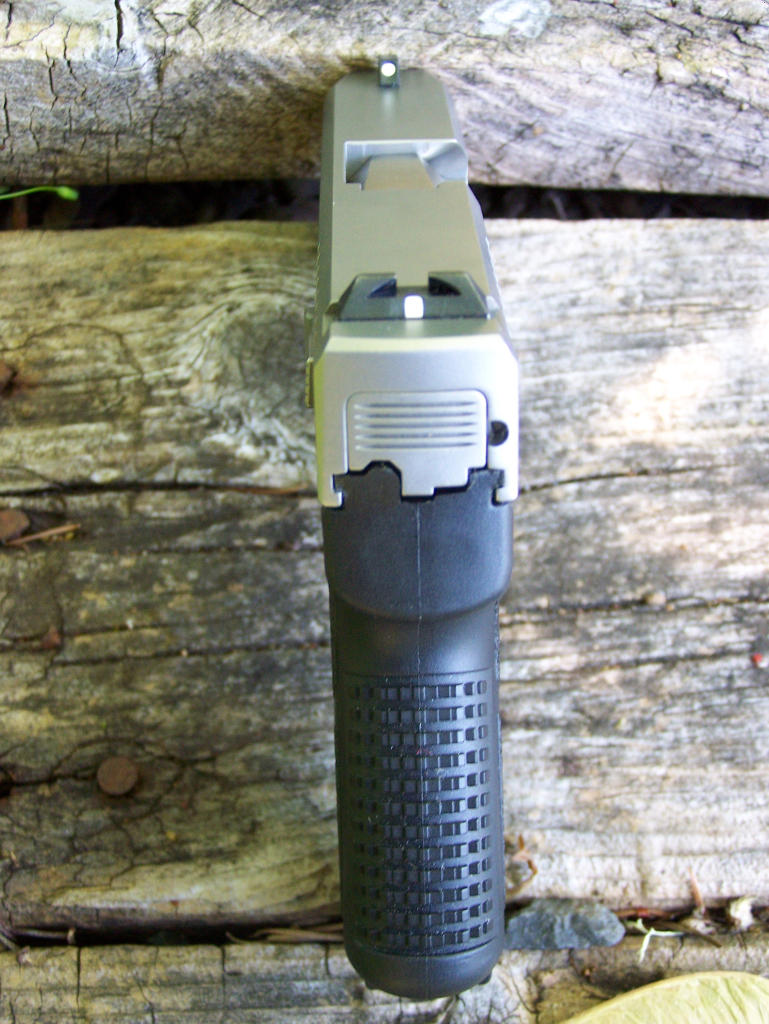
The Black Hills loads functioned 100% of the time. The 155-gr JHP load is one to consider for self-defense, and I’ve used this round for years in my carry guns. The 180-gr FMJ remanufactured loads are a great target practice load, too. The Black Hills 140-gr Barnes load, using the same bullet as the Buffalo Bore load was outstanding. It is moving along a bit slower than the Buffalo Bore load, and both CM40s preferred this round over all the others tested for accuracy. If I did my part, I could get 3-inch groups at 15-yards from both Kahr’s. That’s outstanding for such a short barrel and such a little gun. It just goes to show that you need to experiment with different loads in your guns to see which ones function 100% of the time and which gives you the best accuracy. The Buffalo Bore 140-gr Barnes load is moving faster, with more velocity, than the Black Hills 140-gr Barnes load, yet the Black Hills load was more accurate, and both CM40s seems to operate a bit smoother with the Black Hills load. Oh, to be sure, there was nothing wrong with the Buffalo Bore 140-gr Barnes load. I use this one a lot, but the CM40s liked the Black Hills load a little better. None of the loads tested exceeded 4-inches at 15-yards, so long as I did my part.
I will say, the CM40 does have quite a bit of recoil, and you must really have a firm grip on the gun at all times; if you limp wrist the gun, you will have malfunctions– either expended rounds won’t fully eject or the next round in the mag won’t fully chamber. This is a training issue. The gun recoils a lot, so make sure you have a firm hold on the gun. I intentionally held both guns a bit loose in my hand when firing as a test, and sure enough they would malfunction. While holding the guns firmly, I had no problems.
Blackhawk Productssent me their Leather Compact Askins belt holster to carry the CM40 in, and this baby is just made for the CM40 and other similar sized Kahr’s. The gun rides high and tight to your side. I also requested one of their ankle holsters, but it is on back order. I would like to carry the CM40 as a back-up gun to whatever my main gun is, and an ankle holster is the way to go. However, I’d have no problem carrying a CM40 in the Blackhawk Askins belt holster with at least one spare mag and probably two as my one and only self-defense handgun.
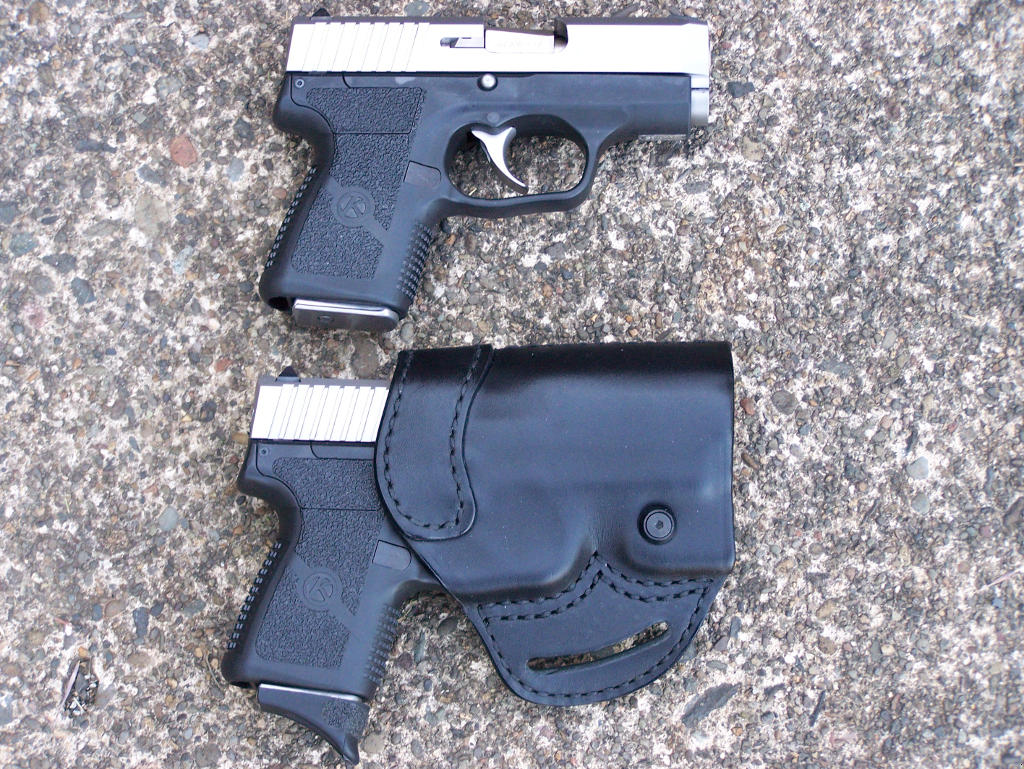
If you’re new to handgunning and would like to carry the CM40, I would steer you to their CM9. It’s the same gun in 9mm; it is much easier to control, especially in rapid-fire. The CM40 demands a strong and firm grip, and it really does recoil quite a bit. Without a lot of practice, you might encounter some malfunctions, which is something you don’t want or need in a life or death showdown. So, go with the CM9 if you find the recoil prohibitive in the .40S&W caliber. With a good JHP bullet, the 9mm will get the job done, and in the CM9 you have 6-rds in the mag instead of just 5-rds, like the CM40 carries.
I don’t know that I’d care to have any other sub-compact carry gun smaller than the CM40. The CM40 recoils more than enough for my liking, and besides if you go smaller or lighter, there is all that much more chance you’ll have more malfunctions and recoil will really turn you off. However, if you can handle the recoil in a CM40, then by all means get your hands on one. It is one potent self-defense pistol. You can usually find the CM40 for under $400 in my neck of the woods, and that’s quite a bargain for such a high-class handgun that is easy to conceal.
– Senior Product Review Editor, Pat Cascio
- Ad USA Berkey Water Filters - Start Drinking Purified Water Today!#1 Trusted Gravity Water Purification System! Start Drinking Purified Water now with a Berkey water filtration system. Find systems, replacement filters, parts and more here.
- Ad Click Here --> Civil Defense ManualNOW BACK IN STOCK How to protect, you, your family, friends and neighborhood in coming times of civil unrest… and much more!
Recipe of the Week: Oriental Chicken Salad, by L.H.
It’s August, and it’s too hot to cook, isn’t it?! Here is a lovely cooling main dish salad, adapted with thanks from my old 1988 Betty Crocker Cookbook. I’ve been making this salad for so many years that the old cookbook automatically opens to this recipe’s page.
Note: Our preferred source of chicken for this recipe is to throw a few extra pieces on the grill when grilling, then throwing them in a ziploc in the freezer ready to be used for it. A can (14 oz.) of chicken is an easy alternative, when time is short. Use whatever works best for you. The amount of chicken you use is not critical to the recipe, nor are the salad ingredients. Use whatever salad fixin’s you have around that your family likes (though I don’t recommend tomatoes in this.) I always double this for a family-sized dinner. You’re assured to have enough for everyone’s taste, and if there’s leftovers, well, the stuff is delicious. It’s easily used for later salads.
Ingredients:
For Ginger Dressing-
- scant 1/3 c. vegetable oil
- 2 Tbs. sesame oil
- 1/4 c. white wine vinegar
- 1 Tbs. sugar
- 2 tsp. soy sauce
- 1/2 tsp. salt
- 1/2 tsp. pepper
- 1/2 tsp. ground ginger
For Salad-
- 4 c. or so favorite lettuce
- 1 1/2 – 3 c. cut-up cooked chicken or turkey (prefer grilled chicken)
- 1 large carrot, shredded (about 1/2 c.)
- 1 bunch green onions, with tops, sliced (about 1/3 c.)
- 1 tbs. toasted sesame seeds
- 2-3 c. favorite chow mein noodles
Directions
- Important Note: Prepare ginger dressing at least 2 hours ahead of serving time.
- In a shaker container, pour sesame oil into vegetable oil, then add remaining dressing ingredients. Shake well and chill in the refrigerator for at least two hours.
- For salad, combine lettuce, chicken, carrot, and green onions in a large bowl; toss.
- Sprinkle sesame seeds over salad.
- Serve salad over beds of chow mein noodles, and pass the ginger dressing to taste.
- Makes 6 servings.
o o o
Do you have a favorite recipe that would be of interest to SurvivalBlog readers? Please send it via e-mail. Thanks!
- Ad Ready Made Resources, Trijicon Hunter Mk2$2000 off MSRP, Brand New in the case
- Ad LifeSaver 20K JerryCan Water PurifierThe best water jerrycan you can buy on the market! Mention Survivalblog for a Free Filter ($130 Value)
Letter Re: Scot’s Product Review: Federal Ammunition
Scot,
Great article on the 7.62. I have found a great alternative to the over 1k price tag. I just use a SOTA Arms 7.62 upper on my AR lower, and it’s been working out great. The price was $450, and I use ASC 20 round mags. These fit in the old ALICE mag pouches real well. I have a “battle rattle” set up just for this rifle. I included the links for you to check out. Again, great article. – G.S.
- Ad California Legal Rifles & Pistols!WBT makes all popular rifles compliant for your restrictive state. Choose from a wide range of top brands made compliant for your state.
- Add Your Link Here
Economics and Investing:
Gerald Celente: A Stock Market Crash Will Happen By The End Of 2015
HJL adds: While I hear increasing warnings about this impending event, don’t discount the ability of TPTB to kick the can down the road just a little bit more, perhaps until after the election cycle of 2016.
o o o
o o o
o o o
Odds ‘n Sods:
Municipal Office Set on Fire, Trucks Looted in Western Venezuela – B.B.
o o o
Do You Have Change for a Bowie? The Advent of Artisanal Cash – JBG
o o o
How Facebook Tracks Messages and Photos For Crime, Reports to Police – D.S.
o o o
I described this scenario in one of my books, though it’s not a hard prediction to make. The danger of over-gadgeting your rifle – Mike Williamson, SurvivalBlog’s Editor at Large
o o o
America Divided – Blacks won’t rebuke Farrakhan terror threats – MVR
Hugh’s Quote of the Day:
“It is not from the benevolence of the butcher, the brewer, or the baker, that we expect our dinner, but from regard to their own interest. We address ourselves, not to their humanity but to their self-love, and never talk to them of our own necessities but of their advantages. Nobody but a beggar chooses to depend chiefly upon the benevolence of his fellow citizens.” – Adam Smith
Notes for Sunday – August 09, 2015
9 August 1831was the birthday of James Paris Lee (August 9, 1831 – February 24, 1904). He was a Scottish-Canadian and later American inventor and arms designer, best known for inventing the bolt action that led to the Lee-Metford and Lee-Enfield series of rifles.
o o o
Today, we present another entry for Round 60 of the SurvivalBlog non-fiction writing contest. The $10,000 worth of prizes for this round include:
First Prize:
- A Gunsite Academy Three Day Course Certificate, good for any one, two, or three day course (a $1,195 value),
- A course certificate from onPoint Tactical. This certificate will be for the prize winner’s choice of three-day civilian courses. (Excluding those restricted for military or government teams.) Three day onPoint courses normally cost $795,
- DRD Tactical is providing a 5.56 NATO QD Billet upper with a hammer forged, chromlined barrel and a hard case to go with your own AR lower. It will allow any standard AR type rifle to have quick change barrel, which can be assembled in less than one minute without the use of any tools, and a compact carry capability in a hard case or 3-day pack (an $1,100 value),
- Gun Mag Warehouse is providing 20 Magpul pmags 30rd Magazines (a value of $300) and a Gun Mag Warehouse T-Shirt. (An equivalent prize will be awarded for residents in states with magazine restrictions.),
- Two cases of Mountain House freeze dried assorted entrees in #10 cans, courtesy of Ready Made Resources (a $350 value),
- A Model 120 Series Solar Generator provided by Quantum Harvest LLC (a $340 value),
- A $250 gift certificate from Sunflower Ammo,
- KellyKettleUSA.com is donating both an AquaBrick water filtration kit and a Stainless Medium Scout Kelly Kettle Complete Kit with a combined retail value of $304,
- TexasgiBrass.com is providing a $300 gift certificate, and
- Two cases of meals, Ready to Eat (MREs), courtesy of CampingSurvival.com (a $180 value).
Second Prize:
- A Glock form factor SIRT laser training pistol and a SIRT AR-15/M4 Laser Training Bolt, courtesy of Next Level Training, which have a combined retail value of $589,
- A FloJak EarthStraw “Code Red” 100-foot well pump system (a $500 value), courtesy of FloJak.com,
- The Ark Institute is donating a non-GMO, non-hybrid vegetable seed package–enough for two families of four, seed storage materials, a CD-ROM of Geri Guidetti’s book “Build Your Ark! How to Prepare for Self Reliance in Uncertain Times”, and two bottles of Potassium Iodate– a $325 retail value,
- A $300 gift certificate from Freeze Dry Guy,
- A $250 gift card from Emergency Essentials,
- Twenty Five books, of the winners choice, of any books published by PrepperPress.com (a $270 value),
- A pre-selected assortment of military surplus gear from CJL Enterprize (a $300 value),
- TexasgiBrass.com is providing a $150 gift certificate,
- RepackBox is providing a $300 gift certificate to their site, and
- Safecastle is providing a package of 10 Lifestraws (a $200 value).
Third Prize:
- A Royal Berkey water filter, courtesy of Directive 21 (a $275 value),
- A large handmade clothes drying rack, a washboard, and a Homesteading for Beginners DVD, all courtesy of The Homestead Store, with a combined value of $206,
- Expanded sets of both washable feminine pads and liners, donated by Naturally Cozy (a $185 retail value),
- Two Super Survival Pack seed collections, a $150 value, courtesy of Seed for Security, LLC,
- Mayflower Trading is donating a $200 gift certificate for homesteading appliances,
- APEX Gun Parts is donating a $250 purchase credit,
- Montie Gear is donating a Precision Rest (a $249 value), and
- Two 1,000-foot spools of full mil-spec U.S.-made 750 paracord (in-stock colors only) from www.TOUGHGRID.com (a $240 value).
Round 60 ends on September 30th, so get busy writing and e-mail us your entry. Remember that there is a 1,500-word minimum, and that articles on practical “how to” skills for survival have an advantage in the judging.
Hypothermia: Prevention, Identification, and Treatment, by Stonecold
Hypothermia is a condition wherein the core body temperature drops from its “normal” temperature, with normal being between 97.7 and 99.5 degrees Fahrenheit. Some symptoms, in order of increasing seriousness, are cold extremities, mild shivering, mental confusion, muscle incoordination, severe shivering and shaking, combativeness, paradoxical undressing, and cardiac arrest. A drop in core body temperature of as little as three degrees can result in these symptoms and eventually lead to death.
Hypothermia should be a concern with anyone who lives in Western Washington, given our wet, temperate climate. Its prevention, identification, and treatment must be in the forefront of our minds while operating outdoors for periods longer than one hour; it is as important as proper hydration and nutrition. Hypothermia will not only decrease your individual readiness, it will also affect team readiness, as a team member with hypothermia will divert resources from the team’s operational capability. A five-person team can be rendered ineffective, if just one member becomes hypothermic.
This article will explore the prevention, identification, and treatment of hypothermia.
Prevention: Clothing
An ounce of prevention is worth a pound of cure. In Western Washington, staying dry is the best preventative. Staying active, fed, and hydrated are close seconds. In order to stay dry while operating outdoors, the proper clothing is essential. If you take nothing else from this article, take this: COTTON IS ROTTEN. Even in the summertime, cotton clothing can lead to hypothermia. Why is that?
Cotton is a hygroscopic fiber; this means it attracts water. Water will be wicked into the fibers to such an extent that a pair of blue jeans will absorb several times its own weight in water. Even without complete immersion, an entire cotton garment can become saturated. That water will then be held against the body. As water conducts heat better than air by several orders of magnitude, a greater amount of body heat will be transferred away from you into the wet garment and from there into the environment much faster than if you were dry. The hygroscopic nature of the fiber will prevent most evaporation from the garment, especially on a humid day.
Two sources of wet clothing exist: external and internal. External moisture is rain, snow, falling in a river, et cetera. Internal moisture is your own sweat. A waterproof outer layer is not sufficient itself; it must be paired with a base layer made of hydrophobic materials– material that does not absorb water– in order to move sweat away from your body and into the environment. Cotton clothing underneath a waterproof outer layer will not keep you dry and warm, even if your outer layer is a breathable water barrier; your sweat will saturate the cotton and keep it next to your body.
Your best defense against hypothermia in Western Washington outdoor operations will be wearing clothing made from wool and/or synthetic fibers. However, as most military field clothing is made from a blend of synthetic fibers (nylon, polyester, polypropylene, and para-aramid) and cotton, that will be the most common textile in use during our group’s field operations. Fortunately, many garments exist made from hydrophobic materials. Any moisture that is absorbed into the fabric is quickly migrated to the environment. Polyester, polypropylene, silk, and wool are examples of hydrophobic fabrics. When garments made from these fabrics are paired with a waterproof outer layer (breathable membrane is the best), you are 90% of the way to preventing hypothermia in Western Washington. Wool is nearly obsolete as an outdoor fabric, except to us old goats who still think man has yet to improve upon nature in that regard.
One can model their field clothing choice based upon the Army’s Extended Cold Weather Clothing System (ECWCS) concept. (The Marines’ equivalent is Mountain/Cold Weather Clothing System.) It consists of a polyester base layer, a polartec fleece mid-layer, and a breathable membrane outer layer. Of course, cost and availability may limit many of us, but we can use the above as a guideline. What follows is my personal advice on what clothing items you should wear in the field.
Clothing for Below 60 Degrees Fehrenheit
Anytime the ambient temperature may be below 60 degrees, or there is a good chance of precipitation, one should wear a base layer of thermal underwear, with full length sleeves and legs, that is made from polyester or polypropylene. One can find used thermals inexpensively at surplus stores; I often find complete sets of long sleeve tops and ankle-length bottoms for $10.00. Short sleeve tops and boxer shorts can be found for even less. Get the lightweight version first. Medium weight is available, but in my opinion it is too heavy for most applications in our local environment. You will need to experiment with the most comfortable combination, given the outside temp and activity level, but one should own at least one set in each length. Two or more of each set is preferred, so one can change into a clean, dry pair at the end of the day or after falling into a lake.
On your feet should be a pair of socks made of at least 80% wool with the balance made from synthetic fibers. Having several pair is a must. You may consider a lightweight base layer of a sock made from polypropylene to wear underneath the wool sock. Test out your socks with your boots before going into the field. I have found that I need boots ½ size larger than my shoe size to accommodate medium- to heavy-weight socks. As for the boots, unless it has not rained for several days, rubber boots are advised for around camp and on patrol, if they are comfortable enough. Leather boots that are waterproofed with beeswax and have a breathable, water-proof layer are ideal unless operating in a marshy environment. The Army and Marines now issue boots of a combined leather and nylon upper with a breathable membrane liner.
Clothing for Below 40 Degrees Fehrenheit
Anytime the ambient temperature may be below 40 degrees, I recommend adding a mid-weight Polartec™-style fleece, especially if your operations include sedentary activity, such as guard duty or LP/OP duty. One can use civilian versions in multiple colors, but earth tones are recommended for tactical/field operations. I usually do not recommend a mid-weight layer below your waist, unless you will be sedentary in sub-freezing temperature. However, your own experience will be your best guide. The key is to find the balance between too cold and too warm.
If you are sedentary and feel just right comfort-wise, remove a layer before becoming active. For example, if you are on guard duty or radio watch and then go on a patrol, remove your mid-weight layer before starting the patrol. Being slightly chilled at the beginning of a patrol or other activity is fine, because the activity will warm you up. If you have to hike several miles to your LP/OP, put your mid-weight top in your pack to don once you arrive at your destination.
Your outer layer should ideally be a breathable thin shell, such as Gore-Tex™, but cost and availability may limit you. In such case, your outer layer should be wool, or a hydrophic synthetic material such as nylon or polyester. A waterproof poncho is a less expensive alternative and can keep rain off of you and your gear. Most camouflage clothing can be obtained in a cotton blend with these synthetic fibers, but avoid 100% cotton except for warm dry areas. The cotton blend will still get wet but not as wet as 100% cotton and your base layer will continue to insulate you when wet.
As part of your outdoor ops clothing kit, one should have a fleece cap and gloves. A cap can be easily donned and doffed, depending on activity level to keep you comfortable. Gloves such as Mechanix™ or a similar make are made from synthetic, hydrophobic fibers.
A note about the flame-esistant Multicam™ or ACU clothing: Current issue is made from 65% rayon, which is a fiber made from cellulose (wood pulp). Rayon is a hygroscopic fiber like cotton. It breathes very well but will absorb water, like cotton, and even when dry provides minimal insulation. The balance of the blend is para-aramid (Kevlar™) and Nylon added for durability. Like cotton blend garments, it is not as absorbent as a 100% cotton garment, but it’s more absorbent than a 100% synthetic garment.
A further note about Gore-Tex™ and other waterproof, breathable membranes: These breathable membranes work when the relative humidity inside the garment is greater than outside. If the outer layer of the garment becomes saturated, the membrane will no longer be breathable. It will still be waterproof, but your sweat will dampen your clothing from the inside. Breathable membrane garments should not be washed with regular detergent, as the residue will cause water to absorb into the garment rather than bead off. Use Nikwax™ or similar product for use on breathable membrane garments. For caked on mud or dirt, allow it to dry then brush it off.
Following the above guidelines will help prevent most instances of hypothermia. Of course, it is not a 100% preventative. Should you become wet, it is still highly advisable to change into dry clothing and get something warm to eat and drink by the fire at base camp.
Letter Re: Zippo Lighters
HJL,
I’ve discovered that bicycle inner tube encased Zippo lighters fit nicely inside a used Tic-Tac plastic case with a little extra space for some tinder, spare wicks, and flints inside the lid. I store my extra flints inside coffee stir stick segments. The Tic-Tac case protects the lighter and provides an extra barrier to slow down the evaporation process. I’ve also used Naphtha in my Zippo while deployed. – RLH in Ohio
Economics and Investing:
The College Bubble 2.0: In just one year, loan debt is up nearly 30% …Half of young graduates are either unemployed or only working part-time… The massive increase in applicants with degrees, the value of college degrees is drastically falling
o o o
The recent dips in the spot silver and gold markets are indicative of both manipulation in the global oil market and panicky investors in Europe shifting into U.S. dollar-denominated investments. (The investing outflows from Europe are pushing the U.S. Dollar up, and precious metals down.) With spot silver at around $14.70 per Troy ounce and gold at around $1,090, they are bargains. So, if you already have your beans and bullets squared away, then I strongly recommend diversifying into some pre-1965 circulated silver coins. This is an ideal time to buy silver. Do it NOW. If you wait until October, then you will probably be too late. – JWR
o o o
Stocks are a ‘disaster waiting to happen’: Stockman – B.B.
o o o
BANKERS THREAT: Global Exchanges Continue To Bleed Silver
o o o
GMO founder Grantham says markets ‘ripe for major decline’ in 2016 – G.G
Odds ‘n Sods:
‘Production Versus Plunder’ Part 19: Life in the New Empire
o o o
Transplanted Venezuelan patients resort to veterinary drugs – P.S.
o o o
Federal court: Drug dog that’s barely more accurate than a coin flip is good enough – T.P.
o o o
Google’s Search Algorithm Could Steal the Presidency – JBG
o o o
Hugh’s Quote of the Day:
“If ye had known me, ye should have known my Father also: and from henceforth ye know him, and have seen him.” John 14:7 (KJV)