
“If people needed helping, I should expend my energy to offer that help, rather than forcing others to provide it.” – Mary Ruwart
- Ad Elk Creek Company - Federally-Exempt No-Paperwork GunsPre-1899 Antique Cartridge Guns -- No FFL Required. Can be mailed to your doorstep with no Federal paperwork!
- Ad USA Berkey Water Filters - Start Drinking Purified Water Today!#1 Trusted Gravity Water Purification System! Start Drinking Purified Water now with a Berkey water filtration system. Find systems, replacement filters, parts and more here.
Notes for Tuesday – November 10, 2015
November 10th is remembered in the United States as the “birthday” of the U.S. Marine Corps. Coincidentally, the 10th is also the birthday of the late Mikhail Timofeyevich Kalashnikov, born in 1919, died December 23, 2013. He didn’t design a lot of different guns, but one of his few designs was the prototype for what turned out to be the world’s most widely produced assault rifles. Once an iconic symbol of international communism, the AK’s curved magazine profile has in more recent years become just a symbol of citizens being well-armed.
o o o
Today, we present another entry for Round 61 of the SurvivalBlog non-fiction writing contest. The nearly $12,000 worth of prizes for this round include:
First Prize:
- A Tactical Self-Contained 2-Series Solar Power Generator system from Always Empowered. This compact starter power system is packaged in a wheeled O.D. green EMP-shielded Pelican hard case (a $1,700 value),
- A Gunsite Academy Three Day Course Certificate that is good for any one, two, or three day course (a $1,195 value),
- A course certificate from onPoint Tactical for the prize winner’s choice of three-day civilian courses, excluding those restricted for military or government teams. Three day onPoint courses normally cost $795,
- DRD Tactical is providing a 5.56 NATO QD Billet upper with a hammer forged, chromlined barrel and a hard case to go with your own AR lower. It will allow any standard AR type rifle to have quick change barrel, which can be assembled in less than one minute without the use of any tools and a compact carry capability in a hard case or 3-day pack (an $1,100 value),
- Gun Mag Warehouse is providing 20 Magpul pmags 30-rd Magazines (a value of $300) and a Gun Mag Warehouse T-Shirt; (an equivalent prize will be awarded for residents in states with magazine restrictions),
- Two cases of Mountain House freeze dried assorted entrees in #10 cans, courtesy of Ready Made Resources (a $350 value),
- The Ark Institute is donating a non-GMO, non-hybrid vegetable seed package (enough for two families of four) plus seed storage materials, a CD-ROM of Geri Guidetti’s book “Build Your Ark! How to Prepare for Self Reliance in Uncertain Times”, and two bottles of Potassium Iodate (a $325 retail value),
- A $250 gift certificate from Sunflower Ammo,
- KellyKettleUSA.com is donating both an AquaBrick water filtration kit and a Stainless Medium Scout Kelly Kettle Complete Kit with a combined retail value of $304, and
- Two cases of meals, Ready to Eat (MREs), courtesy of CampingSurvival.com (a $180 value).
Second Prize:
- A Glock form factor SIRT laser training pistol and a SIRT AR-15/M4 Laser Training Bolt, courtesy of Next Level Training, which have a combined retail value of $589,
- A FloJak EarthStraw “Code Red” 100-foot well pump system (a $500 value), courtesy of FloJak.com,
- A transferable certificate for a two-day Ultimate Bug Out Course from Florida Firearms Training (a $400 value),
- A Model 120 Series Solar Generator provided by Quantum Harvest LLC (a $340 value),
- A $300 gift certificate from Freeze Dry Guy,
- A Trekker IV™ Four-Person Emergency Kit from Emergency Essentials (a $250 value),
- Twenty-five books, of the winners choice, of any books published by PrepperPress.com (a $270 value),
- A pre-selected assortment of military surplus gear from CJL Enterprize (a $300 value),
- RepackBox is providing a $300 gift certificate to their site, and
- Safecastle is providing a package of 10 LifeStraws (a $200 value)
Third Prize:
- A Royal Berkey water filter, courtesy of Directive 21 (a $275 value),
- A $245 gift certificate from custom knifemaker Jon Kelly Designs, of Eureka, Montana,
- A large handmade clothes drying rack, a washboard, and a Homesteading for Beginners DVD, all courtesy of The Homestead Store, with a combined value of $206,
- Expanded sets of both washable feminine pads and liners, donated by Naturally Cozy (a $185 retail value),
- Two Super Survival Pack seed collections, a $150 value, courtesy of Seed for Security, LLC,
- Mayflower Trading is donating a $200 gift certificate for homesteading appliances,
- APEX Gun Parts is donating a $250 purchase credit,
- Montie Gear is donating a Precision Rest (a $249 value), and
- Two 1,000-foot spools of full mil-spec U.S.-made 750 paracord (in-stock colors only) from www.TOUGHGRID.com (a $240 value).
Round 61 ends on November 30th, so get busy writing and e-mail us your entry. Remember that there is a 1,500-word minimum, and that articles on practical “how to” skills for survival have an advantage in the judging.
- Ad Click Here --> Civil Defense ManualNOW BACK IN STOCK How to protect, you, your family, friends and neighborhood in coming times of civil unrest… and much more!
- Ad SurvivalRealty.com: Sell Your Remote LandAdvertise your hard-to-sell remote land to eager buters. We specialize in rural, remote, and off-grid properties worldwide. Affordable ads. No commissions are charged!
Infectious Disease in the TEOTWAWKI World- Part 1, by Militant Medic
Before we start, here’s a quick disclaimer: I am a physician who has been practicing for 11 years, so I hope I know what I’m talking about, BUT this information is written for a TEOTWAWKI scenario where routine hospital based care is unavailable and the only antibiotics you have are ones designed for pets. This article is written for the desperate times ahead. Please do not use it as a guide to infectious diseases or how you should provide care to your family now. If you or a family member are ill and the hospitals are still staffed with knowledgeable and compassionate doctors who have all the great drugs Big Pharma can produce, that is where you should go for care. I assume no liability if you use this information in a scenario in which it was not intended. So once again: this article applies to a TEOTWAWKI scenario where all you have is pet antibiotics. It should not be used to guide medical decision-making for any timeframe prior to that event.
So, “it” has hit the fan, but fortunately you had seen the writing on the wall and gotten your act together. You have food, water, shelter, defense, and first aid. You’re ready for anything.
Included in your first aid inventory is a good selection of antibiotics, and now the time has come to use them, but your OPSEC wasn’t as good as it should be and word has gotten out that you have antibiotics. The people are coming from far and wide. (If you don’t think people will travel for medical care, you are wrong. When I did a medical mission in Honduras, people were walking for 10-20 miles through the jungle to see us; so, it will happen.)
Let’s walk through a few scenarios. Here are the “patients” you have waiting in your front yard “waiting room”:
- Your wife has a sore throat without a runny nose or cough. It hurts to swallow. Little red spots are scattered across the back of her mouth, and her tonsils are swollen and beefy red without white spots.
- Your son cut his hand a few days ago, and now the cut is red, hot, and oozing puss.
- Your other son also cut his hand while salvaging some stuff from a nursing home. His wound too is red, hot, and oozing puss.
- Your grandson (who never got his vaccinations, because your son didn’t believe the “lies” of big pharma) is having coughing fits that take his breath away and end in a “Whoop” of inhaled air.
- Your other grandson (again who had no vaccinations) has broken out with a fever, runny nose, and rash that consists of small fluid-filled blisters on bright red spots on his skin. They itch, and when one area gets better another area gets worse.
- Your third grandson (again who had no vaccinations) has headache, vomiting, muscle aches, a fever of 104.2, and weakness of his left leg muscles. Ten days ago, you chastised him for drinking untreated water from a creek. He didn’t know but it was downstream from a big FEMA refugee camp.
- Your neighbor’s wife has a fever, abdominal pain, and vaginal drainage. You know she was raped on a trip to the farmer’s market one week ago.
- A farm hand seemed okay yesterday but woke with a fever to 102.9, chills, coughing, body aches, runny nose, and a headache. His nasal drainage is yellow-green.
- Your teenaged daughter has not been drinking enough since you ran out of “flavor enhancers” for your water. Now, she has a fever of 101.5, painful urination, urinary frequency, and urinary urgency. Her urine smells “strong”.
- Your prepper neighbor (who has a special filter to remove the fluoride from his city water) has been struggling with a toothache for a few days but now he can barely open his mouth. He has a fever of 102.3, jaw pain, and swelling on the right side of his face. He took some penicillin he had stocked and it seemed to help a little, but then his symptoms got worse.
- Your neighbor ran out of food a while ago and has been shooting and eating prairie dogs out of desperation. He was okay yesterday but woke in the middle of the night with fever and now has fever to 103.7, headache, chills, muscle aches, and diarrhea. He also says his “glands” are swollen in his neck, armpit, and groin.
- Another neighbor was out hunting when he drank untreated water from a creek. Upstream he found a beaver pond. He presents with abdominal pain, copious watery (non-bloody) diarrhea, and a fever to 102.2.
- A boy from down the road was caught looting a house and was hit in the abdomen with three rounds of 00 buckshot as he ran away. He presents with a swollen painful abdomen that is rock hard and fever to 105.6. He is incoherent and having hallucinations. The buckshot is still in his body. His father begs you to save him, and he says he will give you his cherry 1965 Mustang fastback if you do. (If he hadn’t spent so much time and money on that car he might have been able to get some preps of his own and wouldn’t have had to resort to looting houses for food.)
- Your neighbors son presents with fever, fatigue, headaches, vomiting, and diarrhea, and has been unable to sleep. Dad hoped it was just a virus and would pass, but this morning he had a seizure and the father brings him to you. Two months ago the child found a bat in their grass in the middle of the day. He picked it up and got bit, but the wound seemed to heal without complication.
- Your aged mother has had a sore throat, low grade fever of 100.6, and stuffy nose for four days. There are white patches on her tonsils. It hurts a little to eat or drink.
- A farmer from down the road (whom you don’t like very well) tells you he has been trading food for sexual favors from the desperate unprepared women of the nearby town. He says there is an ulcer on the head of his penis. Otherwise he feels fine. It does not hurt, but he is worried he might have “picked something up from one of those whores!”
- A coworker has shown up for help. You had talked to him about prepping, and he was on the path when the balloon went up. He presents with bloating, watery diarrhea that has streaks of blood in it, abdominal pain, and a fever to 104.7. He says the diarrhea smells like horse manure. He also says he recently had a suspected strep throat and took Clindamycin for it. (It’s the only antibiotic he had), and while the throat got better, the diarrhea (which he suspected to be from the antibiotic) has been present for nine days now and is getting worse.
- A neighbor’s child has been struggling with an illness for about a few days but over the last 24 hours has worsened significantly. She awoke this morning with a very stiff neck, high fever, severe headache, and severe nausea. She also has broken out with a blotchy purplish rash on her lower extremities that does not go pale (blanch) when you push on it. Father is here begging for help.
- A neighbor has been ill for about five days. Started with two days of non-bloody vomiting and then evolved into watery non-bloody diarrhea. Had a fever of 101.3 at the beginning of the illness but does not have one now.
- A neighbor ran out of food a few weeks ago and has been out foraging in the forest. He has pulled a lot of ticks off his body. He presents with fever to 102.5, muscle aches, a headache, and a rash on his thigh that looks like a bullseye with concentric rings of redness.
Wow! Do you have your work cut out for you. They are all coming to you for help. You’ve got the antibiotics, but which one do you use for each of your “patients”. Are these bacterial infections that will respond to antibiotics or will you waste your precious antibiotics treating an untreatable virus? If it is a bacteria, will you pick the right antibiotic and heal your patient or will you pick the wrong one potentially making your patient worse, while at the same time wasting a precious resource you cannot easily replace.
Understanding how to identify and treat infectious disease is an often misunderstood subject within the prepper community. Few of us have real medical training, and many of us rely on word of mouth or tradition. Some of us make the mistake of thinking all antibiotics are the same. It is my intention to provide a basic understanding of infectious disease and its treatment.
- Ad SIEGE belts: The essential go-anywhere GRAY MAN accessory. Solid 5.5-7 oz of persuasive power has saved many on their daily routines & travels. Revered "Thousand-Year Buckles" with stunning hand-crafted finishes. Complements CCW. Lear more..SIEGE STOVES: the ultimate high-performance portable survival stove. SIEGE BELTS: Use code "SBLOG" at checkout for $20 off any belt. Gifts that have saved lives. Be prepared!
- Ad STRATEGIC RELOCATION REALTYFOR SALE: Self-sustaining Rural Property situated meticulously in serene locales distant from densely populated sanctuary cities. Remember…HISTORY Favors the PREPARED!
Two Letters Re: Love Thy Neighbor…Trust No One
HJL:
I’ve got the same issue on my one acre in a small town in Georgia. Great soil but with neighbors that think it is theirs. In my case a 45-foot section of board fence drew a line. I continue to fence the corners and plant hedge material when nephew labor is available. Periodic extra tall posts seem decorative now but will make a splendid support for barbed wire. My intent is to make it possible to fence it quickly from stored supplies should misfortune befall us. I hesitate to go ahead and install the fence because the location, while better than where I live, is still not ideal.
In addition to that I have researched IR flood lamps to be used in conjunction with less expensive NV gear. (Scot’s review of Armasite’s Spark) The combination in a defensive scenario seems to be the right application of resources. I can deploy five of those Sparks for the cost of one PVS-14. If I thought I needed offensive capabilities, nothing short of a PVS 14 would do. I have recently come to understand that there are active gang members in this little spot of a town, so the research has begun. The utility of NV vs IR and the availability of a larger tract outside of town is what I am talking about. I would still have to deal with those fine fellows, but distance helps. The current house is five feet from the property line on one side. – R.V.
o o o
Hugh,
Great topic. I, myself, have over the years in my prepping learning curve been had by both the good and bad types. There is a saying that “try not to live up to my expectations” and a lot of people these days attain that status without even batting an eye. When I was in Colorado Springs in the late 1980’s, I met up with some families who were into the survival mode and fellow church members. We ended up pooling resources and having a central family with a remote location to watch over “stuff’ stored with them. We sometimes were not in contact for a month or more, and one day I got a call from a fellow member who was upset because he had been unable to reach these people. I ended driving out to their home only to find a bank-owned “for sale” sign and a vacant home. Back then it was a little harder to track down a person(s). The loss for everybody in the group was both physical and even more a mental let-down because of the mutual trust we thought we enjoyed. Our “group” never recovered, and we parted ways. It was a bitter lesson and also a sign of the times, even more so today. We no longer have, as a country, the spirit of treating people as we would treat ourselves, and that is a sad commentary about our nation.
On the bad side, my living in the country in a remote section of Northern Texas presented an opportunity that some low-lifes just could not pass up, when they burglarized my home, killed my dog and cat (beaten to death), and stole about 15K in personal property. The property was covered by insurance, but the loss of both my beloved animals was the real tragedy. Nothing was ever recovered, nor were the parties identified. I have since moved from TX to AZ and from there moved to Northern Nevada. I have made contact with people in all those locations who where aware and committed to improving their survival chances. Today, I am extremely cautious about groups or people and their motives. I trust in God and prepare the best that I am able. I am not a pessimist; instead, I have discovered that I am a realist, who tries to apply common sense, which today seems to be a rare commodity in the country. Do not give up but pray for guidance and trust those who only have as much to lose as you do. Get off your rear and realize we are at an end game situation, and the days of doing nothing and waiting for a better tomorrow are in our past, not in our present. – John in NV
- Ad USA Berkey Water Filters - Start Drinking Purified Water Today!#1 Trusted Gravity Water Purification System! Start Drinking Purified Water now with a Berkey water filtration system. Find systems, replacement filters, parts and more here.
- Ad Survival RealtyFind your secure and sustainable home. The leading marketplace for rural, remote, and off-grid properties worldwide. Affordable ads. No commissions are charged!
News From The American Redoubt:
Here is a follow-up to a sketchy item from last week’s column: Idaho rancher’s wife: ‘I saw them murder my husband’
o o o
Casper, Wyoming: Enforcing The New Smoking Law
o o o
Eye on Boise: Idaho tax changes in the works
o o o
SurvivalBlog reader C.T. from Idaho wrote in: Fox News reported that Italy is under siege & political revolt over the Italian’s Mafias long held control over Italian politics and how the Mafia and their politicians are getting filthy rich off of the Social Welfare programs they’ve created by flooding Italy with illegal aliens. Exact same mafia corruption happening in Idaho and nationally, thanks to Open Borders that is supported equally by both political parties. The Voice of Idaho posted a video online of at least one group protesting this.
- Ad Survival RealtyFind your secure and sustainable home. The leading marketplace for rural, remote, and off-grid properties worldwide. Affordable ads. No commissions are charged!
- Ad California Legal Rifles & Pistols!WBT makes all popular rifles compliant for your restrictive state. Choose from a wide range of top brands made compliant for your state.
Economics and Investing:
SurvivalBlog reader GJM writes in: This is one example of what my “hegemony warnings” have been about. Like Brazil back in ’90s, it’s only one domino; but unlike anything else so far, it’s a game-changing big one. Ultimately, America either goes to war to maintain a slowly-degrading status quo…or accelerates to fast-fall… War with China means war with Russia means war with Iran means…
Fast-fall has the likelihood of being very fast and falling very far. No military retiree would get a tiny shard of his expected retirement; no police officer will ever get a pension—or much of a paycheck, for that matter; no EBT cards would magically transform into Doritos in the hands of the riotously grumpy; and the supply of pacifying Air-Jordans magically making their way into the flammable portions of America’s grim gothams would quickly evaporate. Congress would quit pretending to have seances over Social Security and would just bury that damnable, decaying old FDR Ponzi scheme, and so on…a lot of so on.
(And note that we’ve just imported 30 million new and additional little hunger gamesters, largely third-world, asymmetrically military-age males, almost none with loyalty or affection for this country, quite a few not-infrequently outrightly hostile, who also won’t be getting their free fortified Wheaties): China to Allow Direct Conversion Between Yuan and Swiss Franc
Either way, that Fantasy Football chart is going to end up seeming a whole lot less important.
o o o
True Nat’l Debt $65T, Gov’t Spending ‘Lost Touch with Reality’, sent in by G.P.
o o o
Items from Professor Preponomics:
The U.S. Distriibutes Lots of Wealth: Where Does It Go? (Mises Wire)
Share of First Time Homebuyers Falls to 28 Year Low (Bloomberg Business)
For Every Job Created Companies Spent $269K on Buybacks (Market Watch)
U.S. GDP Hot Spots (Visual Capitalist)
Deutsche Bank: OH How Broken are the Financial Markets Around the World (Zero Hedge) Commentary: Keep a close eye on the matter of liquidity.
Payrolls Report is Likely to be the Deciding Factor for Rates (Bloomberg Business) Commentary: Unless the Fed can find another reason.
Sprint Chairman Confirms: Lay-Offs will be in the Thousands (Kansas City Star)
Giants Tighten Grip on the Internet (Wall Street Journal) note: subscription required
Economics: Understanding the Free Rider Problem (an overview from Wikipedia)
- Ad Elk Creek Company - Percussion Blackpowder Guns - No FFL Required.Elk Creek Company - Percussion Blackpowder Guns - Pre-1899 Guns - Knives - Bayonets - Magazines - The last bastion of privacy!
Odds ‘n Sods:
On Both Sides Of The Atlantic: Coming Soon To The Politically-Vulnerable Near You. Puppetmasters don’t move an underground irregular military into your community out of “compassion”, any more than they agitate low-achievement and frustrated isolates and enclaves already among you into becoming the pawns of irregular militaries (e.g.: The “New” Black Panthers) of the future, out of “compassion”. Acid or base is not added to a previously-stable compound out of empathy for the acid or base; it’s added to move pH and destabilize the compound, so that it can be altered–an old thing destroyed, a new thing made of its constituent remains—for new uses. Whatever new compound or whatever new order is made of the raw, burnt, mulch of The West, be sure that neither your vision, your will, or any of mine is ever to be among even the gravest of trace ingredients:
German Town: Migrants Riot in Church, Steal From Stores, Defecate on Gardens
And all around us, the walls of our strength and the insights of our heritage continue to crumble. – GJM
o o o
Sent in by JBG: How Law Enforcement Can Use Google Timeline To Track Your Every Move
o o o
As if cameras in smart TVs wasn’t enough: Own a Vizio Smart TV? It’s watching you Data mining is in, and you would be surprised at how much a company can tell about you by your watching habits. You might be even more surprised at how quickly they can discern this information. And to top it off, if the database exists, it can be obtained… by anyone who wants it bad enough.
o o o
From RBS: The 5,554-page Trans Pacific Partnership Text Released- and it ain’t real pretty.
“’The text of the Trans-Pacific Partnership runs 5,554 pages,’ declared Sessions, in a statement issued Thursday, soon after the release of the text. ‘This is, by definition, anti-democratic,’ he charged. ‘No individual American has the resources to ensure his or her economic and political interests are safeguarded within this vast global regulatory structure.’”
o o o
Evidence of vaccine injuries memory-holed from U.S. government website – Sent in by D.S.
Hugh’s Quote of the Day:
“After all, who would you rather be hanging with when the collapse comes: Michael Moore, or James Wesley Rawles?” – Mike Adams, writing in Natural News.
Notes for Monday – November 09, 2015
November 9th (1938) “Kristallnacht” Be forewarned, folks: Once a group in any society has been singled out, they can be systematically attacked. Someday it may be “Constitutionalists” who are targeted.
o o o
SurvivalBlog reader “jollyrogerf14” (a friend up in Montana) has started several Gunbroker.com auctions for some scarce guns. Part of the proceeds will benefit SurvivalBlog, so please consider bidding! Thanks, – JWR
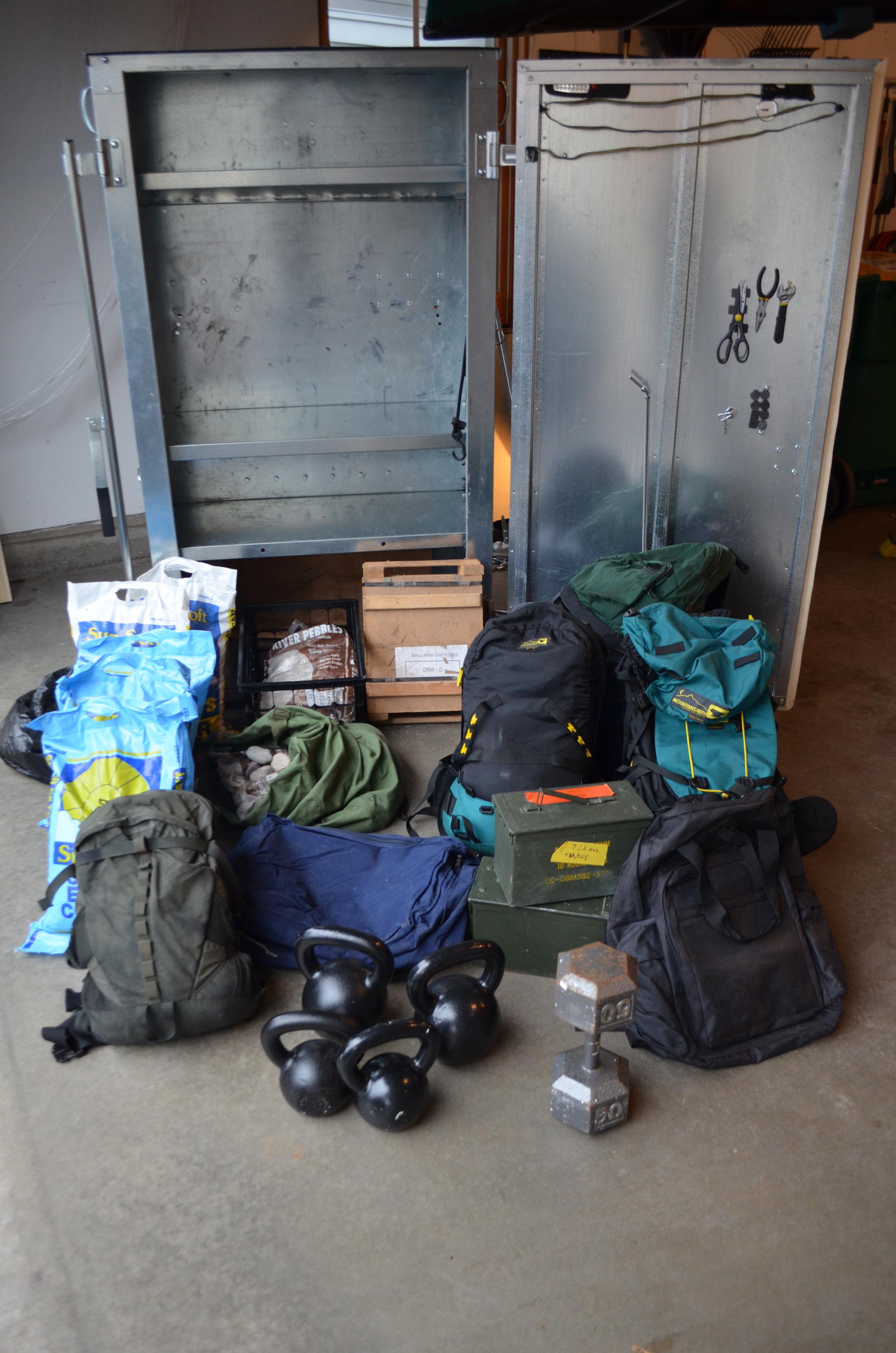
The Survival Mule Secure Locker/Trailer Combo
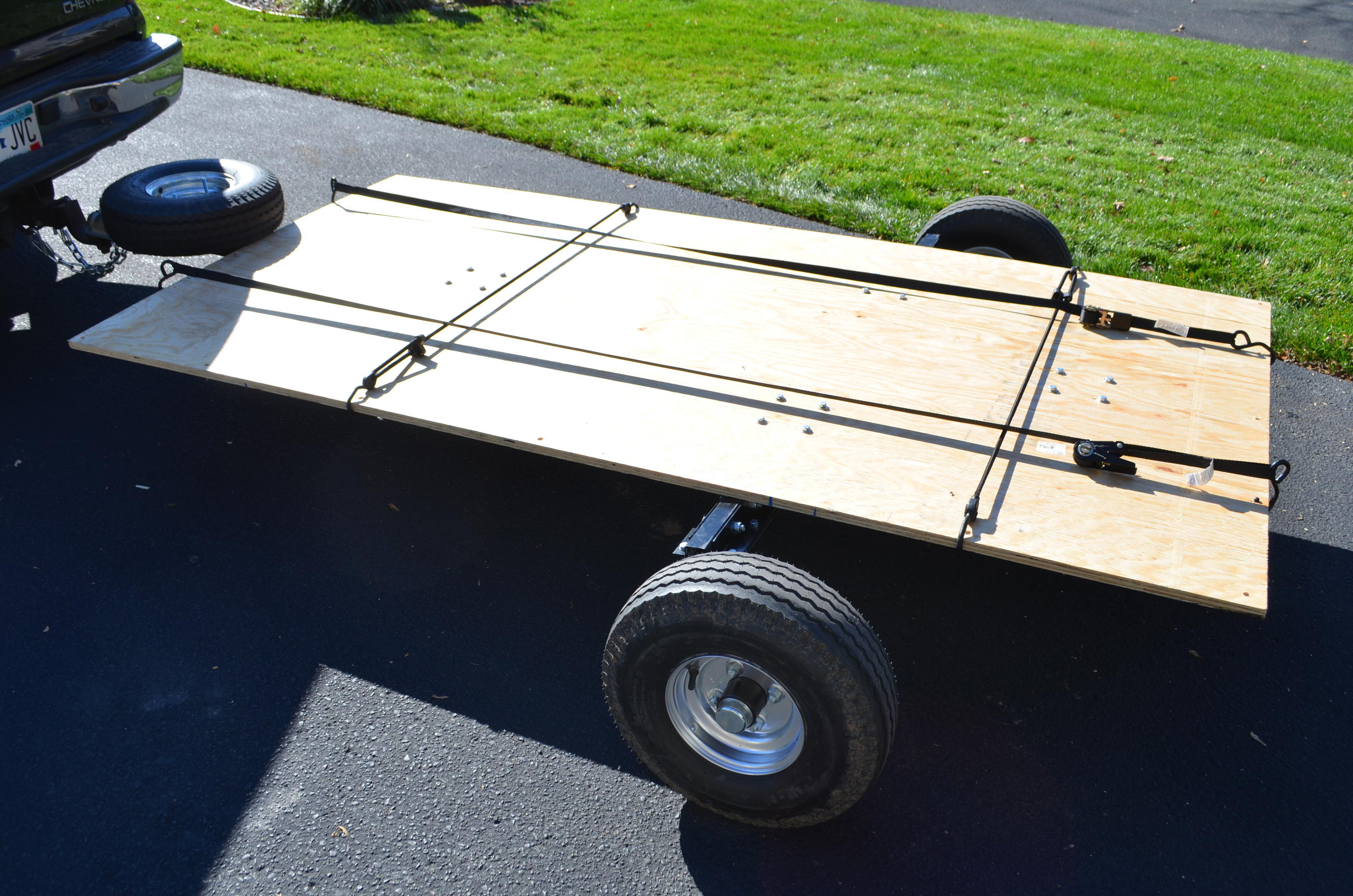
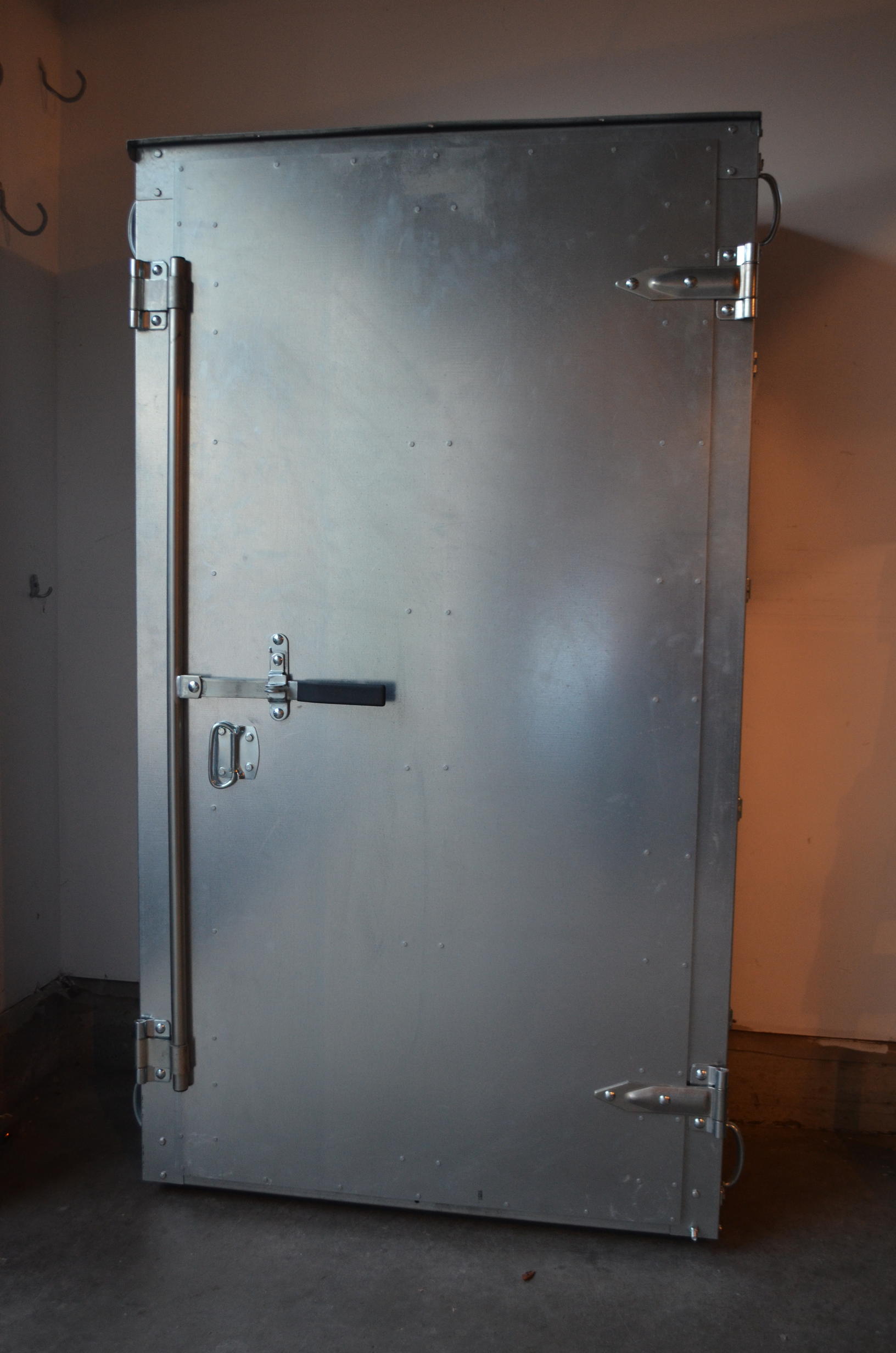
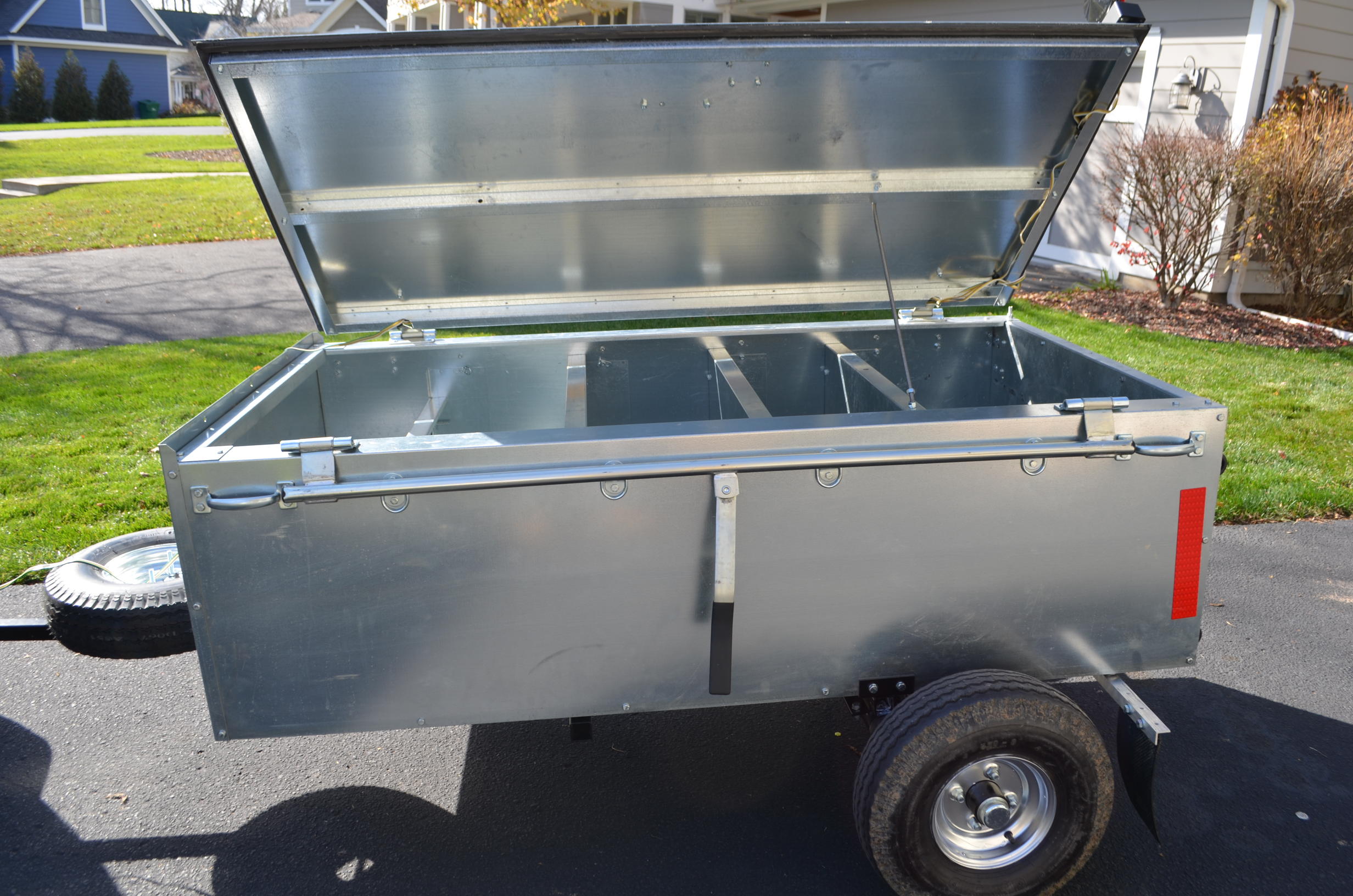
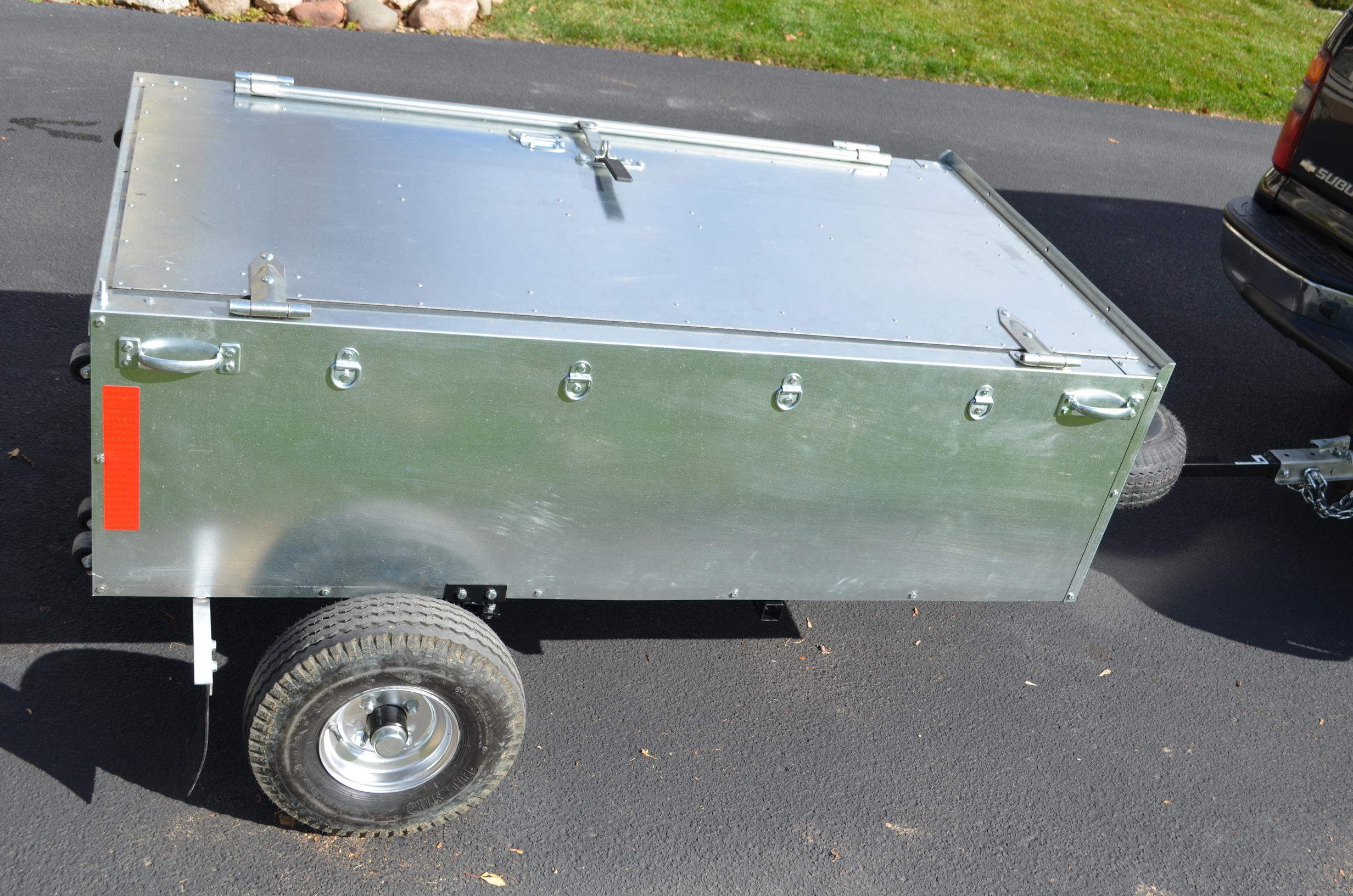
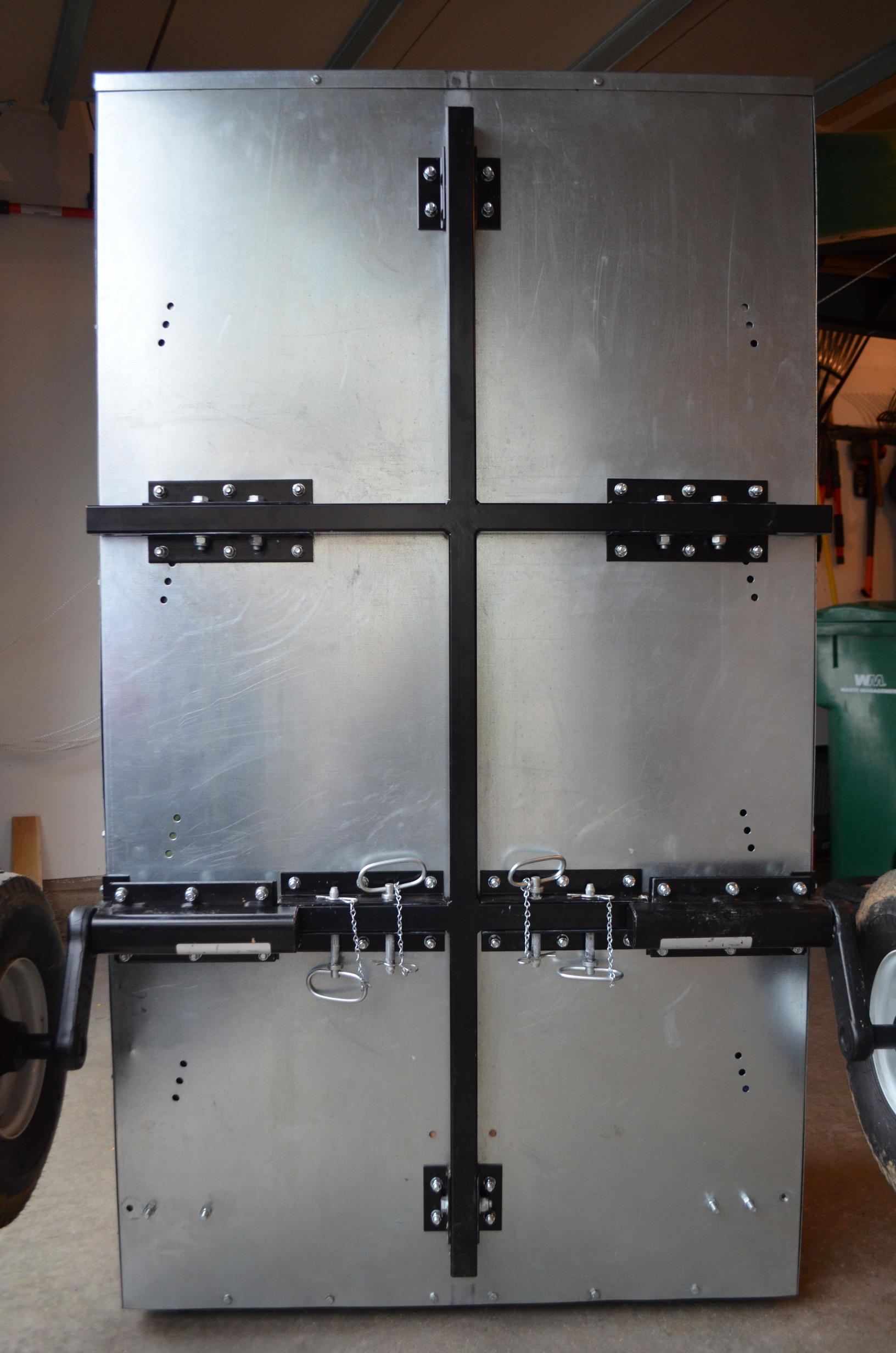
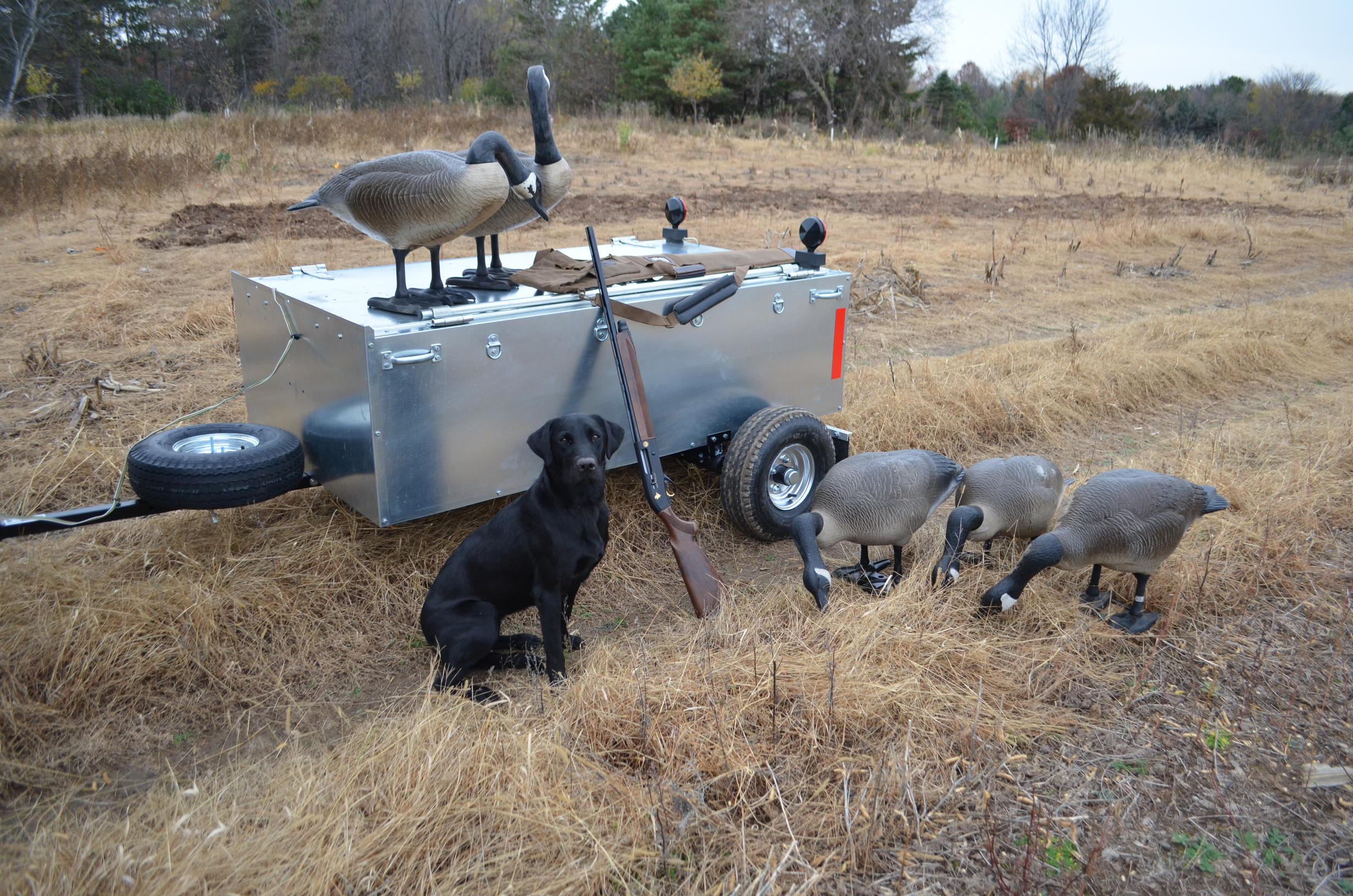
I’ve been posting SurvivalBlog for more than 10 years. I’ve seen a lot of great products come to market, but very few of them have been truly novel concepts. Most of them are just variations on a theme. But I recently had some conversations with a consulting client that amazed me. This former Marine has truly “built a better mousetrap”. He calls it The Survival Mule. This is a fantastic solution to a common prepper dilemma: “How do I get a trailer load of Get Out of Dodge gear on the road, quickly?” What he came up was a wall storage locker/gun locker that quickly converts into a versatile trailer. These Survival Mules are assembled in Minnesota with primarily U.S. and Canadian components.
These photos tell most of the story.
The Survival Mule can be towed with the weather-tight door on for secure transport; with the lid removed, turning it into a box trailer, for transporting bulky items; or with the entire locker removed and replaced by a standard sheet of 1″ plywood, turning it into a small flatbed trailer. The locker itself can be bolted to a wall or floor, making it a decent gun and ammunition storage locker. And, since it is stored vertically, it is like keeping a pre-packed trailer in your garage and out of the weather but without taking up a garage parking space. That is absolutely brilliant.
I believe that this will be a very popular product, so I recommend placing an order soon, before the company builds up a long waiting list. The first 50 SurvivalBlog readers who order will get a $500 discount. (And, by the way, the referral bonus that would normally go to SurvivalBlog will be donated directly to charity.)
Be sure to visit the web site and check out the technical details, video clips, and all of the options as well as several discounts. I highly recommend this product! – JWR



Pat Cascio’s Product Review: Leatherman Tread Multi-Tool
I’m not exactly sure when I bought my first Leatherman multi-tool, but it was a couple decades ago, and since then I’ve probably owned just about every model they have manufactured over the years. There have been many imitators, but Tim Leatherman invented the original multi-tool. Leatherman is located here in Oregon– my adopted home state– and I keep getting invited to go to the Leatherman factory for a tour, but I just don’t get up into the Portland, OR area very much these days. I prefer living and staying out in the boonies. I cherish my privacy!
Tim Leather is an innovator, and he thinks outside the box. I like that. It was on a bike tour in Europe that Tim Leatherman came up with the idea of a small, easily carried multi-tool that could make all kinds of repairs on his bicycle, instead of carrying a tool bag full of tools. You can read all about the Leatherman story on their website. It’s very interesting.
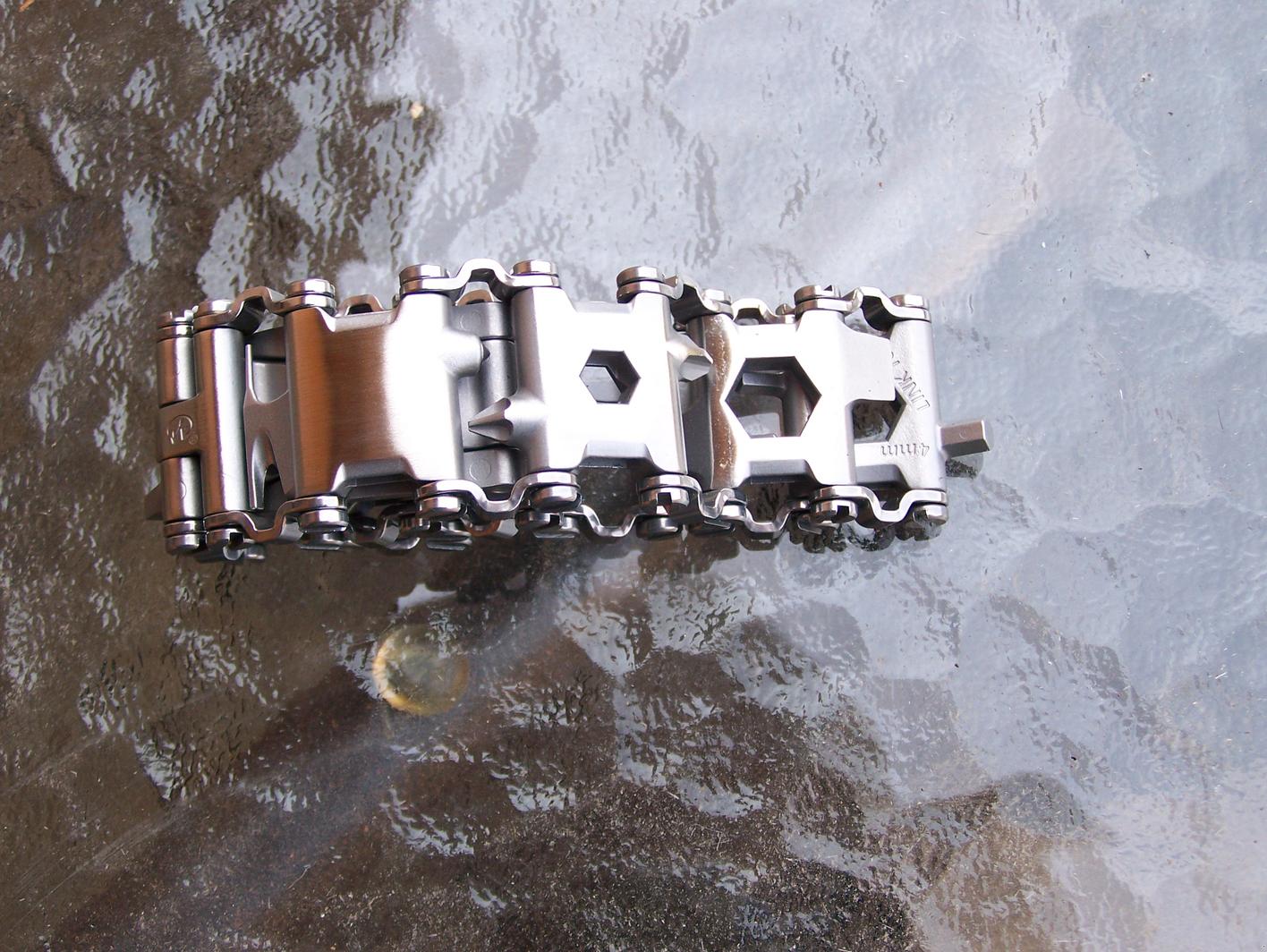
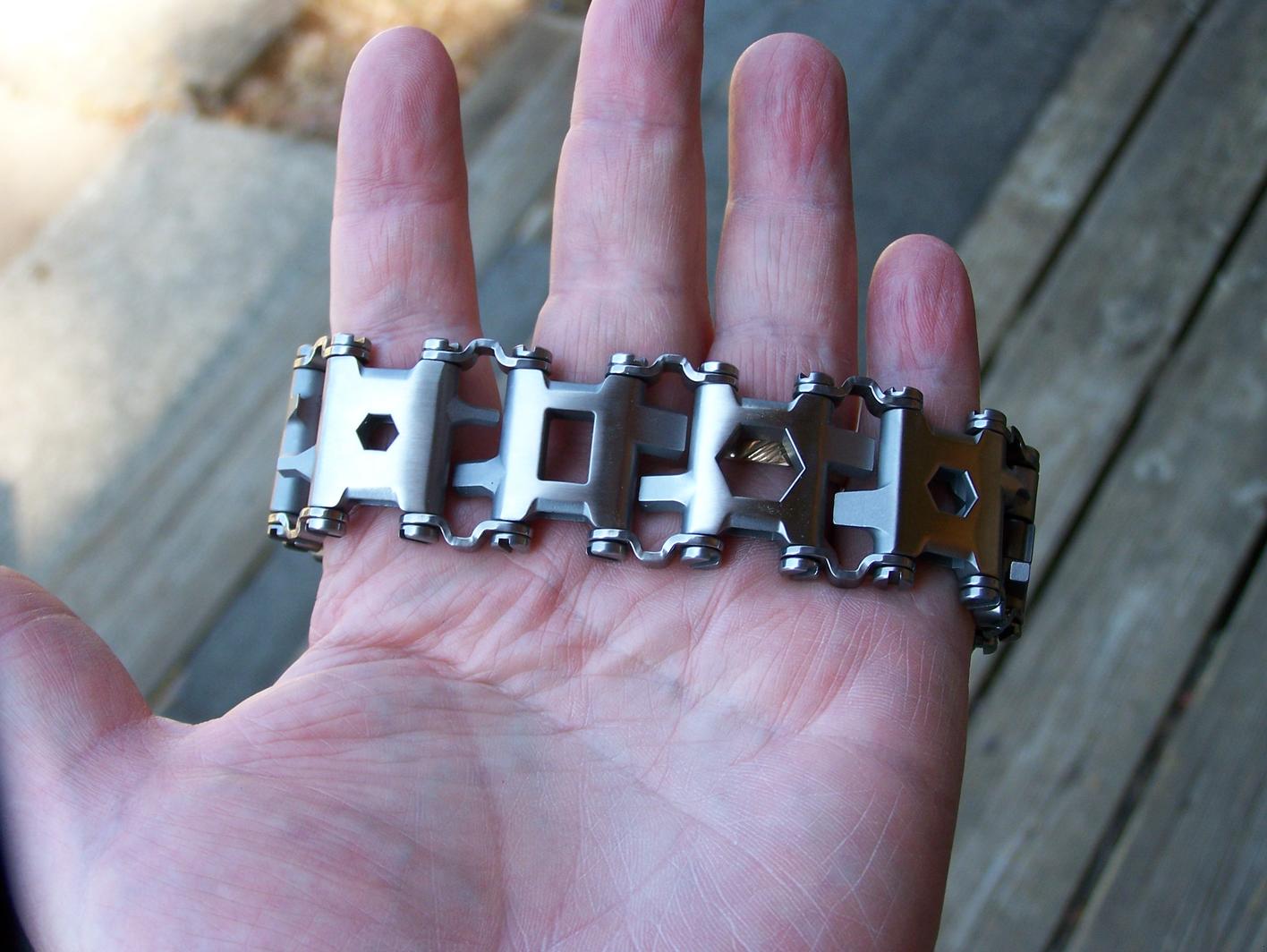
I was more than a little intrigued when I received a press release for the Leatherman “Tread” multi-tool. It is unlike anything Leatherman has produced in the past and unlike anything I’ve seen before. First, I’d like to list all the different tools on the Tread, and then we’ll go from there.
It has :
- #1-2 Phillips screw driver
- 1/4″ box wrench
- 3/16″ screwdriver
- 6mm hex drive
- 10mm box wrench
- 5mm hex wrench
- 1/4″ hex drive
- Oxygen tank wrench
- 3/16″ hex drive
- 1/8″ hex drive
- 3/16″ box wrench
- 3/32″ hex drive
- 3/32″ screwdriver
- 1/8″ flat screwdriver
- 4mm hex drive
- 8mm box wrench
- 3mm hex drive
- 5/16″ screwdriver
- 3/8″ box wrench
- 1/4″ flat screwdriver
- #1 Phillips
- 6mm box wrench
- #2 Phillips
- Carbide glass breaker
- pick/sim card tool
- cutting hook
- 1/4″ socket drive
- bottle opener
- #2 square drive
Wow! To say the least, that’s a lot of tools to have on any single multi-tool. However, it gets even better. The Leatherman Tread, isn’t your typical multi-tool. Instead, all of these tools are manufactured into a stainless steel wrist bracelet. Yes, you read that right; all of this Is on a bracelet you can wear on your wrist! And, the Tread comes in satin finished stainless steel or black coated stainless steel. We are talking high quality and not some piece of junk, though I’m sure there will be imitators come along in very short order.

The Tread is designed to be taken apart with a penny, if you need to remove a link or two, to make it fit your wrist. Some of the above listed tools can probably do double duty, if you need to remove a link so that it fits your wrist. As soon as you put the Tread on your wrist, you know it is high quality, just by the weight of it.
Now, to be sure, the Tread is not designed to replace the regular multi-tools that Leatherman produces. I wouldn’t want to find myself attempting to work on my truck with only the Tread. Whereas, I’ve done some quick repairs with my Leatherman Blast on my truck as well as other household repairs. Instead, the Tread is designed to work on a bicycle, in my humble opinion, or maybe on a motorcycle.
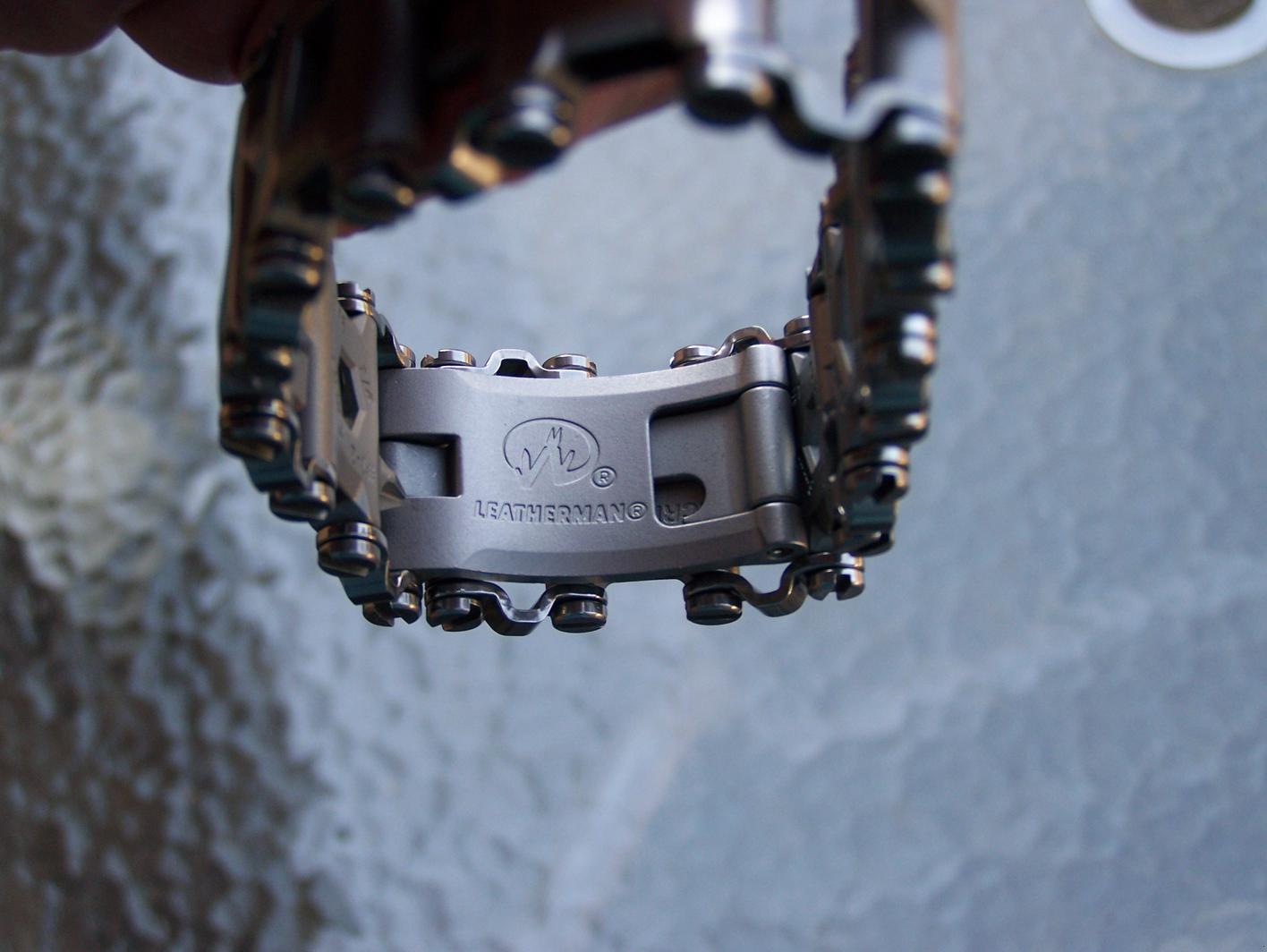
I stopped riding bicycles and motorcycles some years ago, but I always had a small tool kit stowed in a pouch as well as a multi-tool with me. Two wheeled vehicles always seem to break down a lot. I couldn’t tell you how many times I had one of my motorcycles quit on me when I was far, far from home. However, with a multi-tool, some extra fuses, and some electrical tape, I always managed to get going once again, short of running out of fuel, not that that ever happened to me! LOL!
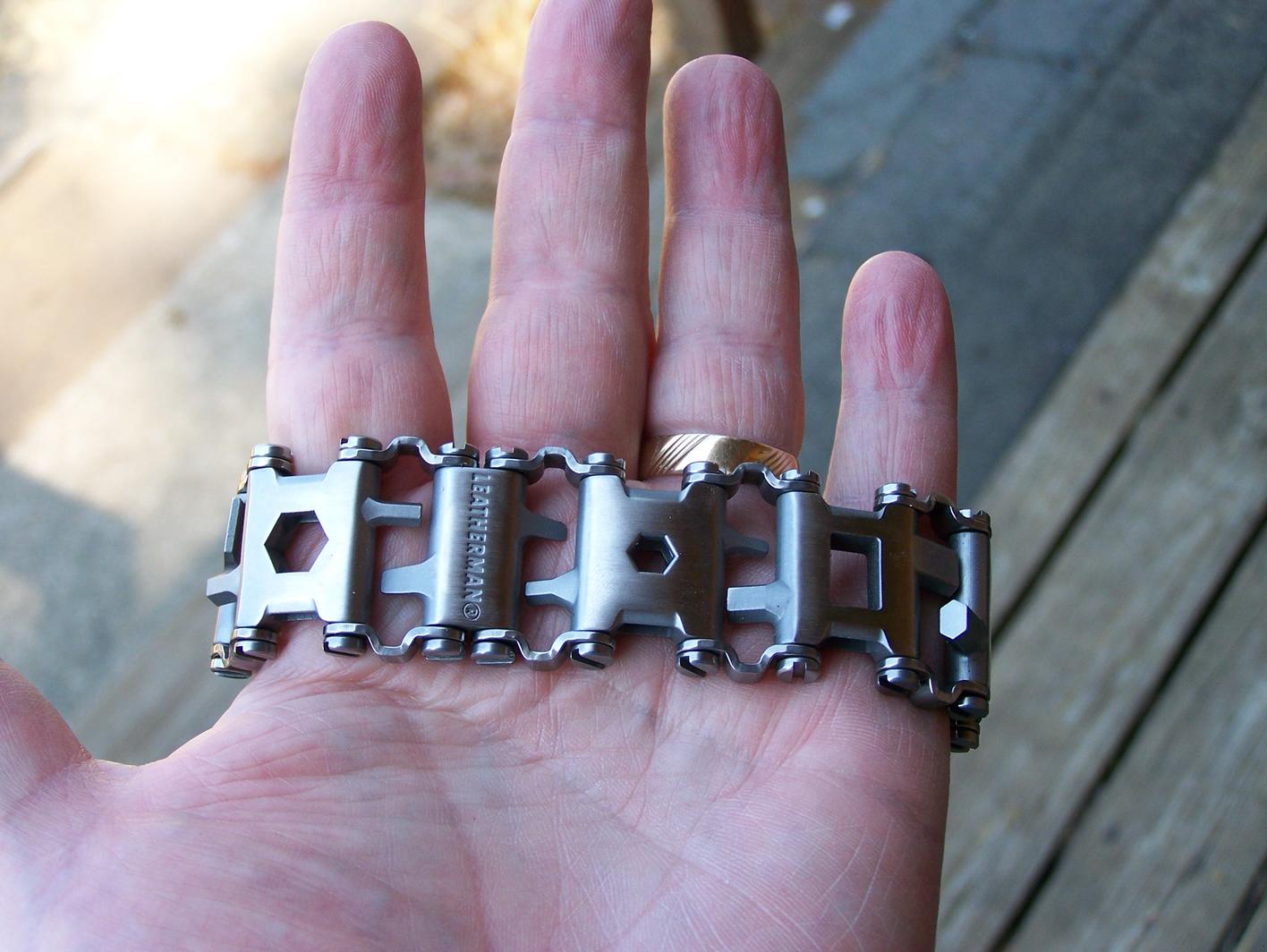
When something like the Leatherman Tread comes along, and I have to wonder how Tim Leatherman came up with this design idea. I’m not saying he’s a tortured soul, like some of the book authors whose books are turned into some really strange movies. I’m thinking those types never give their minds a rest, always turned on high and going at full-speed all of the time. However, it took some serious design genius to come up with the Tread, and it is more than obvious that Tim Leatherman’s mind is always working on new ideas and products. Just look at their website. There are so many different multi-tools, each different from the next one.
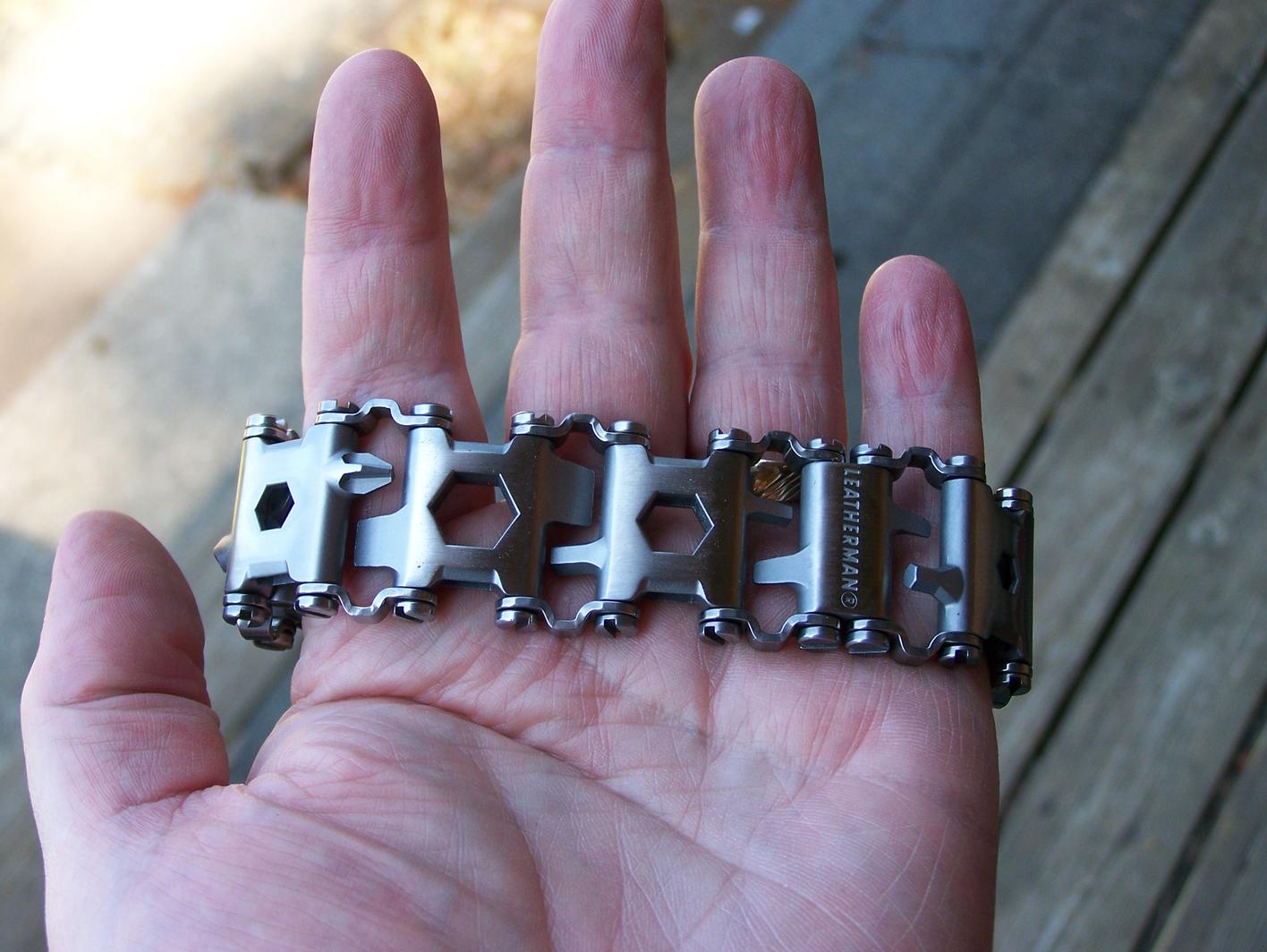
In my carport are two, rusting 10-speed bikes. One belongs to the wife, and one to the oldest daughter. Neither have ridden their bikes for at least five or six years or maybe longer. So, the bikes are just sitting there, rusting and taking up space, much needed space, in my carport. I decided to see how well the Tread would work on the two bikes, but working on some of the nuts and bolts, even rusted, I was able to loosen them. I also tinker with firearms all of the time. When I’m out at the range, I usually reach for my Leatherman Blast to do a quick repair. Lots of times, it’s just screws working loose on handgun grips. The Tread worked fine, but I carefully used the tools as I didn’t want to scratch the finish on any of my guns, which would be easy to do, if you aren’t paying attention.
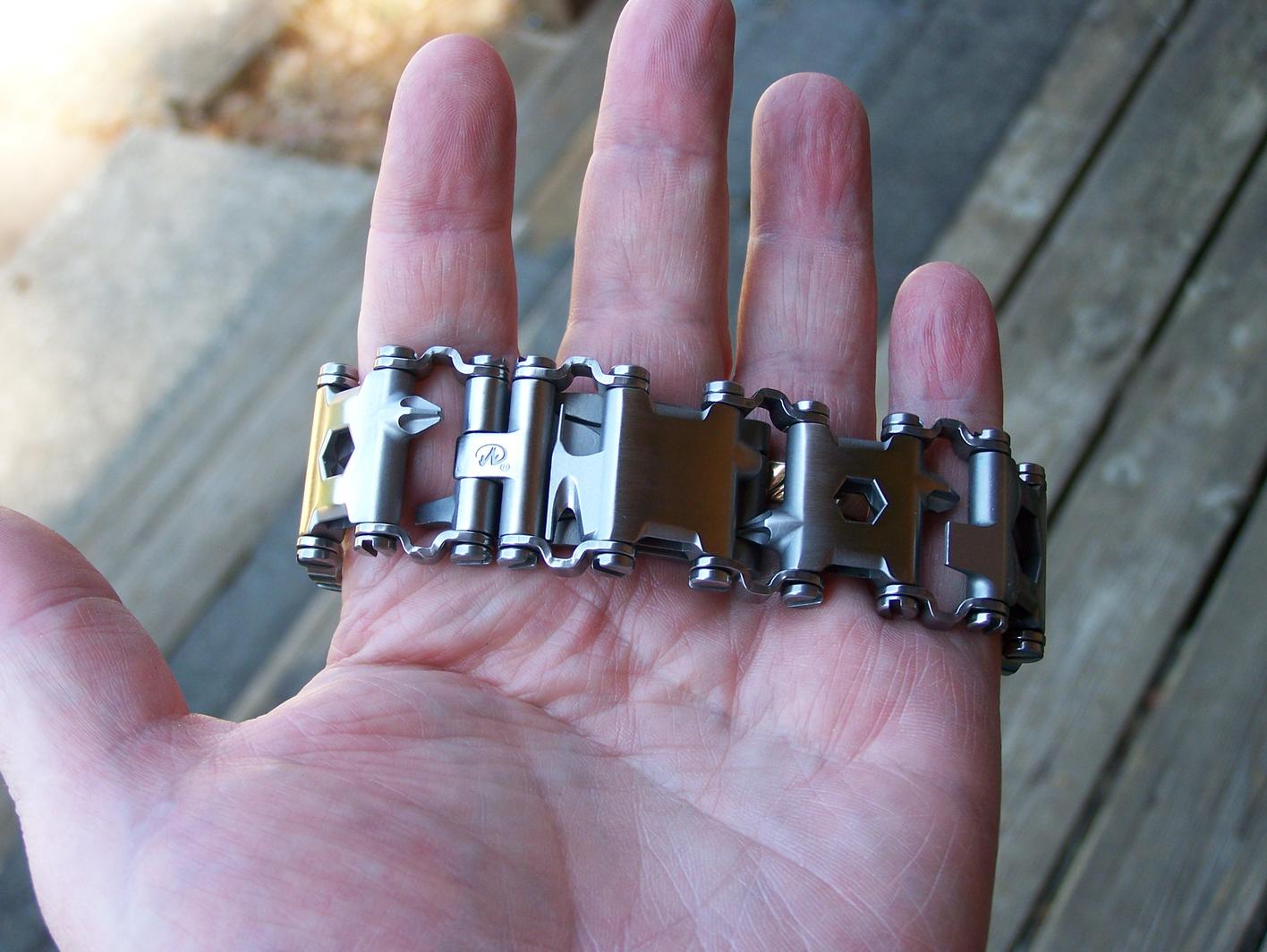
In my neck of the woods, there are a lot of people who ride bikes these days. I don’t know if it’s because they enjoy it or because they lost their driver’s license. It doesn’t matter one way or another. However, I’ve seen more than one person either carrying or pushing their bike, because something had broke on it. I have seen more than a few broken chains, to be sure. Bet they wished they had a Leatherman Tread on their wrist for a quick repair.
I know a lot of people enjoy riding their bikes up and down Highway 101, which runs along the coast from Washington to California. These are hard core bike riders, and they usually carry tools for repairs. To be sure, even the best bikes can and do break down. The Leatherman Tread would sure be a nice tool repair kit to have on your wrist.
As with everything I’ve seen out of Leatherman, the Tread is of the highest quality. As I’ve stated numerous times, you can buy junk, over and over again. However, if you buy quality, you don’t have to keep buying it. Plus, we have the Leatherman 25-year warranty on the Tread. If I were riding bikes and motorcycles again, you can be sure the Tread would be worn on my wrist. Tim Leatherman’s mind was working overtime when he came up with the Tread. I just can’t help but wonder how people like Leatherman keep coming up with new and better ideas in small packages. Quality doesn’t come cheap. The stain-finished Tread is $200, and the blackened model is $220. Yep, it’s spendy for sure, but if you want the best and you want the innovator, then check out the Tread. I think you’ll be saying “Why didn’t I think of that.”
– Senior Product Review Editor, Pat Cascio
Recipe of the Week: Spaghetti Casserole, by L.H.
This is a flavorful, simple, and inexpensive casserole for any occasion where you’d like to provide a meal to someone in need, such as when there’s a new baby, or a medical or condolence call. I like to make it in a disposable aluminum pan, approximately 10” x 12” in size, so that the recipient doesn’t have to be concerned with returning a dish, and I deliver it with a loaf of store-bought French bread on top. Voila! It’s a complete and comforting meal for the family. It also freezes well (along with the bread, too), if it’s not needed immediately. I usually deliver it uncooked with directions for both immediate baking and also for freezing and baking later.
Ingredients
- 1 lb. ground beef or bulk sausage
- 2 Tbsp. butter
- 1 c. chopped onion
- 1 c. chopped green pepper
- 2 cans (14.5 oz. ea.) diced tomatoes, undrained
- 1 can (4 oz.) mushroom stems and pieces, drained
- 1 can (4 oz.) sliced black olives, drained
- 1 Tbsp. Italian seasoning
- 1 lb. spaghetti pasta
- 2 c. (8 oz.) shredded cheddar cheese
- 1 can (10.75 oz.) cream of mushroom soup
- 1/3 c. water, more or less
- 1/4 c. grated Parmesan cheese
- non-stick cooking spray
Directions
- In large skillet, cook and crumble beef or sausage; drain grease and remove meat from pan.
- In same skillet, melt butter over medium heat and sauté onion and green pepper until softened (about 3-4 minutes).
- Add tomatoes, mushrooms, olives, seasoning, and reserved meat.
- Simmer uncovered 10 minutes, stirring occasionally.
- Meanwhile, cook spaghetti pasta, according to package directions to al dente and drain.
- Spray 9″x13″ (or aforementioned 10″x12″ disposable) casserole dish.
- Spread half the spaghetti over the dish; top with half the tomato mixture and then half the cheddar cheese. Repeat layers.
- In small mixing bowl, whisk together the soup with just enough water, a little at a time, to make it where it can be poured.
- Drizzle soup mixture over casserole.
- Sprinkle with Parmesan cheese.
- If delivering, wrap tightly with foil and refrigerate. If serving, bake uncovered at 350 degrees for 35-45 minutes or till hot and bubbly. If not cooking immediately, wrap tightly and freeze; then thaw and bake as directed above.e
o o o
Do you have a favorite recipe that would be of interest to SurvivalBlog readers? Please send it via e-mail. Thanks!
Letter: A Note on Infant Nutrition
Dear Sir,
Regarding the very helpful letter on alternatives to commercial baby foods, I wanted to add the widely-used practice sometimes called “baby-led weaning”. This consists of introducing a six-month or older child to larger chunks of soft foods that they can grab, manipulate, and gum on their own. The two keys to make this practice safe are that the chunks be too large to aspirate (perhaps the size of a large french fry), and soft enough for the baby to mash or dissolve with their tongue or gums.
Banana and avocado are often used as first foods in this method, but cooked sweet potato, carrot, apple, or other appropriate foods would also work well in a situation where imported foods are not available.
Since baby’s “chewing” and swallowing skills usually develop in tandem with their motor skills, this method actually reduces the chances of choking on spoon foods that can sometimes go down too quickly or be aspirated. It also reduces the need for special equipment or steps in pureeing foods, and it allows baby to feed themselves (with supervision, of course!) before they can handle utensils.
We used this method with both of our children, alongside conventional baby foods, and we all preferred it for simplicity and lower frustration for everyone! More information about baby-led weaning can be found at http://www.babyledweaning.com/
Economics and Investing:
US labour force participation stays at a 38-year low Only 62.4% of American civilians over the age of 16 are either working or looking for work. – G.G.
o o o
Biderman: “Welcome To The First Global Recession Created By Central Bankers” Sent in by G.G.
o o o
Items from Professor Preponomics:
The Fed Desperately Tries to Maintain the Status Quo (Mises Institute)
Ensure Your Financial Strategy Passes the Sleep Test(Christian Science Monitor)
Collapsing Obamacare Co-ops Signal Big Trouble to Come(Fiscal Times)
U.S. Debt Ceiling Has Risen No Matter Who Was In Office (Visual Capitalist)
How One Retailer is Preparing for the Apocalypse(Zero Hedge)
Bank of England Pushes Out Timing of Rate Hike(Market Watch)
Amazon-Killer “JET” is Running Out of Cash(Business Insider)
My 8 Tips for Simple Living(Frugal Family Home)
6 Spending Habits of Fiendishly Frugal People (Mighty Bargain Hunter)
Dave Ramsey’s Get Out of Debt Snowball Plan(Dave Ramsey)
Odds ‘n Sods:
SurvivalBlog reader R.F. sent in a link to this instructable on creating a Water Treatment Train.
o o o
One drawback to municipal water systems? You have to trust those who manage it to keep your health in mind, acting in your best interests. Officials Secretly Added Cancer-Causing Chemicals to City’s Water Supply Fail! – Sent in by T.A.
o o o
More details are beginning to emerge in the death of an Idaho rancher: Idaho rancher’s wife: ‘I saw them (cops) murder my husband’. Investigators are actively seeking eye witnesses. Sent in by RBS.
o o o
The Federal Bureau of Investigation processed a record number of background checks in the month of October, indicating that gun sales were at an all time high for the sixth month in a row. Sent in by G.G.
o o o
SurvivalBlog reader GJM sent in this little jewel. Just an all-around class act: You Stop Paying My Bills, I Have You Investigated There are an awful lot of dead people still waiting for a Clinton investigation. (That is, they’re waiting for a Clinton investigation in a rather different sense of the term.)