
Please keep the families of the victims of the November 13th Paris terror attacks in your prayers. For some background, see: Is ISIS Behind New Attacks & Shootings in Paris? Yes, their goal is to impose a global Islamic Caliphate.
- Ad Click Here --> Civil Defense ManualNOW BACK IN STOCK How to protect, you, your family, friends and neighborhood in coming times of civil unrest… and much more!
- Ad Elk Creek Company - Percussion Blackpowder Guns - No FFL Required.Elk Creek Company - Percussion Blackpowder Guns - Pre-1899 Guns - Knives - Bayonets - Magazines - The last bastion of privacy!
Infectious Disease in the TEOTWAWKI World- Part 6, by Militant Medic
Let’s Treat Some Patients (continued)
5) Your other grandson (again with no vaccinations) has broken out with a fever, runny nose, and rash, which consists of small fluid-filled blisters on bright red spots on his skin. They itch and when one area gets better another bunch crop up elsewhere.
Diagnostic features: fluid-filled blisters on red skin occurring in crops, non-vaccinated.
Diagnosis: Chickenpox
Treatment: Viral illness- no cure. Supportive care with spontaneous resolution without complication in 99% of kids (80% of adults).
6) Your third grandson (again with no vaccinations) has headache, vomiting, muscle aches, a fever of 104.2, and weakness of his left leg muscles. Ten days ago you chastised him for drinking untreated water from a creek. He didn’t know, but it was downstream from a big FEMA refugee camp.
Diagnostic features: CNS signs (headache, vomiting, muscle weakness), high fever, water contaminated with human waste, non-vaccinated.
Diagnosis: Polio
Treatment: Viral illness- no cure. Illness will either progress to death (2-5%), or he will recover with a permanent weakness of the muscles of the affected nerve pathway.
7) Your neighbor’s wife has a fever, abdominal pain, and vaginal drainage. You know she was raped on a trip to the farmers market one week ago.
Diagnostic features: Sexual trauma, unknown pathogen, pain, fever, drainage.
Diagnosis: Pelvic Inflammatory Disease
Treatment: Doxycycline plus (Clindamycin or Metronidazole)
8) A farmhand seemed okay yesterday but woke with a fever to 102.9, chills, coughing, body aches, runny nose, and a headache. His nasal drainage is yellow-green.
Diagnostic features: Rapid onset, fever, coughing, body aches.
Diagnosis: Influenza
Treatment: Viral illness- no cure. Supportive care leads to complete resolution without complications in 80%. If symptoms persist past seven days, consider treating for pneumonia.
9) Your teenaged daughter has not been drinking enough since you ran out of “flavor enhancers” for your water. Now, she has a fever of 101.5, painful urination, urinary frequency, and urinary urgency. Her urine smells “strong”.
Diagnostic features: Inadequate fluid intake. Pain with urination, urgency, frequency. Fever.
Diagnosis: UTI
Treatment: Bactrim or Cipro
10) Your prepper neighbor (who has a special filter to remove the fluoride from his city water) has been struggling with a toothache for a few days, but now he can barely open his mouth. He has a fever of 102.3, jaw pain, and swelling on the right side of his face. He says he can taste a foul drainage from the base of the tooth. He took some penicillin he had stocked, and it seemed to help a little but then his symptoms got worse.
Diagnostic features: toothache that progressed. Facial swelling. Fever, puss, failure to respond to penicillin.
Diagnosis: Dental Abscess
Treatment: I&D plus Clindamycin or Metronidazole
11) Your neighbor ran out of food a while ago and has been shooting and eating prairie dogs out of desperation. He was okay yesterday but woke in the middle of the night with fever and now has fever to 103.7, headache, chills, muscle aches, and diarrhea. He also says his “glands” are swollen in his neck, armpit, and groin. (plague)
Diagnostic features: prairie dog exposure, rapid onset, swollen armpit and groin lymph nodes.
Diagnosis: Bubonic Plague (Yersinia pestis)
Treatment: Doxycycline or Cipro. Even with antibiotics, there is an 8-10% mortality rate.
12) Another neighbor was out hunting when he drank untreated water from a creek. Upstream he found a beaver pond. He presents with four days of abdominal pain, copious (8-10 stools daily), watery (non bloody) diarrhea, and a fever to 102.2.
Diagnostic features: Water contaminated with mammal feces, abdominal pain, frequent watery diarrhea
Diagnosis: Giardia
Treatment: Metronidazole (or supportive care; without treatment will resolve spontaneously in up to six weeks)
13) A boy from down the road was caught looting a house and was hit in the abdomen with three rounds of 00 buckshot as he ran away. This was two days ago. He presents with a swollen painful abdomen that is rock hard and fever to 105.6. He is incoherent and having hallucinations. The buckshot is still in his body. His father begs you to save him, and he says he will give you his cherry 1965 Mustang fastback if you do. (If he hadn’t spent so much time and money on that car he might have been able to get some preps of his own and wouldn’t have had to resort to looting houses for food.)
Diagnostic features: penetrating abdominal trauma, rigid abdomen, fever
Diagnosis: Peritonitis
Treatment: Cipro or Metronidazole (Regardless of treatment, this child is likely to die. The holes in his intestines will constantly be spilling bacteria into his abdominal cavity; without surgical closure of the intestinal perforations, it is only a matter of time before he dies. Might want to save your antibiotics to use on someone who has a greater chance of recovery. Look up “Triage- Black tag”.)
14) Your neighbor’s son presents with fever, fatigue, headaches, vomiting, and diarrhea, and has been unable to sleep. Dad hoped it was just a virus and would pass, but this morning he had a seizure and the father brings him to you. Two months ago the child found a bat in their grass in the middle of the day. He picked it up and got bit, but the wound seemed to heal without complication.
Diagnostic features: bite from mammal acting oddly, CNS signs (headache, vomiting, seizure), long incubation time
Diagnosis: Rabies
Treatment: Viral illness- no cure. Supportive care until child dies. 99.9% fatal (only a handful of documented cases of recovery in the history of mankind, and these all required days in the ICU and drugs you don’t have).
15) Your aged mother has had a sore throat, low grade fever of 100.6, and stuffy nose for four days. There are white patches on her tonsils. It hurts a little to eat or drink.
Diagnostic features: runny nose and cough. Exudate (white patches). Brief duration.
Diagnosis: Viral URI (likely Rhinovirus)
Treatment: Viral illness- no cure. Supportive care. If symptoms persist out beyond 12-14 days, consider examining/treating for sinus infection or pneumonia.
16) A farmer from down the road (whom you don’t like very well) tells you he has been trading food for sexual favors from the desperate unprepared women of the nearby town. He says there is an ulcer on the head of his penis. Otherwise he feels fine. It does not hurt, but he is worried he might have “picked something up from one of those whores!”
Diagnostic features: Painless chancre in sexual active adult.
Diagnosis: Syphilis
Treatment: Doxycycline. In the modern world, we would try to track sexual partners and treat them too.
17) A coworker has shown up for help. You had talked to him about prepping, and he was on the path when the balloon went up. He presents with bloating, watery diarrhea that has streaks of blood in it, abdominal pain, and a fever to 104.7. He says the diarrhea smells like horse manure. He also says he recently had a suspected strep throat and took Clindamycin for it (its the only antibiotic he had. While the throat got better, the diarrhea (which he suspected to be from the antibiotic) has been present for nine days now and is getting worse.
Diagnostic features: bloody diarrhea, abdominal pain, high fever, recent broad spectrum antibiotic use, long duration
Diagnosis: C. diff colitis
Treatment: Metronidazole
18) A neighbor’s child has been struggling with an illness for a few days but over the last 24 hours has worsened significantly. She awoke this morning with a very stiff neck, high fever, severe headache, and severe nausea. She also has broken out with a blotchy purplish rash on her lower extremities that does not go pale (blanch) when you push on it. Father is here begging for help.
Diagnostic features: stiff neck, high fever, severe headache, purpuric rash
Diagnosis: Meningitis (purpuric rash is classic for Neisseria meningitis)
Treatment: Cipro and Ampicillin (even with treatment with IV antibiotics there is about a 6-8% mortality rate, and even with recovery between 30-50% will have permanent neurological complications with deafness being the most common). In approximate order of greatest CNS penetration to least CNS penetration for your antibiotics: Metronidazole–>Cipro–>Ampicillin–>TMP-SMX–>Doxycycline–>Clindamycin –>Penicillin–>Amoxicillin–>Keflex.
19) A neighbor has been ill for about five days. Started with two days of non-bloody vomiting and then evolved into watery non-bloody diarrhea. Had a fever of 101.3 at the beginning of the illness but does not have one now.
Diagnostic features: non-bloody vomiting evolving into non-bloody diarrhea, short duration, no fever
Diagnosis: viral gastroenteritis (common causes include Norovirus, Enterovirus, Rotavirus, Astrovirus, and Adenovirus)
Treatment: Viral illness- no cure. Supportive care including fluids to avoid dehydration. Imodium okay as long as the diarrhea is not bloody.
20) A neighbor ran out of food a few weeks ago and has been out foraging in the forest. He has pulled a lot of ticks off his body. He presents with fever to 102.5, muscle aches, a headache, and a rash on his thigh that looks like a bullseye with concentric rings of redness.
Diagnostic features: Bullseye or target lesion, tick exposure, fever, body aches.
Diagnosis: Lyme disease
Treatment: Doxycycline or Amoxicillin
So now you are the hero (except to that one family). You have provided sound medical advice and treated 19 of your 20 patients. Your understanding of the causes of illness and how to treat them using nothing more than pet antibiotics gives you a real skill that can be used in the world you now live in after the TEOTWAWKI event. Whether you use this skill to help just your family of an entire neighborhood is up to you. Also up to you will be how you “bill” for your services. Your skill and your antibiotics are an incredibly valuable bartering commodity.
Good luck.
- Ad USA Berkey Water Filters - Start Drinking Purified Water Today!#1 Trusted Gravity Water Purification System! Start Drinking Purified Water now with a Berkey water filtration system. Find systems, replacement filters, parts and more here.
- Ad California Legal Rifles & Pistols!WBT makes all popular rifles compliant for your restrictive state. Choose from a wide range of top brands made compliant for your state.
Letter: The Free Rider Problem
Hello,
Your Nov 10 blog entry contained a link to Wikipedia’s “free rider problem“. That article in wikipedia is extremely biased. I’d like to suggest you also provide a link to this article as well.
I had one experience that might be illustrative. I lived on a gravel road with eight other families. Eventually, we decided (after a lot of discussion) that we wanted it paved with asphalt. The decision was that everybody should pay equally. As we went around to get contributions, it turned out one would not pay and another would only pay $1000. The first was understandable, because the owner had no home there and no prospect for one due to changes in county zoning. The second simply said he didn’t mind gravel and the asphalt was only worth $1000 to him. The rest of us then decided to spread these unmet costs among the remaining families. We had “free riders”, but we paved the road anyway because each individual decided it was worth it. There was no need for any coercion or government action. Free riding was not a problem at all but just individual decisions about what to do. If the others had not wanted to take on the extra cost so that the road was not paved, that would have been an acceptable outcome as well. – P.B.
- Ad Survival RealtyFind your secure and sustainable home. The leading marketplace for rural, remote, and off-grid properties worldwide. Affordable ads. No commissions are charged!
- Ad SIEGE belts: The essential go-anywhere GRAY MAN accessory. Solid 5.5-7 oz of persuasive power has saved many on their daily routines & travels. Revered "Thousand-Year Buckles" with stunning hand-crafted finishes. Complements CCW. Lear more..SIEGE STOVES: the ultimate high-performance portable survival stove. SIEGE BELTS: Use code "SBLOG" at checkout for $20 off any belt. Gifts that have saved lives. Be prepared!
Economics and Investing:
Sent in by G.P. – Fed Official Says Gold Standard Touted By Cruz Is ‘Unworkable’ “Doesn’t provide stability” is the answer given. I can sort of see that too. To just map the current money supply onto physical gold would push the price of physical gold into astronomical numbers simply because of all the free printing that has gone on in the last 30 years.
o o o
How Many More Recession Confirmations Do You Need? Yep. Every time I buy groceries, I am reminded that this is not a recovery. Sent in by J.Q.
o o o
Items from Professor Preponomics:
80M U.S. Jobs at Risk from Automation (Market Watch)
Downsizing the Federal Government: Housing and Urban Development (Cato Institute)
The Stench of Freddie Mac is Back and the Crony Capitalist Thievery is Back (Contra Corner)
63% of Small Businesses Report Higher Insurance Premiums (Washington Examiner)
U.S. Records $136.5B Budget Deficit for October 2015 (Washington Post)
Obama’s Big Ticket Close Out During His Last Presidential Year (Washington Post)
Oil Slumps 4% (Reuters)
A Chinese-Made Buick? (Market Watch)
China’s Troubled Credit Accounts Swell to $4T Yuan (Bloomberg) Commentary: article contains a good explanation of the term “evergreening” meaning that bad debt may be under reported.
Chinese Investment Company to Buy Texas Oil Fields for 1.3B (CNBC)
- Ad SurvivalRealty.com: Sell Your Remote LandAdvertise your hard-to-sell remote land to eager buters. We specialize in rural, remote, and off-grid properties worldwide. Affordable ads. No commissions are charged!
- Ad Survival RealtyFind your secure and sustainable home. The leading marketplace for rural, remote, and off-grid properties worldwide. Affordable ads. No commissions are charged!
Odds ‘n Sods:
Avalanche Lily suggested this link to Frank and Fern’s Blog: One More Wake Up Call Paris is indeed a tragedy, but are you prepared for the eventuality of the same kind of issues here?
o o o
SurvivalBlog reader P.J. states that Patrice Lewis hits that nail on the head with this article about the recent Million Student March: To The Tantrum Generation: Forget College and further notes that it dovetails nicely with our third place winner in round 53 of the Writing Contest, Getting A Real Education– Why Becoming Self-Sufficient Is Better Than Going To College, by D.T.
o o o
Reader B.B. notes that Sweden, long established as a safe welfare state where doors were hardly ever locked, is descending into anarchy over the “refugee” invasion of Europe.
o o o
In case you haven’t noticed, Yes, we are at war with Islam – We have been for over a thousand years. – Sent in by W.C.
o o o
It should be obvious that when (not if) a similar situation to Paris happens here, the only person you can count on is you…and maybe those who trained with you. We Are All On The Front Lines Now. Train to Fight. Sent in by A.L. (Warning: Some foul language)
- Ad Elk Creek Company - Federally-Exempt No-Paperwork GunsPre-1899 Antique Cartridge Guns -- No FFL Required. Can be mailed to your doorstep with no Federal paperwork!
- Ad STRATEGIC RELOCATION REALTYFOR SALE: Self-sustaining Rural Property situated meticulously in serene locales distant from densely populated sanctuary cities. Remember…HISTORY Favors the PREPARED!
Hugh’s Quote of the Day:
“…as it is written in the book of the words of Esaias the prophet, saying, The voice of one crying in the wilderness, Prepare ye the way of the Lord, make his paths straight. Every valley shall be filled, and every mountain and hill shall be brought low; and the crooked shall be made straight, and the rough ways shall be made smooth; and all flesh shall see the salvation of God.” Luke 3:4-6 (KJV)
- Ad USA Berkey Water Filters - Start Drinking Purified Water Today!#1 Trusted Gravity Water Purification System! Start Drinking Purified Water now with a Berkey water filtration system. Find systems, replacement filters, parts and more here.
Notes for Saturday – November 14, 2015
Today, we present another entry for Round 61 of the SurvivalBlog non-fiction writing contest. The nearly $12,000 worth of prizes for this round include:
First Prize:
- A Tactical Self-Contained 2-Series Solar Power Generator system from Always Empowered. This compact starter power system is packaged in a wheeled O.D. green EMP-shielded Pelican hard case (a $1,700 value),
- A Gunsite Academy Three Day Course Certificate that is good for any one, two, or three day course (a $1,195 value),
- A course certificate from onPoint Tactical for the prize winner’s choice of three-day civilian courses, excluding those restricted for military or government teams. Three day onPoint courses normally cost $795,
- DRD Tactical is providing a 5.56 NATO QD Billet upper with a hammer forged, chromlined barrel and a hard case to go with your own AR lower. It will allow any standard AR type rifle to have quick change barrel, which can be assembled in less than one minute without the use of any tools and a compact carry capability in a hard case or 3-day pack (an $1,100 value),
- Gun Mag Warehouse is providing 20 Magpul pmags 30-rd Magazines (a value of $300) and a Gun Mag Warehouse T-Shirt; (an equivalent prize will be awarded for residents in states with magazine restrictions),
- Two cases of Mountain House freeze dried assorted entrees in #10 cans, courtesy of Ready Made Resources (a $350 value),
- The Ark Institute is donating a non-GMO, non-hybrid vegetable seed package (enough for two families of four) plus seed storage materials, a CD-ROM of Geri Guidetti’s book “Build Your Ark! How to Prepare for Self Reliance in Uncertain Times”, and two bottles of Potassium Iodate (a $325 retail value),
- A $250 gift certificate from Sunflower Ammo,
- KellyKettleUSA.com is donating both an AquaBrick water filtration kit and a Stainless Medium Scout Kelly Kettle Complete Kit with a combined retail value of $304, and
- Two cases of meals, Ready to Eat (MREs), courtesy of CampingSurvival.com (a $180 value).
Second Prize:
- A Glock form factor SIRT laser training pistol and a SIRT AR-15/M4 Laser Training Bolt, courtesy of Next Level Training, which have a combined retail value of $589,
- A FloJak EarthStraw “Code Red” 100-foot well pump system (a $500 value), courtesy of FloJak.com,
- A transferable certificate for a two-day Ultimate Bug Out Course from Florida Firearms Training (a $400 value),
- A Model 120 Series Solar Generator provided by Quantum Harvest LLC (a $340 value),
- A $300 gift certificate from Freeze Dry Guy,
- A Trekker IV™ Four-Person Emergency Kit from Emergency Essentials (a $250 value),
- Twenty-five books, of the winners choice, of any books published by PrepperPress.com (a $270 value),
- A pre-selected assortment of military surplus gear from CJL Enterprize (a $300 value),
- RepackBox is providing a $300 gift certificate to their site, and
- Safecastle is providing a package of 10 LifeStraws (a $200 value)
Third Prize:
- A Royal Berkey water filter, courtesy of Directive 21 (a $275 value),
- A $245 gift certificate from custom knifemaker Jon Kelly Designs, of Eureka, Montana,
- A large handmade clothes drying rack, a washboard, and a Homesteading for Beginners DVD, all courtesy of The Homestead Store, with a combined value of $206,
- Expanded sets of both washable feminine pads and liners, donated by Naturally Cozy (a $185 retail value),
- Two Super Survival Pack seed collections, a $150 value, courtesy of Seed for Security, LLC,
- Mayflower Trading is donating a $200 gift certificate for homesteading appliances,
- APEX Gun Parts is donating a $250 purchase credit,
- Montie Gear is donating a Precision Rest (a $249 value), and
- Two 1,000-foot spools of full mil-spec U.S.-made 750 paracord (in-stock colors only) from www.TOUGHGRID.com (a $240 value).
Round 61 ends on November 30th, so get busy writing and e-mail us your entry. Remember that there is a 1,500-word minimum, and that articles on practical “how to” skills for survival have an advantage in the judging.
Infectious Disease in the TEOTWAWKI World- Part 5, by Militant Medic
Treatment For Specific Diseases
So…maybe you’re feeling a little overwhelmed at this point. Yeah, I know how you feel, but we are not done yet. Again, it is my goal to give you good working knowledge of this topic, practical knowledge that hopefully in the bad times to come can save your life or the lives of your friends and family.
In a modern hospital when we really want to know which antibiotic is best, we get a sample of your blood, urine, spinal fluid, or puss from a wound and grow the bacteria in the lab with a bunch of antibiotics to see which antibiotic kills it best. Then, we start you on that antibiotic in confidence that it will kill the pathogen and get you back to good health.
In the post-apocalyptic scenario, you will have no such luxury. You will be having to play the odds. For instance, the bacteria most commonly isolated from acute ear infections are Strep pneumoniae (~55%), Haemophilus influenza (~25%), and Moraxella catarrhaliis (~15%). So you would pick Amoxicillin, since it generally kills all three. However, if it is one of the 2-3% of ear infections caused by Staph aureus, you would experience a treatment failure, as Amox does not kill staph. Playing the odds will be the only choice you have without the ability to culture bacteria and test their sensitivities.
Antibiotic Dosing Recommendations
Recommendations have been placed on the PDF so you can print it out and place it in your medical preps.
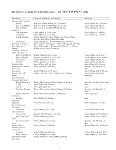
Amazon has some of these antibiotics available, though you will have to get some from a veterinary supply or pet store. (Editors note: You may want to check out our advertisers as well.) The PDF recommends which of these nine (actually eight, because I’m not going to consider penicillin for anything) pet antibiotics should be used for each of the listed infections.
Very specific weight-based dosing is available for kids, and you can look it up if you desire, but usually a good ballpark dose will get the job done. With most of these medications erring on the high side would be better than going too low.
Again, I must stress that this advice is only good for a TEOTWAWKI scenario. The recommendations on this list assume you only have access to the nine (eight) antibiotics listed above, and in many cases I had to recommend an inferior (second or third line) choice because I only had the nine (eight) above to choose from. This is especially true of the more severe infections (peritonitis, osteomyelitis, septic joints, meningitis) that are usually treated in the hospital with IV antibiotics and surgery. In the modern functional world, there may be much better choices for the following infections. So, if you get an infection, go see your doctor, and he will use the most up-to-date research and most modern medications to get you back on your feet.
I’m doing my best to provide good advice for AFTER it all falls apart. I will not be held responsible for any harm caused if you should use this information before that time.
Let’s Treat Some Patients
So…
I have given you a basic understanding of the different pathogens that cause infections in people.
I have given you a basic understanding of the nine different pet antibiotics most available to us as preppers.
I have given you the first line and alternate agents (of the nine available to us; remember the hospital might have better ones) to treat a variety of infections you are likely to encounter.
And I gave you a big nasty list of patients needing your help. (Too bad you didn’t have better OPSEC.)
So let’s treat some patients and get them out of our front yard.
1) Your wife has a sore throat without a runny nose or cough. It hurts to swallow. Little red spots are scattered across the back of her mouth and her tonsils are swollen and beefy red without white spots.
Diagnostic features: a) sore throat WITHOUT runny nose or coughing, and b) little red spots (palatial petechia, which are classic for strep, that are beefy red WITHOUT white patches.
Diagnosis: Strep throat
Treatment: Keflex, Amox, or ampicillin.
2) Your son cut his hand a few days ago while sharpening an ax and now the cut is red, hot, and oozing puss.
Diagnostic features: Trauma with signs of infection (redness, warmth, pain, swelling, puss).
Diagnosis: Cellulitis. Probably not resistant strain.
Treatment: Keflex or Cipro.
3) Your other son also cut his hand while salvaging some stuff from a nursing home. His wound is also red, hot, and oozing puss.
Diagnostic features: Trauma with signs of infection (redness, warmth, pain, swelling with puss).
Diagnosis: Cellulitis. Increased risk for MRSA due to injury happening at nursing home or hospital.
Treatment: Bactrim or Clinda
4) Your grandson (who never got his vaccinations because your son didn’t believe the “lies” of big pharma) is having coughing fits that take his breath away and end in a “Whoop” of inhaled air.
Diagnostic features: Paroxismal cough with “Whoop”
Diagnosis: Whooping cough (pertussis)
Treatment: Bactrim or Cipro. Even with treatment, children will cough for up to three months.
Two Letters Re: Taxes
Hugh,
Another reason for just underpaying your taxes is the increasing amount of tax fraud from people who will file a return as if they are you and claim your refund. What they never do is file for you and pay the small amount due. – C. C. S.
o o o
Hugh,
It’s never, ever good to respond in a fit of anger. So, now that I’m calm, let me quote your letter writer in part: “If one must have a (pretend) “windfall” in April because of one’s lack of discipline or psychological needs…” Hey fella, the tax refund my wife and I get every year comes from our two children, farm expenses, and an earned Income tax credit, plus the standard deduction. My twice-monthly paycheck is fixed at just the right amount so that very little is going into Uncle Sam’s bank account, because it’s needed in our bank account. We can debate the merits of our tax structure and deductions if you’d like, but your assumptions quoted over describe well the adage of the first part of that word. Lack of discipline? Psychological needs? How arrogant and all-knowing of you to assume that, when so many Americans are struggling under the Obama regime. – Wile E. Coyote
HJL Responds: You’re right. We could debate the merits of the tax system for quite some time, but I think “terminology” is the problem here.
“Tax refund” implies that you paid into the system and you are getting back what you paid in. This is what the writer is talking about. Why “loan” it to the government in the first place as they don’t even pay interest on it?
“Tax credit” implies that someone else paid into the system and you are getting something that really belongs to them.
There isn’t such a thing as a free lunch. I will not condone or condemn anyone for participating in the system, but it is broken. The point being made has nothing to do with whether anyone “deserves” the money received from the government or not and everything to do with the concept that the system is so broken that it is about to implode on itself. If you depend upon the money forcefully taken from others (or simply created out of thin air through the complex “deficit spending”), then what will you do when the system does implode and the money stops?
Just so we are on the same page, understand that government does not create wealth; it can only consume. The “child tax credit” does not mean that your children are actually earning money. It’s just a fancy way of stating that the government has forcefully taken that money from someone else and given it to you (or whoever is the recipient).
Our goal is not to insult the readership but to get them to understand that their survival depends on personal responsibility and to impart the knowledge and wisdom that they need to help themselves. The fact is simply that the vast majority of people look at their tax refund as a “windfall” and then proceed to budget their finances based upon that “windfall”.
Economics and Investing:
Americans are buying tons of gold – Sent in by G.G.
o o o
Macy’S Imploding, Catching Down To Sears & Penney’s – Sent in by RBS (Warning: Some foul language)
o o o
Items from Professor Preponomics:
Why Did the EPA Spend $1.4M on Guns? (The Daily Signal)
What Copper Prices Say About the World Economy (Market Watch)
The Legendary American Consumer is Out of Cash in these Cities (Zero Hedge)
China’s Economy isn’t Responding (Business Insider)
Macy’s Cuts Full Year Forecast (Reuters)
When the Government “Accidentally” Pays Too Much, Everyone Pays (Waste Fraud and Abuse)
It’s a Bloodbath: Canadian Casualties include Job Losses, Housing Sector Losses, Risks to Banks (Zero Hedge)
Odds ‘n Sods:
When will they get it through their heads that this is not a religion of peace. It never was, it is not, and it never will be. ‘Behead them in their own homes’: Ohio ISIS Muslim plotted to kill US soldiers, bomb churches, schools Wrap your head around the fact that this one worked in a hospital.
o o o
Reader T.Z. sent in this link to an excellent article on Perimeter Defense written by a Vietnam Vet.
o o o
U.S. universities have traditionally been bastions of liberal thinking, but the total absence of logic and common sense? It’s as if they have been used to brainwash our youth. Bill Whittle on Missouri university Chaos – Sent in by MtH.
o o o
Speaking of universities, Reader P.M. sent in this interesting comparison.
First, Neil Cavuto (Fox News) deals with a young college student who is organizing a “Million Student March” and demanding free public colleges, cancellation of all student debt, and a $15/hour minimum wage for all campus employees (all on the backs of the 1%).
Next, he shares a young Marine’s response on Twitter. (For those who don’t want to click through to twitter, the response is a selfie while wearing his rucksack with the statement: “I wanted money for school, so I marched too… #millionstudentmarch This one was about 25 miles… #USMC”)
o o o
SurvivalBlog Reader C.T. sent in this link about lobbyists blocking support of Christians fighting ISIS. Christians in fight against ISIS blocked from weapons, equipment by D.C. lobbyists
Hugh’s Quote of the Day:
“A son honoureth his father, and a servant his master: if then I be a father, where is mine honour? and if I be a master, where is my fear? saith the Lord of hosts unto you, O priests, that despise my name.” Malachi 1:6 (KJV)
Notes for Friday – November 13, 2015
Today, we present another entry for Round 61 of the SurvivalBlog non-fiction writing contest. The nearly $12,000 worth of prizes for this round include:
First Prize:
- A Tactical Self-Contained 2-Series Solar Power Generator system from Always Empowered. This compact starter power system is packaged in a wheeled O.D. green EMP-shielded Pelican hard case (a $1,700 value),
- A Gunsite Academy Three Day Course Certificate that is good for any one, two, or three day course (a $1,195 value),
- A course certificate from onPoint Tactical for the prize winner’s choice of three-day civilian courses, excluding those restricted for military or government teams. Three day onPoint courses normally cost $795,
- DRD Tactical is providing a 5.56 NATO QD Billet upper with a hammer forged, chromlined barrel and a hard case to go with your own AR lower. It will allow any standard AR type rifle to have quick change barrel, which can be assembled in less than one minute without the use of any tools and a compact carry capability in a hard case or 3-day pack (an $1,100 value),
- Gun Mag Warehouse is providing 20 Magpul pmags 30-rd Magazines (a value of $300) and a Gun Mag Warehouse T-Shirt; (an equivalent prize will be awarded for residents in states with magazine restrictions),
- Two cases of Mountain House freeze dried assorted entrees in #10 cans, courtesy of Ready Made Resources (a $350 value),
- The Ark Institute is donating a non-GMO, non-hybrid vegetable seed package (enough for two families of four) plus seed storage materials, a CD-ROM of Geri Guidetti’s book “Build Your Ark! How to Prepare for Self Reliance in Uncertain Times”, and two bottles of Potassium Iodate (a $325 retail value),
- A $250 gift certificate from Sunflower Ammo,
- KellyKettleUSA.com is donating both an AquaBrick water filtration kit and a Stainless Medium Scout Kelly Kettle Complete Kit with a combined retail value of $304, and
- Two cases of meals, Ready to Eat (MREs), courtesy of CampingSurvival.com (a $180 value).
Second Prize:
- A Glock form factor SIRT laser training pistol and a SIRT AR-15/M4 Laser Training Bolt, courtesy of Next Level Training, which have a combined retail value of $589,
- A FloJak EarthStraw “Code Red” 100-foot well pump system (a $500 value), courtesy of FloJak.com,
- A transferable certificate for a two-day Ultimate Bug Out Course from Florida Firearms Training (a $400 value),
- A Model 120 Series Solar Generator provided by Quantum Harvest LLC (a $340 value),
- A $300 gift certificate from Freeze Dry Guy,
- A Trekker IV™ Four-Person Emergency Kit from Emergency Essentials (a $250 value),
- Twenty-five books, of the winners choice, of any books published by PrepperPress.com (a $270 value),
- A pre-selected assortment of military surplus gear from CJL Enterprize (a $300 value),
- RepackBox is providing a $300 gift certificate to their site, and
- Safecastle is providing a package of 10 LifeStraws (a $200 value)
Third Prize:
- A Royal Berkey water filter, courtesy of Directive 21 (a $275 value),
- A $245 gift certificate from custom knifemaker Jon Kelly Designs, of Eureka, Montana,
- A large handmade clothes drying rack, a washboard, and a Homesteading for Beginners DVD, all courtesy of The Homestead Store, with a combined value of $206,
- Expanded sets of both washable feminine pads and liners, donated by Naturally Cozy (a $185 retail value),
- Two Super Survival Pack seed collections, a $150 value, courtesy of Seed for Security, LLC,
- Mayflower Trading is donating a $200 gift certificate for homesteading appliances,
- APEX Gun Parts is donating a $250 purchase credit,
- Montie Gear is donating a Precision Rest (a $249 value), and
- Two 1,000-foot spools of full mil-spec U.S.-made 750 paracord (in-stock colors only) from www.TOUGHGRID.com (a $240 value).
Round 61 ends on November 30th, so get busy writing and e-mail us your entry. Remember that there is a 1,500-word minimum, and that articles on practical “how to” skills for survival have an advantage in the judging.
Infectious Disease in the TEOTWAWKI World- Part 4, by Militant Medic
Doxycycline (Fish-Doxy)
Doxycline is an antibiotic that is a member of the Tetracycline family of drugs. Like so many other bacteria, the tetracyclines come from a soil fungus and were discovered in the 1940’s. Or maybe it’s more accurate to say tetracyclines were rediscovered then because bone analysis of Nubian people who lived about 350AD show they ingested tetracycline likely in a locally brewed beer.
The tetracyclines work by binding to and deactivating the ribosomes inside the bacterial cell. Ribosomes are the bacteria’s protein factories, and without it they cannot produce the proteins they need to stay alive. Ribosomal deactivation happens in both gram positive and gram negative bacteria, though sometimes the antibiotic has a little more trouble getting into Gram positive cells with their thicker cell walls. Some bacteria have also developed resistance to the tetracyclines usually by developing a pump that spits the antibiotic out of the cell and thereby protecting the ribosomes on the inside.
As it treats a large number of bacteria, Doxycycline is considered a broad spectrum antibiotic. Doxycycline is the preferred agent in treating Chlamydia, Rickettsial infections spread by ticks (Typhus and Rocky Mountain Spotted Fever), and Cholera. It will also work against walking pneumonia (caused by Mycoplasma pneumonia, though technically Azithromycin is a better choice but there is no Fish-Azithro), most strains of Gonorrhea, and early Syphilis infections. Doxy will also work against Anthrax, Plague, Tularemia, and Legionnaires disease. While not FDA approved for this, it will also treat Lyme disease. It will also treat sinus infections, pneumonia, and ear infections, but it is generally a second or third line choice for these. Doxy is generally a poor choice for the streps and staph, as their thicker cell walls are harder to penetrate.
Unlike most antibiotics, Doxycycline is also active against certain parasites of the protozoal class. It can help prevent malaria and is often used as a prophylactic for people visiting malarial areas. However, it is poor in treating malaria once the disease is already established.
Doxycycline is best taken on an empty stomach, though it can be taken with foods as long as they don’t contain calcium (milk), iron (red meats), or aluminum or magnesium (antacids). Calcium, iron, aluminum, and magnesium bind to the antibiotic, decreasing its absorption. Doxycycline should not be taken by children under age 8 or by pregnant women, as it can cause staining of pre-emergent teeth. Unlike Tetracycline, expired Doxycycline does not cause kidney damage.
Trimethoprim-Sulfamethoxizole (Bird-Sulfa)
Trimethoprim-Sulfamethoxizole (a.k.a Bactrim, Septra, or co-trimoxazole and abreviated as TMP-SMX) is a combination of two different weaker antibiotics that when added together seem to be greater than the sum of their parts. Sulfamethoxizole is a sulfa-based antibiotic that works best against Gram-positive bacteria (like strep and staphs) as well as many anaerobic bacteria. Trimethoprim is a man-made antibiotic that works against aerobic bacteria. They are combined in a ratio of one part Trimethoprim to five parts sulfamethoxizole, so the dosing will often be listed as 80mg/400mg or 160mg/800mg. Both act by disrupting the bacteria’s ability to process folate, which stops DNA production and a host of other processes resulting in bacterial cell death.
TMP-SMX is considered a broad spectrum antibiotic. Trimethoprim-Sulfamethoxizole (TMP-SMX) is not a terribly effective antibiotic, and a lot of people have unpleasant reactions to its use. The worst case scenario is that TMP-SMX has a known risk of causing Stevens-Johnson Syndrome (SJS). SJS is a life-threatening reaction that causes your skin to peel off your body. Yeah, it’s as unpleasant as it sounds. Because of these problems, the use of TMP-SMX declined through the 80’s and in some countries it was even banned.
So why do we use it today? It’s four little letters– MRSA. As MRSA (Methycillin-Resistant Staph Aureus) began to spread across the world and began showing up in more and more infections, the medical community began looking for effective treatments. Doctors discovered there are two different types of MRSA. One is more common in hospital settings and is resistant to almost everything and can only be treated with IV antibiotics in the hospital. The other was termed community acquired Methycillin resistant Staph aureus (CA-MRSA) and only two oral antibiotics were found to kill it on a regular basis. These two antibiotics were TMP-SMX and Clindamycin. And so, TMP-SMX came roaring back into the medical mainstream.
While TMP-SMX is a broad spectrum antibiotic, cautious use is recommended due to the potential side effects and interactions with other medications. It is a first line agent for CA-MRSA. It is also considered first line for most all urinary tract infections, as it treats the top five causes of UTI’s (E.coli, proteus, klebsiella, enterobacter, and staph saprophyticus). It is also the first line agent for cat scratch disease. It will also treat most other streps and staphs, but other antibiotics will do the same with fewer side effects. It can be used for ear infections, pneumonia, chlamydia, ghonnorhea, toxoplasmosis, plague, cholera, travelers diarrhea, and many others. However, once again, there is usually a better choice. Interestingly, it does not do well against strep throat.
Because it can mess with your own folate metabolism, it should not be used in pregnancy.
Metronidazole (Fish-Zole)
Metronidazole(better known under its trade name, Flagyl) is a very interesting and unique antibiotic. Invented in France in the 1950’s, it is part of the Nitroimidazole family of antibiotics.
Metronidazole only works after being reduced (a chemistry term for “adding electrons”), and in the case of Metronidazole this reduction only occurs inside Anaerobic bacteria. Because of this, it is not toxic to human cells, which are aerobic. Once reduced, Metronidazole interferes with bacterial DNA replication, making the cell unable to reproduce or make needed proteins, resulting in cell death. Metronidazole is considered a broad-spectrum antibiotic.
As you likely figured out, Metronidazole is best against anaerobic bacteria. Most of your gut bacteria and STD’s are anaerobes, and so Metronidazole is a good choice for those infections. Metronidazole is also able to kill one of the most resistant bacteria in your gut– Clostridium difficile. Clostridium difficile (or C. diff, as it is often abbreviated) is thought to be present in the intestines of about 5% of the population. C. diff usually only causes a problem when all the other gut bacterial have been wiped out by another antibiotic, allowing C.diff to overgrow and cause problems. Metronidazole is one of only two antibiotics in common usage that will kill it.
Metronidazole is also interesting because it is one of the few antibacterial that also acts as an anti-protist and anti-helminthic. This means it can kill some parasites. In America, it is often used to treat Giardia lamblia (sometimes called Beaver Fever, due to its common presence in water that has been contaminated by beaver feces. Giardia is an anaerobic waterborne protozoa that causes abdominal pain, bloating, and fever with a watery diarrhea that can last for six weeks or longer). It is also used to treat Trichomonas vaginalis (a protozoa that is transmitted through sex and while rarely affecting men can cause a frothy greenish fishy smelling vaginal discharge in women), and Entamoeba histolytica (an anaerobic protozoa of the Amoeba family that causes amoebic dysentery and amoebic liver abscesses).
Metronidazole is generally considered the first line drug for the protozoal infections noted above, C. diff colitis, and infections suspected to be caused by anaerobes (dental abscesses, pelvic inflammatory disease, bacterial vaginosis, aspiration pneumonia, intra-abdominal infections, lung abscesses, stomach ulcers caused by the bacteria Heliobacter pylori, and tetanus. It is a poor choice for treatment of streps and staphs, as they are both aerobic bacteria. Metronidazole penetrates the blood-brain barrier better than any other antibiotic and so is a good choice for meningitis caused by anaerobic bacteria. (Unfortunately, most meningitis cases are caused by aerobes.)
Side effects are common, and many complain of belly aches or a metallic taste in their mouth while taking this drug. You should also not drink alcohol while on this drug, as it interferes with your body’s ability to metabolize alcohol and will give you an unpleasant though harmless reaction.
Clindamycin (Fish-Cin)
Clindamycin is a member of the lincosamide family of antibiotics, which were isolated from a member of the Streptomyces bacteria family.
Clindamycin works by binding to the ribosome (protein factory) of the bacteria making the bacteria unable to produce the proteins it needs to stay alive.
Clindamycin is a very broad-spectrum antibiotic able to kill a wide variety of both aerobic gram positive (streps and staphs) and anaerobic gram negative bacteria, but gram negative aerobes (like C. diff) are resistant. While resistance to Clinda is rare, it is increasing. Most strains of CA-MRSA are killed by Clinda, but resistance becomes more common the farther west you travel in the USA.
Clindamycin is the antibiotic most often associated with the development of C. diff colitis. Clinda does not kill C. diff but does kill all its competition, allowing it to overgrow, which leads to illness. C. diff colitis presents as abdominal pain, initial watery stools that eventually can become bloody, fevers that can reach 105 degrees, and stools that smell like horse manure. There will almost always be a history of the person having recently taken a broad spectrum antibiotic. Imodium will significantly worsen the symptoms. Treatment is with Metronidazole or a fecal transplant. (Google that, if you dare.)
Clinda is considered a first line agent for skin and soft tissue infections (streps and staphs), pelvic infections, intra-abdominal infections (like peritonitis and diverticulitis), lung infections caused by Strep pneumo (lung abscesses, pneumonia, and empyema), bacterial vaginosis, and CA-MRSA.
A Word On Medication Allergies
Medication allergies are something we constantly worry about in the medical community. Lots of people claim to be allergic to this antibiotic or that antibiotic. The antibiotics people are most often allergic to are the penicillins and the sulfa family of antibiotics. Now I understand some people have very significant and real allergies; if you have had hives or other signs of anaphylaxis, you are likely allergic to the antibiotic you had taken just prior to the reaction.
However, many people think they have an allergy because they had a more minor reaction while taking the antibiotic. I can’t tell you how many patients I have seen who think they are allergic because they had a rash when they were three years old or the antibiotic upset their stomach one time. This was probably just a non-allergic side effect of the antibiotic or the illness and not a true allergy. An interesting study was recently performed at the Mayo Clinic in Florida. Three hundred eighty-four people with self-reported penicillin allergy had penicillin allergy testing performed. Guess what? Of those, 94% were negative.
In the modern medical world, allergies to an antibiotic are not that big a deal. There are lots of alternative antibiotics we can use if you are allergic. “Allergic to penicillin? Fine. We’ll use a cephalosporin. Allergic to that, too?! Fine. We will use something else.” However, in a post-apocalyptic scenario, the only antibiotic you may be able to get may be the one you have always thought you were allergic to. Will you take it? It probably depends on how ill you are and how bad the reaction you had to the antibiotic was.
Might I suggest that those of you who think you have an allergy to an antibiotic go see your doctor and have an allergy test BEFORE the SHTF. Then you will know what you are really allergic to and what you aren’t.
Letter: Taxes
In his recent article, My Experiences And Lessons Learned As A Suburban Prepper – Part 2, by CGman, the author states: “Depending on my tax refund this year…”
Many people look forward to getting a tax refund from the government, seemingly because they regard this as “found money.” It is not; any refund on taxes paid is money you loaned the government tax free and have not had the use of some of it for as long as the full tax year.
I recognize there are those among us who lack sufficient self-discipline to manage their finances, or who do not understand they are making interest free loans to the government by overpaying taxes and getting a refund. I would think someone actively engaged in “prepping” would have a better understanding of how taxes and refunds work.
It is a valuable technique to perform a quarterly financial and tax review, especially as regards tax payments, whether they be done through withholding or quarterly payments. The IRS will levy penalties in the event one fails to pay at least 90% of one’s tax obligation by December 31 each year, but that does not mean one should pay over 100% of one’s obligations by December 31.
It is greatly more worthwhile to, first, adjust tax payments (however they are made) to pay between 90% and 95% of one’s obligation by December 31, leaving a small amount due on April 15. This prevents overpayment and allows use of the funds in the meantime.
If one must have a (pretend) “windfall” in April because of one’s lack of discipline or psychological needs, a better solution would be to have a percentage of that “windfall” extracted from one’s paycheck (or monthly stipend) and deposited in an interest bearing account at a financial institution. It is simple to set up automatic periodic transfers from one account to another. If one lacks trust in financial institutions (quite understandable, and I do not believe such mistrust is erroneous) one may withdraw the funds monthly and secure them in other vehicles (such as silver, gold, food, ammunition, tools, fuel, clothing, et cetera, or even the proverbial mayonnaise jar buried in the yard, if one is so inclined) as the year progresses.
This technique both controls risk– no more than one month’s amount is in jeopardy– and allows use of the funds yearlong. It is quite probable entirely that having 1/12 of a year’s “tax refund” on January 31 (and each month thereafter) is substantially more beneficial than having 12/12 of it in May of the following year.
It does, however, require a certain amount of self discipline, which is a topic for another time. – N.K.